

Gerry Badger
Author of The Photobook: A History, Vol. 1
Series
Works by Gerry Badger
Tagged
Common Knowledge
- Legal name
- Badger, Gerald David
- Birthdate
- 1948
- Gender
- male
- Education
- Duncan of Jordanstone College of Art
- Occupations
- photographer
photography critic - Nationality
- UK
- Birthplace
- Northampton, Northamptonshire, England, UK
- Associated Place (for map)
- England, UK
Members
Reviews
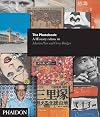
Following the success of volumes 1 and 2 of The Photobook: A History (published in 2004 and 2009 respectively), this is the third volume bringing this study of the photobook fully up to date, with specific exploration of the contemporary, postwar photobook. It covers key themes including the globalization of photographic culture, the personalization of photobooks, the self-publishing boom and the new 'layered' photobook approach.
While the history of photographs is a well-established canon, show more less critical attention has been directed at the phenomenon of the photobook, which for many photographers is perhaps the most significant vehicle for the display of their work and the communication of their vision to a mass audience. Volume III, co-edited by Martin Parr and Gerry Badger, expands this study and history of the photobook further. It explores the symbiotic relationship between the contemporary propaganda book vs. the protest photobook, sex and youth culture, photographers examining their own environments and the impact of the Internet and social media on the nature of the photobook, among much else.
The book is divided into 9 thematic chapters, each featuring general introductory text providing background information and highlighting the dominant political and artistic influences on the photobook in the period, followed by more detailed discussion of the individual photobooks. The introductory chapter texts are followed by spreads and images from over 200 books, which provide the central means of telling the history of the photobook. Chosen by Parr and Badger, these illustrations show the most artistically and culturally important photobooks in three dimensions, with the cover or jacket and a selection of spreads from the book shown.
The Photobook: A History Volume III, Martin Parr and Gerry Badger
By Richard B. Woodward / In Photobooks / April 8, 2014
Published in 2014 by Phaidon Press.
Comments/Context: Of making many books about photobooks there is no end, or so it has seemed in the last decade. Since the turn of the millennium, new histories on this formerly arcane topic have appeared almost every year. Some have been international in scope, others were patriotic. There are now scholarly books on the Japanese, Latin American, Dutch, and Swiss photobook. With 192 countries in the world, the future of this sector in a depressed publishing economy looks surprisingly healthy.
So long as Martin Parr and Gerry Badger are tour guides to this expanding category, a lot of us will be happy to go along for the ride. Volume III of The Photobook: A History has arrived and it’s as enlightening and lively as the previous two. I would wager than no one alive except these two Englishmen has laid hands or eyes on, or even heard of, many titles here.
The focus on roughly 200 photobooks published between the 1930s and 2012 is narrower than in Volumes I and II. But all titles are treated in the same format as before, with no more than three per double-page spread. Accompanying a casual, informed description of the book’s contents—no more than 300 words on its history, ancestors, and progeny—are color reproductions of the cover and a few sample spreads. The generous amounts of white space gives an impression of roominess when in fact each write-up is extremely compact.
Once again, their history does not adhere to a chronology but is divided into nine themes. To their familiar interest in photography as propaganda–there are examples here from Portugal, Palestine, Israel, Algeria, Chile, Libya, East Germany, Nazi Germany, and Cuba–they have added chapters on sex and desire (in a chapter titled “The Kids are Alright,” after Ryan McGinley’s 2000 book); on the photographic book as political protest (“Documents of Anger and Sadness”); on self-portraits (“Looking at Ourselves”); on the ways photographs preserve or falsify a personal past or identity (“Memento Mori”); and on the post-modern movement of re-photography (“Cannibalizing Photography”).
Parr-Badger have done as much as anyone to focus attention on the many varieties of the Japanese photobook. All three volumes are rife with examples. I counted a dozen more here, including Kazuo Kitai’s Teikoh (Resistance) from 1965, a seminal book by a remarkable artist who underwent at least two distinct changes in style.
On the lookout for unusual items from anywhere, the authors can be counted on to shake up one’s preconceptions. I know nothing of a Czechoslovakian photographer named Jioi Putta, although I imagine him as someone who might have been a character in a Milan Kundera story. The full page devoted to his Katalog Masných Vyrobýo, Konsev a Salda (Catalogue of Meat Products, Conserves and Lard) suggests to Parr-Badger that in 1973 Putta decided to goof around with a dull Soviet -era commercial assignment by turning a platter of sausage, garnished with onion rings, a tomato, and parsley into an Arcimboldo.
No photobook history I have read has mentioned Teenage Styles and Trends 1967-71: a Retrospect by Burton Y Berry. Self-published in Zurich in 1972, it pretends to be a catalog of young people’s fashion. Behind this cover story it is actually a photo-book for a gay audience. Burton Y Berry was an American diplomat, now deceased, who made these amateur portraits when he was in his sixties. They reveal his lusty admiration for young men, then enjoying the freedom to dress more provocatively, and have much more sex, than he ever could when he was growing up.
Volume III has numerous other finds from might be called Outsider Photographers, but the concentration remains on those with official artistic credentials: Rinko Kawauchi, Paul Graham, Taryn Simon, Roger Ballen, Susan Meiselas, Guy Tillim, Alessandra Sanguinetti, Dinu Li, Pieter Hugo, Robert Heinecken, Leigh Ledare, Merry Alpern, Mark Steinmetz, Sophie Calle, Yto Barrada, Juergen Teller, John Stezaker, Michael Schmidt, Stephen Shore, Anthony Hernandez, Roe Ethridge, Christopher Wool, Richard Prince, Doug Rickard, and others. (I didn’t do a detailed gender breakdown but the numbers of titles represented skew heavily male.)
The ethical practice of critics touting books that they own has been questioned by several critics, including me. An endorsement by Parr-Badger is like an investing tip. Dozens of collectors have used their volumes, along with Andrew Roth’s The Book of 101 Books: Seminal Photographic Books of the Twentieth Century, as shopping lists. At times I have wondered if enthusiasm for certain titles might correspond with the number of out-of-print sale copies the authors have snapped up and stored away.
It’s hardly their fault, however, that the guides are so popular. Before these books, scholarly interest in the subject was confined to a few specialists in auction houses and museums. Parr-Badger have treated the photobook with respect, noting its special history, one that has developed parallel and separate from photography for galleries and magazines. Taking Americans out of their comfort zone, they aim to enlarge appreciation for photography books far beyond those select few produced for the art market on these shores. Both their politics and aesthetic is populist, in the left-of-center cultural studies mode that has flourished since the 1960s in British journalism.
In his introduction here, Parr writes that he and Badger have “always believed that our volumes act as a kind of unofficial revisionist history” of photography. I wouldn’t disagree. For decades Parr has scoured bookstores and bazaars in the dozens of countries he has visited on assignment as a photographer. As a result, he may possess more first-hand knowledge of the art and photojournalism scenes in more places than any curator in any museum. Although Parr and Badger were certainly not the first to celebrate the photobook’s unique lineage—Swann Galleries has devoted separate catalogs to photographic literature since 1981—the duo has given the genre a larger profile. As Parr writes here, it’s no longer odd in museum retrospectives to find vitrines of an artist’s books in the same room with his or her prints.
What Parr-Badger have not yet done, though, is rigorously prune their shelves. If they want to see themselves as unofficial curators of the genre, then they need to make some tough and, no doubt, controversial judgments. The history of art is not a democracy in which every photo is as good as every other. It’s easy to be a revisionist if all you do is permit a lot of titles into your history that earlier writers ignored or excluded. By allowing into their Volumes any book that intrigues or amuses them, or that has an outré or political edge, they have shied away from having to defend which ones are the most vital and why some (and not others) have had—or should have—lasting influence. Maybe they can perform that essential job as their encore for Volume IV. show less
While the history of photographs is a well-established canon, show more less critical attention has been directed at the phenomenon of the photobook, which for many photographers is perhaps the most significant vehicle for the display of their work and the communication of their vision to a mass audience. Volume III, co-edited by Martin Parr and Gerry Badger, expands this study and history of the photobook further. It explores the symbiotic relationship between the contemporary propaganda book vs. the protest photobook, sex and youth culture, photographers examining their own environments and the impact of the Internet and social media on the nature of the photobook, among much else.
The book is divided into 9 thematic chapters, each featuring general introductory text providing background information and highlighting the dominant political and artistic influences on the photobook in the period, followed by more detailed discussion of the individual photobooks. The introductory chapter texts are followed by spreads and images from over 200 books, which provide the central means of telling the history of the photobook. Chosen by Parr and Badger, these illustrations show the most artistically and culturally important photobooks in three dimensions, with the cover or jacket and a selection of spreads from the book shown.
The Photobook: A History Volume III, Martin Parr and Gerry Badger
By Richard B. Woodward / In Photobooks / April 8, 2014
Published in 2014 by Phaidon Press.
Comments/Context: Of making many books about photobooks there is no end, or so it has seemed in the last decade. Since the turn of the millennium, new histories on this formerly arcane topic have appeared almost every year. Some have been international in scope, others were patriotic. There are now scholarly books on the Japanese, Latin American, Dutch, and Swiss photobook. With 192 countries in the world, the future of this sector in a depressed publishing economy looks surprisingly healthy.
So long as Martin Parr and Gerry Badger are tour guides to this expanding category, a lot of us will be happy to go along for the ride. Volume III of The Photobook: A History has arrived and it’s as enlightening and lively as the previous two. I would wager than no one alive except these two Englishmen has laid hands or eyes on, or even heard of, many titles here.
The focus on roughly 200 photobooks published between the 1930s and 2012 is narrower than in Volumes I and II. But all titles are treated in the same format as before, with no more than three per double-page spread. Accompanying a casual, informed description of the book’s contents—no more than 300 words on its history, ancestors, and progeny—are color reproductions of the cover and a few sample spreads. The generous amounts of white space gives an impression of roominess when in fact each write-up is extremely compact.
Once again, their history does not adhere to a chronology but is divided into nine themes. To their familiar interest in photography as propaganda–there are examples here from Portugal, Palestine, Israel, Algeria, Chile, Libya, East Germany, Nazi Germany, and Cuba–they have added chapters on sex and desire (in a chapter titled “The Kids are Alright,” after Ryan McGinley’s 2000 book); on the photographic book as political protest (“Documents of Anger and Sadness”); on self-portraits (“Looking at Ourselves”); on the ways photographs preserve or falsify a personal past or identity (“Memento Mori”); and on the post-modern movement of re-photography (“Cannibalizing Photography”).
Parr-Badger have done as much as anyone to focus attention on the many varieties of the Japanese photobook. All three volumes are rife with examples. I counted a dozen more here, including Kazuo Kitai’s Teikoh (Resistance) from 1965, a seminal book by a remarkable artist who underwent at least two distinct changes in style.
On the lookout for unusual items from anywhere, the authors can be counted on to shake up one’s preconceptions. I know nothing of a Czechoslovakian photographer named Jioi Putta, although I imagine him as someone who might have been a character in a Milan Kundera story. The full page devoted to his Katalog Masných Vyrobýo, Konsev a Salda (Catalogue of Meat Products, Conserves and Lard) suggests to Parr-Badger that in 1973 Putta decided to goof around with a dull Soviet -era commercial assignment by turning a platter of sausage, garnished with onion rings, a tomato, and parsley into an Arcimboldo.
No photobook history I have read has mentioned Teenage Styles and Trends 1967-71: a Retrospect by Burton Y Berry. Self-published in Zurich in 1972, it pretends to be a catalog of young people’s fashion. Behind this cover story it is actually a photo-book for a gay audience. Burton Y Berry was an American diplomat, now deceased, who made these amateur portraits when he was in his sixties. They reveal his lusty admiration for young men, then enjoying the freedom to dress more provocatively, and have much more sex, than he ever could when he was growing up.
Volume III has numerous other finds from might be called Outsider Photographers, but the concentration remains on those with official artistic credentials: Rinko Kawauchi, Paul Graham, Taryn Simon, Roger Ballen, Susan Meiselas, Guy Tillim, Alessandra Sanguinetti, Dinu Li, Pieter Hugo, Robert Heinecken, Leigh Ledare, Merry Alpern, Mark Steinmetz, Sophie Calle, Yto Barrada, Juergen Teller, John Stezaker, Michael Schmidt, Stephen Shore, Anthony Hernandez, Roe Ethridge, Christopher Wool, Richard Prince, Doug Rickard, and others. (I didn’t do a detailed gender breakdown but the numbers of titles represented skew heavily male.)
The ethical practice of critics touting books that they own has been questioned by several critics, including me. An endorsement by Parr-Badger is like an investing tip. Dozens of collectors have used their volumes, along with Andrew Roth’s The Book of 101 Books: Seminal Photographic Books of the Twentieth Century, as shopping lists. At times I have wondered if enthusiasm for certain titles might correspond with the number of out-of-print sale copies the authors have snapped up and stored away.
It’s hardly their fault, however, that the guides are so popular. Before these books, scholarly interest in the subject was confined to a few specialists in auction houses and museums. Parr-Badger have treated the photobook with respect, noting its special history, one that has developed parallel and separate from photography for galleries and magazines. Taking Americans out of their comfort zone, they aim to enlarge appreciation for photography books far beyond those select few produced for the art market on these shores. Both their politics and aesthetic is populist, in the left-of-center cultural studies mode that has flourished since the 1960s in British journalism.
In his introduction here, Parr writes that he and Badger have “always believed that our volumes act as a kind of unofficial revisionist history” of photography. I wouldn’t disagree. For decades Parr has scoured bookstores and bazaars in the dozens of countries he has visited on assignment as a photographer. As a result, he may possess more first-hand knowledge of the art and photojournalism scenes in more places than any curator in any museum. Although Parr and Badger were certainly not the first to celebrate the photobook’s unique lineage—Swann Galleries has devoted separate catalogs to photographic literature since 1981—the duo has given the genre a larger profile. As Parr writes here, it’s no longer odd in museum retrospectives to find vitrines of an artist’s books in the same room with his or her prints.
What Parr-Badger have not yet done, though, is rigorously prune their shelves. If they want to see themselves as unofficial curators of the genre, then they need to make some tough and, no doubt, controversial judgments. The history of art is not a democracy in which every photo is as good as every other. It’s easy to be a revisionist if all you do is permit a lot of titles into your history that earlier writers ignored or excluded. By allowing into their Volumes any book that intrigues or amuses them, or that has an outré or political edge, they have shied away from having to defend which ones are the most vital and why some (and not others) have had—or should have—lasting influence. Maybe they can perform that essential job as their encore for Volume IV. show less

While the history of photography is a well-established canon, much less critical attention has been directed at the phenomenon of the photobook, which for many photographers is perhaps the most significant vehicle for the display of their work and the communication of their vision to a mass audience.
In the first of two volumes, both co-edited by Martin Parr and Gerry Badger, The Photobook provides a comprehensive overview of the development of the photobook: from its inception at the dawn of show more photography in the early nineteenth century through to the radical Japanese photobooks of the 1960s and 70s, by way of the Modernist and propaganda books of the 1930s and 40s.
The selection of photographers compiled by Badger and Parr challenges the popular canon, and their survey of the history of the photobook reveals a secret web of influence and inter-relationships between photographers and photographic movements around the world. The book is divided into a series of thematic and broadly chronological chapters; each features a general introductory text that offers background information and highlights the dominant political and artistic influences on the photobook in the relevant period, followed by more detailed discussion of the individual photobooks.
The chapter texts are followed by spreads and images from over 200 books, which provide the central means of telling the history of the photobook. Assimilated diligently by Parr and Badger, these illustrations show around 200 of the most artistically and culturally important photobooks featuring the cover or jacket and a selection of spreads. show less
In the first of two volumes, both co-edited by Martin Parr and Gerry Badger, The Photobook provides a comprehensive overview of the development of the photobook: from its inception at the dawn of show more photography in the early nineteenth century through to the radical Japanese photobooks of the 1960s and 70s, by way of the Modernist and propaganda books of the 1930s and 40s.
The selection of photographers compiled by Badger and Parr challenges the popular canon, and their survey of the history of the photobook reveals a secret web of influence and inter-relationships between photographers and photographic movements around the world. The book is divided into a series of thematic and broadly chronological chapters; each features a general introductory text that offers background information and highlights the dominant political and artistic influences on the photobook in the relevant period, followed by more detailed discussion of the individual photobooks.
The chapter texts are followed by spreads and images from over 200 books, which provide the central means of telling the history of the photobook. Assimilated diligently by Parr and Badger, these illustrations show around 200 of the most artistically and culturally important photobooks featuring the cover or jacket and a selection of spreads. show less
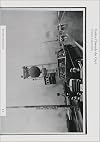
Yutaka Takanashi's Toshi-e (Towards the City) is a landmark volume from one of the founders of the short-lived avant-garde Japanese magazine Provoke. The photographers associated with Provoke cultivated a grainy, blurry, black-and-white aesthetic, and Takanashi's pictures are grainy in the extreme. In contrast to his earlier, more upbeat Tokyoites series, the images here approach landscapes at skewed angles, as though shot from a speeding car, speeding perhaps "towards the city." Published show more in 1974 and considered the most luxurious of all of the Provoke-era publications, its brooding, pessimistic tone describes the state of contemporary life in an unnamed city, in a Japan undergoing massive economic and industrial transformations. This sixth volume in Errata's Books on Books series reproduces all 116 black-and-white photographs, along with an essay by the British photographer, writer and book historian Gerry Badger.
Errata Editions' Books on Books series is an ongoing publishing project dedicated to making rare and out-of-print photography books accessible to students and photobook enthusiasts. These are not reprints or facsimiles but complete studies of the original books. Each volume in the series presents the entire content, page for page, of an original master bookwork which, up until now, has been too rare or expensive for most to experience. Through a mix of classic and contemporary titles, this series spans the breadth of photographic practice as it has appeared on the printed page and allows further study of the creation and meanings of these great works of art. Each volume in the series contains illustrations of every page in the original photobook, a new essay by an established writer on photography, production notes about the creation of the original edition and biographical and bibliographical information about each artist. show less
Errata Editions' Books on Books series is an ongoing publishing project dedicated to making rare and out-of-print photography books accessible to students and photobook enthusiasts. These are not reprints or facsimiles but complete studies of the original books. Each volume in the series presents the entire content, page for page, of an original master bookwork which, up until now, has been too rare or expensive for most to experience. Through a mix of classic and contemporary titles, this series spans the breadth of photographic practice as it has appeared on the printed page and allows further study of the creation and meanings of these great works of art. Each volume in the series contains illustrations of every page in the original photobook, a new essay by an established writer on photography, production notes about the creation of the original edition and biographical and bibliographical information about each artist. show less
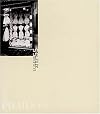
I love small book collections of photography and this one is a little gem. The first few pages are a nice, brief biography of the photographer and most of the photos are kept to one page, which makes them much easier to see. On the opposite side of each photos is a description of where, when and what as well as a brief critique of each image and inspiration.
The images themselves are haunting and evocative, giving a strong sense of the time and place and Atget's sense of light and shadows is show more amazing. They have both a timeless feeling and a sense of a time and place that is long gone, which I find fascinating and keeps me going back and looking at each photo over and over again. show less
The images themselves are haunting and evocative, giving a strong sense of the time and place and Atget's sense of light and shadows is show more amazing. They have both a timeless feeling and a sense of a time and place that is long gone, which I find fascinating and keeps me going back and looking at each photo over and over again. show less
Awards

You May Also Like


Associated Authors
Statistics
- Works
- 30
- Members
- 1,232
- Popularity
- #20,834
- Rating
- 4.2
- Reviews
- 21
- ISBNs
- 48
- Languages
- 4