
Arthur Edward Waite (1857–1942)
Author of The Pictorial Key to the Tarot
About the Author
Arthur Edward Waite was born on October 2, 1857 in Brooklyn, New York. He was a poet and scholarly mystic who wrote extensively on occult and esoteric matters, and was the co-creator of the Rider-Waite Tarot deck. Waite joined the Outer Order of the Hermetic Order of the Golden Dawn in January 1891 show more after being introduced by E.W. Berridge. In 1899 he entered the Second order of the Golden Dawn. He became a Freemason in 1901, and entered the Societas Rosicruciana in Anglia in 1902. In 1903 Waite founded the Independent and Rectified Order R. R. et A. C. Waite was a prolific author and many of his works were well received in academic circles. He wrote occult texts on subjects including divination, esotericism, Rosicrucianism, Freemasonry, and ceremonial magic, Kabbalism and alchemy; he also translated and reissued several important mystical and alchemical works. His works on the Holy Grail, influenced by his friendship with Arthur Machen, were particularly notable. A number of his volumes remain in print, including The Book of Ceremonial Magic (1911), The Holy Kabbalah (1929), A New Encyclopedia of Freemasonry (1921), and his edited translation of Eliphas Levi's 1896 Transcendental Magic, its Doctrine and Ritual (1910), having seen reprints in recent years. Waite also wrote two allegorical fantasy novels, Prince Starbeam (1889) and The Quest of the Golden Stairs (1893). (Bowker Author Biography) show less
Image credit: Courtesy of the NYPL Digital Gallery (image use requires permission from the New York Public Library)
Series
Works by Arthur Edward Waite
The Life of Louis Claude de Saint-Martin, the Unknown Philosopher, and the Substance of his Transcendental Doctrine (1901) 50 copies
Collectanea Chemica: Being Certain Select Treatises on Alchemy and Hermetic Literature (1991) — Editor, some editions — 41 copies
Devil-Worship in France With Diana Vaughan and the Question of Modern Palladism (1896) 41 copies, 1 review
Quest of the Golden Stairs: A Mystery of Kinghood in Faerie (A Newcastle occult book X-28) (1927) 25 copies
The Hermetic and Alchemical Writings of Paracelsus, Volume I: Hermetic Chemistry (1976) — Editor — 19 copies
The Hermetic and Alchemical Writings of Paracelsus, Volume II: Hermetic Medicine and Hermetic Philosophy (1976) — Editor — 16 copies
Complete Rosicrucian Initiations of the Fellowship of the Rosy Cross by Arthur Edward Waite, Founder of the Holy Order of the Golden Dawn (2005) 16 copies
Understanding the Tarot Deck: Being Fragments of a Secret Tradition Under the Veil of Divination (2000) 13 copies
The Weiser Tarot: A New Edition of the Classic 1909 Waite-Smith Deck (78-Card Deck with 64-Page Guidebook) (2022) 12 copies
Lives of Alchemystical Philosophers Based on Materials Collected in 1815 (Classic Reprint) (2017) 7 copies
A New Encyclopaedia of freemasonry (ars magna latomorum) and of cognate instituted mysteries : 6 copies
The Weiser Tarot Card Sticker Book: Includes Over 2,500 Stickers (32 Complete Sets of All 78 Tarot Cards)―Perfect for Tarot Journaling (2023) 4 copies
The Book Of Lambspring: A Noble Ancient Philosopher Concerning The Philosophical Stone (1985) 4 copies
Rosicrucian Rites and Ceremonies of the Fellowship of the Rosy Cross by Founder of the Holy Order of the Golden Dawn Arthur Edward Waite (2008) 4 copies
Collected Poems of A. E. Waite 3 copies
Hermetic Writings Paracelsus 2 copies
The Unknown World 2 copies
A Short Lexicon of Alchemy: Explaining the Chief Terms Used by Paracelsus and Other Hermetic Philosophers (1990) 2 copies
A.E. Waite 1 copy
Pamela Coleman Smith: Limited Gold Edition (Smith-Waite Deluxe Tarot) — Author — 1 copy
Words from a Masonic Mystic. 1 copy
Works of Arthur Edward Waite 1 copy
The Traveller's Tarot 1 copy
Turba Philosophorum. Adunarea inteleptilor. Cartea adevarului in arta si al treilea Sinod Pitagoreic 1 copy
Mini Tarot original 1909 1 copy
ceremonial black magic 1 copy
A Brief Guide To The Celestial Ruby: Concerning The Philosopher's Stone And Its Grand Arcanum (2011) 1 copy
The Classic Rider Waite Smith Tarot Book & Card Deck: Includes 78 Cards and 128 Page Book (Sirius Oracle Kits) (2024) 1 copy
Occult Science 1 copy
New Pearl of Great Price 1 copy
Independent and Rectified Martinist Order or Order of Unknown Philosophers — Composer — 1 copy
Way To Divine Wisdom 1 copy
Doctrine of the Kabalah 1 copy
Michael Maier: A Great German Rosicrucian and Alchemist a Great German Rosicrucian and Alchemist (2010) 1 copy
Albino-WaiteTarot deck 1 copy
Astrological Prediction as Deduced From The Character Of The Sign Of The Zodiac Ascending At The Birth Of The Individual (2010) 1 copy
Arthur Edward Waite and the Rectified Scottish Rite: a selection of extracts from his writings 1 copy
A Book of Mystery and Vision 1 copy
Weiser Tarot 1 copy
The Kabbalistic Conclusions of Pico della Mirandola: Esoteric Classics: Studies in Kabbalah (2016) 1 copy
Meaning Tarot (Rider) 1 copy
Hermetic Museum 1 copy
Obermann 1 copy
Associated Works
The works of Thomas Vaughan, mystic and alchemist (Eugenius Philalethes) (1968) — Editor — 37 copies
Magical Writings of Thomas Vaughan also known as Eugenius Philalethes (1992) — Translator, some editions — 10 copies
Some Characteristics of the Interior Church (1798) — Introduction, some editions — 10 copies, 3 reviews
Tagged
Common Knowledge
- Legal name
- Waite, Arthur Edward
- Birthdate
- 1857-10-02
- Date of death
- 1942-05-19
- Gender
- male
- Education
- St. Charles' College
- Occupations
- author
scholar
writer
occultist - Organizations
- Hermetic Order of the Golden Dawn
Societas Rosicruciana in Anglia
The Independent and Rectified Rite of the Golden Dawn
Fellowship of the Rosy Cross
Freemasons
The Philalethes Society - Awards and honors
- Past Senior Grand Warden of Iowa
Past Provinicial Deputy Grand Director of Ceremonies (Bucks)
Past Inner Grand Guard (English Grand Mark)
Past Great Captain of the Guards
Past Grand Historiographer Etc.
Fellow of the Philalethes Society - Nationality
- USA
UK - Birthplace
- Brooklyn, New York, USA
- Places of residence
- Brooklyn, New York, USA
London, England, UK - Place of death
- London, England, UK
- Burial location
- London, England
Members
Reviews

Sometimes the value of a book depends less on the book than on the reader. And this is undoubtedly one of those books.
It seems clear that this is an Encyclopedia of Freemasonry for Freemasons. If you aren't a Mason, you're likely to be stumped.
Example: I was looking for an account of the legend of the Master Builder, Hiram Abif(f). The Biblical Huram-abi/Hiram the Father/Hiram the Expert is the Phoenician craftsman who, according to 2 Chronicles 2:13, etc., was the man most responsible for show more the creation of Solomon's Temple. Masonic legend has it that the Freemasons arose out of these events, and that the Master Builder was murdered rather than reveal a craft secret. This is one of the core legends of Masonry.
But a search of this book for the legend is extremely frustrating. There is an entry on Hiram Abif, but it doesn't really tell the legend, it just tries to tie it to the Biblical and historical accounts. This is done with much learning, much inclusion of irrelevance, and very little clarity. There is no reference for the "Master Builder" -- not even a cross-reference. There is an entry on Solomon, which is mostly post-Solomonic ritual with little justification for the Masonic link to Solomon. And the entry "Temple" is about Masonic temples, not the Jerusalem Temple.
There is much genuine learning in this book, at least in the sense that Waite knew a lot about obscure aspects of Masonry. Whether he knew anything about the major aspects of Masonry is harder to determine.
As for the mechanical aspects of an Encyclopedia, the book is badly lacking. Too much is packed into long entries, with not enough short entries to get you to where you need to go and with not enough cross-references. Terms are often not clearly defined. The text is ponderous and not well organized.
With all that said, this is an immense (about a thousand page) reference with a tremendous amount of detail. If you know enough about Freemasons to use it, and have the high tolerance for absurdity required to study Masonry, this is an immensely useful book. If you are not a Mason, it will likely be very confusing, and if you want proof of all the claims made by Masons, this will likely be extremely disappointing. If you know which kind of reader you are, you will know whether you will like this book. show less
It seems clear that this is an Encyclopedia of Freemasonry for Freemasons. If you aren't a Mason, you're likely to be stumped.
Example: I was looking for an account of the legend of the Master Builder, Hiram Abif(f). The Biblical Huram-abi/Hiram the Father/Hiram the Expert is the Phoenician craftsman who, according to 2 Chronicles 2:13, etc., was the man most responsible for show more the creation of Solomon's Temple. Masonic legend has it that the Freemasons arose out of these events, and that the Master Builder was murdered rather than reveal a craft secret. This is one of the core legends of Masonry.
But a search of this book for the legend is extremely frustrating. There is an entry on Hiram Abif, but it doesn't really tell the legend, it just tries to tie it to the Biblical and historical accounts. This is done with much learning, much inclusion of irrelevance, and very little clarity. There is no reference for the "Master Builder" -- not even a cross-reference. There is an entry on Solomon, which is mostly post-Solomonic ritual with little justification for the Masonic link to Solomon. And the entry "Temple" is about Masonic temples, not the Jerusalem Temple.
There is much genuine learning in this book, at least in the sense that Waite knew a lot about obscure aspects of Masonry. Whether he knew anything about the major aspects of Masonry is harder to determine.
As for the mechanical aspects of an Encyclopedia, the book is badly lacking. Too much is packed into long entries, with not enough short entries to get you to where you need to go and with not enough cross-references. Terms are often not clearly defined. The text is ponderous and not well organized.
With all that said, this is an immense (about a thousand page) reference with a tremendous amount of detail. If you know enough about Freemasons to use it, and have the high tolerance for absurdity required to study Masonry, this is an immensely useful book. If you are not a Mason, it will likely be very confusing, and if you want proof of all the claims made by Masons, this will likely be extremely disappointing. If you know which kind of reader you are, you will know whether you will like this book. show less
Devil-Worship in France; with: Diana Vaughan and the Question of Modern Palladism by Arthur Edward Waite

Arthur Edward Waite wrote Devil-Worship in France in 1896, before Gabriel Jogand ("Leo Taxil") exposed the great hoax he and his confederates had perpetrated regarding a supposed Luciferian Palladian Order at the heart of global Freemasonry. Although Waite gets a few details wrong, he was correct in casting the most thorough suspicion on this particular constellation of anti-Masonic literature. He was not the first to do so; the noted esotericist and Theosophist C.C. Massey had already show more voiced his objections. But Waite's criticisms were more substantial and extensive, and received more attention than Massey's had.
The micro-genre of Palladian conspiracy literature produced under the bylines of Leo Taxil, Dr. Bataille, and Diana Vaughan enjoyed a considerable vogue in late 19th-century France. Its popularity among the credulous invites comparison with Dan Brown's Da Vinci Code and its concomitant cottage industry in the early 21st century--although the valence was exactly the opposite as far as the Roman Catholic Church was concerned. (That is to say, that church's fond welcome for the anti-Masonic revelations of Taxil matched in scope its offended distaste for The Da Vinci Code.) The fact that Brown's novel is an overt fiction--albeit bearing an appeal to some alleged underlying facts--does not skew the parallel. Much of the material about Palladian Freemasonry was published in the Penny Dreadful periodical format associated more with Victorian Gothic than sober journalism.
Designed as it was for a French Catholic readership, the Taxil material also vilified the English, and in passing, Americans. Waite observes this trend throughout, but reserves special outrage for Dr. Bataille's slander against HRH the Queen! (172-3) Waite's knowledge of the US is a bit limited, though. For instance, he refers to Scottish Rite organizer Albert Pike's role in "[t]he admission of Arkansas into the confederation of the United States," which while strictly accurate, is likely to sound a muddled note for American readers. (28)
Although Waite is notorious for his plodding and convoluted prose, Devil-Worship in France is a comparatively lively exercise, perhaps because it was a matter of such great currency when he wrote it. In several cases, he references personal statements from his own associates and acquaintances, such as W. Wynn Westcott and John Yarker. And I am certain that I detected deliberate, though bone-dry, wit at various points in the book. The several chapters dedicated to summarizing Bataille's Le Diable au XIXe Siecle are quite entertaining. Having cast sufficient doubts on the tales of the Palladium, Waite concludes Devil-Worship in France with an encomium regarding the virtues of Freemasonry, and its points of functional intersection with mysticism.
The 2003 Red Wheel/Weiser reissue of Waite's book appends his previously-unpublished sequel, Diana Vaughan and the Question of Modern Palladism. Much shorter than the first work, it merely supplies updates after feuding among the fabulists and Jogand's public admission of the hoax. Waite takes the opportunity to correct a few incidental errors from Devil-Worship. In particular he admits that Pike did plagiarize considerably from Eliphas Levi, but he also praises a specific text in which Pike did so: the lecture for the 32° in Morals and Dogma.
The Palladian episode is not only a cautionary tale regarding an anti-Masonic scare; this very thorough treatment of it has much to hold the attention of anyone interested in the esotericism of the period. The Taxil collaborator "Jean Kostka" was in fact Jules Doinel, founding patriarch of the French Gnostic Church from which today's Gnostic Catholic Church (E.G.C.) descends. He comes off fairly pitiably in Waite's account, and it is hard to see him as a hero during the early 1890s. Even more importantly, much of the outrage intended to be stoked by the stories of the Palladium had to do with its initiation of women into a secret society. Waite, concurring with Pike, indicates that women are excluded from Masonry, but doubts whether they should be. Of course, the Hermetic Order of the Golden Dawn was initiating men and women on equal terms at the time, the Grand Loge Symbolique Eccosais Mixte which was to eventuate in Theosophical Co-Masonry had been founded in 1893, and a short decade after Diana Vaughan O.T.O. would apply Masonic techniques of initiation to women as well as men.
And as a final enticement to those who might benefit from reading this book, I quote from page eighty-four: "Who would possess a lingam which was an Open Sesame to devildom and not make use thereof?" show less
The micro-genre of Palladian conspiracy literature produced under the bylines of Leo Taxil, Dr. Bataille, and Diana Vaughan enjoyed a considerable vogue in late 19th-century France. Its popularity among the credulous invites comparison with Dan Brown's Da Vinci Code and its concomitant cottage industry in the early 21st century--although the valence was exactly the opposite as far as the Roman Catholic Church was concerned. (That is to say, that church's fond welcome for the anti-Masonic revelations of Taxil matched in scope its offended distaste for The Da Vinci Code.) The fact that Brown's novel is an overt fiction--albeit bearing an appeal to some alleged underlying facts--does not skew the parallel. Much of the material about Palladian Freemasonry was published in the Penny Dreadful periodical format associated more with Victorian Gothic than sober journalism.
Designed as it was for a French Catholic readership, the Taxil material also vilified the English, and in passing, Americans. Waite observes this trend throughout, but reserves special outrage for Dr. Bataille's slander against HRH the Queen! (172-3) Waite's knowledge of the US is a bit limited, though. For instance, he refers to Scottish Rite organizer Albert Pike's role in "[t]he admission of Arkansas into the confederation of the United States," which while strictly accurate, is likely to sound a muddled note for American readers. (28)
Although Waite is notorious for his plodding and convoluted prose, Devil-Worship in France is a comparatively lively exercise, perhaps because it was a matter of such great currency when he wrote it. In several cases, he references personal statements from his own associates and acquaintances, such as W. Wynn Westcott and John Yarker. And I am certain that I detected deliberate, though bone-dry, wit at various points in the book. The several chapters dedicated to summarizing Bataille's Le Diable au XIXe Siecle are quite entertaining. Having cast sufficient doubts on the tales of the Palladium, Waite concludes Devil-Worship in France with an encomium regarding the virtues of Freemasonry, and its points of functional intersection with mysticism.
The 2003 Red Wheel/Weiser reissue of Waite's book appends his previously-unpublished sequel, Diana Vaughan and the Question of Modern Palladism. Much shorter than the first work, it merely supplies updates after feuding among the fabulists and Jogand's public admission of the hoax. Waite takes the opportunity to correct a few incidental errors from Devil-Worship. In particular he admits that Pike did plagiarize considerably from Eliphas Levi, but he also praises a specific text in which Pike did so: the lecture for the 32° in Morals and Dogma.
The Palladian episode is not only a cautionary tale regarding an anti-Masonic scare; this very thorough treatment of it has much to hold the attention of anyone interested in the esotericism of the period. The Taxil collaborator "Jean Kostka" was in fact Jules Doinel, founding patriarch of the French Gnostic Church from which today's Gnostic Catholic Church (E.G.C.) descends. He comes off fairly pitiably in Waite's account, and it is hard to see him as a hero during the early 1890s. Even more importantly, much of the outrage intended to be stoked by the stories of the Palladium had to do with its initiation of women into a secret society. Waite, concurring with Pike, indicates that women are excluded from Masonry, but doubts whether they should be. Of course, the Hermetic Order of the Golden Dawn was initiating men and women on equal terms at the time, the Grand Loge Symbolique Eccosais Mixte which was to eventuate in Theosophical Co-Masonry had been founded in 1893, and a short decade after Diana Vaughan O.T.O. would apply Masonic techniques of initiation to women as well as men.
And as a final enticement to those who might benefit from reading this book, I quote from page eighty-four: "Who would possess a lingam which was an Open Sesame to devildom and not make use thereof?" show less

"... the rectified and perfected tarot which accompanies this work." (page 33) a phrase which says much about its author, Edward Waite. A self-proclaimed "master" of arcane knowledge who pretentiously imposed his miscellanic recycled multi-sourced esoteric constructs, creating a distorted and childishly obvious beginner's pack of cards (RWS tarot deck) explicitly intended for the lowly divinatory use he repeatedly pretended to scorn.
Overall it's a mere set of Victorian/Edwardian caricatures show more of the ancient original tarot Renaissance symbolism. The gratuitously swapped "Force"/"Justice" numerals and the ugly ridiculous Wheel of Fortune card with irrelevant Egyptian, Hebrew, Arabic and obscure symbols sums-up this disgraceful deck.
Waite wasn't even original, copying most of the restricted and sometimes aleatory Alliette's (18th century made-up "Book of Thoth" card deck) card divination meanings and robbing some imagery of the genuine "Sola busca" Italian tarot of the Renaissance. Even the unsuspecting artist Pamela Smith seems to have been underpaid for her hard work (from her own account) all for the glory of Waite. Even the Rider company seem to have originally neglected to put Mrs. Smith name in the published pack's name ("Rider-Waite").
A very controversial pack of cards and this accompanying book which irremediably "polluted" the last century of the already more than six centuries old tarot tradition creating a large following of uninformed and misguided wannabe "tarologists" and fancy deck creators who by restricting themselves to Waite's pretentious lucubrations are condemned to remain permanently "in the dark".
A totally undeserved "classic". show less
Overall it's a mere set of Victorian/Edwardian caricatures show more of the ancient original tarot Renaissance symbolism. The gratuitously swapped "Force"/"Justice" numerals and the ugly ridiculous Wheel of Fortune card with irrelevant Egyptian, Hebrew, Arabic and obscure symbols sums-up this disgraceful deck.
Waite wasn't even original, copying most of the restricted and sometimes aleatory Alliette's (18th century made-up "Book of Thoth" card deck) card divination meanings and robbing some imagery of the genuine "Sola busca" Italian tarot of the Renaissance. Even the unsuspecting artist Pamela Smith seems to have been underpaid for her hard work (from her own account) all for the glory of Waite. Even the Rider company seem to have originally neglected to put Mrs. Smith name in the published pack's name ("Rider-Waite").
A very controversial pack of cards and this accompanying book which irremediably "polluted" the last century of the already more than six centuries old tarot tradition creating a large following of uninformed and misguided wannabe "tarologists" and fancy deck creators who by restricting themselves to Waite's pretentious lucubrations are condemned to remain permanently "in the dark".
A totally undeserved "classic". show less
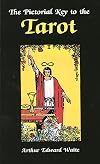
I know that it isn't popular to like A. E. Waite in modern occultism, but I really do appreciate him. While some of his sincerest opinions are a bit ridiculous, most of his research is sound and he was clearly speaking from experience on a number of important points. His insight into the Tarot is second to none, though it should be noted that as a member of the Hermetic Order of the Golden Dawn, he was oathbound not to reveal certain secrets. Hence, some of his interpretations of the Minor show more Arcana are purposefully flip-flopped and some of the symbolism of the Major Arcana is incomplete. Those knowledgeable in the Tarot will find a lot of gold here, while those who are just beginning had best look elsewhere. show less
Lists
el (1)
You May Also Like


Associated Authors
Statistics
- Works
- 213
- Also by
- 9
- Members
- 5,644
- Popularity
- #4,390
- Rating
- 3.6
- Reviews
- 63
- ISBNs
- 524
- Languages
- 10
- Favorited
- 8
