
Fawaz A. Gerges
Author of Journey of the Jihadist: Inside Muslim Militancy
About the Author
Fawaz A. Gerges is professor of international relations and Emirates Chair in Contemporary Middle East Studies at the London School of Economics and Political Science. He is the author of several acclaimed books, including ISIS: A History (Princeton), The New Middle East, and The Far Enemy. Twitter show more @FawazGerges show less
Works by Fawaz A. Gerges
Associated Works
Tagged
Common Knowledge
- Gender
- male
- Education
- London School of Economics (MS)
University of Oxford (PhD) - Short biography
- Fawaz A. Gerges is a Lebanese-American academic and author with expertise on the Middle East, U.S. foreign policy, international relations, Al Qaeda, and relations between the Islamic and Western worlds. He is currently a Professor of Middle East Politics and International Relations at the London School of Economics and Political Science. He also holds the Emirates Chair of the Contemporary Middle East at the LSE and was the inaugural Director of the LSE Middle East Centre.
Gerges is a leading public intellectual and one of the world’s top Middle East scholars. He has appeared on television and radio networks throughout the world, including CNN, ABC, CBS, NPR, the BBC and Al Jazeera. During the weeks leading up to the 2003 U.S. invasion of Iraq, he was a regular guest on The Oprah Winfrey Show, PBS’s The NewsHour with Jim Lehrer and The Charlie Rose Show.
On the ten-year anniversary of 9/11, Oxford University Press released Gerges' book, The Rise and Fall of Al Qaeda (2011). Gerges' newest book, published by Pelgrave Macmillan is Obama and the Middle East - Nationality
- Lebanon
USA - Birthplace
- Lebanon
- Associated Place (for map)
- Lebanon
Members
Reviews
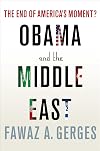
I visited my 89-year old father last month. He told me that he keeps his TV tuned to Fox News because "he wants to see what kind of people we're dealing with."
My Dad. An engineer. A thinking person.
I wanted to be able to tell him that, if he was looking for honest, objective reporting, he needed to look elsewhere and not latch onto Fox because it fed his old-guy rage that things weren't the way they used to be, but I lacked the courage.
All of which is pretty much to say that I wish my father show more would read Fawaz Gerges' book. It is written with passion AND clarity, which -- when you think about it -- is a fairly uncommon combination. Gerges lays out with stunning precision how the Middle East got to be the restive place it is, what the role of the US was in this, how our leadless fearers seem inevitably bound to see EVERYTHING through a Cold War lens, how numbingly worse the George W. Bush 'cowboy Crusade' approach made things, and so on ...
... finishing, as the book's title promises, with the topic of Obama: how Obama's soaring rhetoric promised sweeping change with regard to the United States' relationship with the Middle East -- how this President started out with strong intentions but was dragged under both by his own cautious nature and the stuck-in-peanut-butter-and-concrete status quo in DC.
The book is superbly organized and laid out. For the most part Gerges' writing is superb, although there is an occasional bizarre word choice that lets you know that English -- although he is better with it than 98% of Americans -- is not his first language.
I highly recommend this book to everyone interested in modern politics, the Middle East, I especially recommend it to people who are living under the delusion that "they hate us for our freedoms." They don't. They hate us, if they hate us at all, because we have acted like playground bullies for decades, and seem incapable of stopping. show less
My Dad. An engineer. A thinking person.
I wanted to be able to tell him that, if he was looking for honest, objective reporting, he needed to look elsewhere and not latch onto Fox because it fed his old-guy rage that things weren't the way they used to be, but I lacked the courage.
All of which is pretty much to say that I wish my father show more would read Fawaz Gerges' book. It is written with passion AND clarity, which -- when you think about it -- is a fairly uncommon combination. Gerges lays out with stunning precision how the Middle East got to be the restive place it is, what the role of the US was in this, how our leadless fearers seem inevitably bound to see EVERYTHING through a Cold War lens, how numbingly worse the George W. Bush 'cowboy Crusade' approach made things, and so on ...
... finishing, as the book's title promises, with the topic of Obama: how Obama's soaring rhetoric promised sweeping change with regard to the United States' relationship with the Middle East -- how this President started out with strong intentions but was dragged under both by his own cautious nature and the stuck-in-peanut-butter-and-concrete status quo in DC.
The book is superbly organized and laid out. For the most part Gerges' writing is superb, although there is an occasional bizarre word choice that lets you know that English -- although he is better with it than 98% of Americans -- is not his first language.
I highly recommend this book to everyone interested in modern politics, the Middle East, I especially recommend it to people who are living under the delusion that "they hate us for our freedoms." They don't. They hate us, if they hate us at all, because we have acted like playground bullies for decades, and seem incapable of stopping. show less
 This review was written for LibraryThing Early Reviewers.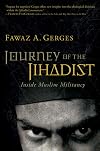
In ‘Journey to the Jihadist’, Fawaz Gerges, a professor of Middle Eastern Studies at Sarah Lawrence College, provides extremely valuable insight into the mindset of Islamic jihadist. Or more correctly, make that plural ‘mindsets’ because the central message of Gerges work is that even among jihadists opinions vary widely as to correct principles, strategies, and tactics.
Gerges starts out with some background to the modern jihad movement and its founder Sayyid Qutb who matriculated show more at Stanford and Colorado State College of Education for two years in the 1940s. Qutb was appalled by the empty materialism and especially the sexual license he perceived. He returned to play an instrumental role in radicalizing the Muslim Brotherhood. The Looming Tower by Lawrence Wright has a more detailed consideration of Qutb.
Gerges, who was raised as Greek Orthodox in Lebanon, traces the development of the jihad through three generations starting with Kamal el-Said Habib. Kamal played a role in the 1981 assassination of Anwar Sadat, but later forswore violence as means to Islamize society for political means. The second generation is represented by Osama bin Laden’s personal bodyguard Abu-Jandal . Gerges identifies the third generation as uneducated youth being radicalized by the American occupation of Iraq.
Gerges attempts to demonstrate that many if not most jihadists rejected bin Laden’s attack on the West, some for moral reasons, more because they viewed it an ill-advised assault on the world’s superpower. Much of the antipathy toward bin Laden flows, of course from Shiites. Gerges suggests that bin Laden and Al Qaeda were faring very poorly after 9-11 and the US rout of the Taliban, but that the US invasion of Iraq has almost universally enraged Muslims.
While Gerges’ book provides essential context and perspective it suffers from inadequate identification of his sources. His endnotes state that his main sources are interviews he conducted between 1990 and 2005. He also identifies printed interviews and books for each chapter. He chose not, however, to footnote his work so it is usually impossible to identify a source for particular statements. He states that he was unable to interview Abu-Jandal, but still freely quotes him. The book has a bit of a slapdash feel to it, especially in a late chapter discussing the British Muslims and the London bombings. Gerges also accepts exaggerated claims by Arab Afghans of their role in defeating the Soviet Union in Afghanistan.
Despite these shortcomings, Gerges’ book provides much-needed perspective on the varying shades of even radical Islam and how the American occupation of Iraq is pushing more and more Muslims toward jihad against ‘the far enemy’ – the West in general and the US in particular. Highly recommended. show less
Gerges starts out with some background to the modern jihad movement and its founder Sayyid Qutb who matriculated show more at Stanford and Colorado State College of Education for two years in the 1940s. Qutb was appalled by the empty materialism and especially the sexual license he perceived. He returned to play an instrumental role in radicalizing the Muslim Brotherhood. The Looming Tower by Lawrence Wright has a more detailed consideration of Qutb.
Gerges, who was raised as Greek Orthodox in Lebanon, traces the development of the jihad through three generations starting with Kamal el-Said Habib. Kamal played a role in the 1981 assassination of Anwar Sadat, but later forswore violence as means to Islamize society for political means. The second generation is represented by Osama bin Laden’s personal bodyguard Abu-Jandal . Gerges identifies the third generation as uneducated youth being radicalized by the American occupation of Iraq.
Gerges attempts to demonstrate that many if not most jihadists rejected bin Laden’s attack on the West, some for moral reasons, more because they viewed it an ill-advised assault on the world’s superpower. Much of the antipathy toward bin Laden flows, of course from Shiites. Gerges suggests that bin Laden and Al Qaeda were faring very poorly after 9-11 and the US rout of the Taliban, but that the US invasion of Iraq has almost universally enraged Muslims.
While Gerges’ book provides essential context and perspective it suffers from inadequate identification of his sources. His endnotes state that his main sources are interviews he conducted between 1990 and 2005. He also identifies printed interviews and books for each chapter. He chose not, however, to footnote his work so it is usually impossible to identify a source for particular statements. He states that he was unable to interview Abu-Jandal, but still freely quotes him. The book has a bit of a slapdash feel to it, especially in a late chapter discussing the British Muslims and the London bombings. Gerges also accepts exaggerated claims by Arab Afghans of their role in defeating the Soviet Union in Afghanistan.
Despite these shortcomings, Gerges’ book provides much-needed perspective on the varying shades of even radical Islam and how the American occupation of Iraq is pushing more and more Muslims toward jihad against ‘the far enemy’ – the West in general and the US in particular. Highly recommended. show less

ISIS: A History is a strongly sourced, objective account of the rise, personnel, and characteristics of the world's most infamous terrorist group. It's also a poorly edited mass that requires a lot of prior knowledge of the field, and could use at least two more passes to find some actual structure.
Gerges investigates the continuity and change between ISIS and previous Jihadi groups, like Al Qaeda in Iraq. ISIS focuses on the "near enemy" of Shiites and insufficiently devout Sunnis instead show more of the "far enemy" of the US and the Israel. Thanks to a complete collapse in State authority caused by the Syrian Civil War and Iraq's corrupt and sectarian government, ISIS expanded from a hunted band to a Caliphate dominating millions of people in a medieval nightmare. Gerges and his graduate assistants do the best possible job tracing the rise of ISIS's leader, Abu Bakr al-Baghdadi from the propaganda, but the man is still largely a cipher.
Gerges describes ISIS as theocratic plagiarists, making little advancement to Salafi-Jihadist thinking, but he doesn't really explain what that thinking is, or the importance of establishing of the Caliphate in the kind of utopian Muslim thinking that characterizes Jihad. From a conventional polisci perspective, it's true that ISIS provides basic government services (water, sewage, schools, police, etc) in areas that Iraq and Syria have abandoned, but the same could be said of the Taliban, and the Taliban hasn't attracted tens of thousands of foreign fighters, or routed professional armies. Gerges claims that ex-Baathist officers in the upper ranks contributed to ISIS taking Mosul, but I need more evidence for strategic thinking from the people who brought you the Iraq-Iran War.
Obviously, there's a lot about ISIS that is simply unknowable to the West, because of their tendency to behead journalists and other outsiders. But I found Graeme Wood's 2015 article in The Atlantic a much more coherent introduction to the organization, that if less detailed, is far more revealing. show less
Gerges investigates the continuity and change between ISIS and previous Jihadi groups, like Al Qaeda in Iraq. ISIS focuses on the "near enemy" of Shiites and insufficiently devout Sunnis instead show more of the "far enemy" of the US and the Israel. Thanks to a complete collapse in State authority caused by the Syrian Civil War and Iraq's corrupt and sectarian government, ISIS expanded from a hunted band to a Caliphate dominating millions of people in a medieval nightmare. Gerges and his graduate assistants do the best possible job tracing the rise of ISIS's leader, Abu Bakr al-Baghdadi from the propaganda, but the man is still largely a cipher.
Gerges describes ISIS as theocratic plagiarists, making little advancement to Salafi-Jihadist thinking, but he doesn't really explain what that thinking is, or the importance of establishing of the Caliphate in the kind of utopian Muslim thinking that characterizes Jihad. From a conventional polisci perspective, it's true that ISIS provides basic government services (water, sewage, schools, police, etc) in areas that Iraq and Syria have abandoned, but the same could be said of the Taliban, and the Taliban hasn't attracted tens of thousands of foreign fighters, or routed professional armies. Gerges claims that ex-Baathist officers in the upper ranks contributed to ISIS taking Mosul, but I need more evidence for strategic thinking from the people who brought you the Iraq-Iran War.
Obviously, there's a lot about ISIS that is simply unknowable to the West, because of their tendency to behead journalists and other outsiders. But I found Graeme Wood's 2015 article in The Atlantic a much more coherent introduction to the organization, that if less detailed, is far more revealing. show less
If you want to know what Fawaz A. Gerges thinks about President Obama and the Middle East, reading just the concluding chapter supplies most of the information. There is more focus on the subject as suggested by the title. Basically, America’s influence in the region is waning because Obama hasn’t acted to build closer relationships.
That chapter devotes less time to President Bush’s policies than the rest of the book but says that Obama is continuing them. As throughout the book, it show more blames Israel for lots of things and in a quote, declares, "the plight of the Palestinians was a root cause of the unrest in the region, and a pretext for tyranny on behalf of the dictatorial regimes..." and it's resolution will determine the future of the area. While many countries in the region give vocal support to the Palestinians, the Palestinians are not a major issue when it comes to the people determining what happens in their own countries nor do they give financial help to the Palestinians.
Later on he writes, "Benjamin Netanyahu exerted increasing pressure on Obama to lay the trip wire for military action against Iran, though the US president deflected the attempt. Neighboring states in the Persian Gulf also added their voices to Israel's." No where in the book does he give credit to Israel for anything nor does he put any responsibility on the Palestinians or other Arab countries regarding Israel.
There is much that I don’t like about Israeli politics. However, Gerges seems to have found nothing positive to say about Israelis: All the problems are caused by the Israelis, particularly the building of settlements. Credit is not given to Israel for totally withdrawing from Gaza. Instead, he ignores the results of that withdrawal and criticizes Israel for reentering the strip to curtail the terrorist activities originating there. He doesn’t mention that many of the Jewish settlements on the West Bank will likely be part of Israel as part of the land swap necessary for the two-state solution.
Conversely, he does not note anything negative about the Palestinians. He ignores the corruption of the Palestinian leadership which has not helped its people preferring to maintain their feeling of being perpetual innocent, helpless victims..
He quotes President Obama as saying, “Palestinians must make peace with Israel before gaining statehood themselves.” He doesn’t mention how Palestinian schools, camps, and mosques teach their children to seek Israel’s destruction instead of living in peace.
He states that Obama was clueless about what was happening, especially regarding the Arab Spring, but tried to pick the winning, hopefully democratic side. “He offered no grand vision or concrete initiatives to translate words into action.”
At least one quarter of the book talks about President George W. Bush and his policies. Granted, those were largely responsible for the situation President Obama inherited, but I think most readers would be familiar with the history, which could have been summed up in a few key sentences.
He states that Jewish and Israeli pressure is what has forced President Obama’s policy.
He often calls for a balanced approach but what he really wants is total support for his side. He would be more credible if he had presented a balanced perspective instead of his vicious, virulent attacks on Israel.
The book was written before the 2012 election so some of his statement have since been proven false. For example, he talks about the success of the election in Egypt and how the Muslim Brotherhood renounced violence forty years ago. The attacks by them on Egyptian Christian Copts and the ouster of President Morsi occurred this year.
He writes of the war on terror, stating that Al Qaeda has limited support but then assumes that people like Rush Limbaugh, Sean Hannity, Bill O’Reilly, and Newt Gingrich represent American opinion. He states that Obama surrounds himself with like-minded people (I agree with that), but includes Hillary Clinton in that group. Kim Ghattas discusses the differences between them in her excellent book, THE SECRETARY.
I think Fawaz A. Gerges has thrown fire rather than light on the situation. There are other, better books about how America’s influence in the Middle East is waning (e.g., THE DISPENSABLE NATION: AMERICAN FOREIGN POLICY IN RETREAT by Vali Nasr) that discuss the factors that contribute to the decline but are not hung up on bashing Israel or regurgitating the Bush administration.
I received this Early Reviewer copy from LibraryThing. show less
That chapter devotes less time to President Bush’s policies than the rest of the book but says that Obama is continuing them. As throughout the book, it show more blames Israel for lots of things and in a quote, declares, "the plight of the Palestinians was a root cause of the unrest in the region, and a pretext for tyranny on behalf of the dictatorial regimes..." and it's resolution will determine the future of the area. While many countries in the region give vocal support to the Palestinians, the Palestinians are not a major issue when it comes to the people determining what happens in their own countries nor do they give financial help to the Palestinians.
Later on he writes, "Benjamin Netanyahu exerted increasing pressure on Obama to lay the trip wire for military action against Iran, though the US president deflected the attempt. Neighboring states in the Persian Gulf also added their voices to Israel's." No where in the book does he give credit to Israel for anything nor does he put any responsibility on the Palestinians or other Arab countries regarding Israel.
There is much that I don’t like about Israeli politics. However, Gerges seems to have found nothing positive to say about Israelis: All the problems are caused by the Israelis, particularly the building of settlements. Credit is not given to Israel for totally withdrawing from Gaza. Instead, he ignores the results of that withdrawal and criticizes Israel for reentering the strip to curtail the terrorist activities originating there. He doesn’t mention that many of the Jewish settlements on the West Bank will likely be part of Israel as part of the land swap necessary for the two-state solution.
Conversely, he does not note anything negative about the Palestinians. He ignores the corruption of the Palestinian leadership which has not helped its people preferring to maintain their feeling of being perpetual innocent, helpless victims..
He quotes President Obama as saying, “Palestinians must make peace with Israel before gaining statehood themselves.” He doesn’t mention how Palestinian schools, camps, and mosques teach their children to seek Israel’s destruction instead of living in peace.
He states that Obama was clueless about what was happening, especially regarding the Arab Spring, but tried to pick the winning, hopefully democratic side. “He offered no grand vision or concrete initiatives to translate words into action.”
At least one quarter of the book talks about President George W. Bush and his policies. Granted, those were largely responsible for the situation President Obama inherited, but I think most readers would be familiar with the history, which could have been summed up in a few key sentences.
He states that Jewish and Israeli pressure is what has forced President Obama’s policy.
He often calls for a balanced approach but what he really wants is total support for his side. He would be more credible if he had presented a balanced perspective instead of his vicious, virulent attacks on Israel.
The book was written before the 2012 election so some of his statement have since been proven false. For example, he talks about the success of the election in Egypt and how the Muslim Brotherhood renounced violence forty years ago. The attacks by them on Egyptian Christian Copts and the ouster of President Morsi occurred this year.
He writes of the war on terror, stating that Al Qaeda has limited support but then assumes that people like Rush Limbaugh, Sean Hannity, Bill O’Reilly, and Newt Gingrich represent American opinion. He states that Obama surrounds himself with like-minded people (I agree with that), but includes Hillary Clinton in that group. Kim Ghattas discusses the differences between them in her excellent book, THE SECRETARY.
I think Fawaz A. Gerges has thrown fire rather than light on the situation. There are other, better books about how America’s influence in the Middle East is waning (e.g., THE DISPENSABLE NATION: AMERICAN FOREIGN POLICY IN RETREAT by Vali Nasr) that discuss the factors that contribute to the decline but are not hung up on bashing Israel or regurgitating the Bush administration.
I received this Early Reviewer copy from LibraryThing. show less
This review was written for LibraryThing Early Reviewers.Lists
Awards


You May Also Like


Associated Authors
Statistics
- Works
- 13
- Also by
- 1
- Members
- 682
- Popularity
- #37,082
- Rating
- 3.6
- Reviews
- 12
- ISBNs
- 53
- Languages
- 1
