
Hugh Howard
Author of Houses of the Founding Fathers
About the Author
Image credit: Photo by John Dolan, found at HughHoward.com
Works by Hugh Howard
Houses of the Presidents: Childhood Homes, Family Dwellings, Private Escapes, and Grand Estates (2012) 72 copies, 1 review
Architects of an American Landscape: Henry Hobson Richardson, Frederick Law Olmsted, and the Reimagining of America’s Public and Private Spaces (2022) 68 copies, 1 review
How Old Is This House?: A Skeleton Key to Dating and Identifying Three Centuries of American Houses (1989) 67 copies
Dr. Kimball and Mr. Jefferson : A Journey Into America's Architectural Past (2006) 63 copies, 2 reviews
Houses of Civil War America: The Homes of Robert E. Lee, Frederick Douglass, Abraham Lincoln, Clara Barton, and Others Who Shaped the Era (2014) 46 copies
The Preservationist's Progress: Architectural Adventures in Conserving Yesterday's Houses (1991) 46 copies
Associated Works
MHQ: The Quarterly Journal of Military History — Summer 2012 (2012) — Author "Our Man Against the British" — 3 copies
Tagged
Common Knowledge
- Canonical name
- Howard, Hugh
- Birthdate
- 1952
- Gender
- male
- Occupations
- historian
- Organizations
- New York Times Book Company, Inc.
- Nationality
- USA
- Associated Place (for map)
- USA
Members
Reviews

What an interesting way to discuss the development of art in the nascent United States of America! Howard's conceit is to discuss Washington and American art through the artists Charles Wilson Peale, John Trumbull, Benjamin West, and Gilbert Stuart, who painted him at different times in his varied career. What I found most fascinating was how Howard traces the changes in the way artists worked and lived, how what we would now call the "art scene" in America differed from, but was influenced show more by, that in Europe. So often, our discussions of art are divorced from history, and we think of history as only, or primarily, "political". Howard does a fine job of connecting the dots. show less
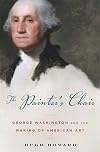
Six-word review: George Washington was a real person.
Extended review:
I read this book to learn how art, and portraiture in particular, found a footing in colonial America. What I got was something more than I was expecting.
It turns out that the history of art in America is all but inseparable from the history of artists' efforts to portray George Washington, first as Colonel Washington, of the Virginia Regiment of the British army, and then, during the War of Independence, the show more commander-in-chief of the Continental Army, later to become the first president of the United States of America. Further, to chronicle the succession of painters who rendered Washington's likeness on canvas is, in Hugh Howard's hands, also to deliver a portrait of the man himself.
I took the prescribed courses in American history in school. I frequented the Boston Museum of Fine Arts as a young person and viewed the iconic, unfinished Gilbert Stuart portrait of Washington many, many times. I've visited Mount Vernon and toured the Washington family's home. I've climbed all the steps of the Washington Monument, and I've spent countless one-dollar bills. At no time have I ever felt a sense of the presence and character of our first national leader as I did while reading this book. Simply put, it made George Washington real to me.
Here's a passage I particularly enjoyed, a down-to-earth glimpse that contrasts nicely with the larger-than-life heroic poses that history is apt to draw:
Lee knew of Washington's temper. He had heard tell of Washington's tirade when he discovered Continental troops retreating at the Battle of Monmouth Courthouse. An officer on the scene, General Charles Scott, remembered that Washington swore "till the leaves shook on the trees . . . Never have I enjoyed such swearing before, or since . . . he swore like an angel from heaven." Washington then had turned his ire on the enemy and personally rallied the troops. The man rarely lost control--since childhood he had disciplined himself to contain his anger when it rose--but Mr. Stuart was quite right that it sometimes simmered dangerously. (page 195)
(I also liked learning the answer to a question that has puzzled me ever since I first saw that incomplete portrait of Washington reproduced in a book: why didn't the artist ever finish it? The answer is that Gilbert Stuart, brilliant and gifted though he was, was also a temperamental slacker. The portrait is unfinished not because he thought it looked better that way but just because he never finished it. Oddly, it seems to me that the emergence of a startlingly realistic face from a flat, empty canvas is part of its power.)
Even more welcome than the lifelike portrayal of a man whose image is almost literally blindingly familiar is the fact that when viewed at close range Washington remains an honorable and admirable person: not flawless, by any means, but still (by this account, at least) a man of strength, resilience, integrity, self-restraint, decisiveness, and wisdom.
Following the artists tasked with painting a commander and leader who did not fancy himself as a celebrity--painters of renown such as Charles Willson Peale, John Trumbull, and Gilbert Stuart--the author depicts the subject within his natural element and outside of it, at home and in the halls of state, on battlefield and in drawing room, at ease on horseback and under duress in the chair of a painter's model. Why do portraits of Washington generally look so grim and forced, and what made the difference in those few images that have the authentic, vital feel of something that goes beyond representational realism? In answering these questions, Howard evokes the man, his time, his place, and the great calling that carved his place in history.
The narrative does drag from time to time, and I did not find all of the detailed research equally fascinating. I referred constantly to the color plates, and I would have been happy to see a good many more of them. My guess is that the limited number of illustrations here is much more a matter of publishing budget than of author's preference; but even some reproductions of black-and-white engravings might have served to amplify many portions of the text.
The writing is competent but seems to me somewhat self-consciously techniquey and not altogether polished. I'm thinking of lines such as this one: "Anatomical accuracy was less interesting to the artist than an appealing picture with overall grace and appeal" (page 43).
On the whole, then, I have to take off some points for delivery, but I still give the book a solidly favorable rating for fulfilling its promise and then some. show less
Extended review:
I read this book to learn how art, and portraiture in particular, found a footing in colonial America. What I got was something more than I was expecting.
It turns out that the history of art in America is all but inseparable from the history of artists' efforts to portray George Washington, first as Colonel Washington, of the Virginia Regiment of the British army, and then, during the War of Independence, the show more commander-in-chief of the Continental Army, later to become the first president of the United States of America. Further, to chronicle the succession of painters who rendered Washington's likeness on canvas is, in Hugh Howard's hands, also to deliver a portrait of the man himself.
I took the prescribed courses in American history in school. I frequented the Boston Museum of Fine Arts as a young person and viewed the iconic, unfinished Gilbert Stuart portrait of Washington many, many times. I've visited Mount Vernon and toured the Washington family's home. I've climbed all the steps of the Washington Monument, and I've spent countless one-dollar bills. At no time have I ever felt a sense of the presence and character of our first national leader as I did while reading this book. Simply put, it made George Washington real to me.
Here's a passage I particularly enjoyed, a down-to-earth glimpse that contrasts nicely with the larger-than-life heroic poses that history is apt to draw:
Lee knew of Washington's temper. He had heard tell of Washington's tirade when he discovered Continental troops retreating at the Battle of Monmouth Courthouse. An officer on the scene, General Charles Scott, remembered that Washington swore "till the leaves shook on the trees . . . Never have I enjoyed such swearing before, or since . . . he swore like an angel from heaven." Washington then had turned his ire on the enemy and personally rallied the troops. The man rarely lost control--since childhood he had disciplined himself to contain his anger when it rose--but Mr. Stuart was quite right that it sometimes simmered dangerously. (page 195)
(I also liked learning the answer to a question that has puzzled me ever since I first saw that incomplete portrait of Washington reproduced in a book: why didn't the artist ever finish it? The answer is that Gilbert Stuart, brilliant and gifted though he was, was also a temperamental slacker. The portrait is unfinished not because he thought it looked better that way but just because he never finished it. Oddly, it seems to me that the emergence of a startlingly realistic face from a flat, empty canvas is part of its power.)
Even more welcome than the lifelike portrayal of a man whose image is almost literally blindingly familiar is the fact that when viewed at close range Washington remains an honorable and admirable person: not flawless, by any means, but still (by this account, at least) a man of strength, resilience, integrity, self-restraint, decisiveness, and wisdom.
Following the artists tasked with painting a commander and leader who did not fancy himself as a celebrity--painters of renown such as Charles Willson Peale, John Trumbull, and Gilbert Stuart--the author depicts the subject within his natural element and outside of it, at home and in the halls of state, on battlefield and in drawing room, at ease on horseback and under duress in the chair of a painter's model. Why do portraits of Washington generally look so grim and forced, and what made the difference in those few images that have the authentic, vital feel of something that goes beyond representational realism? In answering these questions, Howard evokes the man, his time, his place, and the great calling that carved his place in history.
The narrative does drag from time to time, and I did not find all of the detailed research equally fascinating. I referred constantly to the color plates, and I would have been happy to see a good many more of them. My guess is that the limited number of illustrations here is much more a matter of publishing budget than of author's preference; but even some reproductions of black-and-white engravings might have served to amplify many portions of the text.
The writing is competent but seems to me somewhat self-consciously techniquey and not altogether polished. I'm thinking of lines such as this one: "Anatomical accuracy was less interesting to the artist than an appealing picture with overall grace and appeal" (page 43).
On the whole, then, I have to take off some points for delivery, but I still give the book a solidly favorable rating for fulfilling its promise and then some. show less
Dr. Kimball and Mr. Jefferson: Rediscovering the Founding Fathers of American Architecture by Hugh Howard
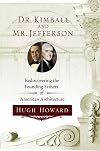
As a student of architecture school at Mr. Jefferson's university c. 1980, I do not recall ever doubting Jefferson's significance as an architect, but that significance was virtually unrecognized by the end of the 19th Century. I confess I never more than casually wondered why the art and architecture library at UVa was named after Fiske Kimball, but as a researcher who (along with his similarly diligent fiance/partner/wife) really put Jefferson back into architectural relevance, where he show more certainly belongs, it makes a great deal of sense.
This book is history, but reads more like a whodunnit as Kimball puts the clues together through accident, research, and simple hard effort. show less
This book is history, but reads more like a whodunnit as Kimball puts the clues together through accident, research, and simple hard effort. show less
A good study of the American art scene during the Revolutionary and early national periods using the artists who painted portraits of George Washington (with a bit of introduction to those who came before). Quite well done and a useful introduction to the topic.
You May Also Like


Associated Authors
Statistics
- Works
- 21
- Also by
- 1
- Members
- 1,005
- Popularity
- #25,666
- Rating
- 4.1
- Reviews
- 10
- ISBNs
- 33
- Languages
- 1