
Charlton Ogburn (1911–1998)
Author of Railroads: The Great American Adventure
About the Author
Disambiguation Notice:
Both Charlton Ogburns, father and son, wrote anti-Shakespearean books. Senior wrote This Star of England and Renaissance Man of England; Junior wrote the others.
Image credit: http://www.ogbourne.com/wp-content/uploads/2014/03/charltono.jpg Ogburn family archives
Works by Charlton Ogburn
Associated Works
Gentlemen, Scholars and Scoundrels: A Treasury of the Best of Harper's Magazine from 1850 to the Present (1972) — Contributor — 62 copies
De grote Ceasar; De tijgerkat; De goden van Hawaii; Diamanten voor Janice — Contributor — 2 copies, 1 review
Tagged
Common Knowledge
- Canonical name
- Ogburn, Charlton
- Legal name
- Ogburn, Charlton, Jr.
- Birthdate
- 1911-03-15
- Date of death
- 1998-10-19
- Gender
- male
- Education
- Harvard University
- Occupations
- author
bureaucrat
naturalist - Organizations
- United States Army
United States Department of State - Relationships
- Ogburn, Charlton Greenwood (father)
Ogburn, Dorothy (mother)
Weidman, Vera M. (wife)
Ogburn, William Fielding (uncle)
Aldis, Will (son)
Aldis, Dorothy (former mother-in-law) - Nationality
- USA
- Birthplace
- Atlanta, Georgia, USA
- Places of residence
- Savannah, Georgia, USA
New York, New York, USA - Place of death
- Beaufort, South Carolina, USA
- Disambiguation notice
- Both Charlton Ogburns, father and son, wrote anti-Shakespearean books. Senior wrote This Star of England and Renaissance Man of England; Junior wrote the others.
- Associated Place (for map)
- USA
Members
Reviews

My edition is from 1984. I love this book--I re-read it once every five years or so. It's a huge volume, and you need to be paying attention when you read it. In other words, this shouldn't be your late-night-read book before you fall off to sleep. But if you're doing something like flying to Shanghai or spending a month at your isolated Maine cottage, then this is a great book (although it's heavy--literally weighs pounds). Ogburn's prose is extremely readable. The first time I read the show more thing, I couldn't put it down--it reads like good detective fiction.
I still can't say I know for sure who wrote Shakespeare--but I know for sure that the man from Stratford wasn't the guy. Although my Shakespeare professor would KILL me--and flunk me retroactively if that were possible. show less
I still can't say I know for sure who wrote Shakespeare--but I know for sure that the man from Stratford wasn't the guy. Although my Shakespeare professor would KILL me--and flunk me retroactively if that were possible. show less
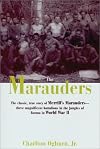
The Marauders (1959), a first person account of the Burma Campaign in World War II (Ogburn was communications officer for Merrill's Marauders), it was later filmed as Merrill's Marauders (1962). https://wikivisually.com/wiki/Charlton_Ogburn.
story of the three battalions of American infantrymen who, in the spring of 1944, marched and fought across six hundred miles of northern Burma to achieve fame as Merrill's Marauders.
Merrill's Marauders were the first American Army infantry unit to fight show more in the China-Burma-India theater, Because of its courageous actions, the unit received the very rare honor of having every member presented with a Bronze Star for gallantry.
Legends seldom fit the facts comfortably. The military outfit called Merrill's Marauders--3,000 American soldiers who ranged hundreds of miles through the Burmese rain forest fighting vastly superior Japanese forces--stands up admirably to the legend that surrounds it, as veteran Ogburn capably shows. The first American force to fight on the Asian mainland since the Boxer Rebellion, the warriors of Galahad--as the three battalions under General Frank Merrill were code-named--suffered terribly in their long campaign over what Winston Churchill called "the most forbidding fighting country imaginable." Writes Ogburn, not only were they felled by bullets, but they also endured lack of food and supplies, a host of tropical diseases, and exhaustion--and, worse, poor treatment at the hands of commanders and strategists far from the fighting. Even so, they scored some important successes and took their toll on a seasoned enemy, which "had never before come up against another first-class outfit on even terms, and the experience must have left them sore and puzzled." Ogburn's action-filled book merits a place alongside the dispatches of Ernie Pyle and Richard Tregaskis's Guadalcanal Diary as an important firsthand account of the war in Asia. --Gregory McNamee show less
story of the three battalions of American infantrymen who, in the spring of 1944, marched and fought across six hundred miles of northern Burma to achieve fame as Merrill's Marauders.
Merrill's Marauders were the first American Army infantry unit to fight show more in the China-Burma-India theater, Because of its courageous actions, the unit received the very rare honor of having every member presented with a Bronze Star for gallantry.
Legends seldom fit the facts comfortably. The military outfit called Merrill's Marauders--3,000 American soldiers who ranged hundreds of miles through the Burmese rain forest fighting vastly superior Japanese forces--stands up admirably to the legend that surrounds it, as veteran Ogburn capably shows. The first American force to fight on the Asian mainland since the Boxer Rebellion, the warriors of Galahad--as the three battalions under General Frank Merrill were code-named--suffered terribly in their long campaign over what Winston Churchill called "the most forbidding fighting country imaginable." Writes Ogburn, not only were they felled by bullets, but they also endured lack of food and supplies, a host of tropical diseases, and exhaustion--and, worse, poor treatment at the hands of commanders and strategists far from the fighting. Even so, they scored some important successes and took their toll on a seasoned enemy, which "had never before come up against another first-class outfit on even terms, and the experience must have left them sore and puzzled." Ogburn's action-filled book merits a place alongside the dispatches of Ernie Pyle and Richard Tregaskis's Guadalcanal Diary as an important firsthand account of the war in Asia. --Gregory McNamee show less

I was expecting this to be a nature book about the ecological and geomorphological changes in beaches between winter and summer (a topic I find fascinating), but instead it's a travelogue about a road trip up and down the Atlantic beach towns in winter in 1966. Still interesting, especially to someone who knows those places forty years later (and loves slightly shabby americana almost as much as geomorphology) but spoiled by how much I wish it was something different. :P
I was especially show more taken by the ways in which he talks about environmental degradation, in a way that acknowledges the danger and evil of up, but faces the whole thing with a sort of resignation toward the inevitable destruction of our world that could have come right out of a modern environmentalist's essays. (It is also interesting to look at the things that got better faster than he expected - and the things that got worse faster.) show less
I was especially show more taken by the ways in which he talks about environmental degradation, in a way that acknowledges the danger and evil of up, but faces the whole thing with a sort of resignation toward the inevitable destruction of our world that could have come right out of a modern environmentalist's essays. (It is also interesting to look at the things that got better faster than he expected - and the things that got worse faster.) show less
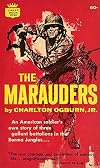
Ogburn was a communications officer with the Marauders during most of their campaign in Burma. He commences the volume with the background on why and how the Marauders were created. He explains that the men selected were mostly volunteers who were trying to escape units or situations they did not like thus from the start, the unit had many troublemakers, drinkers and just plain lazy individuals. The training was inadequate when done at all as the unit was moved to port shortly after being show more formed where in some cases officers met their men for the first time.
After landing in India, some training took place. Men were given assignments for with which they had no previous experience including Ogburn who joined the Army as a photographer and trained as a telephone and line layer only to be assigned radios with which he no experience or knowledge. The classic was giving men the job of caring for and moving mules and horses through jungle trails which included climbing steep cliffs and crossing raging streams over slippery rocks. To their credit, the Marauders came together in the jungle because to do otherwise would mean you could not survive.
They became a cohesive unit that out fought the Japanese at the Japanese specialty- jungle fighting. The Marauders frequently left the jungle floor littered with enemy dead while suffering only a few dead & wounded themselves. However, the constant traveling in the jungle conditions took its toll in mental and physical exhaustion with disease and injury taking out more men than the enemy. An example of the conditions that made an impression on me was the effort it took to clear a path in the jungle. Bamboo had to be cut at ground level and then again at the height of the men so it could be cleared out of the way as the bamboo and the vines were so dense, the cut bamboo would not fall out of the way. There was also the constant fear of ambush as the trails were lined with dense vegetation which hid enemy soldiers and the Marauder scouts approached each bend with caution waiting for the sudden burst of machine gun fire which sometimes did occur.
The leadership of Generals Stillwell & Wingate is analyzed and found wanting at times. Chiang Kai-shek was a real problem for the American forces as he would agree to send troops and then hold them back for personal reasons leaving the Marauders to face huge enemy forces alone. show less
After landing in India, some training took place. Men were given assignments for with which they had no previous experience including Ogburn who joined the Army as a photographer and trained as a telephone and line layer only to be assigned radios with which he no experience or knowledge. The classic was giving men the job of caring for and moving mules and horses through jungle trails which included climbing steep cliffs and crossing raging streams over slippery rocks. To their credit, the Marauders came together in the jungle because to do otherwise would mean you could not survive.
They became a cohesive unit that out fought the Japanese at the Japanese specialty- jungle fighting. The Marauders frequently left the jungle floor littered with enemy dead while suffering only a few dead & wounded themselves. However, the constant traveling in the jungle conditions took its toll in mental and physical exhaustion with disease and injury taking out more men than the enemy. An example of the conditions that made an impression on me was the effort it took to clear a path in the jungle. Bamboo had to be cut at ground level and then again at the height of the men so it could be cleared out of the way as the bamboo and the vines were so dense, the cut bamboo would not fall out of the way. There was also the constant fear of ambush as the trails were lined with dense vegetation which hid enemy soldiers and the Marauder scouts approached each bend with caution waiting for the sudden burst of machine gun fire which sometimes did occur.
The leadership of Generals Stillwell & Wingate is analyzed and found wanting at times. Chiang Kai-shek was a real problem for the American forces as he would agree to send troops and then hold them back for personal reasons leaving the Marauders to face huge enemy forces alone. show less
Awards


You May Also Like


Associated Authors
Statistics
- Works
- 23
- Also by
- 6
- Members
- 665
- Popularity
- #37,922
- Rating
- 3.6
- Reviews
- 5
- ISBNs
- 23
- Favorited
- 2