
Frank Bruni
Author of Born Round: The Secret History of a Full-time Eater
About the Author
Frank Bruni has been an op-ed columnist for the New York Times since 2011. He previously worked as the newspaper's Rome bureau chief, Sunday magazine staff writer, one of its White House correspondents, and its chief restaurant critic. He has written several books including Born Round, Ambling into show more History, and Where You Go Is Not Who You'll Be: An Antidote to the College Admissions Mania. (Bowker Author Biography) show less
Image credit: via Duke Sanford School of Public Policy
Works by Frank Bruni
Where You Go Is Not Who You'll Be: An Antidote to the College Admissions Mania (2015) 366 copies, 9 reviews
Associated Works
The Columbia Reader on Lesbians & Gay Men in Media, Society, and Politics (1999) — Contributor — 86 copies
Tagged
Common Knowledge
- Birthdate
- 1964-10-31
- Gender
- male
- Education
- University of North Carolina, Chapel Hill
Columbia University - Occupations
- journalist
food critic
columnist - Organizations
- New York Post
The Detroit Free Press
The New York Times
The New York Times Magazine - Nationality
- USA
- Birthplace
- White Plains, New York, USA
- Places of residence
- New York, New York, USA
- Associated Place (for map)
- New York, USA
Members
Reviews
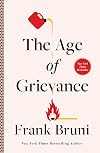
[4.25] Log it as an eerie coincidence. I finished Bruni’s intriguing deep-dive into societal polarization and unbridled anger only hours before the first assassination attempt of a U.S. presidential candidate in decades. It is rare when I begin a book with my inner voice grumbling, “You probably won’t finish it.” I wondered if a book-length examination of our grievance culture that weaves together some previous newspaper columns would be overdose at a time when I often turn to books show more as an escape from our tumultuous times. But I soon realized that there were so many enlightening concepts to unpack and ponder that Bruni’s work would not end up on the DNF list.
The book’s promotional blurb and author interviews assert that Bruni takes aim at both sides of the political spectrum. This is a fair assertion, although it could be argued that more admonitions seem to be directed at the MAGA right.
The author doesn’t ignore the reality that addressing grievances has had positive impacts throughout history. Consider the civil rights movement. But he argues that toxic politics, the internet, AI and other forces have fueled an era of “extreme aggrievement.” The danger, he maintains, is that “grievance is the enemy of perspective, proportionality and nuance.“
In an interview in the Columbia Journalism Review, Bruni suggests that the media should avoid using tired playbooks that can lead to oversimplifying complex political issues. “Dicing and slicing political coverage sends this message that we’re in different camps that maybe compete against one another, rather than that we’re all Americans, ultimately in the same boat,” he says.
Bruni skillfully explores the dangers of confirmation bias, stressing the importance of training ourselves to consume “balanced news diets so we resist the temptation to overstuff ourselves with information that feeds our existing biases and misconceptions.”
The book is well-written, thoroughly researched and incredibly timely. show less
The book’s promotional blurb and author interviews assert that Bruni takes aim at both sides of the political spectrum. This is a fair assertion, although it could be argued that more admonitions seem to be directed at the MAGA right.
The author doesn’t ignore the reality that addressing grievances has had positive impacts throughout history. Consider the civil rights movement. But he argues that toxic politics, the internet, AI and other forces have fueled an era of “extreme aggrievement.” The danger, he maintains, is that “grievance is the enemy of perspective, proportionality and nuance.“
In an interview in the Columbia Journalism Review, Bruni suggests that the media should avoid using tired playbooks that can lead to oversimplifying complex political issues. “Dicing and slicing political coverage sends this message that we’re in different camps that maybe compete against one another, rather than that we’re all Americans, ultimately in the same boat,” he says.
Bruni skillfully explores the dangers of confirmation bias, stressing the importance of training ourselves to consume “balanced news diets so we resist the temptation to overstuff ourselves with information that feeds our existing biases and misconceptions.”
The book is well-written, thoroughly researched and incredibly timely. show less
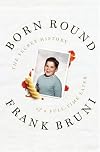
Frank Bruni, a writer for the New York Times, has struggled with food his whole life, swinging between chicken-wing binges and starvation diets. Self-conscious about his size at any size, Bruni's work and love lives are intimately intertwined with his complex relationship with eating, his great (and sometimes dangerous) passion. Becoming the New York Times' restaurant critic poses the ultimate challenge for Bruni: How to eat out for a living while maintaining a healthy relationship with show more food. This is an unusual, often funny, and redemptive memoir of a semi-socially acceptable addiction, one that anyone with a family that expresses love through food can relate to. show less
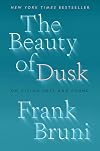
I knew Frank Bruni was a gifted writer from having read his NY Times columns. I knew he was a likable guy from having seen him on the cable news programs. What this book added to that was empathy, sensitivity, and an appreciation of life and of his fellow man. Not only is The Beauty of Dusk about Bruni’s battle with vision loss; it’s about dog behavior, city life, fashion, relationships, and the most impactful lessons of all for me because I am 72, aging. Frank Bruni is not only a gifted show more writer, he is a gifted human being. I am a better 72-year-old for having read The Beauty of Dusk. show less
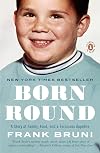
I enjoyed this book far more than I expected to. Not that my expectations were particularly low, otherwise I wouldn't have bothered, but I guess I thought it would be a fairly straightforward memoir about a guy who got lucky in the food media industry, focused primarily on his time as restaurant critic for the New York Times. It was far more than that, however. Frank Bruni has battled his weight all his life and much of the book is devoted to his personal journey in dealing with (and not show more dealing with) that problem. For anyone who has issues with managing their relationship to food, the book would make great reading. Clearly for him to end up in a job as a restaurant critic, he was playing with fire but he takes that on board and manages to find a way of coping without sacrificing his health. A lot of the book centres on his relationship with his big Italian family which is a close one and naturally centred largely around food and eating. It's a warm, funny and touching book that provided real insight into the life of someone who for many is little more than just a "name". His recollections of restaurant reviewing and attempts to remain anonymous are worth the read alone. show less
Lists
Awards


You May Also Like


Associated Authors
Statistics
- Works
- 7
- Also by
- 8
- Members
- 1,417
- Popularity
- #18,146
- Rating
- 3.7
- Reviews
- 48
- ISBNs
- 41
- Languages
- 1
- Favorited
- 1