
Terry Castle
Author of The Professor and Other Writings
About the Author
Terry Castle is Walter A. Haas Professor in the Humanities at Stanford University
Image credit: Stanford University
Works by Terry Castle
The Female Thermometer: Eighteenth-Century Culture and the Invention of the Uncanny (1995) 63 copies, 1 review
Masquerade and Civilization: The Carnivalesque in Eighteenth-Century English Culture and Fiction (1986) 24 copies
Associated Works
Tagged
Common Knowledge
- Canonical name
- Castle, Terry
- Birthdate
- 1953-10-18
- Gender
- female
- Education
- University of Puget Sound (BA|1975)
University of Minnesota (MA|1978|Ph.D|1980) - Occupations
- literary scholar
professor - Organizations
- Stanford University
- Relationships
- Vermeule, Blakey (partner)
- Nationality
- USA
- Birthplace
- San Diego, California, USA
- Places of residence
- San Francisco, California, USA
- Associated Place (for map)
- California, USA
Members
Reviews

A very short well written 'literary' exploration of the author's fascination with the masculine world of the first world war with some thoughtful almost jealous comments on male 'sacrifice' and heroism from a transatlantic lesbian perspective.
In fact, the exploration (dated 2002) for all its virtues is somewhat narcissistic with that embarrassing appropriation of 9/11 as some life-changing event (they should have been in Tokyo in 1944!) which was de rigeur in American literature in the two show more or three years after the attack.
But, putting that to one side, her romantic view of 'sacrifice' and heroism is troubling, part of a turn towards the appropriation of the less attractive and frankly somewhat dumb proto-fascist aspects of late imperial masculinity by self-defining feminists.
There are aspects of this in the current blind allegiance of such feminists to war hawk Hillary Rodham Clinton but the real symptoms lie today in terrible machines of war painted pink to raise awareness of breast cancer and women lauding other women as nuclear strike commanders.
The situation where 'equality' has become little more than the right of educated women to participate in the sociopathic death, economic and social control and administrative machines of the system starts with thinking like that expressed in this book - simpatico for stupidity.
The talk of heroism and sacrifice plays into the hands of those who would order us around to their benefit and our destruction. These people were killed on a false prospectus - insufficient information to make an informed decision. This was sacrifice - not by but of a generation.
Something similar is happening today but the sacrifices are economic and in today's equivalent generation. It is depressing to see how identity politics has constructed, since this otherwise thoughtful short book, a means of strengthening and not weakening the machine.
The problem with defining yourself around an identity (then detourning it into appropriating the other against whom you define yourself) is that success in attaining equality becomes absorption into a unequal system as an equal component of it not in making a society of true equals.
While not accusing Ms. Castle of this directly, feminism under late liberal capitalism, reaching its apogee in the probable/possible next President of the United States of America, has increasingly become the expression of the educated middle class' desire to have a stake in a rotten system.
This book gives us a hint of the dark alleys down which this leads - not into a critique of the exploitation of young men for imperial gain but admiration of their ignorance and a yearning to be good little imperialists (albeit liberal ones) instead of serious egalitarians.
This is not an idle concern if the new President, if that is what she becomes, is not just electorally cynical in her appropriation of the war hawkery of the neo-cons but sincerely believes that she can only represent the equality of her gender through the use of war. show less
In fact, the exploration (dated 2002) for all its virtues is somewhat narcissistic with that embarrassing appropriation of 9/11 as some life-changing event (they should have been in Tokyo in 1944!) which was de rigeur in American literature in the two show more or three years after the attack.
But, putting that to one side, her romantic view of 'sacrifice' and heroism is troubling, part of a turn towards the appropriation of the less attractive and frankly somewhat dumb proto-fascist aspects of late imperial masculinity by self-defining feminists.
There are aspects of this in the current blind allegiance of such feminists to war hawk Hillary Rodham Clinton but the real symptoms lie today in terrible machines of war painted pink to raise awareness of breast cancer and women lauding other women as nuclear strike commanders.
The situation where 'equality' has become little more than the right of educated women to participate in the sociopathic death, economic and social control and administrative machines of the system starts with thinking like that expressed in this book - simpatico for stupidity.
The talk of heroism and sacrifice plays into the hands of those who would order us around to their benefit and our destruction. These people were killed on a false prospectus - insufficient information to make an informed decision. This was sacrifice - not by but of a generation.
Something similar is happening today but the sacrifices are economic and in today's equivalent generation. It is depressing to see how identity politics has constructed, since this otherwise thoughtful short book, a means of strengthening and not weakening the machine.
The problem with defining yourself around an identity (then detourning it into appropriating the other against whom you define yourself) is that success in attaining equality becomes absorption into a unequal system as an equal component of it not in making a society of true equals.
While not accusing Ms. Castle of this directly, feminism under late liberal capitalism, reaching its apogee in the probable/possible next President of the United States of America, has increasingly become the expression of the educated middle class' desire to have a stake in a rotten system.
This book gives us a hint of the dark alleys down which this leads - not into a critique of the exploitation of young men for imperial gain but admiration of their ignorance and a yearning to be good little imperialists (albeit liberal ones) instead of serious egalitarians.
This is not an idle concern if the new President, if that is what she becomes, is not just electorally cynical in her appropriation of the war hawkery of the neo-cons but sincerely believes that she can only represent the equality of her gender through the use of war. show less
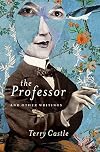
Literary non-fiction is the most self-indulgent of all styles of literature. Really, does anybody care about some writer's (lesbian) lovelife, vacations, or taste in art? Terry Castle redeems the inherent self-indulgence of the genre, but only just. She actually has interesting taste in music, drops literary references in a way that makes the reader feel more cultured, and the lesbian-ness of the bad relationships makes them a little more enjoyable. The wordcrafting is good, and occasionally show more sparkling, and what the hell, everybody like lesbians.
((I only mention lesbians, because that's about the frequency at which Terry Castle mentions her sexuality)) show less
((I only mention lesbians, because that's about the frequency at which Terry Castle mentions her sexuality)) show less
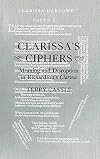
The source of this analysis is more on the author's philosophical interests, and not so much on the actual text of 'Clarissa'. The feeling I had while reading this book is that Terry castle loves hermeneutics, and she used these philosophical tools to interpret 'Clarissa'. So 'Clarissa's Cyphers' is firstly about hermeneutics, and secondly about the novel 'Clarissa'. I don't mind that, this book is an interesting exercise. Some of Terry Castle's ideas I found extremely interesting, and some show more other ideas for me didn't make any sense at all.
Just to note that Terry Castle focused so much on 20th century philosophy in her study, but she completely ignored the philosophers who did indeed influence Richardson, namely Hobbes and Montaigne. As a result her analysis is from time to time anachronistic. show less
Just to note that Terry Castle focused so much on 20th century philosophy in her study, but she completely ignored the philosophers who did indeed influence Richardson, namely Hobbes and Montaigne. As a result her analysis is from time to time anachronistic. show less
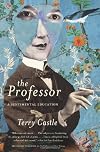
The Professor consists of seven essay/memoir pieces, the longest and last about Castle's sexual relationship as a grad student with a woman professor. It's a profoundly disturbing relationship and Cast le spares neither the professor nor herself in the telling of it. Castle is neurotic, needy, desperate, the professor cruel, disassociative, manipulative. I didn't like the way Castle wrote about lesbians of the seventies, with a limited, dismissive view.
Another piece is called "Desperately show more Seeking Susan," and is about herself and Susan Sontag. She possibly nails Sontag in some ways, but still there is an aura of snarkiness about the writing. The fact that Castle acknowledges her own failings, including a tendency to nastiness, doesn't alleviate the sense of mean-spiritness that seeps in. show less
Another piece is called "Desperately show more Seeking Susan," and is about herself and Susan Sontag. She possibly nails Sontag in some ways, but still there is an aura of snarkiness about the writing. The fact that Castle acknowledges her own failings, including a tendency to nastiness, doesn't alleviate the sense of mean-spiritness that seeps in. show less
Awards


You May Also Like


Statistics
- Works
- 13
- Also by
- 3
- Members
- 534
- Popularity
- #46,619
- Rating
- 4.0
- Reviews
- 9
- ISBNs
- 39
- Languages
- 1
- Favorited
- 1