
James P. Duffy
Author of Czars: Russia's rulers for over one thousand years
About the Author
James P. Duffy is a writer who specializes in military history. He has written numerous books, including Target: America: Hitler's Plan to Attack the United States and Hitler's Secret Pirate Fleet: The Deadliest Ships of World War II, available in a Bison Books edition.
Works by James P. Duffy
War at the End of the World: Douglas MacArthur and the Forgotten Fight For New Guinea, 1942-1945 (2016) 111 copies, 1 review
Tagged
Common Knowledge
- Canonical name
- Duffy, James P.
- Legal name
- Duffy, James Patrick
- Birthdate
- 1941-07-13
- Gender
- male
- Education
- University of Syracuse
- Occupations
- writer
lecturer - Nationality
- USA
- Associated Place (for map)
- USA
Members
Reviews
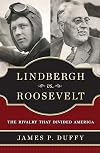
Was aviation pioneer and popular American hero Charles A. Lindbergh a Nazi sympathizer and anti-Semite? Or was he the target of a vicious personal vendetta by President Roosevelt? In Lindbergh vs. Roosevelt, author James Duffy tackles these questions head-on, by examining the conflicting personalities, aspirations, and actions of Franklin D. Roosevelt and Charles A. Lindbergh. Painting a politically incorrect portrait of both men, Duffy shows how the hostility between these two American show more giants divided the nation on both domestic and international affairs. From cancelling U.S. air mail contracts to intervening in World War II, Lindberg and Roosevelt’s clash of ideas and opinions shaped the nation’s policies here and abroad. Insightful, and engaging, Lindbergh vs. Roosevelt reveals the untold story about two of history’s most controversial men, and how the White House waged a smear campaign against Lindbergh that blighted his reputation forever. show less

This book is an interesting comparison with Luftwaffe over America, reviewed earlier. Author James Duffy states his goal was to debunk claims by Patrick Buchanan that the United States was never seriously threatened by Nazi Germany during WWII. He’s not very successful here; while the Axis powers certainly would have carried the war to the U.S. if the means to do so had dropped into their lap, none of the various schemes considered would have been any more than an annoyance even if they show more had worked (with, of course, the salient exception of the Axis nuclear weapon projects).
However, Duffy does succeed in making the case that despite the improbability of an Axis attack, many influential people at the time believed such an attack was possible. This is where the interesting differences between Target America and Luftwaffe over America come in. In LOA, author Manfred Griehl describes things from the German perspective, detailing a variety of plans that the Germans at least gave some thought to; in TA, Duffy writes about things we were afraid the Germans would do.
Some of these are quite far-fetched. A Canadian naval officer expressed fears that a fleet of German freighters would sail across the Atlantic, through the Hudson Strait, into Hudson Bay, unload crated seaplanes, assemble them, and send them off to bomb Winnipeg and Duluth. Thanks to our vigilant northern friends standing on guard for us, no such attack took place.
A similar fear taken very seriously by the U.S. Government was that Vichy would join the Axis and make the Vichy navy and colonial possessions available. This resulted in a 36-hour ultimatum to the Vichy admiral in Martinique, requiring the disarmament of the aircraft carrier Bearn and other naval vessels in Fort de France harbor. The admiral complied. The U.S. also feared that access to French North Africa would allow Germany to construct air bases around Dakar and fly troops across the Atlantic to seize Brazil. The US prepared a pre-emptive strike plan (in late 1940, before American entry) to seize Brazilian airfields with a Marine force and two Army divisions.
Late in the war reconnaissance photographs of U-boats with unidentifiable deck structures lead to fears that the Germans would launch V-1s from submarines. This concern actually made it into the New York Times in January 1945. A large hunter-killer force was deployed to intercept the supposed missile carriers. Ironically, although the Germans did have a plan to launch V-2s from canisters towed behind U-boats, and went so far as to begin construction of three towing canisters, there were no plans for launching V-1s. I hadn’t realized this before but in late 1944 the US Army had successfully built and test-flown a copy of a V-1 assembled out of parts recovered and sent over from Britain. The Army used black-powder catapults to launch them, which could get them off in a much shorter distance than the steam catapults used by the Germans. Thus the possibility of a submarine deck launch must have seemed reasonable.
While hindsight makes all these concerns look silly, it’s important to remember the “shock and awe” that ensued after the rapid German conquests of Poland, Norway, and France. The unconventional paratroop and airlanding tactics used made the Allies believe that the Germans were capable of almost anything.
An interesting sidelight deals with Italian plans to carry the war to the New World. It was proposed to load “pigs”, the Italian manned torpedoes, on Cant Z.511 seaplanes and fly them to New York, where the crews would attack shipping. The seaplanes would refuel from an Italian submarine and fly back. Other proposals involved using the small but ultra-long-range P.23R to drop a single bomb, and using Z.511s to conduct a leaflet raid. Exactly how New Yorkers would have reacted to Italian leaflets falling from the sky is best left unconsidered.
Of the two, I prefer LOA. Griehl is much less sensationalist than Duffy, who describes every long-range German aircraft as an “America bomber” and keeps referring to “Hitler’s plans to attack America”, as if nobody but der Führer ever would have thought of it. OTOH, Duffy has obviously done considerable research - I’d never heard of the Italian plans before. I’d say this one is worthwhile, but I’d get Luftwaffe over America first. show less
However, Duffy does succeed in making the case that despite the improbability of an Axis attack, many influential people at the time believed such an attack was possible. This is where the interesting differences between Target America and Luftwaffe over America come in. In LOA, author Manfred Griehl describes things from the German perspective, detailing a variety of plans that the Germans at least gave some thought to; in TA, Duffy writes about things we were afraid the Germans would do.
Some of these are quite far-fetched. A Canadian naval officer expressed fears that a fleet of German freighters would sail across the Atlantic, through the Hudson Strait, into Hudson Bay, unload crated seaplanes, assemble them, and send them off to bomb Winnipeg and Duluth. Thanks to our vigilant northern friends standing on guard for us, no such attack took place.
A similar fear taken very seriously by the U.S. Government was that Vichy would join the Axis and make the Vichy navy and colonial possessions available. This resulted in a 36-hour ultimatum to the Vichy admiral in Martinique, requiring the disarmament of the aircraft carrier Bearn and other naval vessels in Fort de France harbor. The admiral complied. The U.S. also feared that access to French North Africa would allow Germany to construct air bases around Dakar and fly troops across the Atlantic to seize Brazil. The US prepared a pre-emptive strike plan (in late 1940, before American entry) to seize Brazilian airfields with a Marine force and two Army divisions.
Late in the war reconnaissance photographs of U-boats with unidentifiable deck structures lead to fears that the Germans would launch V-1s from submarines. This concern actually made it into the New York Times in January 1945. A large hunter-killer force was deployed to intercept the supposed missile carriers. Ironically, although the Germans did have a plan to launch V-2s from canisters towed behind U-boats, and went so far as to begin construction of three towing canisters, there were no plans for launching V-1s. I hadn’t realized this before but in late 1944 the US Army had successfully built and test-flown a copy of a V-1 assembled out of parts recovered and sent over from Britain. The Army used black-powder catapults to launch them, which could get them off in a much shorter distance than the steam catapults used by the Germans. Thus the possibility of a submarine deck launch must have seemed reasonable.
While hindsight makes all these concerns look silly, it’s important to remember the “shock and awe” that ensued after the rapid German conquests of Poland, Norway, and France. The unconventional paratroop and airlanding tactics used made the Allies believe that the Germans were capable of almost anything.
An interesting sidelight deals with Italian plans to carry the war to the New World. It was proposed to load “pigs”, the Italian manned torpedoes, on Cant Z.511 seaplanes and fly them to New York, where the crews would attack shipping. The seaplanes would refuel from an Italian submarine and fly back. Other proposals involved using the small but ultra-long-range P.23R to drop a single bomb, and using Z.511s to conduct a leaflet raid. Exactly how New Yorkers would have reacted to Italian leaflets falling from the sky is best left unconsidered.
Of the two, I prefer LOA. Griehl is much less sensationalist than Duffy, who describes every long-range German aircraft as an “America bomber” and keeps referring to “Hitler’s plans to attack America”, as if nobody but der Führer ever would have thought of it. OTOH, Duffy has obviously done considerable research - I’d never heard of the Italian plans before. I’d say this one is worthwhile, but I’d get Luftwaffe over America first. show less
What a great idea for a book: a review of the all the German plans, some completely bonkers, some plausible, to strike back at the United States during the Second World War. One of the striking things about that war (and the First World War as well) is that at no point was the security of the American homeland in any real danger. No other major power had that experience in the war, and most suffered terrible and ongoing attacks.
The German plans (and some Italian ones thrown in as well) show more included long range bombers that could be refuelled over the Atlantic by U-boats, early versions of intercontinental ballistic missiles, midget submarines and even a “space plane” that would bomb U.S. cities from the upper stratosphere. Most of the ideas generated some memos and little more. The author has found some lovely “artists impressions” of weapons that were never — thankfully — built.
So, yes, a great idea for a book. But sadly, not a very good book. The author seems to rely entirely on popular secondary sources, many quoted so often that one wonders how much research actually went into the book. And there are loads of glaring errors (there is no such country as “Columbia” nor a people called “Columbians”; the Germans had not yet invaded the USSR in 1940, and so on).
The constant references to “us” (meaning Americans) is strange, in particular when jumping forward decades. To write that Osama Bin Laden “underestimated the American people and then paid severely for it” in a book published in 2004 when the terrorist leader had not even be caught yet is, well, odd.
Perhaps if the author had focussed on one or two of the plans and done serious research on them, this would have been a more interesting book. show less
The German plans (and some Italian ones thrown in as well) show more included long range bombers that could be refuelled over the Atlantic by U-boats, early versions of intercontinental ballistic missiles, midget submarines and even a “space plane” that would bomb U.S. cities from the upper stratosphere. Most of the ideas generated some memos and little more. The author has found some lovely “artists impressions” of weapons that were never — thankfully — built.
So, yes, a great idea for a book. But sadly, not a very good book. The author seems to rely entirely on popular secondary sources, many quoted so often that one wonders how much research actually went into the book. And there are loads of glaring errors (there is no such country as “Columbia” nor a people called “Columbians”; the Germans had not yet invaded the USSR in 1940, and so on).
The constant references to “us” (meaning Americans) is strange, in particular when jumping forward decades. To write that Osama Bin Laden “underestimated the American people and then paid severely for it” in a book published in 2004 when the terrorist leader had not even be caught yet is, well, odd.
Perhaps if the author had focussed on one or two of the plans and done serious research on them, this would have been a more interesting book. show less
War at the end of the world : Douglas MacArthur and the forgotten fight for New Guinea, 1942-1945 by James P. Duffy

Solid, highly readable account of the war on New Guinea. The fighting was a somewhat bewildering series of hops and jumps of seaborne invasion, airborne drops and overland marches. The book could do with more detailed maps positioned better in the text.
Lists
You May Also Like


Associated Authors
Statistics
- Works
- 16
- Members
- 691
- Popularity
- #36,610
- Rating
- 3.7
- Reviews
- 12
- ISBNs
- 47