
Tom Gilling
Author of The Sooterkin
About the Author
Tom Gilling is an acclaimed novelist. The Sooterkin, Miles McGinty and Dreamland have all been published in Australia, London and New York. His non-fiction works include The Lost Battalions and Project Rainfall. He is also co-author with Clive Small of the highly successful Smack Express, Blood show more Money, Evil Life and Milat. show less
Image credit: https://www.textpublishing.com.au/authors/tom-gilling
Works by Tom Gilling
The Griffith Wars: The Powerful True Story of Donald Mackay's Murder and the Town That Stood Up to the Mafia (2018) 12 copies, 1 review
Bastard Behind the Lines: The Extraordinary Story of Jock McLaren's Escape From Sandakan and His Guerrilla War Against the Japanese (2021) 9 copies, 1 review
The Diggers of Kapyong: The story of the Aussies who changed the course of the Korean War (2024) 7 copies
Start Digging, You Bastards!: Australian and New Zealand forces' desperate battle with Rommel and the Axis at El Alamein (2025) 7 copies, 1 review
Associated Works
Tagged
Common Knowledge
- Birthdate
- 1961
- Gender
- male
- Education
- University of York
- Occupations
- journalist
- Nationality
- Australia
- Places of residence
- Norwich, Norfolk, England, UK
Sydney, New South Wales, Australia - Associated Place (for map)
- Australia
Members
Reviews
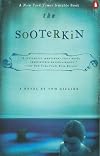
Set in Tasmania, Tom Gilling’s ludicrous fiction The Sooterkin describes how Sarah Dyer was delivered of a monstrous seal-pup child in 1821. The novel presents a variety of comic responses to the event from an array of characters and caricatures who people the whaling town of Hobart. The place itself is rendered in its grotesque physical reality: blood, guts, mud, and ‘rancid with blubber’. It’s reminiscent of the primeval mud of the Nile, which according to the ancient writer, show more Pliny, breeds monsters. The land is marked by manifest signs of the colonised but these vanish into the undifferentiated as soon as the agents of ‘culture’ stray too far beyond the town. The Chaplain, Mr Kidney, finds that the country ‘seems primordial, uncouth, devoid of any human presence save his own.’ The darkness seems to ‘conjure disembodied noises’ (121) and he feels finally ‘taunted by a monstrosity that science and the Bible have been unable to explain.’ (183). The story parallels then, the conjoined history, one of a monstrous birth, the other the ‘birth’ of Australia. Both are essentially unreadable, despite competing theories. Crimes, like Mrs Jakes’ unnamed abortions (‘a parcel the size of a cauliflower’ (184), lie buried in the ground. ‘He didn’t ask what she was doing and he never said.’ (184). I have taught this book as part of a second-year University course on the gothic and the grotesque and can confirm that it was well-received by the majority of students. A minority of readers were irritated by the fantastic elements of the plot – though these are not materially significant and are easily exaggerated. There was a lively debate on the allegorical features of the novel: to what extent is the story a version of Australian history as a grotesque narrative of monstrous births and colonisers’ discourses? show less

Nick Carmody is reporter for a Sydney Tabloid. He was their crime reporter but after his exclusive interview with an escaped prisoner helped the escapee evade capture he was made the scapegoat and been demoted to a quite back water, the foreign sub editors desk.
Nick is invited to attend a New Year party at the Crypt, Danny's infamous nightclub. Danny Grogan, owner of the aforementioned nightclub was on old friend of Nicks from School. Things don't go well when they finally meet up inside. show more
Under some not so subtle pressure and with a large payout Nick agrees to say he was driving Danny's car when it was picked up by a speed camera. The photo of the car showing the driver and passenger is inconclusive. The alternative would see Danny go to goal after one to many such infringements. It soon turns out that he is protecting Danny from more than just a speeding ticket. Somehow people are taking an interest in Nicks testimony. Then Danny turns up dead from an overdose.
Nick takes a chance and assumes the identity of a stranger and goes into hiding.
What does he know of the identity he took? What does he find hidden in the panel van?
Nick's web of lies is getting harder to keep up and his relationship with Air Hostess Alison is based on his false identity. Her demeanor with him is getting odd. Who can he trust?
I did enjoy the locations, always good to see Melbourne and her environs used as back drop, makes the story more believable; which this story needs.
I have a feeling the ending is in part because Gilling had nowhere to go with the plot and this was an easy out. Very abrupt. show less
Nick is invited to attend a New Year party at the Crypt, Danny's infamous nightclub. Danny Grogan, owner of the aforementioned nightclub was on old friend of Nicks from School. Things don't go well when they finally meet up inside. show more
Under some not so subtle pressure and with a large payout Nick agrees to say he was driving Danny's car when it was picked up by a speed camera. The photo of the car showing the driver and passenger is inconclusive. The alternative would see Danny go to goal after one to many such infringements. It soon turns out that he is protecting Danny from more than just a speeding ticket. Somehow people are taking an interest in Nicks testimony. Then Danny turns up dead from an overdose.
Nick takes a chance and assumes the identity of a stranger and goes into hiding.
What does he know of the identity he took? What does he find hidden in the panel van?
Nick's web of lies is getting harder to keep up and his relationship with Air Hostess Alison is based on his false identity. Her demeanor with him is getting odd. Who can he trust?
I did enjoy the locations, always good to see Melbourne and her environs used as back drop, makes the story more believable; which this story needs.
I have a feeling the ending is in part because Gilling had nowhere to go with the plot and this was an easy out. Very abrupt. show less
Start Digging, You Bastards!: Australian and New Zealand forces' desperate battle with Rommel and the Axis at El Alamein by Tom Gilling
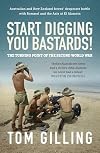
Your standard Xmas gift for dad/uncles/etc in Australia. It goes on to show how the 9th Australian division upheld the Anzac legend and played THE key role in how Monty won the battle of El Alamein.
That said, it’s aim as a post Xmas - per NYE read. I did find the the book gave a good feel for the experience at the individual soldier/section/platoon/company level.
That said, it’s aim as a post Xmas - per NYE read. I did find the the book gave a good feel for the experience at the individual soldier/section/platoon/company level.

One miserable day in Hobart early in the 19th century (when all days were miserable in Hobart, one feels), Sarah Dyer gives birth to a child unlike ever seen before, a baby more seal than human. The baby Arthur quickly grows, and brings fame to his family, greed to the hearts of men who would sell him as a circus freak, and consternation to the Reverend Mr Kidney.
It's an interesting cast of well drawn characters, Mr Kidney and his housekeeper Mrs Jakes, who dabbles as a midwife on the side; show more Mr Sculley the local man of science and a believer of physiognomy; and many other minor characters who pop in for a page or a paragraph here and there. So many that it was a bit hard to keep track of. And somehow, Arthur is the least well developed of the lot, he's just there really to push the other characters along.
This took a while to get into, had far too many words, and a very 19th century feel to the writing. I do like my paragraphs to have the occasional full stop somewhere in the middle, at least. But I did enjoy it by the end, it was an interesting journey with Arthur and all his ragtag crew of antipodean misfits. show less
It's an interesting cast of well drawn characters, Mr Kidney and his housekeeper Mrs Jakes, who dabbles as a midwife on the side; show more Mr Sculley the local man of science and a believer of physiognomy; and many other minor characters who pop in for a page or a paragraph here and there. So many that it was a bit hard to keep track of. And somehow, Arthur is the least well developed of the lot, he's just there really to push the other characters along.
This took a while to get into, had far too many words, and a very 19th century feel to the writing. I do like my paragraphs to have the occasional full stop somewhere in the middle, at least. But I did enjoy it by the end, it was an interesting journey with Arthur and all his ragtag crew of antipodean misfits. show less
Lists
Awards

You May Also Like


Associated Authors
Statistics
- Works
- 14
- Also by
- 2
- Members
- 352
- Popularity
- #67,993
- Rating
- 3.3
- Reviews
- 16
- ISBNs
- 63
- Languages
- 3