
Murray Bail
Author of Eucalyptus
About the Author
Murray Bail has won numerous prizes for his novels -- Eucalyptus, Homesickness, and Holden's Performance -- including the Commonwealth Writers Prize for Eucalyptus. He lives in Sydney
Works by Murray Bail
Associated Works
Lost Classics: Writers on Books Loved and Lost, Overlooked, Under-read, Unavailable, Stolen, Extinct, or Otherwise Out of Commission (2000) — Contributor — 319 copies, 6 reviews
Tagged
Common Knowledge
- Birthdate
- 1941-09-22
- Gender
- male
- Occupations
- novelist
short story writer - Nationality
- Australia
- Birthplace
- Adelaide, South Australia, Australia
- Places of residence
- Adelaide, South Australia, Australia
Sydney, New South Wales, Australia - Associated Place (for map)
- Australia
Members
Reviews
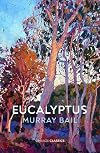
Holland claims to have an example of every eucalypt species in his grounds and offers his daughter's hand in marriage to anyone who can recognise and name all of them.
Each of the 39 chapter headings is the name of a eucalypt species but since all I know is that koalas eat the leaves and get high and they produce an oil which is good for stuffed up noses, the headings really didn't help orientate me and for most of the book, I felt I needed all the help I could get. Some beautiful prose show more which didn't really convey any meaning a lot of the time. If the book hadn't been for book club I doubt I would have persevered beyond the first page or two. show less
Each of the 39 chapter headings is the name of a eucalypt species but since all I know is that koalas eat the leaves and get high and they produce an oil which is good for stuffed up noses, the headings really didn't help orientate me and for most of the book, I felt I needed all the help I could get. Some beautiful prose show more which didn't really convey any meaning a lot of the time. If the book hadn't been for book club I doubt I would have persevered beyond the first page or two. show less
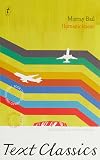
A victim of false marketing: many goodreads reviewers complain that there's no plot here. They are correct. But since Bail isn't interested in a standard plot, that's not his fault. Nor is it the readers' fault. Anyway.
The introduction in this 'Text Classics' edition describes Bail as a cross between Patrick White and Don Delillo, which is pretty much accurate, except that he's far funnier than Delillo. His strength is set pieces, and he plays to it here: a group travels the world; we see show more them in hotels and in museums, and that's about it.
I found this wonderful to begin with--the first museum, in an unnamed African country, is essentially dedicated to the detritus of colonialism, and our naive Australian travelers aren't very comfortable with this. Later, in England, we get a museum of corrugated iron. Possibly only Australians will actually understand the humor and pathos here, but trust me, corrugated iron is next to Vegemite in the Australian national identity. So after failing to understand the deep history of colonialism, the travelers get to confront the far gentler version of the Australian colony. In South American they see the museum of the leg, specifically designed to tire and bore attendees, so they become aware of their own legs.
And at this point it becomes clear that Bail is also up to metanarrative tricks: this 'boring' museum comes along just at the point when his readers will be bored with the constantly recurring museum set scenes. Homesickness, from this perspective, demands more of its readers than you might expect. You have to fight through the boredom of the unexpected, and the rewards are great.
After the leg museum the relationships between the characters take on a new strength, which reinforces the book's more intellectualized points. In the U.S. we see a museum of marriage, the strongest section of the book. It brings together the more or less dysfunctional relationships between the characters, or in their history, and the way that 'romance' is used in fiction to the detriment of more interesting or relevant material. Just in case you didn't get it, the chapter ends with our travelers being led to a treehouse, from which they are invited to observe black men raping a white woman--and, quite possibly, encouraged to shoot the men.
Towards the end the book veers into Kafka territory, which isn't particularly interesting, but does point to the ambition and seriousness of the book; an ambition which Bail matches, in a very Australian way, with slapstick (one of the travelers is a blind photographer; he often falls over).
If you've read any of Michel Houllebecq's books about tourism and been even remotely intrigued, Bail's is far better, and brings far more to the table than the Frenchman. If you like Delillo's set scenes, Bail gives you a different take on them. If you like Patrick White's prose, Bail gives it to you with much more good humor. Highly recommended. show less
The introduction in this 'Text Classics' edition describes Bail as a cross between Patrick White and Don Delillo, which is pretty much accurate, except that he's far funnier than Delillo. His strength is set pieces, and he plays to it here: a group travels the world; we see show more them in hotels and in museums, and that's about it.
I found this wonderful to begin with--the first museum, in an unnamed African country, is essentially dedicated to the detritus of colonialism, and our naive Australian travelers aren't very comfortable with this. Later, in England, we get a museum of corrugated iron. Possibly only Australians will actually understand the humor and pathos here, but trust me, corrugated iron is next to Vegemite in the Australian national identity. So after failing to understand the deep history of colonialism, the travelers get to confront the far gentler version of the Australian colony. In South American they see the museum of the leg, specifically designed to tire and bore attendees, so they become aware of their own legs.
And at this point it becomes clear that Bail is also up to metanarrative tricks: this 'boring' museum comes along just at the point when his readers will be bored with the constantly recurring museum set scenes. Homesickness, from this perspective, demands more of its readers than you might expect. You have to fight through the boredom of the unexpected, and the rewards are great.
After the leg museum the relationships between the characters take on a new strength, which reinforces the book's more intellectualized points. In the U.S. we see a museum of marriage, the strongest section of the book. It brings together the more or less dysfunctional relationships between the characters, or in their history, and the way that 'romance' is used in fiction to the detriment of more interesting or relevant material. Just in case you didn't get it, the chapter ends with our travelers being led to a treehouse, from which they are invited to observe black men raping a white woman--and, quite possibly, encouraged to shoot the men.
Towards the end the book veers into Kafka territory, which isn't particularly interesting, but does point to the ambition and seriousness of the book; an ambition which Bail matches, in a very Australian way, with slapstick (one of the travelers is a blind photographer; he often falls over).
If you've read any of Michel Houllebecq's books about tourism and been even remotely intrigued, Bail's is far better, and brings far more to the table than the Frenchman. If you like Delillo's set scenes, Bail gives you a different take on them. If you like Patrick White's prose, Bail gives it to you with much more good humor. Highly recommended. show less
Iain Banks' Crow Road begins thus:
'It was the day my grandmother exploded.'
Why this is a famous opening baffles me. It is vulgar, too brash. It is an opening by a writer that wants the reader to look at him, not the words on the page. It shows off.
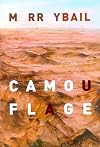
Murray Bail's short story 'Camouflage' begins thus:
'All things considered, piano-tuning is a harmless profession.' Now that's a great opening gambit.
'Camouflage' and 'The Seduction of My Sister'.
Two trifles, both about flying in odd ways. show more Impossible to put down, to be read in moments. You end reluctantly, wishing for more, like the end of a dessert that wasn't quite large enough, or sex sometimes.
Exquisite. show less
'It was the day my grandmother exploded.'
Why this is a famous opening baffles me. It is vulgar, too brash. It is an opening by a writer that wants the reader to look at him, not the words on the page. It shows off.
Murray Bail's short story 'Camouflage' begins thus:
'All things considered, piano-tuning is a harmless profession.' Now that's a great opening gambit.
'Camouflage' and 'The Seduction of My Sister'.
Two trifles, both about flying in odd ways. show more Impossible to put down, to be read in moments. You end reluctantly, wishing for more, like the end of a dessert that wasn't quite large enough, or sex sometimes.
Exquisite. show less
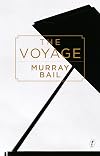
I liked this okay as I was reading it, and I like it a lot more for reading all the negative reviews. Bail does the now standard modernist version of is-this-now-or-is-this-a-memory-and-what's-the-difference-really, and does it fairly well. For the record, "now" is on a boat from Vienna to Australia. The memories are of Vienna. It's pretty easy to get once that's clear.
The story is similarly simple: a man goes to Vienna, music capitol of the Western world, to sell his newly invented piano. show more He pretty much fails to sell it, but does succeed in picking up the daughter of a Viennese socialite and music aficionado.
The book becomes worthwhile once it's read as the sum of its influences, to wit, Thomas Bernhard (and other cranky Austrians writing about how shit Austria is) Henry James (New World naif is taken in by/clashes with old world sophisticates) Virginia Woolf (see above re: now standard modernist form). Bail seems to be wrestling with his own debts to the European modernist and whatever you call Bernhard's time period writers, which can easily be read as a case study in the broader question of Australia's relationship to its European heritage. The answer, in good Jamesian style, is ambivalence.
Bail uses many obviously Bernhardian tics (long paragraphs, complex syntax, Vienna, music, slightly cracked protagonist), but at the same time asserts himself. Our heroic piano inventor goes to Europe, sells one piano to an avant-garde composer who 'writes' a piece that requires the destruction of said piano, then comes back to Australia, where he finds himself inevitably changed, but not changed into a Viennese. Just changed.
I have no idea how anyone would read this who hasn't read, at the very least, Bernhard's "Loser" and James's "The American." It might make no sense at all. For fans of those books, though, this is a nice addition to the corpus. show less
The story is similarly simple: a man goes to Vienna, music capitol of the Western world, to sell his newly invented piano. show more He pretty much fails to sell it, but does succeed in picking up the daughter of a Viennese socialite and music aficionado.
The book becomes worthwhile once it's read as the sum of its influences, to wit, Thomas Bernhard (and other cranky Austrians writing about how shit Austria is) Henry James (New World naif is taken in by/clashes with old world sophisticates) Virginia Woolf (see above re: now standard modernist form). Bail seems to be wrestling with his own debts to the European modernist and whatever you call Bernhard's time period writers, which can easily be read as a case study in the broader question of Australia's relationship to its European heritage. The answer, in good Jamesian style, is ambivalence.
Bail uses many obviously Bernhardian tics (long paragraphs, complex syntax, Vienna, music, slightly cracked protagonist), but at the same time asserts himself. Our heroic piano inventor goes to Europe, sells one piano to an avant-garde composer who 'writes' a piece that requires the destruction of said piano, then comes back to Australia, where he finds himself inevitably changed, but not changed into a Viennese. Just changed.
I have no idea how anyone would read this who hasn't read, at the very least, Bernhard's "Loser" and James's "The American." It might make no sense at all. For fans of those books, though, this is a nice addition to the corpus. show less
Lists
Awards


You May Also Like


Associated Authors
Statistics
- Works
- 16
- Also by
- 10
- Members
- 2,010
- Popularity
- #12,806
- Rating
- 3.5
- Reviews
- 70
- ISBNs
- 121
- Languages
- 13
- Favorited
- 2


