
Robert Drewe
Author of The Shark Net
About the Author
Robert Drewe was born in Melbourne, Australia in 1943. He grew up and was educated in Western Australia where he took up journalism with the West Australian in 1961. He was the literary editor for the Australian from 1971 to 1974. He won the Walkley Award (Australia's highest such award) twice for show more journalism in 1976 and 1981. Drewe's novel, The Drowner was shortlisted for the 1997 Miles Franklin Award. It also made Australian literary history by becoming the first novel to win the Premier's Literary Prize in every state. It also won the Australian Book of the Year Prize, the Adelaide Festival Prize for literature and was voted one of the ten best international novels of the decade. Other books by Drewe were also prize winners: Fortune won the National Book Council fiction prize in Australia. One of his anthologies, The Bay of Contented Men, won a Commonwealth Writers' Prize, while another, the bestseller The Bodysurfers, has been adapted for film, television, radio and stage. Robert Drewe is also a film critic, playwright and the author of several screenplays. His stage drama, South American Barbecue, was first performed in 1991. In 2015 he will be awarded a State Living Treasures Award by the Western Australian state government. The award is given to `highly regarded and skilled¿ career artists who have worked within or created work about Western Australia, passed on their knowledge to other artists, and demonstrated a commitment or contribution to the Western Australian arts sector. (Bowker Author Biography) show less
Image credit: Robert Drewe
Works by Robert Drewe
Associated Works
Tagged
Common Knowledge
- Legal name
- Drewe, Robert Duncan
- Birthdate
- 1943-01-09
- Gender
- male
- Education
- Hale School
- Occupations
- journalist
short story writer
novelist
editor - Nationality
- Australia
- Birthplace
- Melbourne, Victoria, Australia
- Places of residence
- Perth, Western Australia, Australia
Byron Bay, New South Wales, Australia - Associated Place (for map)
- Australia
Members
Reviews
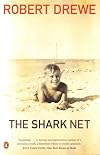
Perfect reading for a West Australian heatwave - I'm about half a generation younger than Drewe and arrived in Perth about a decade after him but there is a familiarity about his description of the sand people with their peeling skin and cracked lips, the barefoot children and the scorn for the shod, the limestone foundationed houses, and the "big fish in small pond" social life of my home city. Beautifully written, funny and poignant, showing the angst of a suburban adolescence (long before show more Dave Warner from the Suburbs sang "Suburban Boy") and set against the real backdrop of the murder spree that is still remembered as the time Perth "lost its innocence", this book would speak to anyone, not just locals like myself. Highly recommended. show less

It crossed my mind more than once as I read this beaut book that 2017 has been an extraordinary year for Australian fiction. So many of our best writers have released wonderful new books, I’ve been hard-pressed to keep up with the best of what’s new*. Whipbird has been on my TBR since July, and I’m only just getting to it now…
I romped through it in two days, and loved it. It’s a witty satire of contemporary Australia that will make you laugh and wince at the same time.
The show more ‘Whipbird’ of the title is a winery, named by its aspirational owner Hugh Cleary after the extinct Gosse’s Mottled Whipbird which used to range over his land near Ballarat. A Melbourne barrister yearning for silk, Hugh has decided that climate change makes this site suitable for the growing of pinot noir, and in honour of the presence at Eureka of his Irish ancestor Conor Cleary, he intends to name his wine ‘Conor’s Rebellion’. The trouble is, Hugh’s grasp of his ancestor’s activities at the stockade isn’t quite accurate…
The plot unfolds over the weekend celebrating the 160th anniversary of Conor Cleary’s arrival in Australia in 1854 during the Gold Rush. Over a thousand of his 3000-odd descendants gather at Whipbird, but fear not, dear readers, you will not need to keep track of all the Hanrahans, Kennedys, O’Donnells, O’Learys, Donaldsons, Opies, Fagans and Sheens: the cast of characters is about the usual size and an interesting lot they are too. As you can tell from the clan names, neatly distinguished amongst the guests by T-shirts of different colours, the first generations of Clearys intermarried with other Catholics of Irish descent, but by the time Hugh and his aspirations reached the altar a Protestant bride was good for his finances and his career and his son Liam goes to Scotch College not Xavier. Multiculturalism has penetrated the clan as well, and indeed, Craig Cleary has married Rani who is a Muslim from Aceh, while Mick Cleary’s niece Amanda has married Dr Nigel Hu. But as 4th generation patriarch Mick gloomily notes, names are no guide any more anyway: the children of his son Sly (Simon) are called Lulu, Oris and Willow.
As the day progresses on from Hugh’s hamfisted welcome and his sister Thea’s gauche interruption to his speech, barbecue stoppers erupt all over the place...
To read the rest of my review please visit https://anzlitlovers.com/2017/12/04/whipbird-by-robert-drewe/ show less
I romped through it in two days, and loved it. It’s a witty satire of contemporary Australia that will make you laugh and wince at the same time.
The show more ‘Whipbird’ of the title is a winery, named by its aspirational owner Hugh Cleary after the extinct Gosse’s Mottled Whipbird which used to range over his land near Ballarat. A Melbourne barrister yearning for silk, Hugh has decided that climate change makes this site suitable for the growing of pinot noir, and in honour of the presence at Eureka of his Irish ancestor Conor Cleary, he intends to name his wine ‘Conor’s Rebellion’. The trouble is, Hugh’s grasp of his ancestor’s activities at the stockade isn’t quite accurate…
The plot unfolds over the weekend celebrating the 160th anniversary of Conor Cleary’s arrival in Australia in 1854 during the Gold Rush. Over a thousand of his 3000-odd descendants gather at Whipbird, but fear not, dear readers, you will not need to keep track of all the Hanrahans, Kennedys, O’Donnells, O’Learys, Donaldsons, Opies, Fagans and Sheens: the cast of characters is about the usual size and an interesting lot they are too. As you can tell from the clan names, neatly distinguished amongst the guests by T-shirts of different colours, the first generations of Clearys intermarried with other Catholics of Irish descent, but by the time Hugh and his aspirations reached the altar a Protestant bride was good for his finances and his career and his son Liam goes to Scotch College not Xavier. Multiculturalism has penetrated the clan as well, and indeed, Craig Cleary has married Rani who is a Muslim from Aceh, while Mick Cleary’s niece Amanda has married Dr Nigel Hu. But as 4th generation patriarch Mick gloomily notes, names are no guide any more anyway: the children of his son Sly (Simon) are called Lulu, Oris and Willow.
As the day progresses on from Hugh’s hamfisted welcome and his sister Thea’s gauche interruption to his speech, barbecue stoppers erupt all over the place...
To read the rest of my review please visit https://anzlitlovers.com/2017/12/04/whipbird-by-robert-drewe/ show less
A dog-walker who begrudgingly takes on the role decides to document some of his adventures, thoughts and popular opinions about the canine breed.
Drewe must own perhaps the naughtiest and most untrainable dog ever written about. His daily walks usually disintegrate into screaming strangers and chewed up roadkill and he intersperses these stories with other more well-known facts and myths, especially concerning the apparently (snigger) easy to train breed of german short-haired pointer.
At show more times I couldn't believe that he continued to let his dog off the lead in the park to hassle and intimidate other living things when he could clearly not control her, but then he writes about a time when she did do exactly what she was supposed to and like all dog-owners, I understand the need to live in hope that your dog will get better. *
Interesting but purely to fill small free minutes and not a book to devour intensely.
* My dog did terrorise (+) old ladies on the beach for a few months as a puppy but he now will return to my whistle no matter how far away I am and is a gorgeous and fantastic canine. **
** No old ladies were harmed in the training of my dog as a puppy.
(+) When I say terrorise I actually mean lick their trousers and jump on their legs. show less
Drewe must own perhaps the naughtiest and most untrainable dog ever written about. His daily walks usually disintegrate into screaming strangers and chewed up roadkill and he intersperses these stories with other more well-known facts and myths, especially concerning the apparently (snigger) easy to train breed of german short-haired pointer.
At show more times I couldn't believe that he continued to let his dog off the lead in the park to hassle and intimidate other living things when he could clearly not control her, but then he writes about a time when she did do exactly what she was supposed to and like all dog-owners, I understand the need to live in hope that your dog will get better. *
Interesting but purely to fill small free minutes and not a book to devour intensely.
* My dog did terrorise (+) old ladies on the beach for a few months as a puppy but he now will return to my whistle no matter how far away I am and is a gorgeous and fantastic canine. **
** No old ladies were harmed in the training of my dog as a puppy.
(+) When I say terrorise I actually mean lick their trousers and jump on their legs. show less
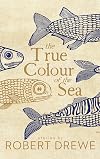
I liked ‘Another Word for Cannibals’ best. Yes, this choice reveals something about my macabre sense of humour…
The unlikely premise of the story is a reunion between the descendants of a Methodist minister, and the offspring of the cannibal ancestors of those who ate him. Drewe has mischievously named his fictional Pacific island Okina, which Wikipedia tells me is a glottal stop in Hawaiian languages, denoting ‘uh-oh’. ‘Uh-oh’ indeed. Through the auspices of a Leeds academic show more who also shares this rarest of ancestral links, Damian and Lisa have been invited to attend a special 150th anniversary ceremony to make amends to the Horne descendants.
Drewe is adept at describing a certain type of woman:
One suspects that a refusal to participate was not a possibility. In response to the understandably ignorant questions of the descendants, Jennifer explains:
Lisa’s not quite convinced.
To read the rest of my review please visit https://anzlitlovers.com/2019/08/09/the-true-colour-of-the-sea-stories-2018-by-r... show less
The unlikely premise of the story is a reunion between the descendants of a Methodist minister, and the offspring of the cannibal ancestors of those who ate him. Drewe has mischievously named his fictional Pacific island Okina, which Wikipedia tells me is a glottal stop in Hawaiian languages, denoting ‘uh-oh’. ‘Uh-oh’ indeed. Through the auspices of a Leeds academic show more who also shares this rarest of ancestral links, Damian and Lisa have been invited to attend a special 150th anniversary ceremony to make amends to the Horne descendants.
Drewe is adept at describing a certain type of woman:
Damian and Lisa had met Jennifer only once before, at a family wedding in North London, and remembered her as a wiry extrovert with reckless scarlet hair and a sort of ethnic-Victorian dress style, a mixture of tinkling bracelets and fingerless net gloves. (p.21)
One suspects that a refusal to participate was not a possibility. In response to the understandably ignorant questions of the descendants, Jennifer explains:
In any society or culture, in whatever period of history, everything we humans do rests on the assumptions we share with our family, friends, neighbours and workmates,’ she’d replied.
‘Everything social is open to question, including solidly held beliefs and ideas about karma, the self in society and nature and culture. Only by relating uncritically to the different versions of the world can we be fully human.’ (p. 22)
Lisa’s not quite convinced.
To read the rest of my review please visit https://anzlitlovers.com/2019/08/09/the-true-colour-of-the-sea-stories-2018-by-r... show less
Lists
Read in 2003 (1)
Awards


You May Also Like


Associated Authors
Statistics
- Works
- 32
- Also by
- 8
- Members
- 1,875
- Popularity
- #13,735
- Rating
- 3.6
- Reviews
- 37
- ISBNs
- 187
- Languages
- 3
- Favorited
- 3