
Carrie Tiffany
Author of Everyman's Rules for Scientific Living
About the Author
Image credit: Simon & Schuster
Works by Carrie Tiffany
Writing a Novel Anthology 2013 — Editor — 1 copy
Associated Works
Tagged
Common Knowledge
- Birthdate
- 1965
- Gender
- female
- Education
- RMIT University
La Trobe University - Occupations
- park ranger
novelist - Nationality
- Australia
- Birthplace
- Halifax, Yorkshire, England, UK
- Places of residence
- Perth, Western Australia, Australia
Melbourne, Victoria, Australia - Associated Place (for map)
- Australia
Members
Reviews
http://shawjonathan.wordpress.com/2013/07/28/carrie-tiffanys-mateship-with-birds...
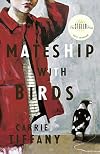
This little book is populated by a handful of painfully shy individuals living on the outskirts of a small Australian town in the 1950s. There’s Betty Fletcher and her two children, Michael and Little Hazel. The children were conceived and born elsewhere, but it’s not the kind of town where people pry into one another’s business. Mues, one of their neighbors, is a retired slaughterer and a pretty show more unsavoury character – he exposes himself to Little Hazel in the first couple of pages, and it’s a sign of things to come that the little girl, far from being traumatised, is profoundly disappointed that his promise to show her a pony was a trick, that adults can’t be counted on: ‘they hold one thing in their hand and call it another.’ The other neighbour is Harry, a dairy farmer, who has become a virtual member of their family, having dinner with them and being called over to help with masculine tasks like removing a dead possum from their roof. And then there’s Harry’s dairy herd, half a dozen kookaburras and sundry other specimens of animal and bird life.
Not a lot happens: Harry takes notes on the kookaburras’ family life, and his milking of the cows is beautifully described; Betty works in an old men’s home, and her warm-hearted management of their needs is not so very different from Harry’s caring for his cows; Hazel keeps a journal about the bird life at school, and it wins second prize; Harry and Betty have an undeclared mutual attraction that builds convincingly over years; Harry decides to take on young Michael’s sex education, which he does in awkwardly comic conversations and in long letters that are a mix of frank personal reminiscence and weirdly detailed accounts of human female anatomy (possible the book’s central tension hinges on these letters – will he actually give them to Michael, and if so what will happen?); Michael embarks on his own sexual experiences; Mues makes an occasional appearance, each less savoury than the last.
It’s not a book to read for the plot. Tension builds and is resolved without insulting the reader’s intelligence, but the main pleasure is in the way we come to know and care about the characters and understand their place and time. They live in a harsh enough world – not exactly nature red in tooth and claw, but death and an uncompromising physicality are everywhere. If you think of kookaburras as slightly comic, benign creatures, Harry’s observations will put you right. Likewise, big-eyed dairy cattle aren’t all sweetness and light, and looking after old men with dementia isn’t work for anyone of deIicate sensibilities. Yet the depiction of this harsh world is suffused with a warm, compassionate affection the way a Drysdale landscape is with light. That is, things may not be pretty, but they’re closely observed with what, if it’s not love, will do till love comes along.
One small note: I was unsettled when I recognised one of Harry’s personal recollections is an episode lifted from Havelock Ellis’s life and relocated from the London Zoo to an Australian country orchard. This made me wonder about the sources of the sex education passages. Harry does drop in at the town library and, improbably, read a book by Havelock Ellis (not the autobiography), so perhaps that is an implied acknowledgement. I guess that’s fodder for scholars. show less
This little book is populated by a handful of painfully shy individuals living on the outskirts of a small Australian town in the 1950s. There’s Betty Fletcher and her two children, Michael and Little Hazel. The children were conceived and born elsewhere, but it’s not the kind of town where people pry into one another’s business. Mues, one of their neighbors, is a retired slaughterer and a pretty show more unsavoury character – he exposes himself to Little Hazel in the first couple of pages, and it’s a sign of things to come that the little girl, far from being traumatised, is profoundly disappointed that his promise to show her a pony was a trick, that adults can’t be counted on: ‘they hold one thing in their hand and call it another.’ The other neighbour is Harry, a dairy farmer, who has become a virtual member of their family, having dinner with them and being called over to help with masculine tasks like removing a dead possum from their roof. And then there’s Harry’s dairy herd, half a dozen kookaburras and sundry other specimens of animal and bird life.
Not a lot happens: Harry takes notes on the kookaburras’ family life, and his milking of the cows is beautifully described; Betty works in an old men’s home, and her warm-hearted management of their needs is not so very different from Harry’s caring for his cows; Hazel keeps a journal about the bird life at school, and it wins second prize; Harry and Betty have an undeclared mutual attraction that builds convincingly over years; Harry decides to take on young Michael’s sex education, which he does in awkwardly comic conversations and in long letters that are a mix of frank personal reminiscence and weirdly detailed accounts of human female anatomy (possible the book’s central tension hinges on these letters – will he actually give them to Michael, and if so what will happen?); Michael embarks on his own sexual experiences; Mues makes an occasional appearance, each less savoury than the last.
It’s not a book to read for the plot. Tension builds and is resolved without insulting the reader’s intelligence, but the main pleasure is in the way we come to know and care about the characters and understand their place and time. They live in a harsh enough world – not exactly nature red in tooth and claw, but death and an uncompromising physicality are everywhere. If you think of kookaburras as slightly comic, benign creatures, Harry’s observations will put you right. Likewise, big-eyed dairy cattle aren’t all sweetness and light, and looking after old men with dementia isn’t work for anyone of deIicate sensibilities. Yet the depiction of this harsh world is suffused with a warm, compassionate affection the way a Drysdale landscape is with light. That is, things may not be pretty, but they’re closely observed with what, if it’s not love, will do till love comes along.
One small note: I was unsettled when I recognised one of Harry’s personal recollections is an episode lifted from Havelock Ellis’s life and relocated from the London Zoo to an Australian country orchard. This made me wonder about the sources of the sex education passages. Harry does drop in at the town library and, improbably, read a book by Havelock Ellis (not the autobiography), so perhaps that is an implied acknowledgement. I guess that’s fodder for scholars. show less
Flippin' heck, mate.
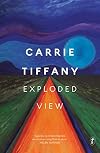
I'll admit that I haven't been much of a fan of Carrie Tiffany's previous novels but this is such a tightly-wound piece of literature. Every sentence is note-perfect. Every line is strange and alienating, the kind of words and phrases that would make no sense if removed from their context but are exactly right within it. Never have the seemingly meaningless minutiae of an Australian family road trip been so accurately catalogued, revealed in all their harsh power. This show more is a brutal novel, be warned. It's short, thank god, because the subject matter is ultimately devastating. But if you have the stomach for an unpleasant narrative of an abuse (primarily in the subtext rather than the text) you will be rewarded with prose that is somehow both restrained and torrential. show less
I'll admit that I haven't been much of a fan of Carrie Tiffany's previous novels but this is such a tightly-wound piece of literature. Every sentence is note-perfect. Every line is strange and alienating, the kind of words and phrases that would make no sense if removed from their context but are exactly right within it. Never have the seemingly meaningless minutiae of an Australian family road trip been so accurately catalogued, revealed in all their harsh power. This show more is a brutal novel, be warned. It's short, thank god, because the subject matter is ultimately devastating. But if you have the stomach for an unpleasant narrative of an abuse (primarily in the subtext rather than the text) you will be rewarded with prose that is somehow both restrained and torrential. show less
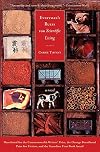
I thoroughly enjoyed this little novel, EVERYMAN'S RULES FOR SCIENTIFIC LIVING. First of all I enjoy reading about Australia, a place I will probably never visit in person, but love to read about nonetheless. Carrie Tiffany, who doesn't look very old in her back cover photo, seems to have acquired a kind of wisdom beyond her years about human behavior and the complexities of family relationships and dynamics. Her protagonists here, Jean and Robert, are an interesting combination of ordinary show more and unique. Jean was orphaned at an early age and raised by an aunt, so escaped into the service of the 'sewing expert' home ec agent on the 'farm train' that criscrossed the interior of Australia. It was there that she met Robert, the soil expert, who we learn had a rather horrific childhood as the son of a prostitute. His uniqe talent of being able to identify where dirt comes from - what geographic locale - by actually tasting it, makes him a rather grotesque character. And yet one feels enormous symypathy for Robert, who has managed to overcome his awful beginnings.
When these two marry, it would appear to be a marriage of opposites, but then such 'opposites' really do attract. And the passion, the abrupt and near-violent couplings between this odd couple are shockingly graphic, yet without any hint of the obscene, perhaps because of their very innocence. Jean wishes they could talk about this physical side of their love, wishes for more intimacy, but doesn't know how to reach Robert, who is so very sexually repressed. Here's an example -
"I think about reaching across and touching him, but I am not sure how he would respond. I don't understand this gulf between our bodies and our minds and why it is so hard to move between the two."
Although my greatest interest here was in this couple's relationship, the book reaches far beyond them - it looks at the awful Dust Bowl years in the wheat belt of the Australian interior and the myriad hardships that the farmers of that area endured, breaking many of them both financially and emotionally. Tiffany had done her homework in depicting the grim details of drought, mice and rabbit plagues, dust storms, children undernourished and dying. It is very similar to what happened in the U.S. in the 30s. As I was reading the book, I kept thinking of another fine recent Australian novel, Goldie Goldbloom's THE PAPERBARK SHOE, although the characters in her novel were a bit further left of center, more unusual, more grotesque.
I also loved the essays that Carrie Tiffany included at the end of her story, about her real experiences as a Park Ranger in the outback and how the isolation of the job brought her closer to books as a means of escape; and also a short piece explaining the 'soil box' shown on the book's cover. I will be watching for Carrie Tiffany's next book; in the meantime I will recommend this one highly. show less
When these two marry, it would appear to be a marriage of opposites, but then such 'opposites' really do attract. And the passion, the abrupt and near-violent couplings between this odd couple are shockingly graphic, yet without any hint of the obscene, perhaps because of their very innocence. Jean wishes they could talk about this physical side of their love, wishes for more intimacy, but doesn't know how to reach Robert, who is so very sexually repressed. Here's an example -
"I think about reaching across and touching him, but I am not sure how he would respond. I don't understand this gulf between our bodies and our minds and why it is so hard to move between the two."
Although my greatest interest here was in this couple's relationship, the book reaches far beyond them - it looks at the awful Dust Bowl years in the wheat belt of the Australian interior and the myriad hardships that the farmers of that area endured, breaking many of them both financially and emotionally. Tiffany had done her homework in depicting the grim details of drought, mice and rabbit plagues, dust storms, children undernourished and dying. It is very similar to what happened in the U.S. in the 30s. As I was reading the book, I kept thinking of another fine recent Australian novel, Goldie Goldbloom's THE PAPERBARK SHOE, although the characters in her novel were a bit further left of center, more unusual, more grotesque.
I also loved the essays that Carrie Tiffany included at the end of her story, about her real experiences as a Park Ranger in the outback and how the isolation of the job brought her closer to books as a means of escape; and also a short piece explaining the 'soil box' shown on the book's cover. I will be watching for Carrie Tiffany's next book; in the meantime I will recommend this one highly. show less
I have really, really liked Carrie Tiffany's previous fiction, and was eagerly anticipating reading her new one ... so I can't begin to tell you how disappointed I am by her latest book, Exploded View. If it had been written by anybody else I wouldn't have read it at all. I would have abandoned it as soon as I realised, and now I wish I had: it's yet another one about a child damaged by sustained abuse, a topic so done to death I can't believe that contemporary authors and publishers think show more there is anything new or insightful to say about it.
The book is unrelentingly sombre, and mercifully short.
If you like wallowing in the unpleasantness of grim fiction à la Sophie Laguna and Emma Donoghue you might like it. I loathed it.
Enough said... show less
The book is unrelentingly sombre, and mercifully short.
If you like wallowing in the unpleasantness of grim fiction à la Sophie Laguna and Emma Donoghue you might like it. I loathed it.
Enough said... show less
Lists
Awards


You May Also Like


Associated Authors
Statistics
- Works
- 4
- Also by
- 1
- Members
- 565
- Popularity
- #44,254
- Rating
- 3.4
- Reviews
- 29
- ISBNs
- 25
- Languages
- 2