
John Donvan
Author of In a Different Key: The Story of Autism
About the Author
Image credit: photo by Ralph Alswang
Works by John Donvan
Associated Works
Tagged
Common Knowledge
- Birthdate
- 1955
- Gender
- male
- Education
- Dartmouth College (BA, English and Classics)
Columbia University (MS, Journalism) - Occupations
- journalist
broadcaster
debate moderator - Organizations
- American Broadcasting Company
- Short biography
- [from Penguin Random House website]
John Donvan is a correspondent for ABC News, and host and moderator of the Intelligence Squared U.S. Debates, which are heard on public radio and by podcast. During his journalism career, in addition to anchoring such broadcasts as ABC's Nightline, John served as chief White House correspondent, and held multiyear postings in London, Moscow, Jerusalem, and Amman, Jordan. He is the winner of three Emmys and the Overseas Press Club Award. He became interested in autism's impact on families upon meeting his wife, the physician and medical school professor Ranit Mishori, who grew up in Israel with a brother profoundly affected by autism. John also performs as a live storyteller with the group Story District. He has two children and lives in Washington, D.C. - Places of residence
- Washington, D.C., USA
- Associated Place (for map)
- D.C., USA
Members
Reviews
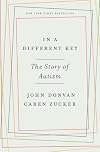
John Donvan, the co-author of this book, is host of the "Intelligence Squared" debates, which makes valiant attempts to let two sides of hot-button issues both present their viewpoints. So: Every review posted of this book so far has been extremely positive. Time for the down side.
The down side being, What the bleep does this book have to do with people with autism?
I'm serious. This is not a book about autism. It's not a book about people with autism, either. It's a book about the diagnosis show more of autism.
Let's start with the positives -- and they are genuine positives: The book is a smooth and easy read; it won't bury you in over-long sentences or technical vocabulary. It is clear that a tremendous amount of research went into this book. It delves deeply into the history of the autism diagnosis, naming many important names and detailing their contributions. (I wish I could give you a list and a count, but I got an advanced edition with no index or even a proper Table of Contents. I wish publishers would stop doing that; the lack of an index makes it harder for me to do a proper review. They clearly have a tentative index; the pre-review copy has a note which says it will be 14 pages long!)
So: There is good history here. I'm glad I read the book.
But I'm not in here. I don't mean me personally. I mean people like me.
For the record: I am autistic, diagnosed in late 2012 at age fifty. So this book should be about me. But nowhere, in the whole book, do I meet anyone like me. This book has no feeling for what autism is. People with autism are treated as aliens -- there is no looking into their minds. And, for the first 489 pages, it's all classic Kanner autism -- barely verbal if at all, no social interaction, no ability to survive on their own. The only acknowledgment that autism is more than just that is a short chapter on Lorna Wing and an ambiguous look at the work of Hans Asperger. But both are just stuck in the middle, as if some editor had added two chapters to fulfill some checklist requirement. There is mention of the changing definition of autism, but no real discussion of how the diagnosis changed.
There is a brief section, early on, describing alleged cases of autism prior to the work of Leo Kanner. But most of them sound more like schizophrenia than autism. The people who seem to have had autism and did great things -- the Isaac Newtons, the Albert Einsteins, the Pierre and Marie Curies, the Lewis Carrolls, the Thomas Jeffersons, the C. S. Lewises -- are not in here.
This often leads to actual errors in the text. Take page 104 (in my copy; the pagination may be different in the final edition): "It would later be disproved... [but at the time] autism appeared strongly associated with families of high-achieving, highly intelligent parents." It was not disproved; recent studies show that genes for autism are also associated with intelligence. And -- have you ever attended a conference of mathematicians or physicists? Probably at least a third could be diagnosed as on the autism spectrum, and almost all the rest have autistic traits. (I should know -- my degree is in physics and mathematics...). Or page 157, "epidemiologists showed that roughly three-quarters of children with autism were also intellectually impaired." That was indeed the finding at the time [late 1960s], but that's because they ignored the autism spectrum. The ones diagnosed with autism were the ones who were most obviously afflicted -- as shown by things like intellectual impairment. In fact those with autism spectrum follow a bell curve of intelligence just like everyone else, with the median near the median for the general population -- but the book requires another 350 pages to correct that error on page 157. Anyone who plows through the 500 pages of Autism-is-for-dummies is most unlikely to be able to make the quick change of perspective required by the last fifty pages of "well, maybe not."
Also the book mentions that the definition of autism in the Diagnostic and Statistical Manual of the American Psychiatric Association underwent many revisions, and implies that this is something unusual that affects the way autism has been handled. But it is not unusual. The changes in the DSM criteria for PTSD has been even more dramatic. Or take personality disorders. In the DSM-IV, there were ten of them. The DSM-5 proposed to cut that back to five or six -- and then went back to the drawing board because it was voted down. The whole discussion misses a key point: To treat a condition, you have to know what it is. The changes in criteria, which happen in all parts of the DSM, come about because we're constantly learning and refining and trying to correctly find diagnoses for people. It's a process that isn't done. The DSM definition probably isn't right even now, but it's getting better.
And, too, the book consists of a series of chapters with little or no connection. We meet (for instance) Leo Kanner, and see why he created a new term, "autism" -- and then he vanishes. This happens dozens of times: someone shows up, "struts his hour on the stage," and is never mentioned again. It is not a coherent history; nothing interacts with anything else. It's chapters of a history. If the authors had organized this as a dictionary of people associated with autism, it wouldn't have changed much, and it would be a lot easier to find things. This book was published just months after Steve Silberman's Neurotribes, which is also a history of autism. Donvan and Zucker provide much more background history. But they don't bring the vision that Silberman did. I would much rather read Silberman's incomplete book that feels as if autism is actually good for something.
For a person with autism, trying to find "my" place in here, it is very off-putting. Even when we finally get to the neurodiversity movement (the movement to say that people with autism should be respected for what they are), what we hear about sounds much too extreme. (Yes, there are neurodiversity extremists, but they aren't what neurodiversity is about!)
Och, you can tell I'm autistic. This review is already incredibly long, and I've mentioned fewer than half my topic points. Suffice it to say that there is a lot more. (Kim Peek wasn't autistic? I've known autism experts who knew him, and they say he was.) And the section on Autism Speaks does not make it clear just how much people who have autism loathe Autism Speaks, the charity that wants to destroy what makes us who we are. But rather than drone on, let's try this capsule summary:
THE GOOD
* There is a tremendous amount of useful detail in this book
* You will get a (brief) look at the contributions of almost every person important in clarifying the diagnosis (although not the treatment) of autism
* You will get a good overview of just how wrong-headed the anti-vaxxers were
THE BAD
* You will not learn what autism means from this book
* You will not learn about famous people with autism from this book
* You probably will not realize that the autism spectrum includes everyone from the non-verbal kids who need constant care to the intelligent, verbal, highly capable adults who just have difficulties with certain life situations
THE UGLY
* If you are a fairly capable autistic person, you will not feel as if this book is for or about you. Because it isn't.
An Addendum: In a Different Key devotes a chapter to, it seems to me, going after Hans Asperger for a recommendation, in his handwriting, that a certain child not be granted education -- in effect, a death warrant. Their insinuation is that Asperger went along with Nazi eugenic ideas. This is in strong contrast to the view in Neurotribes, which defends Asperger.
I assume the Asperger note is genuine, and I was troubled by it. But I have tried to research the matter since. I cannot claim to be the final word, but I think Neurotribes is right and, as has often been the case, In a Different Key just doesn't understand the more capable people with autism -- one of whom, in all likelihood, was Hans Asperger. Could he have signed a death warrant? Yes, probably -- if it would allow him to keep his position and so save others. That is my suspicion that that is what he was trying to do. It didn't work -- the Nazis eventually sent him off to serve on the Russian Front, a clear token that they didn't approve of him. Reading his doctoral thesis gives a different view. In Uta Frith's translation, at least, it shows him trying to combat Nazi ideology in subtle ways (and Frith suggests its approval was delayed as a result). Both Frith and Silberman suggest that Asperger was trying to convince the Nazis that at least some people with autism were worth saving. This is how I read his writings also. And Asperger clearly understood autism far better than Leo Kanner. Little wonder that I had so much trouble with In a Different Key. Despite rejecting the Refrigerator Mother stereotype, there is much, much too much Kanner in this book. show less
The down side being, What the bleep does this book have to do with people with autism?
I'm serious. This is not a book about autism. It's not a book about people with autism, either. It's a book about the diagnosis show more of autism.
Let's start with the positives -- and they are genuine positives: The book is a smooth and easy read; it won't bury you in over-long sentences or technical vocabulary. It is clear that a tremendous amount of research went into this book. It delves deeply into the history of the autism diagnosis, naming many important names and detailing their contributions. (I wish I could give you a list and a count, but I got an advanced edition with no index or even a proper Table of Contents. I wish publishers would stop doing that; the lack of an index makes it harder for me to do a proper review. They clearly have a tentative index; the pre-review copy has a note which says it will be 14 pages long!)
So: There is good history here. I'm glad I read the book.
But I'm not in here. I don't mean me personally. I mean people like me.
For the record: I am autistic, diagnosed in late 2012 at age fifty. So this book should be about me. But nowhere, in the whole book, do I meet anyone like me. This book has no feeling for what autism is. People with autism are treated as aliens -- there is no looking into their minds. And, for the first 489 pages, it's all classic Kanner autism -- barely verbal if at all, no social interaction, no ability to survive on their own. The only acknowledgment that autism is more than just that is a short chapter on Lorna Wing and an ambiguous look at the work of Hans Asperger. But both are just stuck in the middle, as if some editor had added two chapters to fulfill some checklist requirement. There is mention of the changing definition of autism, but no real discussion of how the diagnosis changed.
There is a brief section, early on, describing alleged cases of autism prior to the work of Leo Kanner. But most of them sound more like schizophrenia than autism. The people who seem to have had autism and did great things -- the Isaac Newtons, the Albert Einsteins, the Pierre and Marie Curies, the Lewis Carrolls, the Thomas Jeffersons, the C. S. Lewises -- are not in here.
This often leads to actual errors in the text. Take page 104 (in my copy; the pagination may be different in the final edition): "It would later be disproved... [but at the time] autism appeared strongly associated with families of high-achieving, highly intelligent parents." It was not disproved; recent studies show that genes for autism are also associated with intelligence. And -- have you ever attended a conference of mathematicians or physicists? Probably at least a third could be diagnosed as on the autism spectrum, and almost all the rest have autistic traits. (I should know -- my degree is in physics and mathematics...). Or page 157, "epidemiologists showed that roughly three-quarters of children with autism were also intellectually impaired." That was indeed the finding at the time [late 1960s], but that's because they ignored the autism spectrum. The ones diagnosed with autism were the ones who were most obviously afflicted -- as shown by things like intellectual impairment. In fact those with autism spectrum follow a bell curve of intelligence just like everyone else, with the median near the median for the general population -- but the book requires another 350 pages to correct that error on page 157. Anyone who plows through the 500 pages of Autism-is-for-dummies is most unlikely to be able to make the quick change of perspective required by the last fifty pages of "well, maybe not."
Also the book mentions that the definition of autism in the Diagnostic and Statistical Manual of the American Psychiatric Association underwent many revisions, and implies that this is something unusual that affects the way autism has been handled. But it is not unusual. The changes in the DSM criteria for PTSD has been even more dramatic. Or take personality disorders. In the DSM-IV, there were ten of them. The DSM-5 proposed to cut that back to five or six -- and then went back to the drawing board because it was voted down. The whole discussion misses a key point: To treat a condition, you have to know what it is. The changes in criteria, which happen in all parts of the DSM, come about because we're constantly learning and refining and trying to correctly find diagnoses for people. It's a process that isn't done. The DSM definition probably isn't right even now, but it's getting better.
And, too, the book consists of a series of chapters with little or no connection. We meet (for instance) Leo Kanner, and see why he created a new term, "autism" -- and then he vanishes. This happens dozens of times: someone shows up, "struts his hour on the stage," and is never mentioned again. It is not a coherent history; nothing interacts with anything else. It's chapters of a history. If the authors had organized this as a dictionary of people associated with autism, it wouldn't have changed much, and it would be a lot easier to find things. This book was published just months after Steve Silberman's Neurotribes, which is also a history of autism. Donvan and Zucker provide much more background history. But they don't bring the vision that Silberman did. I would much rather read Silberman's incomplete book that feels as if autism is actually good for something.
For a person with autism, trying to find "my" place in here, it is very off-putting. Even when we finally get to the neurodiversity movement (the movement to say that people with autism should be respected for what they are), what we hear about sounds much too extreme. (Yes, there are neurodiversity extremists, but they aren't what neurodiversity is about!)
Och, you can tell I'm autistic. This review is already incredibly long, and I've mentioned fewer than half my topic points. Suffice it to say that there is a lot more. (Kim Peek wasn't autistic? I've known autism experts who knew him, and they say he was.) And the section on Autism Speaks does not make it clear just how much people who have autism loathe Autism Speaks, the charity that wants to destroy what makes us who we are. But rather than drone on, let's try this capsule summary:
THE GOOD
* There is a tremendous amount of useful detail in this book
* You will get a (brief) look at the contributions of almost every person important in clarifying the diagnosis (although not the treatment) of autism
* You will get a good overview of just how wrong-headed the anti-vaxxers were
THE BAD
* You will not learn what autism means from this book
* You will not learn about famous people with autism from this book
* You probably will not realize that the autism spectrum includes everyone from the non-verbal kids who need constant care to the intelligent, verbal, highly capable adults who just have difficulties with certain life situations
THE UGLY
* If you are a fairly capable autistic person, you will not feel as if this book is for or about you. Because it isn't.
An Addendum: In a Different Key devotes a chapter to, it seems to me, going after Hans Asperger for a recommendation, in his handwriting, that a certain child not be granted education -- in effect, a death warrant. Their insinuation is that Asperger went along with Nazi eugenic ideas. This is in strong contrast to the view in Neurotribes, which defends Asperger.
I assume the Asperger note is genuine, and I was troubled by it. But I have tried to research the matter since. I cannot claim to be the final word, but I think Neurotribes is right and, as has often been the case, In a Different Key just doesn't understand the more capable people with autism -- one of whom, in all likelihood, was Hans Asperger. Could he have signed a death warrant? Yes, probably -- if it would allow him to keep his position and so save others. That is my suspicion that that is what he was trying to do. It didn't work -- the Nazis eventually sent him off to serve on the Russian Front, a clear token that they didn't approve of him. Reading his doctoral thesis gives a different view. In Uta Frith's translation, at least, it shows him trying to combat Nazi ideology in subtle ways (and Frith suggests its approval was delayed as a result). Both Frith and Silberman suggest that Asperger was trying to convince the Nazis that at least some people with autism were worth saving. This is how I read his writings also. And Asperger clearly understood autism far better than Leo Kanner. Little wonder that I had so much trouble with In a Different Key. Despite rejecting the Refrigerator Mother stereotype, there is much, much too much Kanner in this book. show less
 This review was written for LibraryThing Early Reviewers.
Update on my 2015 review: Given the events that transpired during the 2016 Presidential election cycle which, to everyone's dismay, included candidate Trump's denigration of a reporter who suffered from a disability, this book is more important than ever. The epilogue details a situation in New Jersey in which a young adult with autism is bullied on a public bus while his mentor and friend who was teaching him to use that bus had distanced himself from the young man in order to give him more show more independence. As Pete Gerhardt moved toward the back of the bus to intervene in the situation he was stunned with another passenger whom he did not know instead got up, took the bull by the horns and put the two adult bullies in their place. Understanding and empathy were the keys that had moved this person to act on behalf of another regular rider whom he saw as "us" and needed protection. Perhaps if many adults will read this book there will be a kinder, gentler society here in America. Now back to my original review:
Donvan and Zucker have written an eminently readable tome that details the story of autism as a diagnosis from its mid-twentieth century beginnings to the present. Beginning with the childhood of Donald Triplett and ending the book with a chapter detailing his 80th birthday, the book looks both at individual stories and the birth of organizations, medical/psychological designations, and the challenges and internal infighting that have seemingly plagued efforts throughout the years to establish what autism is or is not and how persons affected by autism should be looked at or treated. It is a far more complex story than I ever imagined and this book is well-researched and seems to be fairly complete in telling "The Story of Autism." As a person who has not been personally affected by autism except in brief interactions with young people diagnosed on the autism spectrum, I wasn't sure that the 650 plus pages would draw me in. But they did, and I can recommend this book for anyone. show less
Donvan and Zucker have written an eminently readable tome that details the story of autism as a diagnosis from its mid-twentieth century beginnings to the present. Beginning with the childhood of Donald Triplett and ending the book with a chapter detailing his 80th birthday, the book looks both at individual stories and the birth of organizations, medical/psychological designations, and the challenges and internal infighting that have seemingly plagued efforts throughout the years to establish what autism is or is not and how persons affected by autism should be looked at or treated. It is a far more complex story than I ever imagined and this book is well-researched and seems to be fairly complete in telling "The Story of Autism." As a person who has not been personally affected by autism except in brief interactions with young people diagnosed on the autism spectrum, I wasn't sure that the 650 plus pages would draw me in. But they did, and I can recommend this book for anyone. show less
This review was written for LibraryThing Early Reviewers.I'm a cynic, so let me start by saying that had someone approached me with this book, all 500 pages of it, and announced:"The story of autism. You will not be able to put it down," my first response would have been to roll my eyes.
Though no one in my family has been diagnosed with autism, I likely would have read the book - eventually - just to learn.
And then I picked this up, and I was absolutely mesmerized.
It is masterfully written, sympathetic but not maudlin, well-organized and so full show more of information that I could not stop thinking and talking about it. At every chance I would tell my family members about some new thing I had learned. From the horrific treatments (electric shock) to Simon Baron-Cohen's simple but profoundly insightful test, from the first man diagnosed as autistic to the many organizations and their different philosophies, from the complexity of diagnosing autism to the troubling history of the namesake of Asperger's syndrome and yes, to Jenny McCarthy and the whole vaccine controversy - it is all here. And all absolutely readable and fascinating.
What a complex subject, and yet I feel I now have at least an introductory understanding of many things about autism.
I cannot recommend this book highly enough. show less
Though no one in my family has been diagnosed with autism, I likely would have read the book - eventually - just to learn.
And then I picked this up, and I was absolutely mesmerized.
It is masterfully written, sympathetic but not maudlin, well-organized and so full show more of information that I could not stop thinking and talking about it. At every chance I would tell my family members about some new thing I had learned. From the horrific treatments (electric shock) to Simon Baron-Cohen's simple but profoundly insightful test, from the first man diagnosed as autistic to the many organizations and their different philosophies, from the complexity of diagnosing autism to the troubling history of the namesake of Asperger's syndrome and yes, to Jenny McCarthy and the whole vaccine controversy - it is all here. And all absolutely readable and fascinating.
What a complex subject, and yet I feel I now have at least an introductory understanding of many things about autism.
I cannot recommend this book highly enough. show less
This review was written for LibraryThing Early Reviewers.I put off reading this book for quite a while. It is big and the subject seemed somewhat intimidating. I shouldn't have worried, this comprehensive history of autism is completely accessible and fascinating. Starting with the early years when autistic children were labeled schizophrenic through blaming it on "cold", unloving mothers to the start of the parent's movement, this book follows the advances in psychology, education and parenting of autism that is still ongoing. As I have friends show more and family members with autistic children, I found this book very enlightening and I believe that it should be read by educators and the service providers that work with autistic children and their families. I highly recommend this comprehensive and well-written book. I received this from the LibraryThing early reviewers program in exchange for an honest review. show less
This review was written for LibraryThing Early Reviewers.Lists
Awards


You May Also Like


Associated Authors
Statistics
- Works
- 1
- Also by
- 1
- Members
- 489
- Popularity
- #50,497
- Rating
- 4.2
- Reviews
- 70
- ISBNs
- 16
- Languages
- 2
