
Alfred S. Posamentier
Author of The Fabulous Fibonacci Numbers
About the Author
Alfred S. Posamentier has written more than 75 books in mathematics and mathematics education, including Math Tricks: The Surprising Wonders of Shapes and Numbers, The Joy of Geometry, and Math Makers: The Lives and Works of 50 Famous Mathematicians. He was on the faculty of the City College of the show more City University of New York (CUNY) for forty years, where he was a professor of mathematics education and dean of the School of Education, and he subsequently held the same positions at Mercy College. He is a distinguished lecturer at the New York City College of Technology of CUNY. show less
Image credit: The City College of The City University of New York - School of Education
Works by Alfred S. Posamentier
The Joy of Mathematics: Marvels, Novelties, and Neglected Gems That Are Rarely Taught in Math Class (2017) 57 copies
Mathematical Amazements and Surprises: Fascinating Figures and Noteworthy Numbers (2009) 34 copies, 1 review
101 Great Ideas for Introducing Key Concepts in Mathematics: A Resource for Secondary School Teachers (2000) 21 copies
Problem-Solving Strategies for Efficient and Elegant Solutions, Grades 6-12: A Resource for the Mathematics Teacher (1998) 12 copies
What Successful Math Teachers Do, Grades 6-12: 79 Research-Based Strategies for the Standards-Based Classroom (2005) 11 copies, 1 review
Problem-Solving Strategies in Mathematics: From Common Approaches to Exemplary Strategies (Problem Solving in Mathematics and Beyond) (2015) 10 copies, 1 review
Problem Solving in Mathematics, Grades 3-6: Powerful Strategies to Deepen Understanding (2009) 8 copies
The Secret Lives of Numbers: Numerals and Their Peculiarities in Mathematics and Beyond (2022) 5 copies
100 commonly asked questions in math class : answers that promote mathematical understanding, grades 6-12 (2013) 4 copies
Making Pre-Algebra Come Alive : Student Activities & Teacher Notes (Making Mathematics Come Alive!) (2000) 3 copies
Making Algebra Come Alive: Student Activities and Teacher Notes (Making Mathematics Come Alive!) (2000) 3 copies
The Secret Lives of Numbers: Numerals and Their Peculiarities in Mathematics and Beyond (2022) 2 copies
Mathematics Entertainment For The Millions (Problem Solving in Mathematics and Beyond) (2020) 2 copies
Teachers! Prepare Your Students for the Mathematics for SAT* I: Methods and Problem-Solving Strategies (1996) 2 copies
Making Geometry Come Alive: Student Activities and Teacher Notes (Making Mathematics Come Alive!) (2000) 2 copies
La proporción trascendental 1 copy
Mathematics in Architecture, Art, Nature, and Beyond (Problem Solving in Mathematics and Beyond Book 37) (2025) 1 copy
Tagged
Common Knowledge
- Gender
- male
Members
Reviews
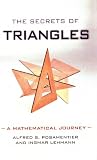
An amazing compendium of aspects of the Euclidean geometry of triangles (plus a chapter on triangle-related fractals) investigated mainly in post-medieval times. (I imagine the ghost of the Alexandrian master expressing hearty approval and condemning the religion-engendered Dark Age that interrupted progress for so many centuries.) The theorems of Ceva, Feuerbach, Gergonne, Morley, Napoleon (yes, *that* Napoleon), Routh, Simson, and Stewart; and much, much more. Exemplified, too, is the fact show more that it is in geometry books that figures placed overleaf (or even more remotely) from the point of discussion are both hardest for the publisher to avoid and maximally troublesome for the reader. show less
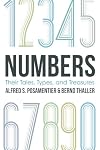
A quite undemanding volume for a Posamentier math popularization, with most of the number explorations confined to the positive integers (sometimes just to their decimal representations). (But phi and pi appear eventually.) Amid all the good stuff also found in numerous other books, topics that were new and interesting to me included Sanskrit verse patterns as a wellspring for the field of combinatorics and the many peculiarities of Pythagorean triples.
Problem-Solving Strategies In Mathematics: From Common Approaches To Exemplary Strategies (Problem Solving in Mathematics and Beyond) by Alfred S. Posamentier
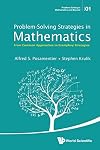
This book is a guide and classroom resource that can also assist an independent student looking to broaden his or her problem-solving strategies. The level is appropriate for secondary education. The reader can easily be the student looking for a self-contained overview to take at any pace or the educator looking to interject fresh material into a lecture or lesson. Each of the ten strategies present contrasting solutions in a format meant to provide insight into the problem. Only elementary show more mathematics is used as the goal is to improve the student’s procedure, not enlarge on mathematical techniques or even increase mathematical sophistication, per se. In the suite of examples, I feel the authors missed three opportunities: helpful duplication for contrasting, editing out unnecessarily similar examples, and including analytic geometry techniques appropriate for the target audience...
[Look for my entire review up at MAA Reviews.] show less
[Look for my entire review up at MAA Reviews.] show less
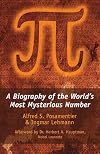
A quick read because IV been through most of the information before. Chapter 7 (Paradox in π) salvaged the book in my opinion.
Lists
Awards

You May Also Like


Associated Authors
Statistics
- Works
- 72
- Members
- 1,346
- Popularity
- #19,116
- Rating
- 3.4
- Reviews
- 17
- ISBNs
- 148
- Languages
- 5