
Randy O. Frost
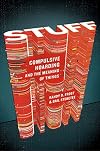
Author of Stuff: Compulsive Hoarding and the Meaning of Things
About the Author
Works by Randy O. Frost
Buried in treasures : help for compulsive acquiring, saving, and hoarding (2007) 241 copies, 5 reviews
Associated Works
Digging Out: Helping Your Loved One Manage Clutter, Hoarding, and Compulsive Acquiring (2007) — Foreword, some editions — 68 copies
Tagged
Common Knowledge
- Birthdate
- 1950
- Gender
- male
- Education
- University of Kansas (PhD|1977)
- Occupations
- psychologist
college professor - Organizations
- Smith College
- Short biography
- Randy O. Frost received his Ph.D. from the University of Kansas in 1977 and is the Harold and Elsa Siipola Israel Professor of Psychology at Smith College. He has published more than 160 scientific articles and book chapters on hoarding and related topics. His work has been funded by the Obsessive Compulsive Foundation and the National Institute of Mental Health. Frost serves on the Scientific Advisory Board of the International OCD Foundation. He has co-authored several best-selling books on hoarding, and his research has been featured on a variety of television and radio news shows, including20/20 Downtown,Good Morning America, The Today Show,Dateline, National Public Radio (general news as well as the award-winning programThe Infinite Mind), CBS Sunday Morning, BBC News, and the Canadian Broadcasting Company'sThe Nature of Things. He has also consulted with various hoarding task forces around the world and has given hundreds of lectures and workshops on the topic in the U.S. and internationally.
http://www.science.smith.edu/departme...
Members
Reviews
I'm really glad I read this. My aunt is an extreme hoarder and has been for as long as I can remember. Possibly longer than I've been alive, and I'm thirty-six. I haven't been allowed in her house since I was ten, and I haven't been allowed in her yard since I was fifteen. Her house has been condemned twice that I know of. If it is condemned again, she will be homeless. It doesn't mean my family doesn't love her. It means we cannot take her in. Rats ate her car. She was able to get another show more one six months later. She went to a hoarder's support group a decade ago and wanted to change her ways, but eight months into going, she said "the people are weird" and stopped. She knows her house is messy but ultimately will not clean it until forced to. It has been nearly forty years. She will not change. Her brother is the only one she will listen to about obeying court orders to clean her house. Even then, she whines and complains and argues and yowls the entire time, no matter if it's rotting trash or something to keep. At a family gathering where my dad was cooking, his beloved electric cooking device finally ended a ten year run. My dad shrugged, put the meat in the oven to finish cooking, and tossed the cooking device in the outside trash can without a second thought. My aunt physically gasped. A tiny one, but the rest of us heard.
"Are you okay?" I asked curiously.
"He threw it away."
"Yeah. It didn't work anymore," I said kindly but probably with a note of condescending.
"Sad," my aunt sighed.
"It lasted ten years," I said cheerfully. "He'll get a new one. He'll be excited."
"Still," she said mournfully.
Over something that wasn't hers..
I am the exact opposite of her. I was raised to be clean and decided to be even cleaner as an adult. I donate things without a second thought, to the extent that I have hurt people's feelings. Discovering Swedish Death Cleaning was an absolute -delight- and one of the most fulfilling things I've done for myself. I read this book to try and understand my aunt.
I knew some rudimentary things the book addresses, and was relieved to find out so much I didn't know. I've tried to understand my aunt. Tried to poke into the psychology of it so I wouldn't think she was so weird. I didn't want to resent her or make fun of her. Our relationship as adults is non-existent for other reasons. Mostly when I think of her hoarding I am mildly concerned. We don't talk about it as a family. She won't let us. But I still wanted to read this so I could, I don't know, try to understand her. I know too little about her emotional state to ask. This book was helpful to me anyway. I'm glad I sat down and read it. show less
"Are you okay?" I asked curiously.
"He threw it away."
"Yeah. It didn't work anymore," I said kindly but probably with a note of condescending.
"Sad," my aunt sighed.
"It lasted ten years," I said cheerfully. "He'll get a new one. He'll be excited."
"Still," she said mournfully.
Over something that wasn't hers..
I am the exact opposite of her. I was raised to be clean and decided to be even cleaner as an adult. I donate things without a second thought, to the extent that I have hurt people's feelings. Discovering Swedish Death Cleaning was an absolute -delight- and one of the most fulfilling things I've done for myself. I read this book to try and understand my aunt.
I knew some rudimentary things the book addresses, and was relieved to find out so much I didn't know. I've tried to understand my aunt. Tried to poke into the psychology of it so I wouldn't think she was so weird. I didn't want to resent her or make fun of her. Our relationship as adults is non-existent for other reasons. Mostly when I think of her hoarding I am mildly concerned. We don't talk about it as a family. She won't let us. But I still wanted to read this so I could, I don't know, try to understand her. I know too little about her emotional state to ask. This book was helpful to me anyway. I'm glad I sat down and read it. show less
Stuff is first and foremost about hoarders-people who keep so much stuff in their homes that it negatively affects their lives- but it is also about all of us. Stuff forces its readers to look at themselves and wonder: why do I have all this stuff?
I agreed to read Stuff because hoarding fascinates me, and my family has had some experience with it. My husband’s grandfather kept a very cluttered house, eventually filling an entire pole barn full of items from yard sales and the trash. Going show more through his items after his death was excruciating, and it was difficult to understand why he kept a broken rake, toy cars with only two wheels, and Tiffany lamps all together.
According to the book, my husband’s family is not alone. In fact, SIX MILLION Americans suffer from hoarding, and only recently are doctors beginning to understand its complications. It is a bizarre combination of nature and nuture-both genes and family conditions have been identified as factors. I had the misconception that most hoarders were elderly, and that the Great Depression had led to their condition. Frost and Steketee quickly addressed this false logic by explaining that in their research most hoarders have never experienced a period of extreme need or want.
Instead, they argue, most of them had a childhood of extreme disconnect/isolation from their parents. Their “recent research indicates that an absence of warmth, acceptance, and support characterizes the early family life of many hoarders, perhaps leading them to form strong emotional attachments to possessions.” Therefore, as children they learned to become attached to objects rather than people.
Still, I was amazed to learn that there are a variety of reasons why hoarders keep these items.
* utility: Everything has a use, and the hoarder believes that they will use the broken rake later to fix another one.
* opportunity: That piece of newspaper is an opportunity to be smarter, go on a trip, understand something greater, etc.
* fear of error: The hoarder can’t decide if this item is important or not, so he/she just keeps it.
* perfection: In an attempt to perfect a collection, he/she keeps all of the magazines published in 1999 together.
Millions more are affected by hoarding when you factor in their families, their caregivers, and their neighbors. At one point Dr. Frost participates in a house-wide cleanout in NYC. After speaking with a representative from the cleaning company he learns that a house-wide cleaning can cost upwards of $50,000 and that this particular company averages four such cleanings a day!
Ironically most of these cleanings are paid for by the city as a result of legal issues/social work, and they don’t end the hoarding because they don’t address the reason behind the issue. In fact, these house-wide cleanouts usually make the issue worse. The authors are concerned that hoarding is on the rise-with 11 million Americans owning storage space around the country-something that did not exist forty years ago.
Consistently in the book I was puzzled by the question: what is the difference between clutter and a hoard? What distigushes a collector from a hoarder? Apparently I am not the only one with these questions, and the authors argued that “(p)erhaps the best way to make the distinction between hoarding and normal collecting is to determine whether the behavior creates a problem for the family.” Still vague huh? Well Dr. Frost developed a Clutter Image Rating to help diagnose potential hoarders. Patients look at the pictures and determine which one looks like their house. Doctors are then in the difficult position of deciding if children in the home are endangered. If so, they legally have to report the hoarding issue which usually results in legal action and the patient not returning to therapy.
I really enjoyed this book because it was a combination of stories and scientific data. It also made me constantly aware of the items that we choose to keep in our home, our cars, and our lives. I still have not come to an answer about all of my stuff, but I do know that my fridge is cleaner after the chapter about food hoarding! show less
I agreed to read Stuff because hoarding fascinates me, and my family has had some experience with it. My husband’s grandfather kept a very cluttered house, eventually filling an entire pole barn full of items from yard sales and the trash. Going show more through his items after his death was excruciating, and it was difficult to understand why he kept a broken rake, toy cars with only two wheels, and Tiffany lamps all together.
According to the book, my husband’s family is not alone. In fact, SIX MILLION Americans suffer from hoarding, and only recently are doctors beginning to understand its complications. It is a bizarre combination of nature and nuture-both genes and family conditions have been identified as factors. I had the misconception that most hoarders were elderly, and that the Great Depression had led to their condition. Frost and Steketee quickly addressed this false logic by explaining that in their research most hoarders have never experienced a period of extreme need or want.
Instead, they argue, most of them had a childhood of extreme disconnect/isolation from their parents. Their “recent research indicates that an absence of warmth, acceptance, and support characterizes the early family life of many hoarders, perhaps leading them to form strong emotional attachments to possessions.” Therefore, as children they learned to become attached to objects rather than people.
Still, I was amazed to learn that there are a variety of reasons why hoarders keep these items.
* utility: Everything has a use, and the hoarder believes that they will use the broken rake later to fix another one.
* opportunity: That piece of newspaper is an opportunity to be smarter, go on a trip, understand something greater, etc.
* fear of error: The hoarder can’t decide if this item is important or not, so he/she just keeps it.
* perfection: In an attempt to perfect a collection, he/she keeps all of the magazines published in 1999 together.
Millions more are affected by hoarding when you factor in their families, their caregivers, and their neighbors. At one point Dr. Frost participates in a house-wide cleanout in NYC. After speaking with a representative from the cleaning company he learns that a house-wide cleaning can cost upwards of $50,000 and that this particular company averages four such cleanings a day!
Ironically most of these cleanings are paid for by the city as a result of legal issues/social work, and they don’t end the hoarding because they don’t address the reason behind the issue. In fact, these house-wide cleanouts usually make the issue worse. The authors are concerned that hoarding is on the rise-with 11 million Americans owning storage space around the country-something that did not exist forty years ago.
Consistently in the book I was puzzled by the question: what is the difference between clutter and a hoard? What distigushes a collector from a hoarder? Apparently I am not the only one with these questions, and the authors argued that “(p)erhaps the best way to make the distinction between hoarding and normal collecting is to determine whether the behavior creates a problem for the family.” Still vague huh? Well Dr. Frost developed a Clutter Image Rating to help diagnose potential hoarders. Patients look at the pictures and determine which one looks like their house. Doctors are then in the difficult position of deciding if children in the home are endangered. If so, they legally have to report the hoarding issue which usually results in legal action and the patient not returning to therapy.
I really enjoyed this book because it was a combination of stories and scientific data. It also made me constantly aware of the items that we choose to keep in our home, our cars, and our lives. I still have not come to an answer about all of my stuff, but I do know that my fridge is cleaner after the chapter about food hoarding! show less

I noticed this book back when it came out, but didn’t read it. Recently though it went on sale and so I decided to give it a go despite being pretty repulsed by the whole hoarding phenomenon. Not only the behavior (which makes me squidgy), but its exploitation on TV. Out of sheer prurience I watched a couple of hoarding reality shows and couldn’t stomach any more. The filth and the out of control nature of a hoarder’s world, coupled with the sheer evil joy of everyone connected with show more the show, turned me off. The authors of this book don’t take that route though, and instead try to understand the individual reasons their patients are hoarders.
Make no mistake; it is a mental illness and a crippling one. None of the people I “met” in this book are capable of stopping. Even if they can see the problem (and not all of them can), they can’t curb the compulsion. For a person without any such debility, it’s really unfathomable. Just stop for crying out loud. They can’t though and that’s really the sad part, especially for those who recognize how crazy they are. It was quite sad reading about those folks. The ones who don’t know they’re mental, still make you sad, but on on a lighter level.
A lot of the underlying causes seem to be the need for safety and security. Some people find comfort in stuff and literally cocoon themselves away under tons of junk. Others simply can’t make decisions about objects in their lives and their importance. They might need that broken window blind someday. Or, for some hoarders, the idea that someone else might need it. Then there’s the people who think that discarding anything, regardless of how foul or degraded, is wasteful. They are obsessed with the potential of objects, not their current state. It is absolutely nuts.
The author labels this tendency as a very modern one and I have to agree. One hundred, two hundred years ago and longer, only the rich and privileged could afford to amass so much crap. The book opens with one such story about a couple of very wealthy brothers who filled a mansion with garbage because they could. Towards the end there is the mirror case of today, but these brothers don’t just stop at one home. They ruin several high end apartments with refuse. Even if the objects don’t start out as trash, they often end up that way. Priceless and worthy objects become worthless.
That and the fact that we now live in a river of endlessly flowing cheap goods, and nothing is meant to be reused or last very long. Back when personal items were expensive and rare, this kind of thing was just impossible. I was reminded of the scene in A Christmas Carol where the Cratchit's meager collection of glassware was described. Some of the pieces had handles missing or chips, but they were displayed with pride and only used on special days. Now people have so much stuff they need storage space beyond their comparatively gigantic homes.
Even more depressing is the fact that clean-outs and interventions seldom take, with the hoarder cranking overtime to replace the items removed. One poor soul was literally dumpster diving to get his stuff back while the city health workers tried to restore his house back to a livable state. Not only do these people eventually endanger themselves, but those who live with or near them. I feel even worse for the neighbors who have to endure the smell and the invading cockroaches. OMG it’s wretched. The book is well written and sensitive though, and through that enlightening about a condition few of us can really understand. show less
Make no mistake; it is a mental illness and a crippling one. None of the people I “met” in this book are capable of stopping. Even if they can see the problem (and not all of them can), they can’t curb the compulsion. For a person without any such debility, it’s really unfathomable. Just stop for crying out loud. They can’t though and that’s really the sad part, especially for those who recognize how crazy they are. It was quite sad reading about those folks. The ones who don’t know they’re mental, still make you sad, but on on a lighter level.
A lot of the underlying causes seem to be the need for safety and security. Some people find comfort in stuff and literally cocoon themselves away under tons of junk. Others simply can’t make decisions about objects in their lives and their importance. They might need that broken window blind someday. Or, for some hoarders, the idea that someone else might need it. Then there’s the people who think that discarding anything, regardless of how foul or degraded, is wasteful. They are obsessed with the potential of objects, not their current state. It is absolutely nuts.
The author labels this tendency as a very modern one and I have to agree. One hundred, two hundred years ago and longer, only the rich and privileged could afford to amass so much crap. The book opens with one such story about a couple of very wealthy brothers who filled a mansion with garbage because they could. Towards the end there is the mirror case of today, but these brothers don’t just stop at one home. They ruin several high end apartments with refuse. Even if the objects don’t start out as trash, they often end up that way. Priceless and worthy objects become worthless.
That and the fact that we now live in a river of endlessly flowing cheap goods, and nothing is meant to be reused or last very long. Back when personal items were expensive and rare, this kind of thing was just impossible. I was reminded of the scene in A Christmas Carol where the Cratchit's meager collection of glassware was described. Some of the pieces had handles missing or chips, but they were displayed with pride and only used on special days. Now people have so much stuff they need storage space beyond their comparatively gigantic homes.
Even more depressing is the fact that clean-outs and interventions seldom take, with the hoarder cranking overtime to replace the items removed. One poor soul was literally dumpster diving to get his stuff back while the city health workers tried to restore his house back to a livable state. Not only do these people eventually endanger themselves, but those who live with or near them. I feel even worse for the neighbors who have to endure the smell and the invading cockroaches. OMG it’s wretched. The book is well written and sensitive though, and through that enlightening about a condition few of us can really understand. show less
First published in 2010, this book points to a cornerstone in our understanding of hoarding. Back then indeed, hoarding behaviours were considered to be a substrate of OCD. As the authors demonstrate, though, such view was very questionable. First, because the compulsive behaviours involved in OCD are triggered by negative, distressing intrusive thoughts, whereas there is no such distress with hoarding. On the contrary, hoarders report very positive feelings when acquiring stuff; it's their show more discarding only which causes them anxiety. Then, and most importantly perhaps, only a quarter of hoarders fit a diagnosis of OCD. The vast majority, then, either have other, widely different conditions (from bipolar to dementia, and everything in between) or have no associated disorder whatsoever. This beg the question: what kind of pathology is it?
As it is, the DSM-5 (first published in 2013) will update it as being a disorder of its own. Many questions remain, though; and these are the many questions that this book addresses, making it a must-read on the topic. The fact that the authors are drawing from the personal experiences and testimonies of hoarders themselves, a person-centred approach which is not only deeply insightful but very moving too (for their stories can be very harrowing, giving a glimpse into how impactful, even, self-destructive, living with such condition can be) renders it all the more laudable, for mixing science with strongly felt compassion.
If our past approach linking it to OCD was misguided, can considering hoarding more akin to an Impulse Control Disorder (e.g. kleptomania, gambling...) be more suitable? And what trigger someone to become a hoarder? Is it rooted in trauma? Is it genetic? Is it a mix of both? Could it be what ethologists call a Fixed Action Pattern (FAPs) that is, an intuitive behaviour comparable to what is seen, for example, in pack-rats or squirrels? Given its prevalence in the Western world, does it have any connection to consumerism, and, if so, what could it say about our materialistic societies? What differentiate hoarding from other accumulating behaviours, such as collecting and cluttering? More to the point, what can we learn about hoarders when assessing their very unique way of perceiving the world around them?
Humbly, the authors certainly don't claim to bring definite answers to these questions. The condition itself might have been around for a while (Emil Kraepelin described what he called 'oniomania' more than 100 years ago already, and gerontologists have been knowing about syllogomania/ Diogenes syndrome at least since the 1960s) but it's only fairly recently that we came to grapple with it. As such, 'Stuff' is merely a window onto a still unknown world. Nevertheless, through its exposing of personal stories and experiences, coupled with scientific insights, and, even, philosophical approach, it remains a gripping and fascinating read on the subject. show less
As it is, the DSM-5 (first published in 2013) will update it as being a disorder of its own. Many questions remain, though; and these are the many questions that this book addresses, making it a must-read on the topic. The fact that the authors are drawing from the personal experiences and testimonies of hoarders themselves, a person-centred approach which is not only deeply insightful but very moving too (for their stories can be very harrowing, giving a glimpse into how impactful, even, self-destructive, living with such condition can be) renders it all the more laudable, for mixing science with strongly felt compassion.
If our past approach linking it to OCD was misguided, can considering hoarding more akin to an Impulse Control Disorder (e.g. kleptomania, gambling...) be more suitable? And what trigger someone to become a hoarder? Is it rooted in trauma? Is it genetic? Is it a mix of both? Could it be what ethologists call a Fixed Action Pattern (FAPs) that is, an intuitive behaviour comparable to what is seen, for example, in pack-rats or squirrels? Given its prevalence in the Western world, does it have any connection to consumerism, and, if so, what could it say about our materialistic societies? What differentiate hoarding from other accumulating behaviours, such as collecting and cluttering? More to the point, what can we learn about hoarders when assessing their very unique way of perceiving the world around them?
Humbly, the authors certainly don't claim to bring definite answers to these questions. The condition itself might have been around for a while (Emil Kraepelin described what he called 'oniomania' more than 100 years ago already, and gerontologists have been knowing about syllogomania/ Diogenes syndrome at least since the 1960s) but it's only fairly recently that we came to grapple with it. As such, 'Stuff' is merely a window onto a still unknown world. Nevertheless, through its exposing of personal stories and experiences, coupled with scientific insights, and, even, philosophical approach, it remains a gripping and fascinating read on the subject. show less
Lists
Awards

You May Also Like


Associated Authors
Statistics
- Works
- 8
- Also by
- 1
- Members
- 1,451
- Popularity
- #17,710
- Rating
- 3.9
- Reviews
- 85
- ISBNs
- 27
- Languages
- 2


