
Elissa Schappell
Author of Blueprints for Building Better Girls
About the Author
Elissa Schappell writes the "Hot Type" column for Vanity Fair and is a founding editor of the new literary magazine Tin House. She received her MFA from the Creative Writing Program at New York University. She has been a senior editor at The Paris Review. She lives in Brooklyn.
Image credit: Courtesy of Squaw Valley Community of Writers
Works by Elissa Schappell
The Friend Who Got Away: Twenty Women's True Life Tales of Friendships that Blew Up, Burned Out or Faded Away (2005) — Editor; Foreword & contributor — 213 copies, 9 reviews
Money Changes Everything: Twenty-Two Writers Tackle the Last Taboo with Tales of Sudden Windfalls, Staggering Debts, and (2007) — Editor — 51 copies, 1 review
The Joy of Cooking 1 copy
Associated Works
The Bitch in the House: 26 Women Tell the Truth About Sex, Solitude, Work, Motherhood, and Marriage (2002) — Contributor — 734 copies, 20 reviews
What My Mother Gave Me: Thirty-one Women on the Gifts That Mattered Most (2013) — Contributor — 106 copies, 19 reviews
Indelible in the Hippocampus: Writings from the Me Too Movement (2019) — Contributor — 36 copies, 1 review
Sex and Sensibility: 28 True Romances from the Lives of Single Women (2005) — Contributor — 28 copies
Here She Comes Now: Women in Music Who Have Changed Our Lives (2015) — Contributor — 25 copies, 1 review
The Artists' and Writers' Cookbook: A Collection of Stories with Recipes (2016) — Contributor — 19 copies
Tagged
Common Knowledge
- Occupations
- author
contributing editor - Organizations
- Tin House (cofounder)
Queens University of Charlotte - Short biography
- Elissa Schappell is a contributing editor at Vanity Fair and a cofounder of Tin House) [adapted from The Friend Who Got Away (2005)]
- Nationality
- USA
- Associated Place (for map)
- USA
Members
Reviews
The Friend Who Got Away: Twenty Women's True-Life Tales of Friendships That Blew Up, Burned Out, or Faded Away by Jenny Offill
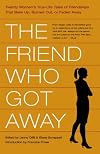
A interesting book theme but which regrettably fails to fulfill its promise. This short story anthology about women who have had women friends exhibits high level writing for which I am grateful but lacks the energy of spontaneity from true memoirs. I read mostly memoirs nowadays. These stories claim to be autobiographical but the editors in the Foreword say that elements have been changed. This means that the works are fiction due to confidentiality issues. The Introduction very concisely show more and elegantly states female friendships as a proposal unlike a love romance "...is supposed to be made of sturdier stuff, a less complicated, more enduring relationship." Their uncomplicated, reassuringly reasonable nonfamilial relationships even promise to last forever. Most remorsefully don't, say the Editors. The writers focus on their own "dizzying subjectivity" which turns out to be the downfall of most of those anthologized. The friendships are used to "glimpse a sharper and clearer, or simply more interesting, image of ourselves." The friendships written about are unfortunately then exercises in self-interest. It's hard to move beyond that as Montagne knew well. But it is to be possible for we readers. The Editors quote Boswell's Johnson as illustrative in this respect but I don't know if that was a real male friendship. Female friendships are different than male friendships but both must be understood as complementary. Published in 2005, this book is a relic of bygone days when Ivy League MFA grads/students were seen as the cream of the crop of creative writers. This book seems like an academic exercise polished up rather than a struggle to find what female friendships can offer or deny. Most often there is a rage against the patriarchy, or minimally cultural criticism. One story even attacks stereotypical standards of beauty as a kind of Picture of Dorian Gray motif. Classical stereotypes of beauty must be set aside in preference to any inclusive model even if rejecting classicist norms causes discomfort and revulsion in the critique. If you like female writers (I do) and desire a book full of them, you can read this and find something interesting. This anthology needs a Part II.
I probably should have rated this higher due to the number of contributors' entries but I can live with saying I read it and leave it there. show less
I probably should have rated this higher due to the number of contributors' entries but I can live with saying I read it and leave it there. show less
I want to buy 1,000 copies of Blueprints for Building Better Girls and hand them out to random passersby on the streets. I want this book to be read, immediately, by everyone I've ever known or will ever know. This is incredible stuff. Easily the best book I've read this year. Possibly the best book I've ever read.
It is a series of short stories that center around women and the relationships we have with one another, with our lovers, with our spouses, our children, our parents. Most of the show more stories intersect with another story in some way. There was laughing, there was crying. There was one particular 8 page section that I had to read out of the corner of my eye because I just couldn't face it head on.
It is brave, and honest, and exceptional in every way. This book made me a wiser person.
Thank you, Goodreads First Reads program for sending me this book and thank you Elissa Schappell for writing it. show less
It is a series of short stories that center around women and the relationships we have with one another, with our lovers, with our spouses, our children, our parents. Most of the show more stories intersect with another story in some way. There was laughing, there was crying. There was one particular 8 page section that I had to read out of the corner of my eye because I just couldn't face it head on.
It is brave, and honest, and exceptional in every way. This book made me a wiser person.
Thank you, Goodreads First Reads program for sending me this book and thank you Elissa Schappell for writing it. show less
The Friend Who Got Away: Twenty Women's True Life Tales of Friendships that Blew Up, Burned Out or Faded Away by Jenny Offill
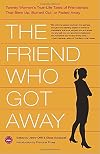
Although I didn't love all the stories in this book of essays, there were a few that really spoke to me. That reminded me of my own 'friends who got away' ... that made me sad, frustrated and nostalgic all at once! Friendships are complicated and I think almost everyone has experienced letting go of a friendship or being let go of ... it's pretty universal. As a result, it was really quite interesting to read about the experiences of other women ... their feelings, their motivations, as well show more as their justifications. Overall, I'm glad that I read this collection of essays but it wasn't a personal favorite. show less
The Friend Who Got Away: Twenty Women's True Life Tales of Friendships that Blew Up, Burned Out or Faded Away by Jenny Offill
I enjoyed individual essays in this collection, and I appreciated the book's statement that friendships are taken for granted, and that there is an unspoken failure and shame if those friendships do not last. But an anthology is always uneven. Dorothy Allison's piece on the sexual relationships she's had with friends was excellently written and smartly self-critical, I thought Patricia Marx's piece Tenure was self-evident and a bit smug.
Katie Roiphe's essay examined how easy it is to choose show more a sexual partner over a friend, and how that is so often seen as the ultimate betrayal. I would have been interested in reading a further examination of this, that talked about the politics of female friendships. It's true that shows like Sex and the City present friendships as the one constant a woman will have through her life the thing that remains unquestioned. And yet, there are many aspects of sexual politics which remain unexamined; popular culture rarely looks at power dynamics between women in an interesting or feminist way. And most of these stories remain on the personal level, without any further analysis, which is what I'd been hoping to read. show less
Katie Roiphe's essay examined how easy it is to choose show more a sexual partner over a friend, and how that is so often seen as the ultimate betrayal. I would have been interested in reading a further examination of this, that talked about the politics of female friendships. It's true that shows like Sex and the City present friendships as the one constant a woman will have through her life the thing that remains unquestioned. And yet, there are many aspects of sexual politics which remain unexamined; popular culture rarely looks at power dynamics between women in an interesting or feminist way. And most of these stories remain on the personal level, without any further analysis, which is what I'd been hoping to read. show less
Lists
Awards


You May Also Like


Associated Authors
Statistics
- Works
- 7
- Also by
- 12
- Members
- 655
- Popularity
- #38,516
- Rating
- 3.6
- Reviews
- 21
- ISBNs
- 20
- Languages
- 1