
L. S. Stavrianos (1913–2004)
Author of The Balkans Since 1453
About the Author
Until his retirement, L. S. Stavrianos was Professor of History at Northwestern University
Works by L. S. Stavrianos
Lifelines from Our Past: A New World History (Sources and Studies in World History) (1989) 28 copies, 2 reviews
Tagged
Common Knowledge
- Canonical name
- Stavrianos, L. S.
- Legal name
- Stavrianos, Leften Savros
- Birthdate
- 1913
- Date of death
- 2004-03-23
- Gender
- male
- Education
- Clark University (MA, PhD)
University of British Columbia (BA - History) - Occupations
- historian
professor - Organizations
- Northwestern University
University of California, San Diego
Queen's University
Smith College - Birthplace
- Vancouver, British Columbia, Canada
- Place of death
- La Jolla, California, USA
- Map Location
- Canada
- Associated Place (for map)
- Vancouver, British Columbia, Canada
Members
Reviews
Lifelines from Our Past: A New World History (Sources and Studies in World History) by Leften Stavros Stavrianos

Intriguing approach to world history: No dates, no kings, no wars. Instead, a categorizing of human societies into 3 groups: Kinship, Tributary, and Capitalist. For the layperson, this approach makes a lot more sense than the traditional one, since it allows us to see societal PATTERNS without the distractions of individual national "events." I loved this book!
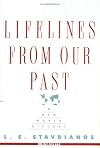
In this stirring call for change, Stavrianos surveys world history and assesses the impact of social and technological change on people's relation to their peers and their world. He argues that human beings are not innately predisposed to either acquisitiveness or aggression. Society has shaped us to our present attitudes, and thus to our current predicament. Stavrianos paints a gloomy picture of the present: the continued exploitation of women; accelerating ecological devastation; a show more widening gap between rich and poor in affluent societies and between rich and poor societies; the specter of nuclear obliteration. "The basic problem in contemporary society is the priority given to productivity . . . as against sustaining a healthy social environment." This book packs a punch.
From Book News, Inc.
An interpretation of world history, from the paleolithic era to Mikhail Gorbachev. Stavrianos conceptualizes human history into three categories: kinship societies, tributary societies, and capitalist societies. In each, he discerns and studies four "lifeline" issues--ecology, gender relations, social relations, and war--that encompass the broadest areas of human experience, are of immediate concern today, and allow the maximum linkage between past and present global existence. show less
From Book News, Inc.
An interpretation of world history, from the paleolithic era to Mikhail Gorbachev. Stavrianos conceptualizes human history into three categories: kinship societies, tributary societies, and capitalist societies. In each, he discerns and studies four "lifeline" issues--ecology, gender relations, social relations, and war--that encompass the broadest areas of human experience, are of immediate concern today, and allow the maximum linkage between past and present global existence. show less
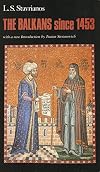
This book is a bit of a doorstop, but that makes it detailed enough to be a good alternative to histories of individual countries. It is clearly written and well organised and the recapitulation of key bits of information mean that it would be possible to read chapters in isolation or skip to the period in which you are most interested. The book proceeds at a fairly slow pace, but in my opinion that makes it an unusually easy read for something so academic. I found it easier going than show more Glenny's "The Balkans" for instance, though the latter has the virtue of being extremely up to date. show less
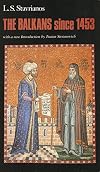
Well-written, comprehensive historical coverage of the Balkans, from the time of their conquest by the Ottomans, until the 1950's. It is a slow read -- very detailed, and written in that unique style of historians that makes it more suitable for "skinning" than for dedicated end-to-end reading. However it's worth digging into if you are interested in the subject.
You May Also Like


Statistics
- Works
- 25
- Members
- 465
- Popularity
- #52,882
- Rating
- 3.8
- Reviews
- 9
- ISBNs
- 55
- Languages
- 1
- Favorited
- 1