
Felipe Fernández-Armesto
Author of Millennium : A History of the Last Thousand Years
About the Author
Felipe Fernandez-Armesto, a world-renowed scholar and author, is the Principe de Asturias Professor of Spanish Culture and Civilization at Tufts University
Series
Works by Felipe Fernández-Armesto
REFORMATIONS: A Radical Interpretation of Christianity and the World, 1500-2000 (1996) 141 copies, 1 review
The Times Atlas of World Exploration: 3000 Years of Exploring, Explorers, and Mapmaking (1991) 95 copies
Before Columbus: Exploration and Colonization from the Mediterranean to the Atlantic, 1229-1492 (1987) 71 copies
A History of England (Complete Set of the 12-volume Folio Society Series) (Volumes I - XII) (2001) 32 copies
A History of England. 5 volume set. Anglo-Saxon Early Medieval England England in the Later Middle Ages England under the Tudors England Under the Stuarts [Folio Society 1997] (1997) — General Editor — 11 copies
The Canary Islands after the Conquest: The Making of a Colonial Society in the Early Sixteenth Century (Oxford Historical Monographs) (1982) 4 copies
Uma historia da imaginacao. Como e por que pensamos o que pensamos (Em Portugues do Brasil) (2019) 3 copies
Itinerario - International Journal on the History of European Expansion and Global Interaction. number 3, 2008 — Interviewee — 1 copy
A HISTORY OF ENGLAND: VOL I - VI. — Editor — 1 copy
Augusto Assía. Artículos 1 copy
Associated Works
England in the Later Middle Ages: A Political History (1973) — General Editor, some editions — 282 copies, 1 review
A History Of England, Volumes I - III Slipcased: Anglo-Saxon England, Early Medieval England; England in the Later Middle Ages (A History Of England - The Folio Society) Volumes… (1997) — Editor — 31 copies
The Malaspina Expedition, 1789-1794 : Journal of the Voyage by Alejandro Malaspina. Volume I: Cádiz to Panamá (2002) — Editor, some editions — 19 copies
Conversion to Christianity: from late antiquity to the modern age: considering the process in Europe, Asia, and the Americas (2009) — Contributor — 2 copies
Austin McQuinn: Ape Opera House & Selected Work 2000-2005 — Contributor — 1 copy
Tagged
Common Knowledge
- Canonical name
- Fernández-Armesto, Felipe
- Birthdate
- 1950-12-06
- Gender
- male
- Education
- Magdalen and St John's Colleges, Oxford (BA, MA, D.Phil)
- Occupations
- historian
university professor - Organizations
- Tufts University
Queen Mary, University of London
Oxford University
University of Notre Dame - Awards and honors
- Caird Medal of the National Maritime Museum (1997)
John Carter Brown Library Medal
Premio Nacional de Investigación, Sociedad Geográfica Española (2003)
IACP Prize (2003)
Professorial Fellow of Queen Mary, U. of London (2000) - Nationality
- UK
- Birthplace
- London, England, UK
- Places of residence
- London, England, UK
South Bend, Indiana, USA - Associated Place (for map)
- UK
Members
Reviews

Felipe Fernández-Armesto is one of the world's greatest historians, especially in the era of the "Great Discoveries." His books on Columbus and Vespucci are standards, and this one on Magellan will be one too. It rests in deep and wide archival research and tackles several historiographical disputes about Magellan's origins, motives, and life. It is no hagiography. After reading his books on Columbus and Vespucci you get the idea that Fernández-Armesto gives them a grudging respect. Not so show more here. To Fernández-Armesto, Magellan was a hack, a monomaniac, and a poor leader of men. He was a turncoat to his birth nation (Portugal), disobeyed orders from his new sovereign (Carlos V of Spain), and a poor leader of men (inspiring multiple mutinies). His voyage discovered a terrible strait to the Pacific, found a useless way across the wide Pacific that found no islands and got almost everybody killed, did not get to the Spice Islands that were his stated goal, and messing things up so bad in the islands he did find (Guam and the Philippines) that he got himself killed—and, it wasn't on Spain's side of the line anyway. For Fernández-Armesto, he was no hero. He didn't even circumnavigate the globe. All the hero-worship that later accrued to his name is odd and misplaced.
Fernández-Armesto offers copious endnotes, some with discursive text. A great work of history. Two things knock it down one half star. First, the images are near to worthless. They are well-chosen, as you would expect from Fernández-Armesto. But, they are all reduced to the size of one book page, in portrait orientation, and in black-and-white. This makes them grainy, tiny, and near to worthless. The editors let him down here. A nice set of color plates would have been good for this book. Second, more than I recall in his other works, Fernández-Armesto makes modern analogies and jokey asides in the text that I found rather off-putting. Still, it must now rank as the best biography of Magellan available, and it will be for some time. show less
Fernández-Armesto offers copious endnotes, some with discursive text. A great work of history. Two things knock it down one half star. First, the images are near to worthless. They are well-chosen, as you would expect from Fernández-Armesto. But, they are all reduced to the size of one book page, in portrait orientation, and in black-and-white. This makes them grainy, tiny, and near to worthless. The editors let him down here. A nice set of color plates would have been good for this book. Second, more than I recall in his other works, Fernández-Armesto makes modern analogies and jokey asides in the text that I found rather off-putting. Still, it must now rank as the best biography of Magellan available, and it will be for some time. show less
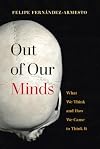
A legitimate question to ask is why humans, part of a sub-group of primates known as great apes, do not live like other great apes. Chimpanzees, our closest living relatives, of which we share 99 percent of our DNA, exhibit very little in the way of cultural variation and evolution, whereas human history is cultural variation and evolution.
How do we account for the difference? Science tells us that all the traditional notions of human superiority are illusions: other animals have keener show more senses, greater physical strength and prowess, cunning intelligence, elaborate communication, sophisticated social systems, and even the capacity for tool use (chimpanzees, for example, fashion sticks as tools to catch termites). Our intelligence and social skills are of a different variety, but they are not unique in the animal kingdom.
So what makes humans truly unique? The answer is the ability to reshape behavior and the environment via the generation, dissemination, and adoption of ideas. While animals exhibit intelligence and social skills, animals cannot become anything other than what they were genetically programmed to become. A chimpanzee can only be a chimpanzee, no matter how highly developed his intellect or social skills are in comparison to other chimps. His behaviors are almost entirely genetically determined. Humans, on the other hand, are the only animals that have broken free from the constraints of biology, able to change themselves and their environments in previously unimagined ways.
The product of this imaginative power, ideas, are therefore the most significant forces driving human behavior and history and the single most important distinction between humans and the rest of the animal kingdom. In Out of Our Minds: What We Think and How We Came To Think It, Felipe Fernandez-Armesto makes the case that a true understanding of human history must focus on the power of ideas. As Fernandez-Armesto writes:
“I propose that ideas, rather than impersonal forces, make the world; that almost everything we do starts in our minds, with reimagined worlds that we then try to construct in reality. We often fail, but even our failures impact on events and jar them into new patterns, new courses.”
This is hard to argue against. Imagine if, for example, Christianity never came to dominate the minds of the middle ages and classical learning never required a renaissance. Would the scientific revolution and age of enlightenment have happened a millennium earlier? And what if the modern world was filled with stoics or Epicureans or platonists instead of Christians? Imagine how different the world would be, in just these two scenarios alone.
The fact is, our thoughts and behaviors are driven by ideas, the majority of which are the result of the intellectual work of others. Even those who do not consider themselves to be “intellectuals” are nonetheless driven by the uncritical acceptance of ideas thought up by past thinkers, transmitted from mind to mind over millennia.
To truly understand history, and ourselves, and to critically evaluate which beliefs are worth maintaining and which are in need of discarding, one needs to confront the origins of ideas and their philosophical merit. And this must be done, otherwise one’s beliefs will simply be the product of historical forces left unexamined, and we know what Socrates said about the unexamined life.
In this way, Out of Our Minds serves an important role in a society that has lost touch with philosophy and thus with the foundation of all knowledge, science, and culture. Ideas that we never question drive our behavior in service to ideologies devised by others, and the escape from this influence can only come from a revival in philosophy and a renewed interest in ideas.
Serving this worthwhile purpose, Fernandez-Armesto takes the reader through the full scope of the history of ideas, from our pre-literate past through the twenty-first century, weaving the story around the three problems that humanity must perpetually face: 1) the problem of knowledge and how to discover the true nature of reality, 2) the problem of conduct and how to lead fulfilling and ethical lives, and 3) the problem of governance and how to organize society politically and economically.
The topics are covered in a mostly objective fashion, but I did find myself disagreeing with the author in a few areas, and this deserves some elaboration. While this is certainly a worthwhile read in intellectual history, the author appears, in general, to be overly sympathetic to religion and more than once refers to atheism as “quasi-religious.”
After stating the obvious fact that some scientists are religious, Fernandez-Armesto writes:
“The idea that science and religion are enemies is false: they concern distinct, if overlapping, spheres of human experience. But the presumption has proved extremely hard to overcome.”
Science and religion are not enemies in the uninteresting sense that someone can be both a scientist and also religious, able to compartmentalize two distinct ways of thinking. But science and religion are enemies in the epistemological sense, a sense you would assume to be more relevant to a history of ideas.
Epistemologically, scientific and religious thinking could not be more different: religion is based on deference to authority and immutable truth that is revealed through scripture or personal revelation; science, on the other hand, is based on observation, experiment, and the progression of knowledge, in addition to a skeptical distrust of intuition and received wisdom. In contrast to the blind conformance to divinely sanctioned and immutable texts, the motto of the Royal Society is “Nullius in verba,” or “take nobody’s word for it.”
These are two distinct epistemological stances: one that believes truth can be revealed or divinely inspired, unencumbered by evidence or experimentation, and one that believes that truth is fundamentally provisional and subject to change based on new discoveries. Religion and science may, as Fernandez-Armesto wrote, concern distinct but overlapping spheres of experience, but the approach to discovering truths about those spheres could not be more dissimilar.
If science is the rational investigation of the material world, then philosophy is the rational investigation of the moral and spiritual world, not religion. Philosophy has more in common with science, due to its reliance on logic, reasoned argument, and evidence, than religion, which relies on faith, or the maintenance of beliefs despite the evidence (faith wouldn’t be required if the evidence lined up in its favor). Therefore the conflict is not simply between science and religion; it’s between science and moral philosophy together against religion. As Christopher Hitchens said, “Philosophy begins where religion ends, just as by analogy chemistry begins where alchemy runs out, and astronomy takes the place of astrology.”
Additionally, despite the claims of the author, atheism is not “just another religion.” A—theism is exactly what it looks like, the absence of theism, or belief in god or gods. It is not a positive theory; it is the negation of a theory that is not persuasive. Knowing that someone is an atheist doesn’t tell you anything else about any of their other beliefs. As Sam Harris said, “Atheism is just a way of clearing the space for better conversations.”
In that sense, atheism allows for a full and honest confrontation with the problems of moral philosophy. If science cannot tell us what is moral, that doesn’t mean that religion fills the gap by default. There is a rich history of secular moral philosophy beginning with Socrates and including Stoicism, Epicureanism, and modern secular humanism, and one would receive a much better and more nuanced moral education by studying literature and philosophy than by reading ancient scripture.
Moral issues are by nature inconclusive and involve trade-offs and conflicting priorities, and are therefore best debated and argued in a context free from dogma or religious constraint. Asserting certainties in an inherently uncertain domain is a recipe for conflict and violence, as dialogue is hindered by professions of faith, which by definition are not amenable to reason.
And that’s what makes especially terrifying the assertion by Fernandez-Armesto that “politics in a Chrisitan tradition may be due for a revival.” Can you think of anything worse, or more divisive, than political decisions being justified by faith or relativistic readings of the Bible? Can you think of anything more contrary to the US Constitution’s Bill of Rights than allowing one particular religion to have state-sanctioned legitimacy above all others?
We should have learned by now that the answer to the tyrannies of the past, including Communism, Nazism, and fascism, is not to replace one type of dogma with another in the form of religion. An open, secular, and democratic society of compromise and dialogue with constitutional protections is the best we can do, however imperfect it remains. But the idea that things might be better if we all start asserting that our political beliefs are divinely sanctioned is a recipe for disaster.
One final observation: the author seems to hold the position that science does not improve morality, forgetting that many immoral acts throughout history were committed based on factual misunderstandings. If we no longer burn witches at the stake or throw virgins into volcanoes to appease the gods, we can thank science.
Science can be used to harm others, obviously, but the net effect seems to be positive, even if only considering the advances of medical science. Fernandez-Armesto also overplays the “failure of science” in the twentieth century to attain certainty, as if the anecdote to incomplete theories or bad science is anything other than better science. People are always looking for excuses to retreat back into mysticism or religion at the hint of any kind of uncertainty, but this is a mistake. Reason and science together may not ever lead to absolute, certain knowledge, but abandoning them is to also abandon our best chance at inhabiting a sane world. show less
How do we account for the difference? Science tells us that all the traditional notions of human superiority are illusions: other animals have keener show more senses, greater physical strength and prowess, cunning intelligence, elaborate communication, sophisticated social systems, and even the capacity for tool use (chimpanzees, for example, fashion sticks as tools to catch termites). Our intelligence and social skills are of a different variety, but they are not unique in the animal kingdom.
So what makes humans truly unique? The answer is the ability to reshape behavior and the environment via the generation, dissemination, and adoption of ideas. While animals exhibit intelligence and social skills, animals cannot become anything other than what they were genetically programmed to become. A chimpanzee can only be a chimpanzee, no matter how highly developed his intellect or social skills are in comparison to other chimps. His behaviors are almost entirely genetically determined. Humans, on the other hand, are the only animals that have broken free from the constraints of biology, able to change themselves and their environments in previously unimagined ways.
The product of this imaginative power, ideas, are therefore the most significant forces driving human behavior and history and the single most important distinction between humans and the rest of the animal kingdom. In Out of Our Minds: What We Think and How We Came To Think It, Felipe Fernandez-Armesto makes the case that a true understanding of human history must focus on the power of ideas. As Fernandez-Armesto writes:
“I propose that ideas, rather than impersonal forces, make the world; that almost everything we do starts in our minds, with reimagined worlds that we then try to construct in reality. We often fail, but even our failures impact on events and jar them into new patterns, new courses.”
This is hard to argue against. Imagine if, for example, Christianity never came to dominate the minds of the middle ages and classical learning never required a renaissance. Would the scientific revolution and age of enlightenment have happened a millennium earlier? And what if the modern world was filled with stoics or Epicureans or platonists instead of Christians? Imagine how different the world would be, in just these two scenarios alone.
The fact is, our thoughts and behaviors are driven by ideas, the majority of which are the result of the intellectual work of others. Even those who do not consider themselves to be “intellectuals” are nonetheless driven by the uncritical acceptance of ideas thought up by past thinkers, transmitted from mind to mind over millennia.
To truly understand history, and ourselves, and to critically evaluate which beliefs are worth maintaining and which are in need of discarding, one needs to confront the origins of ideas and their philosophical merit. And this must be done, otherwise one’s beliefs will simply be the product of historical forces left unexamined, and we know what Socrates said about the unexamined life.
In this way, Out of Our Minds serves an important role in a society that has lost touch with philosophy and thus with the foundation of all knowledge, science, and culture. Ideas that we never question drive our behavior in service to ideologies devised by others, and the escape from this influence can only come from a revival in philosophy and a renewed interest in ideas.
Serving this worthwhile purpose, Fernandez-Armesto takes the reader through the full scope of the history of ideas, from our pre-literate past through the twenty-first century, weaving the story around the three problems that humanity must perpetually face: 1) the problem of knowledge and how to discover the true nature of reality, 2) the problem of conduct and how to lead fulfilling and ethical lives, and 3) the problem of governance and how to organize society politically and economically.
The topics are covered in a mostly objective fashion, but I did find myself disagreeing with the author in a few areas, and this deserves some elaboration. While this is certainly a worthwhile read in intellectual history, the author appears, in general, to be overly sympathetic to religion and more than once refers to atheism as “quasi-religious.”
After stating the obvious fact that some scientists are religious, Fernandez-Armesto writes:
“The idea that science and religion are enemies is false: they concern distinct, if overlapping, spheres of human experience. But the presumption has proved extremely hard to overcome.”
Science and religion are not enemies in the uninteresting sense that someone can be both a scientist and also religious, able to compartmentalize two distinct ways of thinking. But science and religion are enemies in the epistemological sense, a sense you would assume to be more relevant to a history of ideas.
Epistemologically, scientific and religious thinking could not be more different: religion is based on deference to authority and immutable truth that is revealed through scripture or personal revelation; science, on the other hand, is based on observation, experiment, and the progression of knowledge, in addition to a skeptical distrust of intuition and received wisdom. In contrast to the blind conformance to divinely sanctioned and immutable texts, the motto of the Royal Society is “Nullius in verba,” or “take nobody’s word for it.”
These are two distinct epistemological stances: one that believes truth can be revealed or divinely inspired, unencumbered by evidence or experimentation, and one that believes that truth is fundamentally provisional and subject to change based on new discoveries. Religion and science may, as Fernandez-Armesto wrote, concern distinct but overlapping spheres of experience, but the approach to discovering truths about those spheres could not be more dissimilar.
If science is the rational investigation of the material world, then philosophy is the rational investigation of the moral and spiritual world, not religion. Philosophy has more in common with science, due to its reliance on logic, reasoned argument, and evidence, than religion, which relies on faith, or the maintenance of beliefs despite the evidence (faith wouldn’t be required if the evidence lined up in its favor). Therefore the conflict is not simply between science and religion; it’s between science and moral philosophy together against religion. As Christopher Hitchens said, “Philosophy begins where religion ends, just as by analogy chemistry begins where alchemy runs out, and astronomy takes the place of astrology.”
Additionally, despite the claims of the author, atheism is not “just another religion.” A—theism is exactly what it looks like, the absence of theism, or belief in god or gods. It is not a positive theory; it is the negation of a theory that is not persuasive. Knowing that someone is an atheist doesn’t tell you anything else about any of their other beliefs. As Sam Harris said, “Atheism is just a way of clearing the space for better conversations.”
In that sense, atheism allows for a full and honest confrontation with the problems of moral philosophy. If science cannot tell us what is moral, that doesn’t mean that religion fills the gap by default. There is a rich history of secular moral philosophy beginning with Socrates and including Stoicism, Epicureanism, and modern secular humanism, and one would receive a much better and more nuanced moral education by studying literature and philosophy than by reading ancient scripture.
Moral issues are by nature inconclusive and involve trade-offs and conflicting priorities, and are therefore best debated and argued in a context free from dogma or religious constraint. Asserting certainties in an inherently uncertain domain is a recipe for conflict and violence, as dialogue is hindered by professions of faith, which by definition are not amenable to reason.
And that’s what makes especially terrifying the assertion by Fernandez-Armesto that “politics in a Chrisitan tradition may be due for a revival.” Can you think of anything worse, or more divisive, than political decisions being justified by faith or relativistic readings of the Bible? Can you think of anything more contrary to the US Constitution’s Bill of Rights than allowing one particular religion to have state-sanctioned legitimacy above all others?
We should have learned by now that the answer to the tyrannies of the past, including Communism, Nazism, and fascism, is not to replace one type of dogma with another in the form of religion. An open, secular, and democratic society of compromise and dialogue with constitutional protections is the best we can do, however imperfect it remains. But the idea that things might be better if we all start asserting that our political beliefs are divinely sanctioned is a recipe for disaster.
One final observation: the author seems to hold the position that science does not improve morality, forgetting that many immoral acts throughout history were committed based on factual misunderstandings. If we no longer burn witches at the stake or throw virgins into volcanoes to appease the gods, we can thank science.
Science can be used to harm others, obviously, but the net effect seems to be positive, even if only considering the advances of medical science. Fernandez-Armesto also overplays the “failure of science” in the twentieth century to attain certainty, as if the anecdote to incomplete theories or bad science is anything other than better science. People are always looking for excuses to retreat back into mysticism or religion at the hint of any kind of uncertainty, but this is a mistake. Reason and science together may not ever lead to absolute, certain knowledge, but abandoning them is to also abandon our best chance at inhabiting a sane world. show less

Fernández-Armesto is ever-witty, erudite, and engaging. His research is wide and detailed. His story told with verve. This is the best biography of Amerigo Vespucci that exists, and probably will be the best for generations.
Vespucci was nothing special. He was not a navigator. Unlike Columbus the Genoese, he was a landlubbing Florentine. He was not a competent businessman. He made no vast sums. He was not a conquistador. He found no riches like Cortés. Vespucci was a middling factotum for show more larger Florentine interests who probably captained no ships and only made two voyages, not the three or four often ascribed to him.
Fernández-Armesto calls him a magus. A trickster who parleyed his late-Renaissance learning, his Florentine-Medici connections, and his gift for self-promotion into a sort of fame, or infamy. He wrote to his sometime patron, Lorenzo di Pierfrancesco de' Medici, and others, playing up his travels. He exaggerated and hyperbolized his mere tagging along on a Spanish expedition and a Portuguese expedition, turning these into grand explorations under his captaincy. All poppycock. But the books that came into print under his name, Fernández-Armesto claims that he had a hand in all of them, made him into a superstar. The books had the standard tropes of the genre (Sir John Mandeville and Columbus were his models): cannibals, naked savages, wild birds, exotic fauna and flora, and the like. These books became bestsellers, and Vespucci's fame brought him a job with the Spanish (a job that he did not do particularly well) and reputation. This reputation led to the strange incident of Martin Waldseemüller and Matthias Ringmann slapping his name on the South American continent they put on their 1507 wall map of the world. Why? They believed Vespucci's P.R. that he had found a "new world," a "new continent." Fernández-Armesto points out, he didn't discover it, he didn't land on it first, and he wasn't the first to call it something new (Columbus himself had called it an "otro mundo," an "other world"). But he got the credit. And the name stuck.
A fine book all around: writing, research, reading. Good endnotes, good index, decent images (Fernández-Armesto dismisses the conjecture via Vasari that the boy painted in the Madonna della Misericordia by Domenico Ghirlandaio at the Ognissanti church in Florence is a young Amerigo), one map. The only thing which knocked it down to 4.5 stars is the lack of a bibliography/suggested readings. show less
Vespucci was nothing special. He was not a navigator. Unlike Columbus the Genoese, he was a landlubbing Florentine. He was not a competent businessman. He made no vast sums. He was not a conquistador. He found no riches like Cortés. Vespucci was a middling factotum for show more larger Florentine interests who probably captained no ships and only made two voyages, not the three or four often ascribed to him.
Fernández-Armesto calls him a magus. A trickster who parleyed his late-Renaissance learning, his Florentine-Medici connections, and his gift for self-promotion into a sort of fame, or infamy. He wrote to his sometime patron, Lorenzo di Pierfrancesco de' Medici, and others, playing up his travels. He exaggerated and hyperbolized his mere tagging along on a Spanish expedition and a Portuguese expedition, turning these into grand explorations under his captaincy. All poppycock. But the books that came into print under his name, Fernández-Armesto claims that he had a hand in all of them, made him into a superstar. The books had the standard tropes of the genre (Sir John Mandeville and Columbus were his models): cannibals, naked savages, wild birds, exotic fauna and flora, and the like. These books became bestsellers, and Vespucci's fame brought him a job with the Spanish (a job that he did not do particularly well) and reputation. This reputation led to the strange incident of Martin Waldseemüller and Matthias Ringmann slapping his name on the South American continent they put on their 1507 wall map of the world. Why? They believed Vespucci's P.R. that he had found a "new world," a "new continent." Fernández-Armesto points out, he didn't discover it, he didn't land on it first, and he wasn't the first to call it something new (Columbus himself had called it an "otro mundo," an "other world"). But he got the credit. And the name stuck.
A fine book all around: writing, research, reading. Good endnotes, good index, decent images (Fernández-Armesto dismisses the conjecture via Vasari that the boy painted in the Madonna della Misericordia by Domenico Ghirlandaio at the Ognissanti church in Florence is a young Amerigo), one map. The only thing which knocked it down to 4.5 stars is the lack of a bibliography/suggested readings. show less

A fascinating sequel to any general history text that covers the same span (1000-2000 AD). This is semi-popular history, appealing to readers who already have a good overview but are looking for the "missing pieces" or a less western slant. Fernandez-Armesto's own slant is plainly stated: the dominance of Western civilization has at best been short-lived and temporary, and we should anticipate a restoration of the balance. Also, history has not unfolded as a series of world-changing events show more so much as a series of changes to cultures, shaping and defining what subsequent events would follow. Interpreting historical events requires viewing them in terms of their influences.
The author does two key things magnificently: shines a light on every corner of the globe, keeping our entire world in perspective so that no civilization of note, be it African or North American, etc. is overlooked; and he retires nearly all of the expected milestones by which we mark a historical trajectory over this period, to replace them with dusted off exhibits more rarely seen that respond to the question "what significance was assigned to this thing when it happened?". These two differences make for a wonderful read from start to finish, and practically guarantees it will teach you something new. As a bonus, the book is filled with fantastic, unexpected illustrations bearing footnote-like captions.
Part One sets the stage, outlining the world as it was in the early millennium:
Ch1 - In the year 1000, western Europe was arguably the least civilized of noteworthy cultures around the globe.
Ch2 - Eastern orthodoxy of the Byzantine empire, and Moscow as eastern Rome's spiritual successor.
Ch3 - Islam was the most sturdy and successful at weathering nomadic invasions, plague and internal strife.
Ch4 - China's internal focus at the mid-point of the millenium, clearing the way for an uncontested Europe.
Ch5 - Europe was in poor condition for influence and expansion, if not for explorers seeking adventure and glory.
Part Two shows how these cultures began to develop and expand (or not):
Ch6 - Fascinating look at North American and African civilizations, blaming isolation for their collapse.
Ch7 - Conquests by the Mughal empire, Ottomans, Russia, Portugal and Spain.
Ch8 - Colonization by China, Portugal, etc. with a look at slavery and indigenous peoples.
Ch9 - Evangelization by Islam & Christianity in the new world and at home, Buddhism in Mongolia.
Ch10 - Trade in the East Indies and the eventual decline of Spanish pre-eminence on the Atlantic.
Part Three is focussed on the Atlantic portion of the globe, studying the question of western dominance:
Ch11 - Describes the Atlantic political split between old world and new, while retaining cultural ties.
Ch12 - The new North/South American trade as an unstabling factor in Europe-Asia trade.
Ch13 - Mending of the Atlantic political divide: culture, immigration, trade and military support.
Ch14 - Modelling the Atlantic elsewhere: New Zealand and several African examples.
Part Four makes the case for the ebb of western dominance:
Ch15 - Cultural relativism and its conflict with social Darwinism
Ch16 - Western failings in terms of wars, economic depression, totalitarianism, technology downsides
Ch17 - Casebook declines of Argentina, British Empire, France
Ch18 - Post-imperialism in Africa & southeast Asia, and counter-colonization
Ch19 - 20thC Islamic resurgency, in Iran and more generally; hit/miss speculations
Part Five makes the case for returning eastern prominence (or at least a new global balance):
Ch20 - Japan's modernization, imperialism, and subsequent economic miracle
Ch21 - Similar coverage of China, Korea, Hong Kong, Taiwan, Singapore
Ch22 - History of the European Pacific (Australia, New Zealand, California, Vancouver)
Ch23 - The new cultural influence of East upon West, especially from Japan
Epilogue - Mediocre predictions and slanted views on delicate subjects; the only bad part of the book. show less
The author does two key things magnificently: shines a light on every corner of the globe, keeping our entire world in perspective so that no civilization of note, be it African or North American, etc. is overlooked; and he retires nearly all of the expected milestones by which we mark a historical trajectory over this period, to replace them with dusted off exhibits more rarely seen that respond to the question "what significance was assigned to this thing when it happened?". These two differences make for a wonderful read from start to finish, and practically guarantees it will teach you something new. As a bonus, the book is filled with fantastic, unexpected illustrations bearing footnote-like captions.
Part One sets the stage, outlining the world as it was in the early millennium:
Ch1 - In the year 1000, western Europe was arguably the least civilized of noteworthy cultures around the globe.
Ch2 - Eastern orthodoxy of the Byzantine empire, and Moscow as eastern Rome's spiritual successor.
Ch3 - Islam was the most sturdy and successful at weathering nomadic invasions, plague and internal strife.
Ch4 - China's internal focus at the mid-point of the millenium, clearing the way for an uncontested Europe.
Ch5 - Europe was in poor condition for influence and expansion, if not for explorers seeking adventure and glory.
Part Two shows how these cultures began to develop and expand (or not):
Ch6 - Fascinating look at North American and African civilizations, blaming isolation for their collapse.
Ch7 - Conquests by the Mughal empire, Ottomans, Russia, Portugal and Spain.
Ch8 - Colonization by China, Portugal, etc. with a look at slavery and indigenous peoples.
Ch9 - Evangelization by Islam & Christianity in the new world and at home, Buddhism in Mongolia.
Ch10 - Trade in the East Indies and the eventual decline of Spanish pre-eminence on the Atlantic.
Part Three is focussed on the Atlantic portion of the globe, studying the question of western dominance:
Ch11 - Describes the Atlantic political split between old world and new, while retaining cultural ties.
Ch12 - The new North/South American trade as an unstabling factor in Europe-Asia trade.
Ch13 - Mending of the Atlantic political divide: culture, immigration, trade and military support.
Ch14 - Modelling the Atlantic elsewhere: New Zealand and several African examples.
Part Four makes the case for the ebb of western dominance:
Ch15 - Cultural relativism and its conflict with social Darwinism
Ch16 - Western failings in terms of wars, economic depression, totalitarianism, technology downsides
Ch17 - Casebook declines of Argentina, British Empire, France
Ch18 - Post-imperialism in Africa & southeast Asia, and counter-colonization
Ch19 - 20thC Islamic resurgency, in Iran and more generally; hit/miss speculations
Part Five makes the case for returning eastern prominence (or at least a new global balance):
Ch20 - Japan's modernization, imperialism, and subsequent economic miracle
Ch21 - Similar coverage of China, Korea, Hong Kong, Taiwan, Singapore
Ch22 - History of the European Pacific (Australia, New Zealand, California, Vancouver)
Ch23 - The new cultural influence of East upon West, especially from Japan
Epilogue - Mediocre predictions and slanted views on delicate subjects; the only bad part of the book. show less
Lists
Folio Society (1)
Awards


You May Also Like


Associated Authors
Statistics
- Works
- 64
- Also by
- 23
- Members
- 6,152
- Popularity
- #3,996
- Rating
- 3.7
- Reviews
- 83
- ISBNs
- 266
- Languages
- 17
- Favorited
- 9