
James L. Sutter
Author of Starfinder Roleplaying Game: Starfinder Core Rulebook
About the Author
Series
Works by James L. Sutter
Before They Were Giants: First Works from Science Fiction Greats (2010) — Editor — 53 copies, 2 reviews
Starfinder: First Contact — Author — 9 copies
By Faerie Light, Vol. 1 1 copy
Overclocking 1 copy
Bonded Men 1 copy
Miscarriage 1 copy
Associated Works
Machine of Death: A Collection of Stories About People Who Know How They Will Die (2010) — Contributor — 1,053 copies, 43 reviews
Lightspeed Magazine, Issue 61 • June 2015 (Queers Destroy Science Fiction! special issue) (2015) — Contributor — 112 copies, 3 reviews
Madness on the Orient Express: 16 Lovecraftian Tales of an Unforgettable Journey (2014) — Contributor — 33 copies, 1 review
Tagged
Common Knowledge
- Birthdate
- 1984-03-01
- Gender
- male
- Occupations
- game designer
writer
editor - Agent
- Cameron McClure (Donald Maass Literary Agency)
Hannah Vaughn (The Gersh Agency for Film and Television)
Joe Veltre (The Gersh Agency for Film and Television) - Nationality
- USA
- Birthplace
- Issaquah, Washington, USA
- Places of residence
- Seattle, Washington, USA
- Associated Place (for map)
- Washington, USA
Members
Reviews
Before They Were Giants: First Works from Science Fiction Greats (Planet Stories (Paizo Publishing)) by James L. Sutter
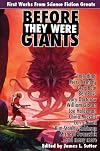
I liked this book for so many different reasons. I liked the one or two stories I didn't enjoy at all (possibly especially the one I couldn't even finish) because they showed me no one is perfect and no matter how great a writer someone is, they are going to have stories someone (in this case me) won't like. I loved several of the stories which, despite being the first professional sale for someone, were freaking amazing, deep, well-written and enjoyable. I also liked the author interviews show more which came after each story. I think this was a fantastic idea for an anthology and very well-executed and if you like science fiction you should totally give it a go. show less
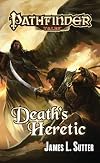
Franchise fantasy - especially when it comes from rpg's - is the kind of thing you hide between the covers of Penthouse to get some respectability. However Paizo has struck gold with Death's Heretic. Sutter has crafted a solid, old-school sword and sorcery novel that's worth consideration, if only for the lack of messianic stableboys, imminent armageddons and cast of thousands.
Salim works for the goddess of death as a kind of investigator-cum-troubleshooter. When someone steals a soul right show more from under her nose, it's up to him to find out why - handicapped with the soul in question's fiery daughter.
I enjoyed this novel. Don't get me wrong; we're not dealing with Madame Bovary, here, but Death's Heretic does exactly what it says on the box, and without insulting your intelligence too much in the process.
Sutter can write, and the strength of a pre-made setting means that the world-building (which he played a large part in) is engaging and three-dimensional. Often franchise fantasies can get bogged down in their own mythos, but Sutter avoids that with a plot that moves along swiftly and without too much digression.
The other pitfall is you end up with books so close to a tabletop campaign, you can all but hear the D20 rolling. Death's Heretic can't wholly escape this in a few small moments, but they don't detract overmuch from the flow of the novel.
Characterisation is a bit weaker, however. Salim is all too typical - grizzled-yet-young combat wunderkind paired with sassy young woman. It resists total cliche - just - but workmanlike is probably as generous as I can go.
And yet in the final wash-up, that didn't matter too much. Why? Because Sutter just gets to business in a way few contemporary fantasties do. The plot starts from the first chapter, and rocks along with nary an interlude, characters exist because they need to, the story finishes on the last page of the book, and the world isn't ending but stuff can still matter enough to the protagonists. A refreshing throwback to an earlier age of fantasy. Anyone who enjoyed Leiber's work will enjoy this unambitious, enjoyably short romp. show less
Salim works for the goddess of death as a kind of investigator-cum-troubleshooter. When someone steals a soul right show more from under her nose, it's up to him to find out why - handicapped with the soul in question's fiery daughter.
I enjoyed this novel. Don't get me wrong; we're not dealing with Madame Bovary, here, but Death's Heretic does exactly what it says on the box, and without insulting your intelligence too much in the process.
Sutter can write, and the strength of a pre-made setting means that the world-building (which he played a large part in) is engaging and three-dimensional. Often franchise fantasies can get bogged down in their own mythos, but Sutter avoids that with a plot that moves along swiftly and without too much digression.
The other pitfall is you end up with books so close to a tabletop campaign, you can all but hear the D20 rolling. Death's Heretic can't wholly escape this in a few small moments, but they don't detract overmuch from the flow of the novel.
Characterisation is a bit weaker, however. Salim is all too typical - grizzled-yet-young combat wunderkind paired with sassy young woman. It resists total cliche - just - but workmanlike is probably as generous as I can go.
And yet in the final wash-up, that didn't matter too much. Why? Because Sutter just gets to business in a way few contemporary fantasties do. The plot starts from the first chapter, and rocks along with nary an interlude, characters exist because they need to, the story finishes on the last page of the book, and the world isn't ending but stuff can still matter enough to the protagonists. A refreshing throwback to an earlier age of fantasy. Anyone who enjoyed Leiber's work will enjoy this unambitious, enjoyably short romp. show less
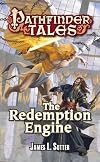
As overall editor, Sutter is arguably the star of the Pathfinder Tales novels, and his debut was terrific. I'm pleased to report I enjoyed its sequel just as much, though I do look forward some for developed in the future.
Salim is sent to that hive of scum and villainy, Kaer Marga, tasked with tracking down a disparity in the accounting of souls. His adventure will take him all through the city, and below it - and through the domains of heaven and hell as well.
Sutter seems to reserve the show more most creative and fabulous settings of the Pathfinder universe for his own books, and The Redemption Engine is no exception.
Every location is stuffed full of interesting people, cultures, and scenery. Salim's whirlwind tour through half a dozen locales that could easily serve up a stand alone novel on themselves was delightful to me. I never knew what Sutter was going to through up next.
This sense of surprise persisted with the narrative. It would be a stretch to call The Redemption Engine a mystery, but there is a procedural element to it. Salim gathers clues, and pieces them together before a spectacular conclusion. I was never bored, even when the mystery was was clear to me because Sutter is always invested in his characters first and foremost. Even minor players get a back story and a sense of something bigger in their lives and the greater world. I enjoy it very much, particular Salim's sidekicks in this outing. Pathfinder again demonstrates its willingness to go beyond the familiar trope - I really applaud its comfort in depicting characters with alternative sexualities and cultures, and taking it seriously.
Which bring me to the, not flaw exactly, but weakness of the book. Salim has been a lone wolf for so long, and it does lend a more episodic sense to the book than warranted. Sutter works hard to give us a sense of how Salim is developing and changing, but I would love to see some regulars in the books, in the same way that Dave Gross has expanded the cast to great effect in his books in this universe. Still, this is a quible, The Redemption Engine is a great read, and Sutter sets the standard again. show less
Salim is sent to that hive of scum and villainy, Kaer Marga, tasked with tracking down a disparity in the accounting of souls. His adventure will take him all through the city, and below it - and through the domains of heaven and hell as well.
Sutter seems to reserve the show more most creative and fabulous settings of the Pathfinder universe for his own books, and The Redemption Engine is no exception.
Every location is stuffed full of interesting people, cultures, and scenery. Salim's whirlwind tour through half a dozen locales that could easily serve up a stand alone novel on themselves was delightful to me. I never knew what Sutter was going to through up next.
This sense of surprise persisted with the narrative. It would be a stretch to call The Redemption Engine a mystery, but there is a procedural element to it. Salim gathers clues, and pieces them together before a spectacular conclusion. I was never bored, even when the mystery was was clear to me because Sutter is always invested in his characters first and foremost. Even minor players get a back story and a sense of something bigger in their lives and the greater world. I enjoy it very much, particular Salim's sidekicks in this outing. Pathfinder again demonstrates its willingness to go beyond the familiar trope - I really applaud its comfort in depicting characters with alternative sexualities and cultures, and taking it seriously.
Which bring me to the, not flaw exactly, but weakness of the book. Salim has been a lone wolf for so long, and it does lend a more episodic sense to the book than warranted. Sutter works hard to give us a sense of how Salim is developing and changing, but I would love to see some regulars in the books, in the same way that Dave Gross has expanded the cast to great effect in his books in this universe. Still, this is a quible, The Redemption Engine is a great read, and Sutter sets the standard again. show less
Before They Were Giants: First Works from Science Fiction Greats (Planet Stories) by James L. Sutter
Before They Were Giants, is an anthology of works from some of today’s contemporary masters of Science Fiction, but these were all works that were either break-out short stories or obscure early works. Some of the authors were well known to me before reading this volume (William Gibson, China Mieville and Kim Stanley Robinson, for example) and others, I think, will become new favorites of mine (Nicola Griffith, for one). Sadly, I felt some offerings detracted from the rest of the stories: show more they just did not measure up.
One notable story that I had almost forgotten about was from the mind of Spider Robinson and marks the birth of Callahan’s Place and Callahan’s Cross Time Saloon, that legendary place that you will find, if you really need to find it. If you’ve never read any of the Callahan stories, you owe it to yourself to read The Guy with the Eyes. It does not get much more original than that.
Anthologies are always hard to rate. For every great beginning story, there are others that deserve to be forgotten and disassociated from their author’s pantheon. For this reason, I’m going just above middle of the road and calling this only three and a half stars. Make no mistake, though, those great stories make up for the bad and if I can find one potential new author to read in an anthology, the read is certainly worthwhile. show less
One notable story that I had almost forgotten about was from the mind of Spider Robinson and marks the birth of Callahan’s Place and Callahan’s Cross Time Saloon, that legendary place that you will find, if you really need to find it. If you’ve never read any of the Callahan stories, you owe it to yourself to read The Guy with the Eyes. It does not get much more original than that.
Anthologies are always hard to rate. For every great beginning story, there are others that deserve to be forgotten and disassociated from their author’s pantheon. For this reason, I’m going just above middle of the road and calling this only three and a half stars. Make no mistake, though, those great stories make up for the bad and if I can find one potential new author to read in an anthology, the read is certainly worthwhile. show less
Awards


You May Also Like


Associated Authors
Statistics
- Works
- 41
- Also by
- 17
- Members
- 929
- Popularity
- #27,632
- Rating
- 3.8
- Reviews
- 13
- ISBNs
- 42
- Languages
- 3