
George Francis Dow (1868–1936)
Author of Every Day Life in the Massachusetts Bay Colony
About the Author
Disambiguation Notice:
The New England antiquary George Francis Dow is not the same as the British railway historian George Dow.
Image credit: Wikipedia
Works by George Francis Dow
Tagged
Common Knowledge
- Canonical name
- Dow, George Francis
- Birthdate
- 1868-01-07
- Date of death
- 1936-06-05
- Gender
- male
- Occupations
- antiquarian
- Organizations
- Society for the Preservation of New England Antiquities
American Antiquarian Society - Nationality
- USA
- Birthplace
- Carroll, New Hampshire, USA
- Places of residence
- Carroll, New Hampshire, USA (birth)
Massachusetts, USA - Disambiguation notice
- The New England antiquary George Francis Dow is not the same as the British railway historian George Dow.
- Associated Place (for map)
- USA
Members
Reviews
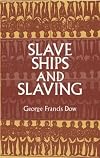
George Francis Dow put this book together actually in 1927; this version is a Dover Reprint (thank God for Dover for publishing long-forgotten books!). What it is is an examination of the slave trade out of Africa, told through first person accounts of persons actually involved in the slave trade. Sadly, what's not here are slave voices.
The least reliable stories, imho, are those of the captains & the traders, who set the scene in telling about the dangers faced by the crews & by the white show more people in their zeal to collect slaves off of the coast of West Africa. While the dangers themselves are real (terrible, often mortal illnesses and the fear of being attacked by Africans who have been either kidnapped or taken as war hostages for sale into slavery), the reports of how slaves were treated once on the ship made it sound like the captains were doing the captured Africans a "favor" by taking them out of their homeland. However, this is balanced by the reports of physicians who reported the truth of the conditions of the slave ships & of the psyche of those torn away from their families and homes.
Considering this is such an old book, and written before the term "political correctness" was coined, I thought it had a lot of insight into the slave trade. There was one story in here written by a former ship's medical assistant that was most likely fiction (and would have made for a sequel to Wide Sargasso Sea) so I discounted it, but the other nonself-serving entries really opened my eyes to the horrors of the slave trade.
I would recommend it, most definitely. If you read it, keep in mind that it was written at a time when the epithets used to describe Africans were perfectly acceptable and that the author was not intending this as a racist history. show less
The least reliable stories, imho, are those of the captains & the traders, who set the scene in telling about the dangers faced by the crews & by the white show more people in their zeal to collect slaves off of the coast of West Africa. While the dangers themselves are real (terrible, often mortal illnesses and the fear of being attacked by Africans who have been either kidnapped or taken as war hostages for sale into slavery), the reports of how slaves were treated once on the ship made it sound like the captains were doing the captured Africans a "favor" by taking them out of their homeland. However, this is balanced by the reports of physicians who reported the truth of the conditions of the slave ships & of the psyche of those torn away from their families and homes.
Considering this is such an old book, and written before the term "political correctness" was coined, I thought it had a lot of insight into the slave trade. There was one story in here written by a former ship's medical assistant that was most likely fiction (and would have made for a sequel to Wide Sargasso Sea) so I discounted it, but the other nonself-serving entries really opened my eyes to the horrors of the slave trade.
I would recommend it, most definitely. If you read it, keep in mind that it was written at a time when the epithets used to describe Africans were perfectly acceptable and that the author was not intending this as a racist history. show less

The book is nearly 90 years old and from a bit of a different time and I get that. Its value would have been greatly enhanced, however, with a worthwhile map. Although reasonably familiar w/ the area, a better map would have allowed me to totally tune in. Nevertheless, about 2/3 of the book was excellent; the other 1/3 needed a map. The narratives of the surgeon, sailor, slave trader, and captains were quite good especially as they laid out the technicalities of the trade. Their veracity show more might be in question, but I feel sure that only the tip of the iceberg was uncovered here, so it matters little. No matter what you might think you know, you don't know it all when it comes to the slave trade. Extremely enlightening! show less

You May Also Like


Associated Authors
Statistics
- Works
- 20
- Members
- 478
- Popularity
- #51,586
- Rating
- 3.3
- Reviews
- 4
- ISBNs
- 28