
Allen Kurzweil
Author of The Grand Complication
About the Author
Allen Kurzweil is the author of A Case of Curiosities and The Grand Complication. He lives with his wife and son in Providence, Rhode Island
Works by Allen Kurzweil
Scatola dell’inventore, La 1 copy
Associated Works
Tagged
Common Knowledge
- Canonical name
- Kurzweil, Allen
- Birthdate
- 1960-12-16
- Gender
- male
- Education
- Yale University
University of Rome - Awards and honors
- Granta's Best Of Young American Novelists (1996)
- Agent
- Liz Darhansoff
- Nationality
- USA
- Places of residence
- Providence, Rhode Island, USA
- Associated Place (for map)
- Rhode Island, USA
Members
Reviews
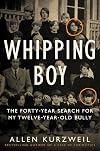
Whipping Boy: The Forty-Year Search for My Twelve-Year-Old Bully by Allen Kurzweil is a very highly recommended account of a man ostensibly searching for a bully. What he finds in his search is much more interesting and satisfying.
When Kurzweil was 10, he attended Aiglon College, a British-style boarding school located in the Swiss Alps, above Geneva. When there one of his roommates, Cesar Augustus, took delight in tormenting him. Kurzweil shares several incidents that traumatized him during show more this one year of his childhood and how the specter of Cesar loomed large in his adult life. He still remembered the verbal and physical torment Cesar put him through and his emotional pain was still present.
As an adult, Kurzweil decided to do some research to try and discover what happened to Cesar and what he did with his life. There was, also, always present the idea of payback, or confrontation of Cesar for what he did to Kurzweil.
What Kurzweil discovers is far more interesting than even he could have imagined. Cesar was part of a huge global banking scam that swindled millions of dollars from unsuspecting clients. It was run by the Badische Trust Consortium and Cesar was part of the group of scam artists, many posing as European aristocrats, who ran the con. Several members, including Cesar, had been imprisoned for their felonious deceit. "The consolidated rap sheet of the Badische gang included embezzlement, racketeering, arson, forgery, fraud, extortion, perjury, check kiting, probation violation, grand larceny, assault and battery, and domestic abuse."
In the end this is less a book about searching for Cesar, the bully, and more the story of researching Cesar and the members of the Badische Trust Consortium. There is a satisfying meeting/discussion with Cesar. Kurzweil ends with an enlightening revelation/discovery about freeing himself from the memories of his bully.
This well written, detailed account, while partially a memoir, is most certainly an engaging true crime thriller as Kurzweil researches the Badische scam artists and their crimes through the court records, etc. he is given access to use in his search. Even though his research began as a search for his bully, he found a much more interesting story in which Cesar is a bit player. Yes, he is a scam artist, but he is not the most interesting character in the search. I found myself hoping he would be able to find and confront his bully, but what Kurzweil discovers is so much more and made for a fascinating, intriguing nonfiction account of his search. Whipping Boy includes 16 pages of black-and-white photos and 83 images.
Disclosure: My Kindle edition was courtesy of HarperCollin for review purposes.
New Yorker Article
http://www.newyorker.com/magazine/2014/11/17/whipping-boy show less
When Kurzweil was 10, he attended Aiglon College, a British-style boarding school located in the Swiss Alps, above Geneva. When there one of his roommates, Cesar Augustus, took delight in tormenting him. Kurzweil shares several incidents that traumatized him during show more this one year of his childhood and how the specter of Cesar loomed large in his adult life. He still remembered the verbal and physical torment Cesar put him through and his emotional pain was still present.
As an adult, Kurzweil decided to do some research to try and discover what happened to Cesar and what he did with his life. There was, also, always present the idea of payback, or confrontation of Cesar for what he did to Kurzweil.
What Kurzweil discovers is far more interesting than even he could have imagined. Cesar was part of a huge global banking scam that swindled millions of dollars from unsuspecting clients. It was run by the Badische Trust Consortium and Cesar was part of the group of scam artists, many posing as European aristocrats, who ran the con. Several members, including Cesar, had been imprisoned for their felonious deceit. "The consolidated rap sheet of the Badische gang included embezzlement, racketeering, arson, forgery, fraud, extortion, perjury, check kiting, probation violation, grand larceny, assault and battery, and domestic abuse."
In the end this is less a book about searching for Cesar, the bully, and more the story of researching Cesar and the members of the Badische Trust Consortium. There is a satisfying meeting/discussion with Cesar. Kurzweil ends with an enlightening revelation/discovery about freeing himself from the memories of his bully.
This well written, detailed account, while partially a memoir, is most certainly an engaging true crime thriller as Kurzweil researches the Badische scam artists and their crimes through the court records, etc. he is given access to use in his search. Even though his research began as a search for his bully, he found a much more interesting story in which Cesar is a bit player. Yes, he is a scam artist, but he is not the most interesting character in the search. I found myself hoping he would be able to find and confront his bully, but what Kurzweil discovers is so much more and made for a fascinating, intriguing nonfiction account of his search. Whipping Boy includes 16 pages of black-and-white photos and 83 images.
Disclosure: My Kindle edition was courtesy of HarperCollin for review purposes.
New Yorker Article
http://www.newyorker.com/magazine/2014/11/17/whipping-boy show less
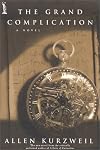
Another one bites the dust, I think this is 3 in a row now. At least I'm clearing off some of my bookshelves. I told my wife that I feel like we're watching/reading the Gong Show lately. After about 50 pages the cane starts to come out, the book desperately tries to get better, but ultimately fails. This one got to about 85 pages.
It was witty and I can see how library geeks could be more interested in this, but it didn't really seem to be going anywhere. Seeing as I read Kurzweil's other show more book (and loved it) a LONG time ago, I didn't even get any cool links between the two books (and it was starting to become obvious that there were some). show less
It was witty and I can see how library geeks could be more interested in this, but it didn't really seem to be going anywhere. Seeing as I read Kurzweil's other show more book (and loved it) a LONG time ago, I didn't even get any cool links between the two books (and it was starting to become obvious that there were some). show less
The basic plot seems simple enough: a rich older gentleman hires a research librarian to help him track down an object that once resided in a compartmentalized case (in fact, the case is the eponymous Case of Curiosities from Kurzweil’s first novel). The search, its results, and its aftermath form the framework of the book. But hidden within this seemingly bland framework is a story as wonderfully complex as an Escher print: characters are not who they seem to be; motivations are called show more into question; and vital bits of information dance just out of our reach.
Kurzweil is a powerfully evocative writer. His scenes in the research library make you feel like you can reach out and touch the books (and oh! such books: Secret Compartments in Eighteenth-Century Furniture, The Universal Penman, Hints on Husband Catching, or A Manual for Marriageable Misses—and that’s just from the first 30 pages). Jesson’s home is described in all of its opulent splendor, with special attention given to yards of books and the shelving thereof (are you sensing a pattern?). Thankfully, even non-book-oriented places are described well.
When an author is this attentive to setting, character can sometimes be lost. But Kurzweil sidesteps this trap neatly, giving us a cast of exuberantly eccentric characters who nonetheless manage to ring true. Everyone from the petty research library bureaucrats to the narrator’s tempestuous girlfriend is limned with just enough detail to make their various eccentricities believable.
The Grand Complication is a Chinese treasure-box of a novel—just when you’re certain you know what’s going on, you find another hidden compartment with new information in it. The writing is beautiful, the plot is compelling, and the characters are a joy to spend time with. Stop listening to me natter on about it and pick it up for yourself. I think you’ll enjoy the read. show less
Kurzweil is a powerfully evocative writer. His scenes in the research library make you feel like you can reach out and touch the books (and oh! such books: Secret Compartments in Eighteenth-Century Furniture, The Universal Penman, Hints on Husband Catching, or A Manual for Marriageable Misses—and that’s just from the first 30 pages). Jesson’s home is described in all of its opulent splendor, with special attention given to yards of books and the shelving thereof (are you sensing a pattern?). Thankfully, even non-book-oriented places are described well.
When an author is this attentive to setting, character can sometimes be lost. But Kurzweil sidesteps this trap neatly, giving us a cast of exuberantly eccentric characters who nonetheless manage to ring true. Everyone from the petty research library bureaucrats to the narrator’s tempestuous girlfriend is limned with just enough detail to make their various eccentricities believable.
The Grand Complication is a Chinese treasure-box of a novel—just when you’re certain you know what’s going on, you find another hidden compartment with new information in it. The writing is beautiful, the plot is compelling, and the characters are a joy to spend time with. Stop listening to me natter on about it and pick it up for yourself. I think you’ll enjoy the read. show less
"Whipping Boy" may not be a great book, but I'm glad that Allen Kurzweil wrote it. He seems pretty darn certain that he got something significant off his chest by doing so. As for the book itself, it's not the characters themselves but the surrounding weirdness that I found most interesting. The boarding school he and his bully attended seemed to mix a fetish for order and hierarchy with airy, specifically British ideas about the benefits of the great outdoors. "Whipping Boy" -- and the show more tireless research that went into it -- also gives you a chance to look at the business of fraud and fraud detection up close. Kurzweil's right when he claims that the scheme that his former bully got involved in was a really doozy: the principals dressed like the Sgt. Pepper's album cover and claimed dozens of titles and degrees. The most useful part of the book, and perhaps the creepiest, though, are the interviews that he conducts with his former bully near the end of the book. It's a portrait of a con man who trades on easy familiarity, bathes in self pity, petty resentment, and self-justification, and uses evasive language filled with new-economy and "spirituality" buzzwords. It's not revealing, but that's the point: his unremarkable blandness is what makes grown-up Cesar really unsettling. Whatever else he is, he's certainly a product of our modern environment. While Kurzweil writes well and the book does indeed go someplace, it rates as kind of light, in my opinion. I'm happy the author got what he wanted out of writing it, but otherwise can't really recommend as more than summer reading. show less
Lists
Awards


You May Also Like


Associated Authors
Statistics
- Works
- 7
- Also by
- 1
- Members
- 2,570
- Popularity
- #9,995
- Rating
- 3.6
- Reviews
- 56
- ISBNs
- 88
- Languages
- 9
- Favorited
- 2