
Fleur Adcock (1934–2024)
Author of The Faber Book of 20th Century Women's Poetry
About the Author
Fleur Adcock was born in New Zealand in 1934, and spent the war years in England, returning with her family to New Zealand in 1947. She emigrated to Britain in 1963, working as a librarian in London until 1979. She was Northern Arts Literary Fellow in 1979-81, living in Newcastle, becoming a show more freelance writer after her return to London. She received an OBE in 1996, and the Queen's Gold Medal for Poetry in 2006 for Poems 1960-2000. This was followed by Dragon Talk (20 (0), Class Wings (2013), The Land Ballot (20IS). Hoard (2017) and The Mer-maid's Purse (2021). In 2019 Fleur Adcock was presented with the New Zealand Prime Minister's Award for Literary Achievement in Poetry by the Rt Hon Jacinda Ardern. show less
Image credit: Fleur Adcock Photo: Bloodaxe Books
Works by Fleur Adcock
Associated Works
I Wouldn't Thank You for a Valentine: Poems For Young Feminists (1992) — Contributor — 57 copies, 2 reviews
The Colour of Distance: New Zealand Writers in France, French Writers in New Zealand (2006) — Contributor — 3 copies
In'hui, No.9 — Contributor — 1 copy
Tagged
Common Knowledge
- Legal name
- Adcock, Kareen Fleur
- Birthdate
- 1934-02-10
- Date of death
- 2024-10-10
- Gender
- female
- Education
- Victoria University of Wellington (MA|Classics)
- Occupations
- poet
librarian
translator - Organizations
- Royal Society of Literature (Fellow)
- Awards and honors
- Order of the British Empire (Officer, 1996)
New Zealand Order of Merit (Companion, 2008)
Queen's Gold Medal for Poetry (2006) - Relationships
- Duckworth, Marilyn (sister)
Campbell, Alistair (husband|divorced)
Crump, Barry (husband|divorced)
Adcock, Irene (mother)
Farlane, Mia (niece) - Nationality
- New Zealand (birth)
- Birthplace
- Papakura, Auckland, New Zealand
- Places of residence
- Auckland, New Zealand
London, England, UK
Dunedin, New Zealand - Place of death
- London, England, UK
- Associated Place (for map)
- New Zealand
Members
Reviews

Fleur Adcock now 89 years old has eighteen collections of poetry behind her and her collected poems were published in 2019. Born in New Zealand she has lived in England during her later years. This selection of her poems was published in 1983 and so is missing all ten subsequent books of poetry. There are 146 poems crammed into 124 pages. I started reading the poems over three years ago and have read them all now, mostly in short bursts. I do think that you need to spend more time with a show more book of poetry than when reading a novel, but three years is perhaps a bit too long, especially when there are more than 150 poetry books in your TBR.
It was not the difficulty of reading the poems, nor was it a lack of enjoyment that kept me from finishing the selection. The book just kept getting buried under piles of other books. Fleur Adcock's poems will not cause much difficulty for most readers, but some are complex enough to make the reader unsure of an interpretation, a meaning or the tenor of the piece. I found the poems strong on description with frugal use of exotic imagery. Much of her later poetry is in free verse, but some of her earlier work does use rhyming schemes; she uses different stanza forms, choosing them to fit the subject of the poem. She is a poet very aware of the world around her, the natural world in particular, she is inspired by places that she visits and some of the poems are small travelogues: This is from her book [Below Loughrigg] the lake district in England.
Paths
I am the dotted lines on the map
Footpaths exist only when they are walked on.
I am gravel tracks through the woodland; I am
field paths, the muddy ledge by the stream,
the stepping stones. I am the grassy lane
open between waist-high bracken where sheep
fidget. I am the track to the top
Skirting and scaling rocks. I am the cairn
here on the brow of the world I stop,
set my stone face to the wind and turn
to each wide quarter. I am that I am.
She writes about human relationships her own love affairs and about sex. She is pithy about her partners and very aware of her self as a woman. In her poem Against Coupling which vaunts the joys of masterbation; she ends with:
I advise you, then to embrace it without
encumbrance. No need to set the scene,
dress up (or undress), make speeches.
Five minutes of solitude are
enough - in the bath, or to fill
that gap between the Sunday papers and lunch.
She writes about children, she writes about grandparents, she writes about other women, keenly observing people in isolation, her subjects are far and wide, but usually make reference to the natural world. She is skilled in the use of irony and it is this skill that sometimes makes the reader wonder as to how he should read some of the poems. She writes in the first person and much of the poetry makes the reader feel that he is there with her when she is describing what she sees and what she feels, however her strength is as an observer, she is not always concerned with 'the meaning of life'. She can be funny and she can be witty and most of her poems work well. I never felt out of my depth when reading, her poems have a point to them that can readily be understood.
My only criticism is that these 146 poems seem a little cramped in their 124 pages. I think many of the poems would benefit from a little more space around them. I will keep this book handily within reach for a while longer and dip back into its pleasures 4 stars. show less
It was not the difficulty of reading the poems, nor was it a lack of enjoyment that kept me from finishing the selection. The book just kept getting buried under piles of other books. Fleur Adcock's poems will not cause much difficulty for most readers, but some are complex enough to make the reader unsure of an interpretation, a meaning or the tenor of the piece. I found the poems strong on description with frugal use of exotic imagery. Much of her later poetry is in free verse, but some of her earlier work does use rhyming schemes; she uses different stanza forms, choosing them to fit the subject of the poem. She is a poet very aware of the world around her, the natural world in particular, she is inspired by places that she visits and some of the poems are small travelogues: This is from her book [Below Loughrigg] the lake district in England.
Paths
I am the dotted lines on the map
Footpaths exist only when they are walked on.
I am gravel tracks through the woodland; I am
field paths, the muddy ledge by the stream,
the stepping stones. I am the grassy lane
open between waist-high bracken where sheep
fidget. I am the track to the top
Skirting and scaling rocks. I am the cairn
here on the brow of the world I stop,
set my stone face to the wind and turn
to each wide quarter. I am that I am.
She writes about human relationships her own love affairs and about sex. She is pithy about her partners and very aware of her self as a woman. In her poem Against Coupling which vaunts the joys of masterbation; she ends with:
I advise you, then to embrace it without
encumbrance. No need to set the scene,
dress up (or undress), make speeches.
Five minutes of solitude are
enough - in the bath, or to fill
that gap between the Sunday papers and lunch.
She writes about children, she writes about grandparents, she writes about other women, keenly observing people in isolation, her subjects are far and wide, but usually make reference to the natural world. She is skilled in the use of irony and it is this skill that sometimes makes the reader wonder as to how he should read some of the poems. She writes in the first person and much of the poetry makes the reader feel that he is there with her when she is describing what she sees and what she feels, however her strength is as an observer, she is not always concerned with 'the meaning of life'. She can be funny and she can be witty and most of her poems work well. I never felt out of my depth when reading, her poems have a point to them that can readily be understood.
My only criticism is that these 146 poems seem a little cramped in their 124 pages. I think many of the poems would benefit from a little more space around them. I will keep this book handily within reach for a while longer and dip back into its pleasures 4 stars. show less
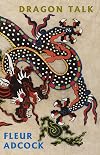
A new collection from New Zealand poet Fleur Adcock. The poems are about her family's move to England during WWII. The poems start with the family packing to leave New Zealand, their arrival in England and subsequent multiple moves to other towns and homes, their return to New Zealand after the war and poems of more recent events that evoke those times for Adcock. The poems are straightforward and some are humorous.
The Mill Stream
by Fleur Adcock
And what was the happiest day I remember?
It was show more when we went to the Mill Stream -
my sister and I and the Morris kids.
We wore our bathing-suits under our dresses
(subterfuge), crossed the live railway lines
(forbidden), and tramped through bluebell woods.
There was a bridge with green and brown shadows
to lurk among in the long afternoon.
Chest high in the stream, with pointy water-snails
as escorts, I could hardly believe my luck.
Happiness is chemical. Sunshine and water
trigger it. (And I couldn't even swim.) show less
The Mill Stream
by Fleur Adcock
And what was the happiest day I remember?
It was show more when we went to the Mill Stream -
my sister and I and the Morris kids.
We wore our bathing-suits under our dresses
(subterfuge), crossed the live railway lines
(forbidden), and tramped through bluebell woods.
There was a bridge with green and brown shadows
to lurk among in the long afternoon.
Chest high in the stream, with pointy water-snails
as escorts, I could hardly believe my luck.
Happiness is chemical. Sunshine and water
trigger it. (And I couldn't even swim.) show less
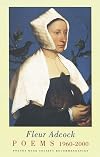
Fleur Adcock is one of Britain's most accomplished poets. Her poised, ironic poems are tense and tightly controlled as well as shrewdly laconic, and often chilling as she unmasks the deceptions of love or unravels family lives. Disarmingly conversational in style, they are remarkable for their psychological insight and their unsentimental, mischievously casual view of personal relationships.
Born in New Zealand, she has explored questions of identity and rootedness throughout her work, both show more in relation to her personal allegiances to her native and adopted countries as well as her family history, whose long-dead characters she brings to life. She has also written movingly of birth, death and bereavement, and has tackled political issues with honest indignation and caustic wit.
This first Collected edition of her poetry replaces her Selected Poems, with the addition of work from her later Oxford collections The Incident Book, Time-Zones and Looking Back. All her most celebrated poems are here, from the highly entertaining 'Against Coupling', 'Smokers For Celibacy' and 'The Prize-Winning Poem' to modern classics such as 'The Ex-Queen Amongst the Astronomers' and 'Things' -- as well as the notorious one about kissing John Prescott... show less
Born in New Zealand, she has explored questions of identity and rootedness throughout her work, both show more in relation to her personal allegiances to her native and adopted countries as well as her family history, whose long-dead characters she brings to life. She has also written movingly of birth, death and bereavement, and has tackled political issues with honest indignation and caustic wit.
This first Collected edition of her poetry replaces her Selected Poems, with the addition of work from her later Oxford collections The Incident Book, Time-Zones and Looking Back. All her most celebrated poems are here, from the highly entertaining 'Against Coupling', 'Smokers For Celibacy' and 'The Prize-Winning Poem' to modern classics such as 'The Ex-Queen Amongst the Astronomers' and 'Things' -- as well as the notorious one about kissing John Prescott... show less
I don't really understand what makes poetry good yet so keep that in mind
enjoyable and good poetry. felt very down to earth and relatable and the style is very easy to read. most of the poems are about her childhood and they're good at capturing a certain feeling - found a few pretty affecting without really understanding why. the last few are reflections on grandmotherhood and her own mothers death that are emotional but not dramatic - kind of understated but still touching and relatable. show more
feel like maybe it'd stay with you over time even though all the poems are kind of quiet and understated and almost all about very average events. it's all very explicitly autobiographical yet still feels close enough to touch off your own feelings. like listening to your granny talking actually. There's a homely feeling in a good way.
talking about it convinced me to raise the rating to 4 stars cause it touched me more than I realised show less
enjoyable and good poetry. felt very down to earth and relatable and the style is very easy to read. most of the poems are about her childhood and they're good at capturing a certain feeling - found a few pretty affecting without really understanding why. the last few are reflections on grandmotherhood and her own mothers death that are emotional but not dramatic - kind of understated but still touching and relatable. show more
feel like maybe it'd stay with you over time even though all the poems are kind of quiet and understated and almost all about very average events. it's all very explicitly autobiographical yet still feels close enough to touch off your own feelings. like listening to your granny talking actually. There's a homely feeling in a good way.
talking about it convinced me to raise the rating to 4 stars cause it touched me more than I realised show less
Awards

You May Also Like


Associated Authors
Statistics
- Works
- 29
- Also by
- 10
- Members
- 446
- Popularity
- #54,978
- Rating
- 3.7
- Reviews
- 6
- ISBNs
- 48