
E. R. Eddison (1882–1945)
Author of The Worm Ouroboros
About the Author
Series
Works by E. R. Eddison
In Valhalla 1 copy
Associated Works
Tagged
Common Knowledge
- Legal name
- Eddison, Eric Rücker
- Birthdate
- 1882-11-24
- Date of death
- 1945-08-18
- Gender
- male
- Education
- Eton College
University of Oxford (Trinity College) - Occupations
- civil servant
novelist - Organizations
- Board of Trade
- Awards and honors
- Order of St Michael and St George (Companion, 1924)
Order of the Bath (Companion, 1929) - Relationships
- Ransome, Arthur (friend)
- Nationality
- UK
- Birthplace
- St Helens, Adel, Yorkshire, England, UK
- Places of residence
- Leeds, England, UK
St. Helens, Adel, Yorkshire, England (birth) - Place of death
- Marlborough, Wiltshire, England, UK
- Map Location
- England, UK
Members
Reviews

Well, it took me 15 months and a stack of dictionaries, but I've finally finished this epic! I feel as much a sense of accomplishment in the reading as Eddison might have felt in the writing of it!
I don't recall it having been so laborious from my first time of reading back in my teenage years, but I guess without internet reference rabbit-holes to fall down, it would be faster, though somewhat more archaic and obscure.
Anyway, the plot takes precedence over character, and there's barely any show more plot to speak of, so what you are left with is a framework over which Eddison drapes his sumptuous language, weaving moods and reveries, sometimes loud, brash and theatrical, at othertimes delicate fretworks of bejewelled, gilded traceries. It's definitely a love/hate book, and I've needed my own mood to be right to enter into Eddison's world, but I was happy to take my time and approach it as a feast of many courses, rather than a fast food binge. show less
I don't recall it having been so laborious from my first time of reading back in my teenage years, but I guess without internet reference rabbit-holes to fall down, it would be faster, though somewhat more archaic and obscure.
Anyway, the plot takes precedence over character, and there's barely any show more plot to speak of, so what you are left with is a framework over which Eddison drapes his sumptuous language, weaving moods and reveries, sometimes loud, brash and theatrical, at othertimes delicate fretworks of bejewelled, gilded traceries. It's definitely a love/hate book, and I've needed my own mood to be right to enter into Eddison's world, but I was happy to take my time and approach it as a feast of many courses, rather than a fast food binge. show less
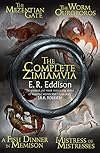
This thick volume collects four works of fiction by a British civil servant who spent his free time inventing and exploring worlds vastly different from that of his day job. He was a passionate student of the ancient Scandinavian sagas and transposed their values, along with a strong admixture of Homer, Sappho, and a bit of potted Spinoza, to imagine worlds where gods take flesh. The results have led Eddison to be called one of the first writers of fantasy literature. One of his early fans, show more the American aficionado of lost, aristocratic worlds, James Branch Cabell, used the term “romance,” however, to distinguish these books from what he called disparagingly “novels.”
I read this in the Kindle version, which was good enough, but it would have been better to have a print copy to make it easier to consult the maps or the charts of the intricate and confusing cast of characters.
The first book in the collection, The Worm Ouroboros, is set in a world the author calls Mercury. It is similar to our world but also different. The various lands are inhabited by beings motivated by recognizable human qualities but called Goblins, Ghouls, and Imps. The two leading nations are the Demons and the Witches. Despite their name, the Demons are the good guys. But while the Witches have many traits usually associated with the villains—they never make a treaty they don’t intend to break at the first opportunity—, Eddison is careful to impart to them a certain nobility. In fact, the greatest tragedy that could befall the Demons would be to not have an adversary as strong as the Witches. For then they “must turn shepherds and hunters, lest we become mere mountebanks and fops,” as their monarch, King Juss, laments. This is not the morality of the Biblical prophets; the thought of turning swords to plowshares is foreign to this world. A sword is nothing more than forged metal unless its glory is found in testing its mettle against another, wielded by a powerful foe.
Fittingly, there are many battles, and I enjoyed the way the author varied his descriptive technique. Some are told as straightforward narratives, another from the viewpoint of an observer watching from the ramparts, while others are recounted after the fact by surviving participants.
The other three books form a cycle set in a land only glimpsed from afar in Worm, Zimiamvia. They are printed here in the order they were published, although the first of them, Mistress of Mistresses, is the last narratively. I read them in the order they appear in this collection. This works because Mistress of Mistresses is the most fully realized. Eddison employs two plots in parallel, one in Zimiamvia, the other on our earth, with the action shifting back and forth. It soon becomes clear that the protagonist on earth, Lessingham, is (as is his wife) an incarnation of a figure who also lives in Zimiamvia, a more rarified plane of existence (this is also a feature of the subsequent book).
The remaining two books fill in the history of Zimiamvia and its rival dynasties. One, A Fish Dinner in Memison, has a high ratio of talk to action. Even more so than in Mistress, Eddison’s mix of intricate description and complex philosophy veers to incoherence. Overall, I found it the weakest of the four, although the dinner involves a marvelous conceit.
The final book, The Mezentian Gate, is the most ambitious in scope but was left unfinished at Eddison’s death. He left behind a plot outline, however. This, along with notes for some of the unwritten chapters, stitch together the finished chapters so that one gets the picture. Fortunately, the portion Eddison wrote includes the closing chapters. In particular, the lengthy final chapter is a fitting conclusion to the entire cycle.
It’s jarring, however, that the plot of Gate surrounds that of Fish Dinner, the events of which are crucial for the unfolding of the denouement in the final book. It seems as if Eddison did not start out with the entire trilogy in mind but added to it as new plot elements came to him.
Eddison’s style, like his values, is that of the Scandinavian sagas. It’s interesting that, on the one hand, he is an adept of philosophy, with its insistence on viewing life Sub specie aeternitatis, as the mephistophelean Vandermast is fond of saying, yet on the other, he (like the characters he creates) is in love with sensual world. Eddison spends pages describing a castle and its halls, for instance, as well as the fantastical landscapes in which it is set. Readers of modern fantasy might grow impatient, wondering when the action might begin. At first, I found the prose slow-going, but my enjoyment rose once I slowed down to savor the luxuriant, archaic prose.
Perhaps the key to this duality of philosophy and sensuality is the basic theme of these books. Eddison has the temperament of an aristocrat and is a devotee of the pantheon, whether in its Greek or Nordic guise. His heroes (all brave and manly) and his heroines (all beautiful—voluptuous, even) are, to one degree or another, incarnations of the divine two, one of whom, Zeus, creates worlds to delight the other (Aphrodite). show less
I read this in the Kindle version, which was good enough, but it would have been better to have a print copy to make it easier to consult the maps or the charts of the intricate and confusing cast of characters.
The first book in the collection, The Worm Ouroboros, is set in a world the author calls Mercury. It is similar to our world but also different. The various lands are inhabited by beings motivated by recognizable human qualities but called Goblins, Ghouls, and Imps. The two leading nations are the Demons and the Witches. Despite their name, the Demons are the good guys. But while the Witches have many traits usually associated with the villains—they never make a treaty they don’t intend to break at the first opportunity—, Eddison is careful to impart to them a certain nobility. In fact, the greatest tragedy that could befall the Demons would be to not have an adversary as strong as the Witches. For then they “must turn shepherds and hunters, lest we become mere mountebanks and fops,” as their monarch, King Juss, laments. This is not the morality of the Biblical prophets; the thought of turning swords to plowshares is foreign to this world. A sword is nothing more than forged metal unless its glory is found in testing its mettle against another, wielded by a powerful foe.
Fittingly, there are many battles, and I enjoyed the way the author varied his descriptive technique. Some are told as straightforward narratives, another from the viewpoint of an observer watching from the ramparts, while others are recounted after the fact by surviving participants.
The other three books form a cycle set in a land only glimpsed from afar in Worm, Zimiamvia. They are printed here in the order they were published, although the first of them, Mistress of Mistresses, is the last narratively. I read them in the order they appear in this collection. This works because Mistress of Mistresses is the most fully realized. Eddison employs two plots in parallel, one in Zimiamvia, the other on our earth, with the action shifting back and forth. It soon becomes clear that the protagonist on earth, Lessingham, is (as is his wife) an incarnation of a figure who also lives in Zimiamvia, a more rarified plane of existence (this is also a feature of the subsequent book).
The remaining two books fill in the history of Zimiamvia and its rival dynasties. One, A Fish Dinner in Memison, has a high ratio of talk to action. Even more so than in Mistress, Eddison’s mix of intricate description and complex philosophy veers to incoherence. Overall, I found it the weakest of the four, although the dinner involves a marvelous conceit.
The final book, The Mezentian Gate, is the most ambitious in scope but was left unfinished at Eddison’s death. He left behind a plot outline, however. This, along with notes for some of the unwritten chapters, stitch together the finished chapters so that one gets the picture. Fortunately, the portion Eddison wrote includes the closing chapters. In particular, the lengthy final chapter is a fitting conclusion to the entire cycle.
It’s jarring, however, that the plot of Gate surrounds that of Fish Dinner, the events of which are crucial for the unfolding of the denouement in the final book. It seems as if Eddison did not start out with the entire trilogy in mind but added to it as new plot elements came to him.
Eddison’s style, like his values, is that of the Scandinavian sagas. It’s interesting that, on the one hand, he is an adept of philosophy, with its insistence on viewing life Sub specie aeternitatis, as the mephistophelean Vandermast is fond of saying, yet on the other, he (like the characters he creates) is in love with sensual world. Eddison spends pages describing a castle and its halls, for instance, as well as the fantastical landscapes in which it is set. Readers of modern fantasy might grow impatient, wondering when the action might begin. At first, I found the prose slow-going, but my enjoyment rose once I slowed down to savor the luxuriant, archaic prose.
Perhaps the key to this duality of philosophy and sensuality is the basic theme of these books. Eddison has the temperament of an aristocrat and is a devotee of the pantheon, whether in its Greek or Nordic guise. His heroes (all brave and manly) and his heroines (all beautiful—voluptuous, even) are, to one degree or another, incarnations of the divine two, one of whom, Zeus, creates worlds to delight the other (Aphrodite). show less
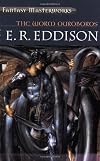
Prendiamo un azzimato signore inglese di inizio 900: studia ad Eton ed al Trinity College di Oxford, è membro della Viking Society for Northern Research, frequenta gli Inklings dove conosce Tolkien e C.S. Lewis, lavora per il governo britannico nella Board of Trade ed ottiene ben due cavalierati (quello dell’Ordine di San Michele e San Giorgio e del Molto Onorevole Ordine del Bagno).
Questo signore ha tre grandi passioni letterarie: le saghe nordiche (tanto da tradurre in inglese la show more Egil’s Saga e scrivere un romanzo su un personaggio dell’epoca vichinga, Styrbjörn the Strong), Saffo ed Omero ed il teatro dell’epoca Giacobiana (Shakespeare e Webster)
Mettiamo che nel tempo libero questo signore decida di scrivere lui stesso un romanzo ambientato in un mondo fantastico (il pianeta Mercurio) dove mescola tutte le sue passioni letterarie usando (sicuramente in maniera voluta) un inglese arcaico inframmezzato da sonetti e poemi reali dell’epoca giacobiana.
Ne esce fuori un mondo nobile e barbaro allo stesso tempo, pieno di intrighi machiavellici, cruente battaglie ed atti eroici popolato da creature della mitologia classica e abitato da personaggi che nulla hanno da invidiare a Omero e Shakespeare: malvagi re stregoni, filosofi, spietati guerrieri, nobili principi e splendide dame. Un mondo i cui palazzi superano in splendore e magnificenza o terrore quelli del nostro mondo, e le cui minuziose descrizioni lasciano senza fiato.
Questo è l’ambientazione in cui il nostro scrittore, Eric Rucker Eddison, fa svolgere le intricate ed avventurose vicende dei tre fratelli Juss, Spitfire e Goldry Bluszco, signori di Demonland e dei loro arcinemici, i re Gorice di Witchland.
Parliamoci chiaro: non è un libro semplice, vuoi per la lingua, lo stile, i temi e così via. Non lo si può leggere tutto d’un fiato anche se si vorrebbe andare avanti ed ancora avanti. Volendo fare un paragone lo si può considerare come un buon vino da meditazione o un distillato invecchiato, uno di quelli da bere a piccole sorsi e a piccole dosi ma i cui aromi, le sue sfumature incantano e sorpendono.
In definitiva un libro fuori dagli schemi che dovrebbe essere letto da tutti gli amanti del fantastico. show less
Questo signore ha tre grandi passioni letterarie: le saghe nordiche (tanto da tradurre in inglese la show more Egil’s Saga e scrivere un romanzo su un personaggio dell’epoca vichinga, Styrbjörn the Strong), Saffo ed Omero ed il teatro dell’epoca Giacobiana (Shakespeare e Webster)
Mettiamo che nel tempo libero questo signore decida di scrivere lui stesso un romanzo ambientato in un mondo fantastico (il pianeta Mercurio) dove mescola tutte le sue passioni letterarie usando (sicuramente in maniera voluta) un inglese arcaico inframmezzato da sonetti e poemi reali dell’epoca giacobiana.
Ne esce fuori un mondo nobile e barbaro allo stesso tempo, pieno di intrighi machiavellici, cruente battaglie ed atti eroici popolato da creature della mitologia classica e abitato da personaggi che nulla hanno da invidiare a Omero e Shakespeare: malvagi re stregoni, filosofi, spietati guerrieri, nobili principi e splendide dame. Un mondo i cui palazzi superano in splendore e magnificenza o terrore quelli del nostro mondo, e le cui minuziose descrizioni lasciano senza fiato.
Questo è l’ambientazione in cui il nostro scrittore, Eric Rucker Eddison, fa svolgere le intricate ed avventurose vicende dei tre fratelli Juss, Spitfire e Goldry Bluszco, signori di Demonland e dei loro arcinemici, i re Gorice di Witchland.
Parliamoci chiaro: non è un libro semplice, vuoi per la lingua, lo stile, i temi e così via. Non lo si può leggere tutto d’un fiato anche se si vorrebbe andare avanti ed ancora avanti. Volendo fare un paragone lo si può considerare come un buon vino da meditazione o un distillato invecchiato, uno di quelli da bere a piccole sorsi e a piccole dosi ma i cui aromi, le sue sfumature incantano e sorpendono.
In definitiva un libro fuori dagli schemi che dovrebbe essere letto da tutti gli amanti del fantastico. show less

Summary: A heroic fantasy of the warfare between Witchland and Demonland, including the quest to rescue Goldry Bluszco, after he is banished by spell to a remote mountain top in revenge for defeating and killing King Gorice XI of the Witches in a wrestling match.
This is a work of heroic fantasy that was praised by the likes of J. R. R. Tolkien, C. S. Lewis, and Ursula LeGuin as inspiration for their own work. And certainly the ideas of transport to an alien world, heroic quests, and great, show more and often seemingly hopeless, contests against evil powers find their roots in this work.
I came across this work first around the time I discovered The Lord of the Rings and saw Tolkien’s commendation. I never picked it up until recently, perhaps because of the obscurity of the title. Ouroboros refers to the worm (a term often used for dragons or serpents) who swallow their own tail, forming an endless ring. It is a symbol worn by the king of Witchland, and the idea of an endless cycle figures in the conclusion of the work, which I will not give away for those who haven’t read it.
The story is told through the eyes of one “Lessingham” who is transported from Earth to Mercury, where this story takes place. After the early chapters, Lessingham disappears from the story, not to reappear at the conclusion. The story really begins with brothers Juss, Spitfire, and Goldry Bluszco, and Brandoch Daha, the Lords of Demonland receiving the diminutive ambassador of Witchland who asserts the Kingship of Gorice XI, King of Witchland over Demonland. The Lords of Demonland decide to contest this via a wrestling match between Gorice, famed for his wrestling prowess, and Goldry, a formidable wrestler in his own right. If Goldry wins, they submit; if not, they retain their independence. Goldry defeats and kills Gorice XI, and in vengence, his son casts a spell that transports and imprisons Goldry on a distant icy mountain top. Juss and Brandoch think he is being held in Carce, the capitol of Witchland, and only learn in defeat and escape through an ally, of the spell that has sent him far away.
This sets up the remainder of the book, divided between the quest to rescue Goldry, and the wars against Witchland. Juss and Brandoch Daha pursue a year-long quest, including a battle against a terrifying manticore taking them to the mountain castle of Queen Sophonisba, who tells them Goldry can only be reached by finding the egg of a hippogriff, back in Demonland. Meanwhile, Spitfire unsuccessfully resists an attack by Duke Corsus on Witchland. He takes the castle, Krothering, of Brandoch Daha, and lays it waste. Brandoch’s sister escapes when Gro, a spurned adviser of Corsus turns traitor and helps her get free. Ultimately, Gro will turn traitor once more. Juss and Brandoch return in time to expel Corsus and the forces of Witchland, then Juss finds the hippogriff egg, rescues Goldry, leading, after defeat of the fleet of Witchland, to the climactic battle before the gates of Carce.
The book is not an easy read. The language is influenced by Elizabethan English (an odd choice for events taking place on Mercury), including written texts in period English (which sometimes look like the writing of someone who is spelling challenged–which may help in deciphering it). Some may contend that this is far simpler than Tolkien’s passages in Elvish, the languages of Dwarves, Orcs, and the Dark Tower. Some might complain about all the different names and kingdoms (in addition to Witchland and Demonland, there are Ghouls, Goblins, Imps and Pixies!). Eddison helps us somewhat with a chronology summarizing the relations of all of these at the end of the work.
What I struggled with, and perhaps it is an artifact of the heroic fantasy genre, is that I do not see any of the characters grow through the quests and battles they face. Courage and heroism there is in abundance, as is deceit, betrayal, and dark arts. But in the end, the horrors and travails of war, and the conquest of evil do not seem to eventuate in the love of peace or the wise pursuit of a better world. The main characters only seem to be defined by the quests and battles, perhaps an earlier version of Klingons who think it a shame to die a peaceful death.
On the one hand, it raises the question of whether tension, or some threat, is necessary to out the best in human beings, or whatever human-like races these beings are. And yet, these figures cannot envision quests that don’t involve killing or dying or battle. Is there not also a heroism that heals, that pursues peace, goodness, truth, and beauty–sometimes in the resistance of evil and deceit and ugliness–but also in the creation of cultural goods? As influential as this story was, what I saw in Tolkien that I miss in Eddison is a richer heroism, one capable of growth, that fights evil when it must but loves hearth, home, song, and good food, and a world where these might flourish. show less
This is a work of heroic fantasy that was praised by the likes of J. R. R. Tolkien, C. S. Lewis, and Ursula LeGuin as inspiration for their own work. And certainly the ideas of transport to an alien world, heroic quests, and great, show more and often seemingly hopeless, contests against evil powers find their roots in this work.
I came across this work first around the time I discovered The Lord of the Rings and saw Tolkien’s commendation. I never picked it up until recently, perhaps because of the obscurity of the title. Ouroboros refers to the worm (a term often used for dragons or serpents) who swallow their own tail, forming an endless ring. It is a symbol worn by the king of Witchland, and the idea of an endless cycle figures in the conclusion of the work, which I will not give away for those who haven’t read it.
The story is told through the eyes of one “Lessingham” who is transported from Earth to Mercury, where this story takes place. After the early chapters, Lessingham disappears from the story, not to reappear at the conclusion. The story really begins with brothers Juss, Spitfire, and Goldry Bluszco, and Brandoch Daha, the Lords of Demonland receiving the diminutive ambassador of Witchland who asserts the Kingship of Gorice XI, King of Witchland over Demonland. The Lords of Demonland decide to contest this via a wrestling match between Gorice, famed for his wrestling prowess, and Goldry, a formidable wrestler in his own right. If Goldry wins, they submit; if not, they retain their independence. Goldry defeats and kills Gorice XI, and in vengence, his son casts a spell that transports and imprisons Goldry on a distant icy mountain top. Juss and Brandoch think he is being held in Carce, the capitol of Witchland, and only learn in defeat and escape through an ally, of the spell that has sent him far away.
This sets up the remainder of the book, divided between the quest to rescue Goldry, and the wars against Witchland. Juss and Brandoch Daha pursue a year-long quest, including a battle against a terrifying manticore taking them to the mountain castle of Queen Sophonisba, who tells them Goldry can only be reached by finding the egg of a hippogriff, back in Demonland. Meanwhile, Spitfire unsuccessfully resists an attack by Duke Corsus on Witchland. He takes the castle, Krothering, of Brandoch Daha, and lays it waste. Brandoch’s sister escapes when Gro, a spurned adviser of Corsus turns traitor and helps her get free. Ultimately, Gro will turn traitor once more. Juss and Brandoch return in time to expel Corsus and the forces of Witchland, then Juss finds the hippogriff egg, rescues Goldry, leading, after defeat of the fleet of Witchland, to the climactic battle before the gates of Carce.
The book is not an easy read. The language is influenced by Elizabethan English (an odd choice for events taking place on Mercury), including written texts in period English (which sometimes look like the writing of someone who is spelling challenged–which may help in deciphering it). Some may contend that this is far simpler than Tolkien’s passages in Elvish, the languages of Dwarves, Orcs, and the Dark Tower. Some might complain about all the different names and kingdoms (in addition to Witchland and Demonland, there are Ghouls, Goblins, Imps and Pixies!). Eddison helps us somewhat with a chronology summarizing the relations of all of these at the end of the work.
What I struggled with, and perhaps it is an artifact of the heroic fantasy genre, is that I do not see any of the characters grow through the quests and battles they face. Courage and heroism there is in abundance, as is deceit, betrayal, and dark arts. But in the end, the horrors and travails of war, and the conquest of evil do not seem to eventuate in the love of peace or the wise pursuit of a better world. The main characters only seem to be defined by the quests and battles, perhaps an earlier version of Klingons who think it a shame to die a peaceful death.
On the one hand, it raises the question of whether tension, or some threat, is necessary to out the best in human beings, or whatever human-like races these beings are. And yet, these figures cannot envision quests that don’t involve killing or dying or battle. Is there not also a heroism that heals, that pursues peace, goodness, truth, and beauty–sometimes in the resistance of evil and deceit and ugliness–but also in the creation of cultural goods? As influential as this story was, what I saw in Tolkien that I miss in Eddison is a richer heroism, one capable of growth, that fights evil when it must but loves hearth, home, song, and good food, and a world where these might flourish. show less
Lists
Read These Too (1)
Unread books (1)
Awards


You May Also Like


Associated Authors
Statistics
- Works
- 13
- Also by
- 7
- Members
- 4,475
- Popularity
- #5,600
- Rating
- 3.7
- Reviews
- 67
- ISBNs
- 118
- Languages
- 7
- Favorited
- 13

