
Debra Magpie Earling
Author of Perma Red
About the Author
Image credit: The University of Montana
Works by Debra Magpie Earling
Associated Works
Talking Leaves: Contemporary Native American Short Stories (1991) — Contributor — 217 copies, 2 reviews
Reinventing the Enemy's Language: Contemporary Native Women's Writings of North America (1997) — Contributor — 182 copies, 1 review
Song of the Turtle: American Indian Literature 1974-1994 (1996) — Contributor — 71 copies, 2 reviews
Dancing on the Rim of the World: An Anthology of Contemporary Northwest Native American Writing (Sun Tracks) (1990) — Contributor — 31 copies
Hozho: Walking in Beauty: Native American Stories of Inspiration, Humor, and Life (2001) — Contributor — 15 copies
Tagged
Common Knowledge
- Legal name
- Earling, Debra Cecille Magpie
- Birthdate
- 1957-08-03
- Gender
- female
- Education
- University of Washington
Cornell University - Nationality
- Bitterroot Salish
- Birthplace
- Spokane, Washington, USA
- Map Location
- USA
Members
Reviews

If you're American, you grew up with the story of the brave Indian maid who helped out Lewis and Clark on their journey across the western half of the American continent. What usually isn't included in the children's tale is that she was taken along as the enslaved chattel of their interpreter and that she was so, so young. Debra Magpie Earling tells the more complicated story here.
The book begins with Sacajawea's childhood, where her parents teach her about the world around her. Earling is show more doing something very interesting and difficult here -- her protagonist is from a society that is pre-literate and that has its own complicated spirituality based on nature. To recount Sacajewea's experiences in her own words is to enter a place where language is used differently, and while there is a note explaining what is intended, it was an effort for me to understand what is going on in beginning of the book. As Sacajawea grows up and as events in her life lead her into contact with both other tribes and with white men, her language changes accordingly, which was easier to follow, but also heartbreaking. This is not a happy story; it's full of beauty and poetry, but also full of pain as she is first kidnapped by a hostile tribe and then traded to a French Canadian when she is still a child. I admire what Earling has accomplished here, but I am not going to reread this one. show less
The book begins with Sacajawea's childhood, where her parents teach her about the world around her. Earling is show more doing something very interesting and difficult here -- her protagonist is from a society that is pre-literate and that has its own complicated spirituality based on nature. To recount Sacajewea's experiences in her own words is to enter a place where language is used differently, and while there is a note explaining what is intended, it was an effort for me to understand what is going on in beginning of the book. As Sacajawea grows up and as events in her life lead her into contact with both other tribes and with white men, her language changes accordingly, which was easier to follow, but also heartbreaking. This is not a happy story; it's full of beauty and poetry, but also full of pain as she is first kidnapped by a hostile tribe and then traded to a French Canadian when she is still a child. I admire what Earling has accomplished here, but I am not going to reread this one. show less
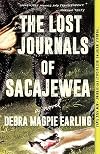
I usually have problems with real historical people having fictional words put into their mouth. But here we have one of the most marginalized, yet mythologized historical figures that was barely mentioned in even the accounts of Lewis & Clark, who apparently needed her around for their benefit. But since Sacajewea was hardly allowed her own story, I'm willing to read a fictionalized story of Sacajewea written from a Native perspective, as this author is. Here, Sacajewea spends the early show more part of the book as a child with her family, but then is kidnapped by enemies and is forced to marry a white man. She stays in her husband's lodge until Lewis & Clark arrive. But this summary just makes it sound like the narrative is following the generic myth of Sacajewea. It is so much more. The book is difficult to read in all the ways, like making your way through a river of dead buffalo. I did not expect a historical person like Sacajewea to have a modern vernacular, and I appreciate the inventiveness of the writer here, but reading this is always work, at times it was a bit TOO confusing, with sometimes a few puzzling things even within one sentence. (I still haven't figured out what the "Ogres" represent...) But a narrative like this shouldn't be easy, by any means, for any of the reasons. For all its harshness and brutality, there is also a ton of beauty. If you can pick apart some of this, I don't think it could possibly be richer or fuller. If it were simpler, it might lean into cliche by default, no matter the skill of the writer. I ended up loving the confusion of what was spirit and what was not. There is a ton of memorable beautiful imagery here, but also some horrifying, miserable imagery as well. But I can see the reason: this isn't supposed to be the sugarcoated/myth/history book version from school. This is realistic. With this writer's power, she can make Sacajewea live in your heart. And I think that was the entire point.
*Book #147/340 I have read of the shortlisted Morning News Tournament of Books show less
*Book #147/340 I have read of the shortlisted Morning News Tournament of Books show less
In the beginning Sacajewea describes herself as a young girl in the Lemhi Shoshone tribe, living a happy childhood, learning the skills, traditions and spiritual beliefs of her people and dreaming of the man she plans to marry.
Then she is stolen away by a raiding tribe. Her family members are killed; she herself is raped, brutalized and turned into a slave. After some years she is gambled away to a French-Canadian trapper named Charbonneau, who continues to treat her as a slave. When show more Charbonneau is engaged by the Lewis & Clark expedition, Sacajewea is taken along and her myth is created.
This was a truly challenging read. As a “journal” it’s written in a stream of consciousness which, begins as a young child in abbreviated language. As Sacajewea matures, so does her thinking, vocabulary and knowledge. But even as the language improves and becomes easier to read, the brutality against her is told in graphic terms. We are used to seeing the statues of Sacajewea standing triumphantly with her child strapped to her back and pointing the direction with her outstretched arm. This is as much a white-man fiction as the happy slaves on southern plantations.
I had the privilege of hearing Debra Earling speak soon after this book was published. She said the story was ‘given’ to her almost in its entirety. And while it follows much of the standard story of Sacajewea, I really liked the ending – and as hard as it was to read, I like very much the woman and history it portrays. show less
Then she is stolen away by a raiding tribe. Her family members are killed; she herself is raped, brutalized and turned into a slave. After some years she is gambled away to a French-Canadian trapper named Charbonneau, who continues to treat her as a slave. When show more Charbonneau is engaged by the Lewis & Clark expedition, Sacajewea is taken along and her myth is created.
This was a truly challenging read. As a “journal” it’s written in a stream of consciousness which, begins as a young child in abbreviated language. As Sacajewea matures, so does her thinking, vocabulary and knowledge. But even as the language improves and becomes easier to read, the brutality against her is told in graphic terms. We are used to seeing the statues of Sacajewea standing triumphantly with her child strapped to her back and pointing the direction with her outstretched arm. This is as much a white-man fiction as the happy slaves on southern plantations.
I had the privilege of hearing Debra Earling speak soon after this book was published. She said the story was ‘given’ to her almost in its entirety. And while it follows much of the standard story of Sacajewea, I really liked the ending – and as hard as it was to read, I like very much the woman and history it portrays. show less
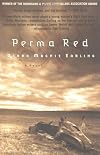
Debra Magpie Earling’s debut novel Perma Red is something of a miracle. The University of Montana creative writing professor began writing it in 1984 and, over the years, it has gone through at least nine different rewrites, trimmed from an epic-length 800 pages to a compact 288, been burned to a crisp in a house fire, and rejected by publishers who loved the writing but thought the original ending too dark and brutal.
Through it all, Earling persevered and the novel stands as a testament show more to her faith and patience. Perma Red wears the two decades of hard work on the sleeve of its dust jacket. I mean that as the sincerest compliment. Like the finest of wines, Perma Red’s vintage has reached the peak of perfection with a lyricism that makes most other books on the average bookstore’s New Release table look like cheap bottles of Mogen-David.
Taken at face value, there’s really nothing extraordinary about Perma Red’s plot. A sixteen-year-old girl, Louise White Elk, struggles to escape life on the Flathead Indian Reservation as she is caught in a tug-of-war between the men who love her: the volatile-tempered Baptiste Yellow Knife, the rich white man Harvey Stoner, and the soulful reservation police officer Charlie Kicking Horse. Fans of James Welch, Louise Erdrich and Sherman Alexie will undoubtedly hear echoes of those authors on these pages.
What makes Earling’s novel such a stellar piece of literature—the closest thing approaching a masterpiece I’ve read in recent years—is the way she gets the reader involved in the characters on the page. These are not mere pulp-and-ink creations—they are real people who continue to haunt me even now, nearly a week after finishing the book. When I reached the last page, it was a heart-wrenching moment as I knew I’d have to say goodbye to Louise, Baptiste and Charlie Kicking Woman.
Imagine, then, the emotional journey Earling must have taken when writing Perma Red. Complicating matters is the fact that Louise is based in part on Earling’s aunt who was murdered when she was 23. Earling has transformed her family history, the legendary story of an aunt who was “wild and vivacious and sexy,âÂ? into literature with universal appeal and which subtly comments on strained race relations.
Subtlety limns every page of the novel. Perma Red is set in the 1940s, yet it has a timeless aura; it is about Native Americans, but the characters could be anyone caught in the net of a love triangle; it takes place in Montana, yet you could substitute the American South or New England and it would have the same impact. EarlingâÂÂs simple, graceful way with words creates a world where we can all find some part of ourselves on the page.
From the first sentenceâÂÂWhen Louise White Elk was nine, Baptiste Yellow Knife blew a fine powder in her face and told her she would disappearâÂÂEarling draws us into the complex relationship between strong-willed Louise and the reservationâÂÂs bad boy Baptiste, a rattlesnake-deadly Heathcliff. Try as she might, Louise is unable to resist his dark pull:
When Baptiste Yellow Knife got drunk he was mean. His teeth looked big. She noticed he had tattooed her name on his hand with indigo pen ink. The tattoo was large, in wide block letters, blue pigment staining his skin forever with her name. Louise tried to imagine Baptiste poking the ink-dipped needle into his brown hand again and again, ink pooling beneath his skin, her name sinking into his blood.
Louise longs to escape not only Baptiste, but the reservation and the harsh Catholic schoolteachers, the âÂÂbad medicineâÂ? cast on her family by BaptisteâÂÂs mother, the barren, snake-haunted landscape and the ever-present undercurrent of violence. In the course of the novel, Louise is always in motionâÂÂliterally and figuratively. She is running away from herself, but what is she running toward?
If Charlie Kicking Woman had his way, sheâÂÂd be running straight into his arms. As tribal police officer, he is always on the lookout for Louise, a habitual truant from school. Charlie and Louise do a ritualistic dance of pursuit-capture-pursuit-capture, and even though his attraction to the teenager threatens to destroy his marriage, he canâÂÂt keep his mind, or his eyes, off her. Some people just seem to draw trouble and Louise is one of them, he tells us. Perma RedâÂÂs chapters shift points of view between Charlie in the first person and Louise and Baptiste in the thirdâÂÂas such, weâÂÂre drawn most intimately into CharlieâÂÂs mind.
Lives are tangled, tension mounts, characters die tragically and the land-scouring Montana wind continues to blow. Perma Red climaxes on a note which most readers will probably see coming for many pages, but yet it is a note which is ultimately satisfyingâÂÂright down to the last, simple sentence: She stepped forward.
With Perma Red, Debra Magpie Earling finally steps forward after two decades and delivers a book as permanently beautiful as the Montana landscape itself. To paraphrase another Big Sky writer, Norman Maclean, I am haunted by words. show less
Through it all, Earling persevered and the novel stands as a testament show more to her faith and patience. Perma Red wears the two decades of hard work on the sleeve of its dust jacket. I mean that as the sincerest compliment. Like the finest of wines, Perma Red’s vintage has reached the peak of perfection with a lyricism that makes most other books on the average bookstore’s New Release table look like cheap bottles of Mogen-David.
Taken at face value, there’s really nothing extraordinary about Perma Red’s plot. A sixteen-year-old girl, Louise White Elk, struggles to escape life on the Flathead Indian Reservation as she is caught in a tug-of-war between the men who love her: the volatile-tempered Baptiste Yellow Knife, the rich white man Harvey Stoner, and the soulful reservation police officer Charlie Kicking Horse. Fans of James Welch, Louise Erdrich and Sherman Alexie will undoubtedly hear echoes of those authors on these pages.
What makes Earling’s novel such a stellar piece of literature—the closest thing approaching a masterpiece I’ve read in recent years—is the way she gets the reader involved in the characters on the page. These are not mere pulp-and-ink creations—they are real people who continue to haunt me even now, nearly a week after finishing the book. When I reached the last page, it was a heart-wrenching moment as I knew I’d have to say goodbye to Louise, Baptiste and Charlie Kicking Woman.
Imagine, then, the emotional journey Earling must have taken when writing Perma Red. Complicating matters is the fact that Louise is based in part on Earling’s aunt who was murdered when she was 23. Earling has transformed her family history, the legendary story of an aunt who was “wild and vivacious and sexy,âÂ? into literature with universal appeal and which subtly comments on strained race relations.
Subtlety limns every page of the novel. Perma Red is set in the 1940s, yet it has a timeless aura; it is about Native Americans, but the characters could be anyone caught in the net of a love triangle; it takes place in Montana, yet you could substitute the American South or New England and it would have the same impact. EarlingâÂÂs simple, graceful way with words creates a world where we can all find some part of ourselves on the page.
From the first sentenceâÂÂWhen Louise White Elk was nine, Baptiste Yellow Knife blew a fine powder in her face and told her she would disappearâÂÂEarling draws us into the complex relationship between strong-willed Louise and the reservationâÂÂs bad boy Baptiste, a rattlesnake-deadly Heathcliff. Try as she might, Louise is unable to resist his dark pull:
When Baptiste Yellow Knife got drunk he was mean. His teeth looked big. She noticed he had tattooed her name on his hand with indigo pen ink. The tattoo was large, in wide block letters, blue pigment staining his skin forever with her name. Louise tried to imagine Baptiste poking the ink-dipped needle into his brown hand again and again, ink pooling beneath his skin, her name sinking into his blood.
Louise longs to escape not only Baptiste, but the reservation and the harsh Catholic schoolteachers, the âÂÂbad medicineâÂ? cast on her family by BaptisteâÂÂs mother, the barren, snake-haunted landscape and the ever-present undercurrent of violence. In the course of the novel, Louise is always in motionâÂÂliterally and figuratively. She is running away from herself, but what is she running toward?
If Charlie Kicking Woman had his way, sheâÂÂd be running straight into his arms. As tribal police officer, he is always on the lookout for Louise, a habitual truant from school. Charlie and Louise do a ritualistic dance of pursuit-capture-pursuit-capture, and even though his attraction to the teenager threatens to destroy his marriage, he canâÂÂt keep his mind, or his eyes, off her. Some people just seem to draw trouble and Louise is one of them, he tells us. Perma RedâÂÂs chapters shift points of view between Charlie in the first person and Louise and Baptiste in the thirdâÂÂas such, weâÂÂre drawn most intimately into CharlieâÂÂs mind.
Lives are tangled, tension mounts, characters die tragically and the land-scouring Montana wind continues to blow. Perma Red climaxes on a note which most readers will probably see coming for many pages, but yet it is a note which is ultimately satisfyingâÂÂright down to the last, simple sentence: She stepped forward.
With Perma Red, Debra Magpie Earling finally steps forward after two decades and delivers a book as permanently beautiful as the Montana landscape itself. To paraphrase another Big Sky writer, Norman Maclean, I am haunted by words. show less
Lists
Awards


You May Also Like


Associated Authors
Statistics
- Works
- 3
- Also by
- 9
- Members
- 483
- Popularity
- #51,117
- Rating
- 3.7
- Reviews
- 22
- ISBNs
- 11
- Languages
- 1