
Works by Emma Lange
A Regency Christmas IV [1992: Porcelain Madonna/ Christmas Rose/ Seasonal Stratagem/ Best Gift of All/ Christmas Tart] (1992) — Contributor — 98 copies, 2 reviews
A Regency Christmas VI [1994: Best Gift/ Dinner at Grillion's/ Christmas Knight/ Christmas Magic/ It Came Upon a Midnight Clear] (1994) — Contributor — 75 copies, 2 reviews
Verzauberte Heiligabend 1 copy
Was kann es Schöneres geben! 1 copy
Tagged
Common Knowledge
- Gender
- female
- Education
- University of California, Berkeley
- Awards and honors
- Romantic Times Career Achievement Award
Members
Reviews

Well-written, but the hero doesn't learn anything -- his behaviour at the end of the book is just as bad as his behaviour at the beginning. When apologies are called for, he goes for kidnapping and telling her how it's all her fault anyway. Jackass.
The quality of the writing is quite good, with lots of interesting characters, humor, and a real period feel. However! I found the "hero" to be a paranoid, arrogant, abusive bully! It seems to me that the only things the hero had going for him were his sparkling eyes, and broad shoulders. Throughout the book until near the end, at which point I hated the "hero," he was suspicious and threatening toward the heroine. It was not romantic!

*** "The Christmas Tart" by Mary Jo Putney. re-read.
I've actually read this one 3 times, not really intentionally, and it hasn't improved on the re-reads. (Some stories do.)
A young seamstress is erroneously accused of theft and turned out of the household that had employed her--the wicked employer keeping her savings, assuming they were the profit from her theft. Homeless and penniless, she's mistaken for a prostitute by the hero's friends who "give" her to him as a gift. It's Cinderella show more and Pretty Woman set in the Regency period, and I didn't quite buy that they actually fell in love.
*** "A Seasonal Stratagem" by Sandra Heath.
This story's plot is a romance standard: the rakish hero makes a bet that he can seduce (in this case, just get a kiss from) the virtuous heroine; he succeeds, but not before he's lost his heart. But then she finds out about the wager, feels betrayed, and he has to work to convince her he's serious. This isn't a bad story--it's just that there's nothing special about it, either.
****½ "The Porcelain Madonna" by Mary Balogh.
Wow. Now this story made the whole volume worthwhile... and I'm not a fan, or even a regular reader of Ms. Balogh--she seems to turn up in anthologies I read pretty regularly, but I don't believe I've ever read one of her single titles. Maybe I should reconsider that.
Anyway. This story grabbed me from the beginning. The hero is self-deprecatingly cynical about Christmas, and we first see him as the shabbily-dressed heroine is admiring the procelain madonna of the title in a shop window. A young boy tries to pick her pocket, and the hero comes to the rescue. The whole story is about his cynicism clashing with her optimism, made poignant by his desperate desire for hope.
I think, if it had been written differently, this story could have been too schmaltzy, but since we get his POV with his self-deprecating remarks, and get a very clear view of his character from the beginning, it's instead funny and warm-hearted.
*½ "Christmas Rose" by Marjorie Farrell.
Speaking of the writing making the difference... this story has the opposite effect.
The hero and heroine have been married for 5 years, and have drifted apart because they've been unable to conceive a child. When he comes home "fizzy" one night and sees a woman leaving a baby in a basket on an absent neighbor's doorstep, he convinces her to move the baby to his. The baby brings him and his wife together, until a servant's comment makes the wife believe it's her husband's bastard.
It could have also been a poignant story, but it was told from such a distant POV that I never connected to either of the characters. Even worse, what I did learn about them made me dislike them.
** "The Best Gift of All" by Emma Lange.
*sigh* I really, really, couldn't like this hero who brings his mistress (and his mistress's husband) home with him for Christmas. And I couldn't rejoice with the heroine that the husband she loved decided she wasn't so bad after all.
This is more a case of genre confusion than anything else, I think. It was, admittedly, entirely realistic that a Regency-era aristocratic husband would have a mistress and ignore his cit wife. I just couldn't stomach it as a romance. show less
I've actually read this one 3 times, not really intentionally, and it hasn't improved on the re-reads. (Some stories do.)
A young seamstress is erroneously accused of theft and turned out of the household that had employed her--the wicked employer keeping her savings, assuming they were the profit from her theft. Homeless and penniless, she's mistaken for a prostitute by the hero's friends who "give" her to him as a gift. It's Cinderella show more and Pretty Woman set in the Regency period, and I didn't quite buy that they actually fell in love.
*** "A Seasonal Stratagem" by Sandra Heath.
This story's plot is a romance standard: the rakish hero makes a bet that he can seduce (in this case, just get a kiss from) the virtuous heroine; he succeeds, but not before he's lost his heart. But then she finds out about the wager, feels betrayed, and he has to work to convince her he's serious. This isn't a bad story--it's just that there's nothing special about it, either.
****½ "The Porcelain Madonna" by Mary Balogh.
Wow. Now this story made the whole volume worthwhile... and I'm not a fan, or even a regular reader of Ms. Balogh--she seems to turn up in anthologies I read pretty regularly, but I don't believe I've ever read one of her single titles. Maybe I should reconsider that.
Anyway. This story grabbed me from the beginning. The hero is self-deprecatingly cynical about Christmas, and we first see him as the shabbily-dressed heroine is admiring the procelain madonna of the title in a shop window. A young boy tries to pick her pocket, and the hero comes to the rescue. The whole story is about his cynicism clashing with her optimism, made poignant by his desperate desire for hope.
I think, if it had been written differently, this story could have been too schmaltzy, but since we get his POV with his self-deprecating remarks, and get a very clear view of his character from the beginning, it's instead funny and warm-hearted.
*½ "Christmas Rose" by Marjorie Farrell.
Speaking of the writing making the difference... this story has the opposite effect.
The hero and heroine have been married for 5 years, and have drifted apart because they've been unable to conceive a child. When he comes home "fizzy" one night and sees a woman leaving a baby in a basket on an absent neighbor's doorstep, he convinces her to move the baby to his. The baby brings him and his wife together, until a servant's comment makes the wife believe it's her husband's bastard.
It could have also been a poignant story, but it was told from such a distant POV that I never connected to either of the characters. Even worse, what I did learn about them made me dislike them.
** "The Best Gift of All" by Emma Lange.
*sigh* I really, really, couldn't like this hero who brings his mistress (and his mistress's husband) home with him for Christmas. And I couldn't rejoice with the heroine that the husband she loved decided she wasn't so bad after all.
This is more a case of genre confusion than anything else, I think. It was, admittedly, entirely realistic that a Regency-era aristocratic husband would have a mistress and ignore his cit wife. I just couldn't stomach it as a romance. show less
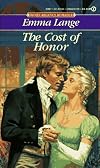
The book held my attention well enough. The hero was a hypocritical idiot though. I suppose I can see why the heroine stayed with him, given the historical context, but I can't see how she could have fallen in love with him.
You May Also Like


Associated Authors
Statistics
- Works
- 22
- Members
- 661
- Popularity
- #38,153
- Rating
- 3.7
- Reviews
- 11
- ISBNs
- 21