

Robert Mawson
Author of The Lazarus Child
About the Author
Series
Works by Robert Mawson
Associated Works
Reader's Digest Condensed Books: Chasing the Dime / Under an English Heaven / Cut Throat / Daddy's Little Girl (2002) 11 copies
Het Beste Boek 226: Het aandenken / De wolkenjagers / Smak / De laatste belofte (2004) — Author — 2 copies, 1 review
Reader's Digest Select Editions: Worth Dying For | Dambuster | The Summer of the Bear | Stagestruck (2011) — Author — 2 copies
Tagged
Common Knowledge
- Canonical name
- Mawson, Robert
- Legal name
- Mawson, Robert
- Other names
- Radcliffe, Robert
- Birthdate
- 1956
- Gender
- male
- Occupations
- pilot
journalist
advertising copywriter
author - Agent
- Christopher Little Literary Agency
- Nationality
- England
UK - Places of residence
- Suffolk, England, UK
- Associated Place (for map)
- England, UK
Members
Reviews
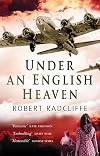
I'd had this book lying around for some time and finally decided I'd better read it! I'm glad I did. This is a wonderfully written, moving book about the American crew of a B17 bomber based in Norfolk during World War 2. It starts with carnage as one pilot loses his whole crew while another crew loses their pilot. You can guess that they are teamed up. The damage and post-traumatic stress they all suffer is movingly captured by Radcliffe, as is their growing sense of camaraderie as they rack show more up mission after mission on their way to that elusive number 25, which means they can go home.
Radcliffe's descriptions of the missions are tense and accurate, conveying some sense of the claustrophobia and sheer terror these men experienced as they flew missions deep into enemy territory. But the book doesn't just focus on the Americans. It also touches on the lives of some of the people from the village near the airbase, especially a young evacuee, Billy Street, who's obssessed with the bomber crews, and Heather, a teacher who's husband is a prisoner of war in a Japanese prison camp and who finds a soulmate in the damaged pilot Hooper.
There's a nice twist at the end too which I won't spoil, but this is a great book which manages to be both exciting and believable, while paying tribute to the brave souls who fought and died in the skies above Europe during those fateful years. show less
Radcliffe's descriptions of the missions are tense and accurate, conveying some sense of the claustrophobia and sheer terror these men experienced as they flew missions deep into enemy territory. But the book doesn't just focus on the Americans. It also touches on the lives of some of the people from the village near the airbase, especially a young evacuee, Billy Street, who's obssessed with the bomber crews, and Heather, a teacher who's husband is a prisoner of war in a Japanese prison camp and who finds a soulmate in the damaged pilot Hooper.
There's a nice twist at the end too which I won't spoil, but this is a great book which manages to be both exciting and believable, while paying tribute to the brave souls who fought and died in the skies above Europe during those fateful years. show less
[ ACROSS THE BLOOD-RED SKIES ] By Radcliffe, Robert ( AUTHOR ) Jan-2011[ Paperback ] by Robert Radcliffe
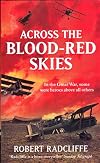
Set during the First World War, Across the Blood-Red Skies offers a wild ride with the pioneers of aerial combat, the courageous men who fought high above the trenches in their flimsy machines.
In a war notable for grim statistics, one number stands out for newly promoted flight leader George Duckwell of the Royal Flying Corps: eighteen hours is the average survival time of a reconnaissance pilot in the spring of 1917.
I really enjoyed reading about the women of the FANY (First Aid Nursing show more Yeomanry), a group that I previously knew anything about. But of the three main characters, it’s George’s engaging voice that dominates and gives the story much of its appeal. George is immensely likable, a bit of a lad, reckless, loyal, resourceful, and possessed of an irrepressible dry sense of humour. This book has it all: strong storytelling, sympathetic characters, action, human drama, comradeship and romance. show less
In a war notable for grim statistics, one number stands out for newly promoted flight leader George Duckwell of the Royal Flying Corps: eighteen hours is the average survival time of a reconnaissance pilot in the spring of 1917.
I really enjoyed reading about the women of the FANY (First Aid Nursing show more Yeomanry), a group that I previously knew anything about. But of the three main characters, it’s George’s engaging voice that dominates and gives the story much of its appeal. George is immensely likable, a bit of a lad, reckless, loyal, resourceful, and possessed of an irrepressible dry sense of humour. This book has it all: strong storytelling, sympathetic characters, action, human drama, comradeship and romance. show less
No cross marks the place where now we lie
What happened is known but to us
You asked, and we gave our lives to protect
Our land from the enemy curse
No Flanders Field where poppies blow;
No Gleaming Crosses, row on row;
No Unnamed Tomb for all to see
And pause -- and wonder who we might be
The Sailors’ Valhalla is where we lie
On the ocean bed, watching ships pass by
Sailing in safety now thru’ the waves
Often right over our sea-locked graves
We ask you just to remember us.
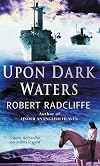
Having read "Under an show more English Heaven" by the same author I was keen to read this novel especially as I'm a fan of history based stories. This book is set onboard a tiny corvette (HMS Daisy) during the WWII Battle of the Atlantic. A battle when the mortality rates on both the Allied and German sides reached 70%.
Rather than the Atlantic convoys much of the story is set in pre-war Uruguay where Michael Villiers (Daisy's second officer) is born & grows up, before moving to England & a British boarding school.
This book starts with a few survivors of HMS Daisy in a life boat in the Atlantic making it rather difficult to really bond their ship-mates as characters . The story is told in flashback, as such you know that the narrator must survive even if it seems improbable therefore some of the suspense is taken out of the story. This is very different with "Under an English Heaven" where you fly with the crew of Misbehavin' Martha as they strive to make it through their tour of duty.
That all sounds rather negative and that would be a little unfair as I still found this an enjoyable read. In particular when the author describes torpedoes streaking towards lumbering merchant ships you get an idea of the sheer brutality of submarine warfare especially when the surviving ships are forced to leave their brethren in the water rather than risk losing another ship to the U-boats. Michael's meeting with the captain of the Graf Spee in Montevideo after the Battle of the Plate is pretty poignant as it speaks the Naval family.
In this novel there are similarities to Sebastian Faulks' "Birdsong". In "Birdsong" the main character develops as a man in pre-war France, here the main character does so in Uruguay yet both end up fighting for the Allies. Also as with "Birdsong" the actual fighting of the war is largely secondary.Instead how war affects the participants is central to the story.
If you enjoy reading war fiction then this is worth giving a go. However I do feel that the author missed the chance of creating a real classic which is a real shame. show less
What happened is known but to us
You asked, and we gave our lives to protect
Our land from the enemy curse
No Flanders Field where poppies blow;
No Gleaming Crosses, row on row;
No Unnamed Tomb for all to see
And pause -- and wonder who we might be
The Sailors’ Valhalla is where we lie
On the ocean bed, watching ships pass by
Sailing in safety now thru’ the waves
Often right over our sea-locked graves
We ask you just to remember us.
Having read "Under an show more English Heaven" by the same author I was keen to read this novel especially as I'm a fan of history based stories. This book is set onboard a tiny corvette (HMS Daisy) during the WWII Battle of the Atlantic. A battle when the mortality rates on both the Allied and German sides reached 70%.
Rather than the Atlantic convoys much of the story is set in pre-war Uruguay where Michael Villiers (Daisy's second officer) is born & grows up, before moving to England & a British boarding school.
This book starts with a few survivors of HMS Daisy in a life boat in the Atlantic making it rather difficult to really bond their ship-mates as characters . The story is told in flashback, as such you know that the narrator must survive even if it seems improbable therefore some of the suspense is taken out of the story. This is very different with "Under an English Heaven" where you fly with the crew of Misbehavin' Martha as they strive to make it through their tour of duty.
That all sounds rather negative and that would be a little unfair as I still found this an enjoyable read. In particular when the author describes torpedoes streaking towards lumbering merchant ships you get an idea of the sheer brutality of submarine warfare especially when the surviving ships are forced to leave their brethren in the water rather than risk losing another ship to the U-boats. Michael's meeting with the captain of the Graf Spee in Montevideo after the Battle of the Plate is pretty poignant as it speaks the Naval family.
In this novel there are similarities to Sebastian Faulks' "Birdsong". In "Birdsong" the main character develops as a man in pre-war France, here the main character does so in Uruguay yet both end up fighting for the Allies. Also as with "Birdsong" the actual fighting of the war is largely secondary.Instead how war affects the participants is central to the story.
If you enjoy reading war fiction then this is worth giving a go. However I do feel that the author missed the chance of creating a real classic which is a real shame. show less

“Sometimes you have to kind of die inside in order to rise from your own ashes and believe in yourself and love yourself to become a new person.”
― Gerard Way
Robert Mawson is a pen name of the author Robert Radcliffe whose historical novels I have largely enjoyed so I was curious as to how he would handle a very different subject matter.
This books weaves two stories together. The first takes the Heywood family through the consequences of a near-fatal accident to their youngest child show more Frankie which was witnessed by her 12-year-old brother Ben. Frankie is hit by a bus on the way to school and knocked into a deep coma.
Rather than a fairly conventional treatment of right to life and euthanasia issues or perhaps the locked-in syndrome from the point of view of the patient as in Dalton Trumbo's "Johnny Got his Gun", Mawson takes a very different path. Exploring the consequences of trying to bring Frankie back - Lazarus-like - from what doctors clinically describe as a persistent vegetative state.
Brilliant young American psychiatrist Lizzie, who herself lost a younger sibling when a child, has established the Perlman Clinic specifically to rescue children in Frankie's condition believes that she can bring Frankie back. However, a sizeable part of the American medical establishment are against Lizzie and her methods despite the fact that she has had some limited success.This is the second thread of this book.
On the whole Mawson is compelling, even daring, and the story rattles on at a fairly good pace. At times you feel for Frankie's parents, Jack and Alison, and the unenviable situation they find themselves in, not to mention the difficult decisions they are faced with. However, what lets the book down generally is that some parts seem to work better than others. This seems apparent in the first chapter alone. The placement of the innocent image of the rag doll at the scene of the accident is wonderful. Then it swiftly switches to the father Jack waking up on the office settee because he slept with his secretary and has been banished fro the family home meaning Ben must walk Frankie to school. This in turns to why Ben witnesses and blames himself for Frankie's accident. However, although we know why Jack is unable to walk the kids to school we are none the wiser why Alison did not fill the void.
Character development is generally poor as was treatment of the protest at the clinic IMHO which quite frankly I'm not sure was totally necessary. However, what really let me down was the psychic journey that culminates with the end of the book. The title itself gives the ending away so is fairly predictable and did Mawson really need so detailed description and to take so long to get there?
On the whole I found the book OK running along at a quick enough pace to keep me interested but a little more care with the characterisation and a little judicious editing would have made it more thought provoking. Or it could just simply be me. show less
― Gerard Way
Robert Mawson is a pen name of the author Robert Radcliffe whose historical novels I have largely enjoyed so I was curious as to how he would handle a very different subject matter.
This books weaves two stories together. The first takes the Heywood family through the consequences of a near-fatal accident to their youngest child show more Frankie which was witnessed by her 12-year-old brother Ben. Frankie is hit by a bus on the way to school and knocked into a deep coma.
Rather than a fairly conventional treatment of right to life and euthanasia issues or perhaps the locked-in syndrome from the point of view of the patient as in Dalton Trumbo's "Johnny Got his Gun", Mawson takes a very different path. Exploring the consequences of trying to bring Frankie back - Lazarus-like - from what doctors clinically describe as a persistent vegetative state.
Brilliant young American psychiatrist Lizzie, who herself lost a younger sibling when a child, has established the Perlman Clinic specifically to rescue children in Frankie's condition believes that she can bring Frankie back. However, a sizeable part of the American medical establishment are against Lizzie and her methods despite the fact that she has had some limited success.This is the second thread of this book.
On the whole Mawson is compelling, even daring, and the story rattles on at a fairly good pace. At times you feel for Frankie's parents, Jack and Alison, and the unenviable situation they find themselves in, not to mention the difficult decisions they are faced with. However, what lets the book down generally is that some parts seem to work better than others. This seems apparent in the first chapter alone. The placement of the innocent image of the rag doll at the scene of the accident is wonderful. Then it swiftly switches to the father Jack waking up on the office settee because he slept with his secretary and has been banished fro the family home meaning Ben must walk Frankie to school. This in turns to why Ben witnesses and blames himself for Frankie's accident. However, although we know why Jack is unable to walk the kids to school we are none the wiser why Alison did not fill the void.
Character development is generally poor as was treatment of the protest at the clinic IMHO which quite frankly I'm not sure was totally necessary. However, what really let me down was the psychic journey that culminates with the end of the book. The title itself gives the ending away so is fairly predictable and did Mawson really need so detailed description and to take so long to get there?
On the whole I found the book OK running along at a quick enough pace to keep me interested but a little more care with the characterisation and a little judicious editing would have made it more thought provoking. Or it could just simply be me. show less
You May Also Like


Associated Authors
Statistics
- Works
- 17
- Also by
- 3
- Members
- 744
- Popularity
- #34,143
- Rating
- 3.3
- Reviews
- 22
- ISBNs
- 104
- Languages
- 11