
Philip Connors
Author of Fire Season: Field Notes From a Wilderness Lookout
About the Author
Series
Works by Philip Connors
Associated Works
Lapham's Quarterly - Lines of Work: Volume IV, Number 2, Spring 2011 (2011) — Contributor — 32 copies, 2 reviews
Tagged
Common Knowledge
- Gender
- male
- Education
- University of Montana
- Nationality
- USA
- Birthplace
- Iowa, USA
- Places of residence
- Minnesota, USA
Iowa, USA
New Mexico, USA - Associated Place (for map)
- USA
Members
Reviews
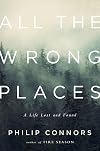
In one of those coincidences that only seem to happy in the Southwest, I happened to meet [[Philip Connors]] in a bookstore in El Paso, Texas, as we both know the owner and frequent the store any time we are nearby. The owner shuffled over to me with a stack of Connors' books and encouraged me to buy them all that day - I'm glad I did.
Connors was an editor for the Arts and Leisure section of the Wall Street Journal, which might give some readers pause - but he is the self-proclaimed only show more socialist ever to work for the Journal. This book is a memoir of the years he tries to process his brother's suicide, blaming himself, as many do, for so long that looking back he was in all the wrong places. Eventually, he becomes a fire lookout in the Gila Wilderness in New Mexico and begins to piece his life back together looking down at the grand high desert. He characterizes himself as someone who never developed the skills to ask the right questions nor to understand the answers he received - but that self-deprecation just highlights the way his mind was working to regain a grip on reality. Because spending time in his mind while reading this book is among the most pleasant and moving experiences I've ever had reading a memoir. He is unabashedly open and keenly observes the world around him. The last time I read a memoir this cutting and worthwhile was Andrew McCarthy's [The Longest Way Home].
Connors is a once-in-a-generation writer who only awakened to the world around him once he hiked into the desert - the solemn place restoring him. His next book [Fire Season] won the National Outdoor Book Award.
Highly Recommended!!!!!
5 bones!!!!! show less
Connors was an editor for the Arts and Leisure section of the Wall Street Journal, which might give some readers pause - but he is the self-proclaimed only show more socialist ever to work for the Journal. This book is a memoir of the years he tries to process his brother's suicide, blaming himself, as many do, for so long that looking back he was in all the wrong places. Eventually, he becomes a fire lookout in the Gila Wilderness in New Mexico and begins to piece his life back together looking down at the grand high desert. He characterizes himself as someone who never developed the skills to ask the right questions nor to understand the answers he received - but that self-deprecation just highlights the way his mind was working to regain a grip on reality. Because spending time in his mind while reading this book is among the most pleasant and moving experiences I've ever had reading a memoir. He is unabashedly open and keenly observes the world around him. The last time I read a memoir this cutting and worthwhile was Andrew McCarthy's [The Longest Way Home].
Connors is a once-in-a-generation writer who only awakened to the world around him once he hiked into the desert - the solemn place restoring him. His next book [Fire Season] won the National Outdoor Book Award.
Highly Recommended!!!!!
5 bones!!!!! show less
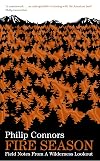
A book that compels the reader to read it at a leisurely pace, Philip Connors' Walden-like memoir Fire Season sees its author remove himself from the urban rat-race of 21st-century American society to spend four months of each year as a fire-watcher in one of the last few remaining wilderness landscapes in the United States. In the Gila wilderness, atop a lookout tower on a mountain peak, with little more technology than a radio, he lives a solitary existence as he looks out on impressive show more natural vistas where there is not another human dwelling for a hundred miles (pg. 22).
It is to Fire Season's great credit that it avoids the clichés and pitfalls that this scenario immediately evokes. Connors does not rail against the modern life, only recognises its inferiority – indeed, he acknowledges that it is the life he lives outside of these four or five months of the year. While he writes eloquently about the natural world he finds himself immersed in, he does not rhapsodize, and in fact even recognises that – thanks to the conservation efforts of the last eighty years or so – this 'natural', 'preserved' world he retreats to is in some ways as planned and artificial as the world he has fled from. And while the book is necessarily a slow-paced, introspective narrative, there is nothing so trite in these pages as "finding oneself".
With these traps and clichés carefully avoided, Fire Season becomes a sincere and erudite account of a modern man who wrestles to balance his soul: the logical self-assessment that one must work, pay tax and take part in society, combined with that other noble and atavistic yearning we all possess to one extent or another; "that part of ourselves that relishes a campfire under a sky berserk with stars… completely reliant on our own dexterity" (pg. 91). Connors reaches no hugely profound revelation on this divide in every human heart, but he does document the experience well.
While Connors has much to say on the natural beauty of the region he inhabits, the solitude it offers and the thoughts that result, much of his book is transfixed by fire; that phenomenon which it is his job, as a fire-watcher, to look out for. Not only does Connors do the reader a service in fleshing out our understanding of the intricacies of this job, but also leads the reader to a more nuanced appreciation of forest fires, which are necessary for the bio-diversity of the land and are sometimes deliberately left unfought.
It is in stepping outside his firewatch tower that Connors begins to stretch himself, in ways that perhaps warp the effects of Fire Season on the reader. Sometimes, his reaches work well, as in the final chapter when he deftly links his experiences of fire in the Gila forests to his experience of fire in the urban jungle of New York, where he was present on 9/11 and walked the streets covered in ash. Elsewhere, the reaches fail to grasp: much of the book diverts itself with impersonal, journalistic accounts of the history of the Forest Service or conservation efforts in the United States. On one hand, it is good to see these highlighted by an astute commentator, particularly as contemporary narratives in American society seem to be so toxically negative, and the success of such historical endeavours show what can be done in the country if one looks to it.
That said, as worthy as such discussions are, they make a thoughtful and already-slow book almost static. It's something I see a lot of in modern travel memoirs: editor-induced padding and filler to make a slight book – and what's wrong with a book being slight, when the writing is fine? – more substantial. Connors does it better than most, due to his skills as a writer, but an affecting story of his encounter with a beleaguered fawn late on in the book (pp217-22) shows that it is the personal stories Connors relates which retain the most power. For all his in-depth discussion of the history of American conservation or forest-fire theory, it is a passing mention of sitting in his isolated tower on the Fourth of July, watching fireworks "blooming like tiny flowers" in the distance (pg. 192), that will have more staying power with the reader.
A good writer and a reasonably independent thinker, Connors might be a little too analytical at times for Fire Season to emerge as truly special, failing to allow himself to be taken away by the magic and majesty of his surroundings. But that still puts him in the first-rank, considering the dearth of truly deep writers and artists in our time. Connors draws heavily on Aldo Leopold for his nature writing, and on Norman Maclean for his discussions of forest-fire, and in such storied company he is not found wanting. In Fire Season, he proves himself a worthy successor, seated in crisp mountaintop isolation, naming emergent fires the way American wanderers once named creeks and canyons and land. Even if, at such a height, he remains in the shadows of Leopold and Maclean, they are at least cool shadows to be in. show less
It is to Fire Season's great credit that it avoids the clichés and pitfalls that this scenario immediately evokes. Connors does not rail against the modern life, only recognises its inferiority – indeed, he acknowledges that it is the life he lives outside of these four or five months of the year. While he writes eloquently about the natural world he finds himself immersed in, he does not rhapsodize, and in fact even recognises that – thanks to the conservation efforts of the last eighty years or so – this 'natural', 'preserved' world he retreats to is in some ways as planned and artificial as the world he has fled from. And while the book is necessarily a slow-paced, introspective narrative, there is nothing so trite in these pages as "finding oneself".
With these traps and clichés carefully avoided, Fire Season becomes a sincere and erudite account of a modern man who wrestles to balance his soul: the logical self-assessment that one must work, pay tax and take part in society, combined with that other noble and atavistic yearning we all possess to one extent or another; "that part of ourselves that relishes a campfire under a sky berserk with stars… completely reliant on our own dexterity" (pg. 91). Connors reaches no hugely profound revelation on this divide in every human heart, but he does document the experience well.
While Connors has much to say on the natural beauty of the region he inhabits, the solitude it offers and the thoughts that result, much of his book is transfixed by fire; that phenomenon which it is his job, as a fire-watcher, to look out for. Not only does Connors do the reader a service in fleshing out our understanding of the intricacies of this job, but also leads the reader to a more nuanced appreciation of forest fires, which are necessary for the bio-diversity of the land and are sometimes deliberately left unfought.
It is in stepping outside his firewatch tower that Connors begins to stretch himself, in ways that perhaps warp the effects of Fire Season on the reader. Sometimes, his reaches work well, as in the final chapter when he deftly links his experiences of fire in the Gila forests to his experience of fire in the urban jungle of New York, where he was present on 9/11 and walked the streets covered in ash. Elsewhere, the reaches fail to grasp: much of the book diverts itself with impersonal, journalistic accounts of the history of the Forest Service or conservation efforts in the United States. On one hand, it is good to see these highlighted by an astute commentator, particularly as contemporary narratives in American society seem to be so toxically negative, and the success of such historical endeavours show what can be done in the country if one looks to it.
That said, as worthy as such discussions are, they make a thoughtful and already-slow book almost static. It's something I see a lot of in modern travel memoirs: editor-induced padding and filler to make a slight book – and what's wrong with a book being slight, when the writing is fine? – more substantial. Connors does it better than most, due to his skills as a writer, but an affecting story of his encounter with a beleaguered fawn late on in the book (pp217-22) shows that it is the personal stories Connors relates which retain the most power. For all his in-depth discussion of the history of American conservation or forest-fire theory, it is a passing mention of sitting in his isolated tower on the Fourth of July, watching fireworks "blooming like tiny flowers" in the distance (pg. 192), that will have more staying power with the reader.
A good writer and a reasonably independent thinker, Connors might be a little too analytical at times for Fire Season to emerge as truly special, failing to allow himself to be taken away by the magic and majesty of his surroundings. But that still puts him in the first-rank, considering the dearth of truly deep writers and artists in our time. Connors draws heavily on Aldo Leopold for his nature writing, and on Norman Maclean for his discussions of forest-fire, and in such storied company he is not found wanting. In Fire Season, he proves himself a worthy successor, seated in crisp mountaintop isolation, naming emergent fires the way American wanderers once named creeks and canyons and land. Even if, at such a height, he remains in the shadows of Leopold and Maclean, they are at least cool shadows to be in. show less
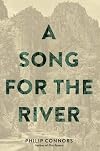
I read Fire Season and enjoyed it so I was pleased when I found out he had written another book. I found the flow and tenor of this book very different that his first. He is facing various difficult situations in his life and reflecting on them.
The portion of the book focusing on the 3 teenagers that tragically died had a big impact on me since I lost a son at a young age. It was very touching to me to hear his words about how they are remembered by him, and those that knew them in their show more small town. I was not expecting this from the book and it really hit home for me. show less
The portion of the book focusing on the 3 teenagers that tragically died had a big impact on me since I lost a son at a young age. It was very touching to me to hear his words about how they are remembered by him, and those that knew them in their show more small town. I was not expecting this from the book and it really hit home for me. show less
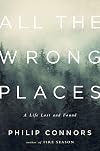
ALL THE WRONG PLACES is a hero's journey and the story of the emergence of one of the best of the West's new writers.
I had the pleasure of meeting Phil Connors at an Association for the Study of Literature and Environment writer's conference where he was a speaker. Dave Foreman was there too and the three of us had lunch along with my wife and publisher at Torrey House Press, Kirsten Allen. Kirsten ended up sitting with three men who had lost their brothers by their brother's own hand. It show more was a moving experience for me, one I still feel and am grateful for.
As coincidence would have it, the copy of ALL THE WRONG PLACES Phil generously sent me showed up in my mailbox on the five year anniversary of my brother's death. I started reading it around noon and finished it a minute before midnight. I had in my hand a story I related to on many levels, of course, but also one that told the background story of how a sensitive, hard working, acutely honest and master observer came to be an award winning writer.
Phil was on a path he might not have been cut out for when his world was side swiped by the news of his younger brother's suicide. It was a suicide he feels he might have prevented. We older brothers know this, know we could have done something, know what it would have been, know it even though we are often told there is nothing we could have done. The challenge is to figure how to live with the realization of this existential truth. Phil ended up leaving New York City for a fire tower in the Gila, where his title FIRE SEASON emerged followed by this work. We are all the richer for it.
What is most personal is the most universal. In this exquisitely honest portrayal of a life closely examined and found wanting the rest of us can shed a light on our own dark interior.
Man, Phil, nice work.
-Mark show less
I had the pleasure of meeting Phil Connors at an Association for the Study of Literature and Environment writer's conference where he was a speaker. Dave Foreman was there too and the three of us had lunch along with my wife and publisher at Torrey House Press, Kirsten Allen. Kirsten ended up sitting with three men who had lost their brothers by their brother's own hand. It show more was a moving experience for me, one I still feel and am grateful for.
As coincidence would have it, the copy of ALL THE WRONG PLACES Phil generously sent me showed up in my mailbox on the five year anniversary of my brother's death. I started reading it around noon and finished it a minute before midnight. I had in my hand a story I related to on many levels, of course, but also one that told the background story of how a sensitive, hard working, acutely honest and master observer came to be an award winning writer.
Phil was on a path he might not have been cut out for when his world was side swiped by the news of his younger brother's suicide. It was a suicide he feels he might have prevented. We older brothers know this, know we could have done something, know what it would have been, know it even though we are often told there is nothing we could have done. The challenge is to figure how to live with the realization of this existential truth. Phil ended up leaving New York City for a fire tower in the Gila, where his title FIRE SEASON emerged followed by this work. We are all the richer for it.
What is most personal is the most universal. In this exquisitely honest portrayal of a life closely examined and found wanting the rest of us can shed a light on our own dark interior.
Man, Phil, nice work.
-Mark show less
Lists
Awards


You May Also Like


Associated Authors
Statistics
- Works
- 6
- Also by
- 3
- Members
- 671
- Popularity
- #37,613
- Rating
- 3.8
- Reviews
- 45
- ISBNs
- 32
- Languages
- 1
- Favorited
- 1