
Virginia Rounding
Author of Catherine the Great: Love, Sex, and Power
About the Author
Virginia Rounding lives in London where, in addition to being an author, book critic, and clerk to a City of London guild, she recently held a three-year Royal Literary Fund Fellowship at the Courtauld Institute of Art. She is the author of the critically acclaimed Catherine the Great and Grandes show more Horizontales. show less
Image credit: My photo
Works by Virginia Rounding
Grandes Horizontales: The Lives and Legends of Four Nineteenth-Century Courtesans (2003) 165 copies, 4 reviews
The Burning Time: Henry VIII, Bloody Mary, and the Protestant Martyrs of London (2017) 73 copies, 3 reviews
Tagged
Common Knowledge
- Canonical name
- Rounding, Virginia
- Birthdate
- 1950
- Gender
- female
- Education
- Merchant Taylors's School for Girls, Great Crosby, England, UK
School of Slavonic and East European Studies, University of London - Occupations
- administrator
author
writing coach - Nationality
- UK
- Places of residence
- Hoxton, Middlesex, England, UK
- Associated Place (for map)
- England, UK
Members
Reviews
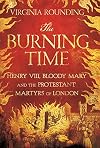
This book was received from a Goodreads contest.
The Burning Time is a very educational insight to a tumultuous time in English history, where the whims of leaders are the difference between life and death. I had learned the gist of Henry VIII's marriage foibles in study before, so I'm glad that this book provides me the opportunity to see it from a ground level.
The juxtaposition of John Deane and Richard Rich provides an intriguing driving force. Despite being positioned on either side of show more the divide, both the Catholic and the feckless member of Henry's regime found themselves irrevocably embroiled in England's troubles. Both friends and enemies burned, so their lives also serve as a reminder of the link shared by two opposing faiths.
The tone of the book is scholarly, but it is still engaging enough to keep me turning the pages. The events portrayed in this book constitute horrible reminders of the worst of humanity, where faith, interpretation, and selfishness lead to the brutal martyrdom of scores of citizens, rich and poor, young and old, famous or obscure. Given what the world looks like in 2017, the Smithfield burnings aren't that far off after all. The message resonates as strongly as ever, and everyone owes it to themselves to read it and think. show less
The Burning Time is a very educational insight to a tumultuous time in English history, where the whims of leaders are the difference between life and death. I had learned the gist of Henry VIII's marriage foibles in study before, so I'm glad that this book provides me the opportunity to see it from a ground level.
The juxtaposition of John Deane and Richard Rich provides an intriguing driving force. Despite being positioned on either side of show more the divide, both the Catholic and the feckless member of Henry's regime found themselves irrevocably embroiled in England's troubles. Both friends and enemies burned, so their lives also serve as a reminder of the link shared by two opposing faiths.
The tone of the book is scholarly, but it is still engaging enough to keep me turning the pages. The events portrayed in this book constitute horrible reminders of the worst of humanity, where faith, interpretation, and selfishness lead to the brutal martyrdom of scores of citizens, rich and poor, young and old, famous or obscure. Given what the world looks like in 2017, the Smithfield burnings aren't that far off after all. The message resonates as strongly as ever, and everyone owes it to themselves to read it and think. show less
The Burning Time: Henry VIII, Bloody Mary, and the Protestant Martyrs of London by Virginia Rounding
This is a fascinating and well-written work, a surprising statement given the subject matter. Yet Rounding is able to take this time in England and provide a year-by-year detail of the hundreds of burnings at St. Bartholomew's Cathedral in London. This book begins with Henry VIII and the easy way he had with consigning people to death, and ends with the death of Mary Tudor that ends her queenship.
Part of what makes this book work is the clear, concise way that Rounding writes. She is just as show more deft at working in the historical context as Alison Weir while also crafting a story that is easy to read. Rounding takes the lives of the women and men who were burned at the stake and tells their stories. Yes, some people were left out; not everyone was documented in the 16th century. But she has still done her research, and having the number of victims she does name makes the act of reading much easier.
The irony she points out is the ambiguity of the times in which many of these martyrs lived. If one supported the changes in the church that Henry VIII instituted to divorce Catherine of Aragon and marry Anne Boleyn, then one could still be burned as a religious martyr if one fell out of grace with the same King. And then there was Mary Tudor, sweeping up all of the supporters of her father's religious changes in a horrible period of retribution.
Rounding also points out the reality that many of these women and men faced when they were brought to trial: if they recanted their confession, they could not live with their conscience nagging at them. It was a different time when one's death led to heaven, or eternal torture. For the victims whose stories are told here, they chose to go to the stake to be burned, knowing that they would see their Heavenly Father.
The book also contains a chronology with dates of what happened at Court, who was burned when (including Thomas Cromwell), the brief reign of Edward VI, and the also brief reign of Mary Tudor. I found myself referencing it, especially when I picked up and put down this book, reading it after a period of time.
Sometimes, during difficult times, it is important to read books about troubling and other difficult times. This is not a book I might have read 3 years ago, but just like with COVID and the lockdown, I found solace in reading about the Black Plague and the London Plague. We are in difficult times and this was one outcome. show less
Part of what makes this book work is the clear, concise way that Rounding writes. She is just as show more deft at working in the historical context as Alison Weir while also crafting a story that is easy to read. Rounding takes the lives of the women and men who were burned at the stake and tells their stories. Yes, some people were left out; not everyone was documented in the 16th century. But she has still done her research, and having the number of victims she does name makes the act of reading much easier.
The irony she points out is the ambiguity of the times in which many of these martyrs lived. If one supported the changes in the church that Henry VIII instituted to divorce Catherine of Aragon and marry Anne Boleyn, then one could still be burned as a religious martyr if one fell out of grace with the same King. And then there was Mary Tudor, sweeping up all of the supporters of her father's religious changes in a horrible period of retribution.
Rounding also points out the reality that many of these women and men faced when they were brought to trial: if they recanted their confession, they could not live with their conscience nagging at them. It was a different time when one's death led to heaven, or eternal torture. For the victims whose stories are told here, they chose to go to the stake to be burned, knowing that they would see their Heavenly Father.
The book also contains a chronology with dates of what happened at Court, who was burned when (including Thomas Cromwell), the brief reign of Edward VI, and the also brief reign of Mary Tudor. I found myself referencing it, especially when I picked up and put down this book, reading it after a period of time.
Sometimes, during difficult times, it is important to read books about troubling and other difficult times. This is not a book I might have read 3 years ago, but just like with COVID and the lockdown, I found solace in reading about the Black Plague and the London Plague. We are in difficult times and this was one outcome. show less
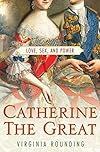
Admittedly this book took me a long time to finish (this is in large part due to the fact that I'm not the speediest reader and I tend to have more than one book going at a time), but as far as nonfiction goes, this is officially a favorite. In fact, it is one of the better books I've ever read; fiction, nonfiction, or otherwise. In "Love, Sex, Power", Rounding brings to life a fantastic minx of woman that put Russia on the map as a legitimate world player. The reader is thoroughly show more entertained and educated. So often with biographies, the storytelling becomes dry and muddled with incoherent facts. However, with this book, Rounding cleverly weaves history, people and legend into one enthralling story. From the infamous “horse rumors” to “Potemkin Villages”, the life of Catherine is depicted whole-heartedly. In many ways, this biography read like a novel, and a thrilling one at that.
Rating: 5 out of 5 stars.
Suggested With: Many many midday hours during which one can get wrapped up with a bowl of soup or cup of tea. show less
Rating: 5 out of 5 stars.
Suggested With: Many many midday hours during which one can get wrapped up with a bowl of soup or cup of tea. show less
An enjoyable biography, and filled with the sort of details that made Catherine the Great, her many lovers, and many of her courtiers came alive. We are fortunate that Catherine maintained such a voluminous correspondence and did a great deal of personal writing, both of which the book liberally quoted. In addition, a large number of letters from foreign diplomats (especially the series of British ambassadors to her court) describing the details of life at court were preserved, and were also show more quoted from many times. The combination provided an excellent insight into how Catherine thought, the broader circumstances surrounding her activities, and how she approached what she considered her duties as Empress. For example, her letters describe how she decided to have herself and her children inoculated against smallpox at a time when the technique was uncommon and not without risks because she believed in taking selfless actions to improve the public health and to set a good example.
In addition, "the horse story" is a complete myth, and an autopsy showed that she actually died of a cerebral stroke
I appreciated how Rounding enhanced the readability of the book by using modern spellings, and using the name Catherine only for Catherine the Great (there were many other "Catherines" but the Russian spelling was used for clarity), and mostly omitted the patronymics (except for the royal family). Both of these made everything much easier to follow. In addition, she was careful to specify when she was using the old calendar to date events and when she was using the new calendar (Russia was still using the old calendar at that point, although most of the rest of Europe was using the new), so it was also easier to keep track of what happened when. show less
In addition, "the horse story" is
I appreciated how Rounding enhanced the readability of the book by using modern spellings, and using the name Catherine only for Catherine the Great (there were many other "Catherines" but the Russian spelling was used for clarity), and mostly omitted the patronymics (except for the royal family). Both of these made everything much easier to follow. In addition, she was careful to specify when she was using the old calendar to date events and when she was using the new calendar (Russia was still using the old calendar at that point, although most of the rest of Europe was using the new), so it was also easier to keep track of what happened when. show less
You May Also Like


Statistics
- Works
- 6
- Members
- 646
- Popularity
- #39,072
- Rating
- 3.7
- Reviews
- 18
- ISBNs
- 22
- Languages
- 1
