

Michael Sorkin (1948–2020)
Author of Variations on a Theme Park: The New American City and the End of Public Space
About the Author
Michael Sorkin is principal of Michael Sorkin Studio & director of the Graduate Program in Urban Design at the City College of New York. (Bowker Author Biography)
Works by Michael Sorkin
Variations on a Theme Park: The New American City and the End of Public Space (1992) — Editor — 259 copies, 2 reviews
Associated Works
The Suburbanization of New York: Is the World's Greatest City Becoming Just Another Town? (2006) — Contributor — 34 copies, 1 review
Harvard Design Magazine: urban design now — Contributor — 2 copies
Tagged
Common Knowledge
- Legal name
- Sorkin, Michael David
- Birthdate
- 1948-08-02
- Date of death
- 2020-03-26
- Gender
- male
- Education
- Massachusetts Institute of Technology (MA - Architecture)
Columbia University
University of Chicago - Occupations
- architect
non-fiction author
distinguished professor (Architecture) - Organizations
- Barnard University
City University of New York (City College) - Cause of death
- COVID-19
- Nationality
- USA
- Birthplace
- Washington, D.C., USA
- Place of death
- New York, New York, USA
- Associated Place (for map)
- USA
Members
Reviews
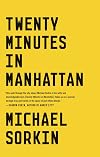
To fully enjoy this book, do you have to live along the walk Michael Sorkin uses as the basis for free-ranging meditations about urban life and community, and it's perpetual struggle with real-estate developers? Although I do, I don't think it's necessary: Twenty Minutes in Manhattan ranges over all of NYC and adduces examples from other cities in the U.S. and abroad, describing and analyzing in an attractive flowing prose the signs indicating the rise and fall of urban neighborhoods, and show more the perpetual struggle to keep them home to a reasonably wide range of people, not solely the wealthy in good times and the poor in bad.
What is known as gentrification is seen as prelude to the fall of true neighborhoods. The homogenization of shops and apartments to suit the tastes of the rich and usually some of the famous, requiring intensive renovation and steeply increased rents or selling prices, drive away all the residents and merchants who made a neighborhood interesting in the first place. Greenwich Village, where Sorkin has lived for decades, has virtually none of the artists and writers that made it so attractive in the first half of the 20th century, and the surrounding areas are seeing grocery, book, and a variety of other useful shops now selling expensive shoes, designer handbags, and jewelry. On the street are no longer one's neighbors, but tourists from other parts of the city and the country and foreign lands, drawn to look at all the upscale merchandise as well as the people shopping for it.
Although much hard information is conveyed here, it's done in such an organized and easy way that it seems like more a diary of an architect and urban planner's ideas as they evolve. This is the first of his books I've read, having just heard of him a few days before acquiring Twenty Minutes in Manhattan. As a fan of both NYC and urban studies in general – I do believe cities can save the earth – I was pretty sure I'd like Sorkin, but Twenty Minutes in Manhattan surpassed my expectations.
So, despite the rather steep prices of his work even in paperback, it won't be my last Michael Sorkin book. Twenty Minutes in Manhattan is a an excellent, and inexpensive, introduction to the man and his ideas. show less
What is known as gentrification is seen as prelude to the fall of true neighborhoods. The homogenization of shops and apartments to suit the tastes of the rich and usually some of the famous, requiring intensive renovation and steeply increased rents or selling prices, drive away all the residents and merchants who made a neighborhood interesting in the first place. Greenwich Village, where Sorkin has lived for decades, has virtually none of the artists and writers that made it so attractive in the first half of the 20th century, and the surrounding areas are seeing grocery, book, and a variety of other useful shops now selling expensive shoes, designer handbags, and jewelry. On the street are no longer one's neighbors, but tourists from other parts of the city and the country and foreign lands, drawn to look at all the upscale merchandise as well as the people shopping for it.
Although much hard information is conveyed here, it's done in such an organized and easy way that it seems like more a diary of an architect and urban planner's ideas as they evolve. This is the first of his books I've read, having just heard of him a few days before acquiring Twenty Minutes in Manhattan. As a fan of both NYC and urban studies in general – I do believe cities can save the earth – I was pretty sure I'd like Sorkin, but Twenty Minutes in Manhattan surpassed my expectations.
So, despite the rather steep prices of his work even in paperback, it won't be my last Michael Sorkin book. Twenty Minutes in Manhattan is a an excellent, and inexpensive, introduction to the man and his ideas. show less

This compendium of Michael Sorkin's articles from his ten-year tenure (1978-88) at New York's Village Voice is the first of four books collecting his critical output over roughly fifty years. The paper, which halted print publication in 2017 and then sadly ceased publication entirely the following year, was the ideal pulpit for Sorkin's progressive views. He could rail against Philip Johnson and other overrated architects, draw attention to ones he liked but were otherwise little known, and show more proffer alternative points of view on important developments in New York City. Although the book is subtitled "Writings on Buildings," it's clear that Sorkin was already focused as much on cities as on the buildings filling them. show less

In 1998, architect Michael Sorkin put out this monograph emblazoned with, not one of his projects, but a cluster (army?) of frogs. The cover image and the book's title, Wiggle, certainly aren't at odds with each other, but it's clear to me that idea trumps image, particularly when compared to other architecture monographs. What those ideas or visions are is not spelled out in an essay; instead the projects — with some short but honest and helpful explanatory text — speak for themselves. show more They range from small exhibitions to city plans. Tying them together are Sorkin's distinctive "wiggly" designs and his beautiful (and underappreciated, I think) drawings. Most striking are the plans, which are dense with lines, have nary a right angle, and give the impression that social life would be much more intimate if we lived in Sorkin World.
(Written in 2018) show less
(Written in 2018) show less
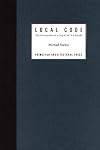
Design for Sorkin is much more than lines on paper or a scale model. It is also the codes that determine to a large degree what those lines must follow and what shape those models will become. For most architects building and zoning codes are mandates to follow. But what if they could develop their own? What would they dictate? How would they be written? And what would be their underlying goals? Sorkin did what most architects and urban designers would never spend the time on: he developed a show more code, complete with a Bill of Rights and designed for a Utopia that will never exist. Hardly a text to be read cover to cover, Local Code is more a template for students of urban design to use in their projects; best I can recall, it was used that way in the past.
(Written in 2018) show less
(Written in 2018) show less
Lists
You May Also Like


Associated Authors
Statistics
- Works
- 25
- Also by
- 5
- Members
- 899
- Popularity
- #28,500
- Rating
- 3.7
- Reviews
- 22
- ISBNs
- 48
- Languages
- 3
- Favorited
- 1