
Yvonne Vera (1964–2005)
Author of Butterfly Burning
About the Author
Yvonne Vera (1964-2005) was born in Bulawayo, Zimbabwe, and later attended York University in Toronto, gaining her doctorate in English Literature in 1995. Her fiction has won a number of international awards, including the Tucholski Prize from Swedish PEN (2004) and the Macmillan writer's prize show more for Africa (2002). Her novel Nehanda was short-listed for the Commonwealth Prize (Africa, 1995), which she won two years later for Under the Tongue (1997). show less
Image credit: Yvonne Vera
Works by Yvonne Vera
Seelen im Exil : Erzählungen 1 copy
Associated Works
New Daughters of Africa: An International Anthology of Writing by Women of African Descent (2019) — Contributor — 117 copies, 1 review
Tagged
Common Knowledge
- Canonical name
- Vera, Yvonne
- Legal name
- Jose, Yvonne Vera
- Birthdate
- 1964-09-19
- Date of death
- 2005-04-07
- Gender
- female
- Education
- York University, Canada
- Occupations
- art gallery director
teacher (literature)
author - Organizations
- National Gallery of Art, Zimbabwe (director)
- Awards and honors
- Commonwealth Writer's Prize (African Region ∙ 1997)
Tucholsky Award van Swedish PEN-Society (2004)
Swedish Award "Voice of Africa" (1999) - Relationships
- Jose, John (husband)
Mlambo, Kupukile (friend) - Short biography
- Yvonne Vera werd geboren in Bulawayo, Zimbabwe. Zij studeerde Engels in Toronto en schreef zes boeken, waaronder Vuurvlinder (2003). Haar werk werd verschillende keren bekroond, onder andere met de Commonwealth Prize (1997) voor Under the Tongue. Vera was enkele jaren directeur van de National Gallery of Art in Bulawayo, maar ze moest vluchten uit haar geboorteland, waarna ze in Canada woonde en werkte. In 2004 kende de Zweedse PEN-Vereniging haar de Tucholsky Award toe, een prijs bestemd voor schrijvers die vervolgd of bedreigd zijn, of gedwongen zijn in ballingschap te leven.
Ze zette zich actief in voor vrouwenrechten en werd door velen getipt als winnares van de Nobelprijs voor Literatuur.
Yvonne Vera overleed op 7 april 2005 aan de gevolgen van een hersenvliesontsteking. - Cause of death
- meningitis (AIDS-related)
- Nationality
- Zimbabwe
- Birthplace
- Bulawayo, Zimbabwe
- Places of residence
- Bulawayo, Zimbabwe
Harare, Zimbabwe
Tsholotsho
Toronto, Ontario, Canada - Place of death
- Toronto, Ontario, Canada
- Burial location
- cremated
Haliburton, Canada (some of her ashes scattered at their cottage by her husband)
Matopos Hill, Zimbabwe (the rest of her ashes scattered atop) - Associated Place (for map)
- Zimbabwe
Members
Reviews

A difficult novel to read, dealing with the violence around and after Zimbabwe's independence from a very direct, personal and shatteringly painful viewpoint. A young woman is murdered in a village outside Bulawayo; her sister is also attacked and left seriously injured and disfigured, and has to find a way to get back to something like normal life.
We are shown the world in which these things happen in an apparently objective, poetic way — the scenery, the buildings, the weather and show more vegetation, the normal lives of the people in Bulawayo and the village, the fighters who have returned from the bush, the memories and visible signs of pre-colonial heritage — and we are taken into the minds of the women to participate in a very subjective way in what is happening to them, but we are left to work out for ourselves how these things fit together, what it is in the external world that might have provoked this outburst of violence, and what the world's (limited) resources for palliating its effects might be.
A rather beautiful book, full of memorable language and images, but not really a comforting read. Vera leaves her characters living in a mental world full of jagged edges and unexploded mines, and we aren't given much hope that they will be able to avoid them for long. show less
We are shown the world in which these things happen in an apparently objective, poetic way — the scenery, the buildings, the weather and show more vegetation, the normal lives of the people in Bulawayo and the village, the fighters who have returned from the bush, the memories and visible signs of pre-colonial heritage — and we are taken into the minds of the women to participate in a very subjective way in what is happening to them, but we are left to work out for ourselves how these things fit together, what it is in the external world that might have provoked this outburst of violence, and what the world's (limited) resources for palliating its effects might be.
A rather beautiful book, full of memorable language and images, but not really a comforting read. Vera leaves her characters living in a mental world full of jagged edges and unexploded mines, and we aren't given much hope that they will be able to avoid them for long. show less

When I read Under the Tongue a bunch of years ago I couldn't quite get into it. Whether it was the book or me, or both, I don't know; but Vera's writing is very busy, the kind that in a lesser writer would reek of thesaurus overuse. and at that moment I didn't quite think the payoff was worth the effort I had to make to piece it together. This time, something clicked. Which isn't to say that Butterfly Burning is straight-forward. Here's some builders at work:
We are here. This is said show more urgently and with wisdom. We are here. The here of it and the now of it make the honey. Rocking and touching, each man holds on to the word the other has offered and each word raises the moment. The birth of a word, violent, mute. They are pitched against an opposite world so they plunge and pull.
...and so on and so forth. But yes, when you hit that sweet spot between understanding and absorbing, it's often brilliant. It's all in the way that Vera comes at her story; not as particles but as wave forms, oscillations on themes that build both the characters and the plot up rather than starting with the outline and digging in. It's like being caught up in a swirl of pointillist influences, where layers and transparent layers of story are all visible at the same time, as her characters fight to find a fixed point to hold on to or push off from, only to occasionally throw in an unstoppable physical FACT where the characters and the plot can't get through, have to bounce and eddy around. Like that masterful ending of chapter two, where the swirl of half-told details gets jerked awake by a passing car. It's a cliché for a reason, could be anywhere, just happens to be 1940s Rhodesia.
It's set 50 years before it was written, in the "safe" past of apartheid - "safe" in the sense that everyone in it is dead, historians and politicians have drawn a line and accounted for it. Soldiers have come home from fighting a war they lost even when they won, stores have started selling plastic and skin lightening creams, people have started taking English names as soon as they reach the city and settled into asbestos shantytowns. Fumbatha never knew his father, he was hung by the British before he was born, he's born up against a wall; Phephelaphi is younger, she wants to try and be something more than just his girlfriend, a new concept - word is they may let blacks get actual professions soon! Vera coaxes out her characters, carefully, with an archaeologist's brush uncovering every little detail slowly, almost as if she wants to protect them from what's already happened. She has to expose them to do this, so she does it gently.
Butterfly Burning is ridiculously beautiful, even when it gives me a headache. Or heartache. Either works. Sensual, harsh, endlessly detailed from a distance where she never lets you step back and look at it at a safe distance. show less
We are here. This is said show more urgently and with wisdom. We are here. The here of it and the now of it make the honey. Rocking and touching, each man holds on to the word the other has offered and each word raises the moment. The birth of a word, violent, mute. They are pitched against an opposite world so they plunge and pull.
...and so on and so forth. But yes, when you hit that sweet spot between understanding and absorbing, it's often brilliant. It's all in the way that Vera comes at her story; not as particles but as wave forms, oscillations on themes that build both the characters and the plot up rather than starting with the outline and digging in. It's like being caught up in a swirl of pointillist influences, where layers and transparent layers of story are all visible at the same time, as her characters fight to find a fixed point to hold on to or push off from, only to occasionally throw in an unstoppable physical FACT where the characters and the plot can't get through, have to bounce and eddy around. Like that masterful ending of chapter two, where the swirl of half-told details gets jerked awake by a passing car. It's a cliché for a reason, could be anywhere, just happens to be 1940s Rhodesia.
It's set 50 years before it was written, in the "safe" past of apartheid - "safe" in the sense that everyone in it is dead, historians and politicians have drawn a line and accounted for it. Soldiers have come home from fighting a war they lost even when they won, stores have started selling plastic and skin lightening creams, people have started taking English names as soon as they reach the city and settled into asbestos shantytowns. Fumbatha never knew his father, he was hung by the British before he was born, he's born up against a wall; Phephelaphi is younger, she wants to try and be something more than just his girlfriend, a new concept - word is they may let blacks get actual professions soon! Vera coaxes out her characters, carefully, with an archaeologist's brush uncovering every little detail slowly, almost as if she wants to protect them from what's already happened. She has to expose them to do this, so she does it gently.
Butterfly Burning is ridiculously beautiful, even when it gives me a headache. Or heartache. Either works. Sensual, harsh, endlessly detailed from a distance where she never lets you step back and look at it at a safe distance. show less

Yvonne Vera's tale isn't a pretty one - accomplished novelist by 30, considered one of the most promising African writers, and dead from AIDS at 40. Once you know something like that about a writer, it's difficult to separate her from the books she wrote; it looks too symbolic, too depressing.
Much like Under the Tongue, in other words. Her third novel (and the first of hers I've read) is at the same time graceful and deeply unsettling, hard-hitting and willfully opaque. This is obviously show more intentional; after all, this tale of three generations of Zimbabwean women living around the time of the war for independence is centered around the idea that there are some things you cannot say, some things that are too horrible, too traumatizing or too taboo to speak out loud - yet will kill you from within if you don't express them; a history of accusations of witchcraft, of grief, of violence and rape. Let your women keep silence etc. How the very things you fight for can end up crushing you - or leading to you crushing others. It tries to understand, to connect, but optimistic it ain't.
Alternating between a first-person account by the young grand-daughter Zhizha and a third-person history of her family, the novel paints a picture where the reader has to fill in a lot him/herself - especially for Zhizha's chapters, which get very poetic and symbolic; too much so, IMO. While the imagery is sometimes very striking, it also frequently gets both too impenetrable and far too repetitive. The entire novel, but especially the first-person bits, has an almost nightmarish quality - and anyone who's ever tried their hand at dream interpretation know how frustrating it can be. "Oh, another reference to rivers flowing somewhere but roots tying you down?"
I'm sure there is a good, possibly great, novel to be found in here if you're willing to do the work. A story that's both compassionate and painful, furious and forgiving. If your tastes run towards the abstractly allegorical, you might like it a lot; personally, I find myself playing connect-the-dots a little too often to appreciate the whole picture. show less
Much like Under the Tongue, in other words. Her third novel (and the first of hers I've read) is at the same time graceful and deeply unsettling, hard-hitting and willfully opaque. This is obviously show more intentional; after all, this tale of three generations of Zimbabwean women living around the time of the war for independence is centered around the idea that there are some things you cannot say, some things that are too horrible, too traumatizing or too taboo to speak out loud - yet will kill you from within if you don't express them; a history of accusations of witchcraft, of grief, of violence and rape. Let your women keep silence etc. How the very things you fight for can end up crushing you - or leading to you crushing others. It tries to understand, to connect, but optimistic it ain't.
Alternating between a first-person account by the young grand-daughter Zhizha and a third-person history of her family, the novel paints a picture where the reader has to fill in a lot him/herself - especially for Zhizha's chapters, which get very poetic and symbolic; too much so, IMO. While the imagery is sometimes very striking, it also frequently gets both too impenetrable and far too repetitive. The entire novel, but especially the first-person bits, has an almost nightmarish quality - and anyone who's ever tried their hand at dream interpretation know how frustrating it can be. "Oh, another reference to rivers flowing somewhere but roots tying you down?"
I'm sure there is a good, possibly great, novel to be found in here if you're willing to do the work. A story that's both compassionate and painful, furious and forgiving. If your tastes run towards the abstractly allegorical, you might like it a lot; personally, I find myself playing connect-the-dots a little too often to appreciate the whole picture. show less
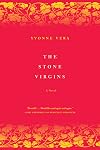
Unusual, breathtakingly beautiful prose (reminded me of Virginia Woolf). The book itself destroys.
I think I told someone I never wanted to read this book again. But lo, I went and bought a copy yesterday. Maybe someday I'll get the courage to read it a second time.
I think I told someone I never wanted to read this book again. But lo, I went and bought a copy yesterday. Maybe someday I'll get the courage to read it a second time.
Lists
Awards


You May Also Like


Associated Authors
Statistics
- Works
- 11
- Also by
- 5
- Members
- 421
- Popularity
- #57,941
- Rating
- 3.6
- Reviews
- 9
- ISBNs
- 50
- Languages
- 9
- Favorited
- 2