

Travis Elborough
Author of Atlas of Improbable Places: a Journey to the World's Most Unusual Corners
About the Author
Travis Elborough is an acclaimed author and social commentator. In 2020, he won the Edward Stanford Travel Illustrated Book of the Year Award for Atlas of Vanishing Places.
Series
Works by Travis Elborough
Atlas of Improbable Places: a Journey to the World's Most Unusual Corners (2016) 277 copies, 10 reviews
Atlas of Vanishing Places: The Lost Worlds As They Were and As They Are Today (2019) 159 copies, 5 reviews
Atlas of the Unexpected: Haphazard discoveries, chance places and unimaginable destinations (2018) 93 copies, 2 reviews
Atlas of Forgotten Places: Journey to Abandoned Destinations from Around the Globe (2021) 91 copies, 4 reviews
The Writer's Journey: In the Footsteps of the Literary Greats (1) (Journeys of Note) (2022) 40 copies, 1 review
Being a Writer: Advice, Musings, Essays and Experiences From the World's Greatest Authors (2017) 34 copies, 1 review
The Artist's Journey: The travels that inspired the artistic greats (Journeys of Note, 2) (2023) 21 copies, 2 reviews
Associated Works
The Loneliness of the Long Distance Runner (1959) — Contributor, some editions — 1,752 copies, 33 reviews
Tagged
Common Knowledge
- Gender
- male
- Occupations
- author
reviewer - Short biography
- (fl. 2006-2020).
- Nationality
- UK
- Places of residence
- Stoke Newington, London, England
- Associated Place (for map)
- Stoke Newington, London, England
Members
Reviews
Rating: 4.5* of five
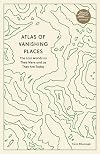
The Publisher Says: Maps offer us a chance to see not just how our world looks today, and how it once looked. But what about the places that have vanished from modern atlases? With beautiful maps and stunning photography, Travis Elborough takes you on a voyage to all corners of the world in search of the lost, disappearing and vanished.
2020 WINNER OF THE EDWARD STANFORD TRAVEL ILLUSTRATED BOOK OF THE YEAR AWARD
Discover unusual and secret places that have disappeared from show more modern atlases, and revel in imagining what the world once looked like. Award-winning author Travis Elborough takes you on a fascinating voyage to all corners of the world in search of the lost, disappearing and vanished.
Unearth ancient seats of power and long-forgotten civilizations through the Mayan city of Palenque; delve into the mystery of a disappeared Japanese islet; and uncover incredible hidden sites like the submerged Old Adaminaby, once abandoned but slowly remerging.
With beautiful maps and stunning colour photography, Atlas of Vanishing Places shows these sites as they once were, together with how they look today—it’s a travel guide, a modern atlas and a passage through geography like no other: travel writing has rarely been so inspiring.
I RECEIVED A DRC FROM THE PUBLISHER VIA EDELWEISS+. THANK YOU.
My Review: I love the idea of travel more than the reality of it. My disabilities aren't forgiving of the physical exertion of my body that travel requires. A book like this one is a grace note in a more restricted life than most are required to lead. I'm glad that I could go on these historic-site voyages with the eloquent guidance of Author Elborough.
The Table of Contents is the clear road map of where we'll be going. It's always worth a close look, to gauge your giftee's interest in the book's direction.
Vanished Port-Royal, Jamaica:
A modern city submerged by an earthquake? Cool beans, four hundred years later. The tragedy no longer stings but the place is a fascinating reminder of what can happen to human places when the planet shrugs its shoulders.
The ruins of Mohenjo-Daro in modern-day Pakistan, on the dried-up course of the ancient Indus River:
The Indus Valley civilization is deeply fascinating if very underknown in the US, and the global north generally. Comparatively little attention gets paid to it, partly because it had the misfortune to be uncovered at the same time King Tut's tomb was dominating world archaeological news. Lacking gold "treasures" and charismatic stone statuary, it simply failed to gain traction. It's never recovered in the world's attention. It is so much older than other urban centers, and well-preserved because the Indus River dried up millennia ago, so no one ever came along to reuse the land on which it stands.
Examples of Author Elborough's agenda...places vanished from our collective memory and yet still present, more or less, to be visitable. Armchair travel is, for me, the best kind. The fact that these are all places with really intriguing history attached to them is a huge plus to elderly me as a reader.
Who in your gifting circle needs this? Who needs an escape from where they are, but can't do it in body?
Here's a great value-for-dollar way to help them. show less
The Publisher Says: Maps offer us a chance to see not just how our world looks today, and how it once looked. But what about the places that have vanished from modern atlases? With beautiful maps and stunning photography, Travis Elborough takes you on a voyage to all corners of the world in search of the lost, disappearing and vanished.
2020 WINNER OF THE EDWARD STANFORD TRAVEL ILLUSTRATED BOOK OF THE YEAR AWARD
Discover unusual and secret places that have disappeared from show more modern atlases, and revel in imagining what the world once looked like. Award-winning author Travis Elborough takes you on a fascinating voyage to all corners of the world in search of the lost, disappearing and vanished.
Unearth ancient seats of power and long-forgotten civilizations through the Mayan city of Palenque; delve into the mystery of a disappeared Japanese islet; and uncover incredible hidden sites like the submerged Old Adaminaby, once abandoned but slowly remerging.
With beautiful maps and stunning colour photography, Atlas of Vanishing Places shows these sites as they once were, together with how they look today—it’s a travel guide, a modern atlas and a passage through geography like no other: travel writing has rarely been so inspiring.
I RECEIVED A DRC FROM THE PUBLISHER VIA EDELWEISS+. THANK YOU.
My Review: I love the idea of travel more than the reality of it. My disabilities aren't forgiving of the physical exertion of my body that travel requires. A book like this one is a grace note in a more restricted life than most are required to lead. I'm glad that I could go on these historic-site voyages with the eloquent guidance of Author Elborough.
The Table of Contents is the clear road map of where we'll be going. It's always worth a close look, to gauge your giftee's interest in the book's direction.
Vanished Port-Royal, Jamaica:
A modern city submerged by an earthquake? Cool beans, four hundred years later. The tragedy no longer stings but the place is a fascinating reminder of what can happen to human places when the planet shrugs its shoulders.
The ruins of Mohenjo-Daro in modern-day Pakistan, on the dried-up course of the ancient Indus River:
The Indus Valley civilization is deeply fascinating if very underknown in the US, and the global north generally. Comparatively little attention gets paid to it, partly because it had the misfortune to be uncovered at the same time King Tut's tomb was dominating world archaeological news. Lacking gold "treasures" and charismatic stone statuary, it simply failed to gain traction. It's never recovered in the world's attention. It is so much older than other urban centers, and well-preserved because the Indus River dried up millennia ago, so no one ever came along to reuse the land on which it stands.
Examples of Author Elborough's agenda...places vanished from our collective memory and yet still present, more or less, to be visitable. Armchair travel is, for me, the best kind. The fact that these are all places with really intriguing history attached to them is a huge plus to elderly me as a reader.
Who in your gifting circle needs this? Who needs an escape from where they are, but can't do it in body?
Here's a great value-for-dollar way to help them. show less
Atlas of Forgotten Places: Journey to Abandoned Destinations Around the Globe (Unexpected Atlases) by Travis Elborough
Elborough writes beautifully and thoughtfully. I loved, in his introduction, the explanation of the term "quarantine" (and drawing parallels between 40 days on Poveglia and Jesus' 40 days in the Judean desert). Similarly, I loved the exhortation to look back on the past and, in turn, "think longer and harder about the world to come and what might be worth salvaging from the wreckage" (eARC introduction).
The book proves educational and insightful, as well; did you know, for example, that show more Chernobyl is not the only abandoned nuclear power plant? (Enter Zarnowiec, in Poland.) Granted, different reasons gave cause for abandonment at this site, but the end result was the same. And then there's the downright beautiful, like Sammezzano Castle in Tuscany--ohhh, I'd love to visit that! (Same goes for Kennecott, Alaska, one location that at least geographically seems more reachable for me here in the US. Surprisingly, a lot of US locations are included--just goes to show my knowledge is by no means comprehensive!)
I found it interesting that a number of places now abandoned had some kind of Soviet connection. Not sure if that was intentional during the author's selection process, or just luck of the draw!
Each location features sizable maps; helpful on the one hand, but on the other, I almost wish the maps were smaller, with more photographs included. Some locations had 3+ photos; others had 1, and I often found myself wanting to see more of the actual facility/grounds in lieu of a map (or at least more photographic equity?)..
Brighton's West Pier was a surprising addition; I've been reading a fair bit of Jane Austen over the last year or so--in fact, just today finished listening to a production of _Mansfield Park_--and Brighton often merits at least a passing mention there. The "skeletal shell" is sobering!
A fascinating and thought-provoking read. 4/5 stars.
I received an eARC of the book from the publisher via NetGalley. All opinions are my own. show less
The book proves educational and insightful, as well; did you know, for example, that show more Chernobyl is not the only abandoned nuclear power plant? (Enter Zarnowiec, in Poland.) Granted, different reasons gave cause for abandonment at this site, but the end result was the same. And then there's the downright beautiful, like Sammezzano Castle in Tuscany--ohhh, I'd love to visit that! (Same goes for Kennecott, Alaska, one location that at least geographically seems more reachable for me here in the US. Surprisingly, a lot of US locations are included--just goes to show my knowledge is by no means comprehensive!)
I found it interesting that a number of places now abandoned had some kind of Soviet connection. Not sure if that was intentional during the author's selection process, or just luck of the draw!
Each location features sizable maps; helpful on the one hand, but on the other, I almost wish the maps were smaller, with more photographs included. Some locations had 3+ photos; others had 1, and I often found myself wanting to see more of the actual facility/grounds in lieu of a map (or at least more photographic equity?)..
Brighton's West Pier was a surprising addition; I've been reading a fair bit of Jane Austen over the last year or so--in fact, just today finished listening to a production of _Mansfield Park_--and Brighton often merits at least a passing mention there. The "skeletal shell" is sobering!
A fascinating and thought-provoking read. 4/5 stars.
I received an eARC of the book from the publisher via NetGalley. All opinions are my own. show less
Atlas of Vanishing Places by Travis Elborough is an interesting look at some places that are, well, vanishing (as the entities we think of them as).
I think my favorite of his Atlas of... books is Untamed Places, but this is quite good also. It covers thirty-seven places, each with a brief overview/history as well as a couple of pictures and a map. This is great for dipping into periodically when the mood takes you or reading straight through.
While it is not a book I would have ever made show more students buy, unless I planned to teach most of the locations (certainly not for just one unit), I can imagine I would have either referenced it or included a chapter or two in a course reader. In any case, I would have had to supplement with other resources. That said, whether for students or casual readers, this is a great starting point from which to look deeper into any location that appeals to you.
I saw that someone believes this isn't a book to buy but to check out. I think it is suitable for either. It is nice, even if this is an area you know well, to have overview texts as well as deep dives. It wouldn't be possible to go too deeply into thirty-seven locations, to complain about that is disingenuous at best. It is, however, a great book to always have handy for when you remember something about one of these places and want to verify your memory.
If you happen to live near or are planning to visit near one of these sites, this will offer some information so you can decide if it is worth the trip. Or if there is even anything worth making the trip for. It isn't a travel guide but could certainly help when you're making travel plans.
Reviewed from a copy made available by the publisher via NetGalley. show less
I think my favorite of his Atlas of... books is Untamed Places, but this is quite good also. It covers thirty-seven places, each with a brief overview/history as well as a couple of pictures and a map. This is great for dipping into periodically when the mood takes you or reading straight through.
While it is not a book I would have ever made show more students buy, unless I planned to teach most of the locations (certainly not for just one unit), I can imagine I would have either referenced it or included a chapter or two in a course reader. In any case, I would have had to supplement with other resources. That said, whether for students or casual readers, this is a great starting point from which to look deeper into any location that appeals to you.
I saw that someone believes this isn't a book to buy but to check out. I think it is suitable for either. It is nice, even if this is an area you know well, to have overview texts as well as deep dives. It wouldn't be possible to go too deeply into thirty-seven locations, to complain about that is disingenuous at best. It is, however, a great book to always have handy for when you remember something about one of these places and want to verify your memory.
If you happen to live near or are planning to visit near one of these sites, this will offer some information so you can decide if it is worth the trip. Or if there is even anything worth making the trip for. It isn't a travel guide but could certainly help when you're making travel plans.
Reviewed from a copy made available by the publisher via NetGalley. show less
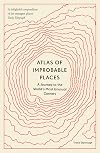
Atlas of Improbable Places: A Journey to the World's Most Unusual Corners (Unexpected Atlases) by Travis Elborough
In a time when exploring the world is something to look forward to but due to pandemic restrictions not easily doable, travel books are a great way to discover new places and stir up anticipation for the time after. Travis Elborough has found places which are not on the average agenda for a trip. In the subtitle, he calls them “the world’s most unusual corners” and I couldn’t agree more with that.
He classifies his finding into six groups: dream creations, deserted destinations, show more architectural oddities, floating worlds, otherworldly places, and subterranean realms. In each, he presents several destinations which are distributed all over the world with a majority in the USA and Europe. Each spot is accompanied by a text of two to four pages explaining what makes the place outstanding.
The author offers a great variety, from formerly closed soviet cities and other deserted military places over utopian places like Christania and villages abandoned after wars or other incidents to modern creations like the artificial island “The Palm” and underground ways which were never meant to be discovered.
It is a great coffee table book or gift to somebody who likes to travel and to learn about never heard of places. The information has the perfect lengths to take up the book now and again and just read and learn a bit about this planet’s wondrous locations. show less
He classifies his finding into six groups: dream creations, deserted destinations, show more architectural oddities, floating worlds, otherworldly places, and subterranean realms. In each, he presents several destinations which are distributed all over the world with a majority in the USA and Europe. Each spot is accompanied by a text of two to four pages explaining what makes the place outstanding.
The author offers a great variety, from formerly closed soviet cities and other deserted military places over utopian places like Christania and villages abandoned after wars or other incidents to modern creations like the artificial island “The Palm” and underground ways which were never meant to be discovered.
It is a great coffee table book or gift to somebody who likes to travel and to learn about never heard of places. The information has the perfect lengths to take up the book now and again and just read and learn a bit about this planet’s wondrous locations. show less
Lists
Awards


You May Also Like


Associated Authors
Statistics
- Works
- 28
- Also by
- 5
- Members
- 1,150
- Popularity
- #22,331
- Rating
- 4.0
- Reviews
- 31
- ISBNs
- 74
- Languages
- 6