
Meridel Le Sueur (1900–1996)
Author of The Girl
About the Author
Series
Works by Meridel Le Sueur
The River Road: A Story of Abraham Lincoln (Meridel Le Sueur Wilderness Book Series) (1964) 32 copies
The People Together: One Hundred Years of Minnesota, 1858-1958 (1958) — Contributor; Committee Chair — 3 copies
My people are my home 2 copies
Le Sueur, Meridel Archive 1 copy
Meridel Le Sueur 1 copy
Zapata Is Here! 1 copy
Associated Works
Sisters of the Earth: Women's Prose and Poetry About Nature (1991) — Contributor — 441 copies, 6 reviews
America's Working Women: A Documentary History 1600 to the Present (1976) — Contributor, some editions — 156 copies
Gone to Croatan: Origins of North American Dropout Culture (1994) — Contributor — 110 copies, 5 reviews
The Heath Anthology of American Literature, Concise Edition (2003) — Contributor — 72 copies, 1 review
She Rises Like the Sun: Invocations of the Goddess by Contemporary American Women Poets (1989) — Contributor — 71 copies
Years of Protest: A Collection of American Writings of the 1930's (1967) — Contributor — 44 copies, 1 review
The Best Short Stories of 1932 and the Yearbook of the American Short Story (1932) — Contributor — 15 copies
The Best Short Stories of 1939 and the Yearbook of the American Short Story (1939) — Contributor — 8 copies
The Best Short Stories of 1936 and the Yearbook of the American Short Story (1936) — Contributor — 5 copies
The Best Short Stories of 1927 and the Yearbook of the American Short Story (1927) — Contributor — 3 copies
West end magazine: Midwest people's culture anthology issue: volume 5 number 1 Summer 1978 — Contributor — 1 copy
The North Dakota quarterly : vol. 50, no 4, Fall 1982 — Contributor — 1 copy
Tagged
Common Knowledge
- Birthdate
- 1900-02-22
- Date of death
- 1996-11-14
- Gender
- female
- Education
- American Academy of Dramatic Arts
- Occupations
- actor
activist
reporter
poet
novelist
short story writer - Relationships
- Crawford, Joan (cousin)
- Nationality
- USA
- Birthplace
- Murray, Iowa, USA
- Places of residence
- New York, New York, USA
- Place of death
- Hudson, Wisconsin, USA
- Associated Place (for map)
- USA
Members
Reviews

For any woman who has been used and abused by a man, this is a terribly triggering book.
In the afterword, the author tells that this book was really written by the great and heroic women of the depression.
"As part of our desperate struggle to be alive and human we pulled our memories, experiences and in the midst of disaster told each other our stories or wrote them down. We had a writer's group of women in the workers alliance and we met every night to raise our miserable circumstances to show more the level of saga, poetry, cry-outs."
Clara is The Girl's friend. Clara is a sex worker. Belle and The Girl work at the German Village, where they sell bootleg.
"I listened about men from Belle while I wandered with Clara. Clara's been twice to the house of correction and she says you learn a lot about how not to get screwed there. Belle says this is a rotten stinking world and for women it is worse, and with your insides rotting out of you and Men at You day and night and the welfare workers following you and people having to live off each other like rats. It's covered with slime, she says. I wouldn't bring up no kids in it. She says she had 13 abortions. Clara is very cheerful, cutting out pictures from the magazine showing elegant houses and drapes and furniture and stuff for the baby room and maid's room, all the best stuff, but at night she cries thinking she is going to hell because of what she does with men, but Belle says we are in hell right now and there isn't a God who would make men and women wanting what they want and then stick them in hell after they've done it."
Men and their rotten ways of making up rules and games, changing them all the time without ever telling women what the rules are or what their change means to them:
"we came to a field and Butch stopped and for some reason I jumped out and ran across the road and looked back and called him, I don't know why I did it, and he jumped out of the car and ran after me and grabbed my arm from behind. I was scared. I didn't know why I did it.
He was trying to kiss me and he had hold of my arms tight, screwing them around. I got away and ran some more. We were in a pasture with short grasses. He came up and I said, Don't, Butch.
Why did you get out and run?
I don't know, I said, I didn't mean to.
You egged me on, he said, you got me going, now it's your fault. You got to take the consequences.
I was surprised.
You got to take your medicine, he said, you egged me on. You did it on purpose. You got me all riled up now. You can't say I wasn't treating you like a sister and then you jumped out of the car and runs like a harlot.
I didn't, I said, I didn't mean anything.
She didn't mean anything! He said to the sky. God almighty, here I've been hot as a hound for a week and trying to act nice to you because you are such a nice girl and then all of a sudden you egg me on."
The Girl's father dies, so she goes to her parents house for his funeral. Now we learn what a god-awful sad situation the family's life is, what the father's miserable mental illness has caused to the family.
"Joe [The Girl's big brother] said, he let me go and began to cry like a whipped dog. It was awful. It scared us worse than his yelling.
I'll go away, he kept shouting, I'll go away. Get me a pillow slip I'll put my earthly belongings in, I'll go away, that's what I'll do. I worked like a slave all my life. I worked, I grubbed, I did everything a father could do. I worked day and night for my children he said, I built houses for my children. I walked this country looking for work, looking asking here there everywhere for work...
We all looked at each other.
Gee, it was awful, Joe said.
He did too, Mama said. You children don't know what it is to have 11 mouths to feed day in and day out.
Well, whose fault is it? Joe said. did we ask to be born?" show less
In the afterword, the author tells that this book was really written by the great and heroic women of the depression.
"As part of our desperate struggle to be alive and human we pulled our memories, experiences and in the midst of disaster told each other our stories or wrote them down. We had a writer's group of women in the workers alliance and we met every night to raise our miserable circumstances to show more the level of saga, poetry, cry-outs."
Clara is The Girl's friend. Clara is a sex worker. Belle and The Girl work at the German Village, where they sell bootleg.
"I listened about men from Belle while I wandered with Clara. Clara's been twice to the house of correction and she says you learn a lot about how not to get screwed there. Belle says this is a rotten stinking world and for women it is worse, and with your insides rotting out of you and Men at You day and night and the welfare workers following you and people having to live off each other like rats. It's covered with slime, she says. I wouldn't bring up no kids in it. She says she had 13 abortions. Clara is very cheerful, cutting out pictures from the magazine showing elegant houses and drapes and furniture and stuff for the baby room and maid's room, all the best stuff, but at night she cries thinking she is going to hell because of what she does with men, but Belle says we are in hell right now and there isn't a God who would make men and women wanting what they want and then stick them in hell after they've done it."
Men and their rotten ways of making up rules and games, changing them all the time without ever telling women what the rules are or what their change means to them:
"we came to a field and Butch stopped and for some reason I jumped out and ran across the road and looked back and called him, I don't know why I did it, and he jumped out of the car and ran after me and grabbed my arm from behind. I was scared. I didn't know why I did it.
He was trying to kiss me and he had hold of my arms tight, screwing them around. I got away and ran some more. We were in a pasture with short grasses. He came up and I said, Don't, Butch.
Why did you get out and run?
I don't know, I said, I didn't mean to.
You egged me on, he said, you got me going, now it's your fault. You got to take the consequences.
I was surprised.
You got to take your medicine, he said, you egged me on. You did it on purpose. You got me all riled up now. You can't say I wasn't treating you like a sister and then you jumped out of the car and runs like a harlot.
I didn't, I said, I didn't mean anything.
She didn't mean anything! He said to the sky. God almighty, here I've been hot as a hound for a week and trying to act nice to you because you are such a nice girl and then all of a sudden you egg me on."
The Girl's father dies, so she goes to her parents house for his funeral. Now we learn what a god-awful sad situation the family's life is, what the father's miserable mental illness has caused to the family.
"Joe [The Girl's big brother] said, he let me go and began to cry like a whipped dog. It was awful. It scared us worse than his yelling.
I'll go away, he kept shouting, I'll go away. Get me a pillow slip I'll put my earthly belongings in, I'll go away, that's what I'll do. I worked like a slave all my life. I worked, I grubbed, I did everything a father could do. I worked day and night for my children he said, I built houses for my children. I walked this country looking for work, looking asking here there everywhere for work...
We all looked at each other.
Gee, it was awful, Joe said.
He did too, Mama said. You children don't know what it is to have 11 mouths to feed day in and day out.
Well, whose fault is it? Joe said. did we ask to be born?" show less
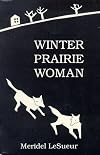
Such a brief book. Stream of consciousness writing from the point of view of an elderly rural woman, apparently near death, in the middle of winter. She sits and rocks and remembers her life.
It was easier for me to read once I thought of it as an extended poem without line breaks. The images are strong, yet because so often they circle around to the importance of birthing and new life in this woman's thoughts, it was hard for me to accept, being not so old but still quite old enough and have show more never spent so much focus on birth. I just want to acknowledge that not all rural women just value new live birthing.
Having said that, I am looking to buy a copy for my mother who is also approaching her death at age 95 and, as her memory loosens, I think she could relate to this woman's circling thoughts. My mother also lived her whole life focused on babies, child rearing; and then became strongly involved in the pro-life movement so I think she might be someone who would appreciate the importance of birth cycle.
Or, because of the ending, maybe I won't dare give this to her. show less
It was easier for me to read once I thought of it as an extended poem without line breaks. The images are strong, yet because so often they circle around to the importance of birthing and new life in this woman's thoughts, it was hard for me to accept, being not so old but still quite old enough and have show more never spent so much focus on birth. I just want to acknowledge that not all rural women just value new live birthing.
Having said that, I am looking to buy a copy for my mother who is also approaching her death at age 95 and, as her memory loosens, I think she could relate to this woman's circling thoughts. My mother also lived her whole life focused on babies, child rearing; and then became strongly involved in the pro-life movement so I think she might be someone who would appreciate the importance of birth cycle.
Or, because of the ending, maybe I won't dare give this to her. show less

Thanks to Ceridwen for reminding me about Meridel Le Sueur. I've had this collection of stories on my shelf since the 1980s, so reading again after so long was like reading anew. The book is really two collections, the more literary stories of "Harvest" (among the very best of the genre, respecting the classic rules of unity of time, place & character, written exquisitely) and the overtly political & engaged story-journalism of Song for My Time. Throughout, Le Sueur exhibits a honed artistry show more as well as a generosity of spirit and intellect that make for compelling reading. show less

I picked up this book because of the author,well-known (in some circles)leftist/feminist, and because of the distinctive artwork by Robert Desjarlait, of whom I had never heard.
My son enjoyed the tale. We matched locales with places we've visited. I appreciated this enlivement of the final years of the Sac at their Illinois/Wisconsin home. I liked how Sparrow Hawk's thoughts created songs (shown as poetic stanzas) to match his mood as he traveled.
What I had difficulty with was the show more implication that native peoples were unable to figure out seed selection to improve the corn plant without the aid of white know-how. Sparrow Hawk's friend Huck provides this knowledge. I see I have to do some research to verify the claim that prior to this early 1800 date the ears of corn were short and not well filled. I don't believe it. show less
My son enjoyed the tale. We matched locales with places we've visited. I appreciated this enlivement of the final years of the Sac at their Illinois/Wisconsin home. I liked how Sparrow Hawk's thoughts created songs (shown as poetic stanzas) to match his mood as he traveled.
What I had difficulty with was the show more implication that native peoples were unable to figure out seed selection to improve the corn plant without the aid of white know-how. Sparrow Hawk's friend Huck provides this knowledge. I see I have to do some research to verify the claim that prior to this early 1800 date the ears of corn were short and not well filled. I don't believe it. show less
Lists
Awards


You May Also Like


Associated Authors
Statistics
- Works
- 33
- Also by
- 23
- Members
- 631
- Popularity
- #39,928
- Rating
- 3.8
- Reviews
- 5
- ISBNs
- 52
