
Richard Taruskin (1945–2022)
Author of Music in the Western World: A History in Documents
About the Author
Richard Taruskin is Professor Emeritus of Music at the University of California, Berkeley, and the author of a dozen books, including the five-volume Oxford History of Western Music. He was awarded the Kyoto Prize in 2017.
Image credit: Photograph by Kathleen Karn
Series
Works by Richard Taruskin
Music from the Earliest Notations to the Sixteenth Century: The Oxford History of Western Music (2005) 157 copies, 2 reviews
Music in the Seventeenth and Eighteenth Centuries: The Oxford History of Western Music (2005) 139 copies
Stravinsky and the Russian Traditions: A Biography of the Works through Mavra, Two-volume set (1996) 48 copies
The Oxford History of Western Music, Vol. 6: Resources- Chronology, Bibliography, Master Index (2005) 21 copies
Stravinsky and the Russian Traditions, Volume One: A Biography of the Works through Mavra (Volume 1) (2016) 7 copies
Opera and drama in Russia as preached and practiced in the 1860s (Russian music studies) (1981) 2 copies
Oxford Recorded Anthology of Western Music: Volume One: The Earliest Notations to the Early Eighteenth Century 2 CDs (2012) 2 copies
Ockeghem: The Motets 1 copy
Tagged
Common Knowledge
- Legal name
- Taruskin, Richard Filler
- Birthdate
- 1945-04-02
- Date of death
- 2022-07-01
- Gender
- male
- Education
- High School of Music and Art, New York
Columbia University (BA|MA|Phd) - Occupations
- musicologist
music historian
university professor
musician (cello|viola da gamba)
choral conductor - Organizations
- Columbia University
Collegium Musicum
Aulos Ensemble
New York Times, The
University of California, Berkeley - Awards and honors
- Fulbright-Hays Fellowship (1971)
Noah Greenberg Prize (1978)
Alfred Einstein Award (1980)
Dent Medal (1987)
ASCAP-Deems Taylor Award (1988)
Kinkeldey Prize (1997 & 2006) (show all 7)
Kyoto Prize (2017) - Relationships
- Lang, Paul Henry (colleague, influence)
- Cause of death
- esophageal cancer
- Nationality
- USA (birth)
- Birthplace
- New York, New York, USA
- Places of residence
- El Cerrito, California, USA
- Place of death
- Oakland, California, USA
- Associated Place (for map)
- California, USA
Members
Discussions
The Rest is Noise #1 in Le Salon Littéraire du Peuple pour le Peuple (June 2012)
Reviews
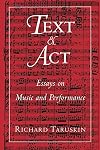
It’s rather dispiriting to read today Professor Taruskin’s fomenting from some forty years ago in response to some recordings of Historically-Informed Performances. I’ve just been rereading some essays of his relating to recordings of Bach released around that time: the gamba suites recreated on cello and modern concert grand and suchlike.
Prof. Taruskin is clearly intelligent, which makes it all the sadder to see this intelligence misdirected. Taruskin is a polemicist and delights in show more firing off diatribes condemning some or other aspects of HIP. He regularly employs strawman arguments, ascribing to the performers some position – a position for which there’s no evidence – and then proceeds to demolish with verbal fireworks that imagined position.
Ah, it’s so vitiating. And misguided.
“There’s none so blind as those that will not see.”
It reminds me of Karajan and the Berlin Phil, when they recorded Bach orchestral suites in the 1960s. These performances were aural confectionery, the aural equivalent of Mozart balls. Delightful if that’s what you’re longing for. ("What Bach would have wanted had he only heard the Berlin Philharmonic ...”)
In the same breath we can recall the Karajan/Berlin Phil recordings of the Brahms symphonies from the 1980s. So sterile, so missing the point, but of course historically interesting as a record of a (hopefully moribund) performance tradition. show less
Prof. Taruskin is clearly intelligent, which makes it all the sadder to see this intelligence misdirected. Taruskin is a polemicist and delights in show more firing off diatribes condemning some or other aspects of HIP. He regularly employs strawman arguments, ascribing to the performers some position – a position for which there’s no evidence – and then proceeds to demolish with verbal fireworks that imagined position.
Ah, it’s so vitiating. And misguided.
“There’s none so blind as those that will not see.”
It reminds me of Karajan and the Berlin Phil, when they recorded Bach orchestral suites in the 1960s. These performances were aural confectionery, the aural equivalent of Mozart balls. Delightful if that’s what you’re longing for. ("What Bach would have wanted had he only heard the Berlin Philharmonic ...”)
In the same breath we can recall the Karajan/Berlin Phil recordings of the Brahms symphonies from the 1980s. So sterile, so missing the point, but of course historically interesting as a record of a (hopefully moribund) performance tradition. show less
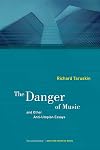
A collection of essays from two decades of criticism by the author. This work is both intellectual stimulating and enjoyable in its depth and variety. I enjoyed the passion of this critic throughout the volume.
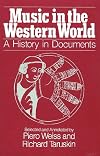
This was one my music history texts at university. A bit dry, but still interesting.
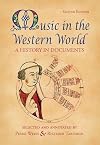
nice collection of history documents from the medieval period to... uh... i dunno, i only read up to the baroque. Used for Music History courses under Dr. Burkholder at Indiana University
Lists
Awards


You May Also Like


Statistics
- Works
- 32
- Members
- 1,435
- Popularity
- #17,925
- Rating
- 4.5
- Reviews
- 8
- ISBNs
- 75
- Languages
- 2
- Favorited
- 3