
Ed van der Elsken (1925–1990)
Author of Love on the Left Bank
About the Author
Image credit: wikimedia.org
Works by Ed van der Elsken
Sin Censura 1 copy
Gouden Banden: uitgegeven ter gelegenheid van het vijftigjarig bestaan van de Coöperatieve Condensfabriek 'Frieslan 1 copy, 1 review
Appel - Catalogus Stedelijk 1 copy
Associated Works
Bijster : tweemaandelijks tijdschrift / — Contributor, some editions — 1 copy
Tagged
Common Knowledge
- Canonical name
- Elsken, Ed van der
- Legal name
- Elsken, Ed van der
- Birthdate
- 1925-03-10
- Date of death
- 1990-12-28
- Gender
- male
- Occupations
- photographer
filmmaker - Nationality
- Netherlands
- Birthplace
- Amsterdam, Netherlands
- Places of residence
- Paris, France
Tokyo, Japan - Place of death
- Edam, Netherlands
- Burial location
- Edam, Netherlands
- Associated Place (for map)
- Netherlands
Members
Reviews
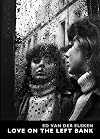
This is a book about the walk on the wild side - or - the existentialism of youth. It is not so much the artistry of the images, nor the somewhat unnecessary storyline that make it compelling, as the general atmosphere of the lives portrayed and the feeling of dangerous carefree existence that marks being young. The photos feel staged and fresh and it is constantly surprising to remember that they are from a time long gone and depict real people - many with serious issues who took their own show more lives within years of the events portrayed. show less
For those in the business of education, who stand behind the idea that standardized test are a sure-fire measure of ability; the world of photography offers one of its elite, Ed van der Elsken as an excellent example of an exception. Failing the final exam in his photography correspondence course, the eccentric Dutchman ignored the first volley of disinterest and criticism to his ideas and work and embarked on a globe-spanning career which would produce indelible photographs of post-WWII show more life in Paris, Africa, and Asia. Riding the crest of the French New Wave, Elsken’s bohemian nature allowed him to easily fall in with the nite-trodding disenchanted youths of 1950’s Paris. The result was Elsken’s first and most popular success, Love on the Left Bank. The book was groundbreaking in its use of a fictional narrative to link straight-shot docu-photography. Published in 1954, the strength of the material earned his work a spot in Edward Steicen’s exhibition, Family of Man in 1955. Despite critical recognition, Elsken’s headstrong and independent manner prevented him from capitalizing very heavily on his skills. Shunned by Vouge after he insisted on using only black models and rejected by local peers when, in his Dutch magazine premiere, he characterized them as “little men with no flair, no imagination, no courage, and no artistry.” ; Elsken lived his life, earned his living and practiced his art on his own terms. He always enjoyed supreme editorial powers with his books with a careful eye to every singe detail of its publishing. In contrast, his style of photography was almost careless, wandering the streets of the world hoping for something to spark his impulse; always in search of life’s surprises. In linking Elsken’s work to that other notorious roamer of dark city streets, the NYC institution known as Weegee, Village Voice photography critic Vince Aletti describes it as “dark, rough, improvisatory, immediate..” Although Elsken’s work is done on the fly and is often described as lacking composition, their emotional impact is undeniable. show less

'Mijn Amsterdam. Mijn Amsterdammers'. Dat wilde Ed van der Elsken vastleggen, het liefst van lekker dichtbij. 'Mensen uit fatsoenlijke buurten, de Nieuwmarkt, de Jodenbuurt, de Pijp, Kattenburg. Mensen die nooit op de Apollolaan komen of op de Goudkust, nou ja misschien als melkboer, of als inbreker.'
Ed van der Elsken hield van reuring, van actie. Niet voor niets noemde hij Amsterdam 'mijn jachtterrein'. Hij fotografeerde demonstraties, de markt, de kermis, het verkeer. Maar ook werklui, show more rebelse jongeren en mooie meiden. En 'vuile knolsmerissen' die bij relletjes vaak hardhandig ingrepen. De foto's die hij tussen 1947 en 1970 in 'zijn stad' maakte bundelde hij in het fotoboek Amsterdam!, waarvan de eerste druk verscheen in 1979. Zijn vernieuwende en ontwapenende stijl maakten het boek tot een klassieker. Nu verschijnt een heruitgave, waarvoor nieuwe scans zijn gemaakt van alle originele negatieven. (Source: Bol.com) show less
Ed van der Elsken hield van reuring, van actie. Niet voor niets noemde hij Amsterdam 'mijn jachtterrein'. Hij fotografeerde demonstraties, de markt, de kermis, het verkeer. Maar ook werklui, show more rebelse jongeren en mooie meiden. En 'vuile knolsmerissen' die bij relletjes vaak hardhandig ingrepen. De foto's die hij tussen 1947 en 1970 in 'zijn stad' maakte bundelde hij in het fotoboek Amsterdam!, waarvan de eerste druk verscheen in 1979. Zijn vernieuwende en ontwapenende stijl maakten het boek tot een klassieker. Nu verschijnt een heruitgave, waarvoor nieuwe scans zijn gemaakt van alle originele negatieven. (Source: Bol.com) show less

The book was the first of some twenty Van der Elsken publications. It quickly sold out in Europe and the UK, and its filmic qualities led to Van der Elsken’s subsequent experiments with, and parallel career in, cinema.
One of the best dutch photo books
One of the best dutch photo books
Lists
You May Also Like


Associated Authors
Statistics
- Works
- 77
- Also by
- 2
- Members
- 706
- Popularity
- #35,870
- Rating
- 3.9
- Reviews
- 90
- ISBNs
- 59
- Languages
- 4
- Favorited
- 1