
Alison Leslie Gold
Author of Anne Frank Remembered: The Story of the Woman Who Helped to Hide the Frank Family
About the Author
Alison Leslie Gold is the author, with Miep Gies, of Anne Frank Remembered: The Story of the Woman Who Helped to Hide the Frank Family, an international bestseller that has been translated into eighteen languages. Gold is also the author of the novels The Devil's Mistress, which was nominated for a show more National Book Award, and Clairvoyant. She lives in New York City show less
Works by Alison Leslie Gold
Anne Frank Remembered: The Story of the Woman Who Helped to Hide the Frank Family (1987) — Collaboration — 1,694 copies, 33 reviews
The Devil's Mistress: The Diary of Eva Braun, the Woman Who Lived and Died With Hitler (1997) 18 copies
Associated Works
Reader's Digest Auswahlbücher 159 - Bittere Medizin. Die Ladies von Missalonghi. Der Tunnel. Meine Zeit mit Anne Frank (1977) 13 copies
Reader's Digest Condensed Books 1987 vM: Carter's Castle / New Orleans Legacy / To Kill the Potemkin / Anne Frank Remembered (1987) 12 copies, 1 review
Reader's Digest Condensed Books: Vet in Practice • Johnnie Alone • Wolf Winter • Nightshade • Anne Frank Remembered (1988) — Co-Author — 6 copies
Livros Condensados: Na Esteira do Assassino | Lembrando Anne Frank | Soldadinhos de Chumbo | Callanish (1991) — Collaborator — 6 copies
Tagged
Common Knowledge
- Canonical name
- Gold, Alison Leslie
- Other names
- GOLD, Alison Leslie
- Birthdate
- 1945-07-13
- Gender
- female
- Nationality
- USA
- Birthplace
- New York, New York, USA
- Associated Place (for map)
- New York, USA
Members
Reviews
Anne Frank Remembered : The Story of the Woman Who Helped to Hide the Frank Family (Audio) by Miep Gies
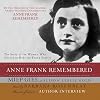
30. Anne Frank Remembered : The Story of the Woman Who Helped to Hide the Frank Family (Audio) by Miep Gies with Alison Leslie Gold, read by Barbara Rosenblat (1987 with 2008 epilogue, 256 pages, Listened May 6-19)
I'm very happy to have listened to this. Miep Gies helped care for the Franks in hiding, going through extensive efforts, along with others. Not arrested when the Franks were found, simply due to the a capricious decision by a the German officer making the arrests, she found and show more saved Anne's writing and found herself the only person available who knew how to run Otto Frank's business. She kept it going until his return after the war. She was 100 years old in 2008 and the last one alive to have known and helped the Franks during WWII.
The biography was almost forced out of her by Allison Leslie Gold, who insisted Miep's story must be told. Gold conducted the interviews and then wrote the book. But, you wouldn't know that from the book itself.
It reads very simply, but with a formality that gives a touching charm to it. Miep covers her childhood, which oddly started in Vienna. She was sent to Amsterdam along with many other children because, in the wake of WWI, her family could not feed her. She was raised by foster Dutch parents, whom she took to, and grew up to see herself as Dutch. The book then covers her getting hired by Otto Frank, her experiences in the business and her marriage. And then most of the book is her efforts to assist in hiding the Franks. (Her husband, a social worker, was involved in the Dutch resistance, although he hid this from Miep for most of the war, to protect both her and himself.)
Among the interesting aspect here are her insights into the character of Otto Frank. He comes across as a special personality before the war, one caring, well respected and on very good terms with about everyone he interacted with. The stress of hiding, however, brought him down. Miep also talks about her resistance to read the diary. She never read the papers she had saved, and refused to read it when Otto, surprised to discover how special they were, and very moved, asked her to read parts. It was only long after it was published that Miep finally read it. And she talks about her discomfort with the fame she experienced once the diary was published.
I was struck by her characterization of the Nazi crackdowns on Jews. A higher percentages of Dutch Jews died then practically that of any other country. She discusses how the Nazi's waited a long time before they acted, apparently giving them time to better understand the Dutch systems, and then how the Nazis so effectively broke initial popular sympathy and support of Dutch Jews, by terrorizing people from helping Jews.
The epilogue is an interview of Miep at 100 in 2008. I found one the most moving parts of the book to be when Miep tells us how lucky she has been.
2014
https://www.librarything.com/topic/172769#4724949 show less
I'm very happy to have listened to this. Miep Gies helped care for the Franks in hiding, going through extensive efforts, along with others. Not arrested when the Franks were found, simply due to the a capricious decision by a the German officer making the arrests, she found and show more saved Anne's writing and found herself the only person available who knew how to run Otto Frank's business. She kept it going until his return after the war. She was 100 years old in 2008 and the last one alive to have known and helped the Franks during WWII.
The biography was almost forced out of her by Allison Leslie Gold, who insisted Miep's story must be told. Gold conducted the interviews and then wrote the book. But, you wouldn't know that from the book itself.
It reads very simply, but with a formality that gives a touching charm to it. Miep covers her childhood, which oddly started in Vienna. She was sent to Amsterdam along with many other children because, in the wake of WWI, her family could not feed her. She was raised by foster Dutch parents, whom she took to, and grew up to see herself as Dutch. The book then covers her getting hired by Otto Frank, her experiences in the business and her marriage. And then most of the book is her efforts to assist in hiding the Franks. (Her husband, a social worker, was involved in the Dutch resistance, although he hid this from Miep for most of the war, to protect both her and himself.)
Among the interesting aspect here are her insights into the character of Otto Frank. He comes across as a special personality before the war, one caring, well respected and on very good terms with about everyone he interacted with. The stress of hiding, however, brought him down. Miep also talks about her resistance to read the diary. She never read the papers she had saved, and refused to read it when Otto, surprised to discover how special they were, and very moved, asked her to read parts. It was only long after it was published that Miep finally read it. And she talks about her discomfort with the fame she experienced once the diary was published.
I was struck by her characterization of the Nazi crackdowns on Jews. A higher percentages of Dutch Jews died then practically that of any other country. She discusses how the Nazi's waited a long time before they acted, apparently giving them time to better understand the Dutch systems, and then how the Nazis so effectively broke initial popular sympathy and support of Dutch Jews, by terrorizing people from helping Jews.
The epilogue is an interview of Miep at 100 in 2008. I found one the most moving parts of the book to be when Miep tells us how lucky she has been.
2014
https://www.librarything.com/topic/172769#4724949 show less
If you're familiar with Anne Frank's story and you've ever wondered what was happening on the outside while her family was in hiding in Amsterdam, Miep Gies's memoir provides the answer. Miep (her real nickname, but not her real name) tells of being sent from her home in Vienna to live with a Dutch family after World War I so that she could regain her health and strength. She recalls working with Otto Frank in a company that sold pectin for jam making. Miep became a friend of the whole show more family, and she shares her memories of her first meeting with Anne and of watching her grow up. When the Franks and another family went into hiding in the firm's storage area, Miep and a few other employees were their only connection to the outside world. Unknown to the Frank family, Miep and her husband also hid a Jewish man in their home. As the months passed, it became increasingly difficult for Miep to find enough food to feed so many people. After the Franks and the others were discovered and sent to concentration camps, Miep and her husband had to endure the “hunger winter” and its extreme shortage of food, fuel, and electricity.
It always made me sad that Anne Frank and her family were discovered just months before the end of the war and the Holocaust. I thought that if they hadn't been discovered, they could have remained in hiding until the end of the war and Anne could have published her diary herself. After hearing Miep's description of the “hunger winter” and how difficult it became to find any food at all, I'm not certain that the Franks and their companions would all have survived in hiding even if they hadn't been discovered. Miep probably couldn't have continued to feed that many people. It's a tragic, but important, story, and a good complement to the more famous Diary of Anne Frank. show less
It always made me sad that Anne Frank and her family were discovered just months before the end of the war and the Holocaust. I thought that if they hadn't been discovered, they could have remained in hiding until the end of the war and Anne could have published her diary herself. After hearing Miep's description of the “hunger winter” and how difficult it became to find any food at all, I'm not certain that the Franks and their companions would all have survived in hiding even if they hadn't been discovered. Miep probably couldn't have continued to feed that many people. It's a tragic, but important, story, and a good complement to the more famous Diary of Anne Frank. show less
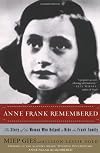
A well written and very moving account of the horrors of WW II for a young Dutch woman and her husband and their incredible daily bravery in helping to hide many Jews, including Anne Frank's family, whom she makes more human by her story. It was wonderful, too, to see how much Miep cared for the Franks and how, after the war, she and her husband welcomed Otto Frank into their home for many years. This would make an excellent companion to Things We Couldn't Say, another account of a Dutch show more resistance member who hid and supported Jews. show less

A touching memoir recounts the story of Hannah Goslar, a close friend of Anne Frank during her time in Amsterdam and one of the last people to see her alive after their detainment at a concentration camp.
Lists
Awards


You May Also Like


Associated Authors
Statistics
- Works
- 15
- Also by
- 5
- Members
- 3,067
- Popularity
- #8,321
- Rating
- 4.2
- Reviews
- 52
- ISBNs
- 112
- Languages
- 11
- Favorited
- 1
