
Leif Enger
Author of Peace Like a River
About the Author
Disambiguation Notice:
Leif Enger wrote the “Gun Pedersen” series of books with his brother, Lin Enger, under the name L.L. Enger. Please don't combine the two authors, as L.L. Enger is actually two people.
Series
Works by Leif Enger
A folyó dala 1 copy
Associated Works
The Year's Best Fantasy and Horror: Third Annual Collection (1988) — Contributor — 194 copies, 2 reviews
Tagged
Common Knowledge
- Legal name
- Enger, Leif
- Other names
- Enger, L.L.
- Birthdate
- 1961
- Gender
- male
- Occupations
- reporter (Minnesota Public Radio)
producer (Minnesota Public Radio)
author - Organizations
- Minnesota Public Radio
- Relationships
- Enger, Lin (brother)
- Nationality
- USA
- Birthplace
- Osakis, Minnesota, USA
- Places of residence
- Osakis, Minnesota, USA (birth)
- Disambiguation notice
- Leif Enger wrote the “Gun Pedersen” series of books with his brother, Lin Enger, under the name L.L. Enger. Please don't combine the two authors, as L.L. Enger is actually two people.
- Associated Place (for map)
- Osakis, Minnesota, USA
Members
Reviews
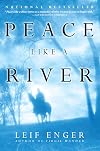
I read this for a local book club. Enger is a major name in Minnesota literature, and I was glad to have an excuse to pick up this debut of his, right as his new release is getting a lot of buzz. I must say--dang, this man can write. The Land family is mesmerizing in their complexity. The book is dark and sinister yet profoundly hopeful, ardently Christian yet not the sort to ever be marketed in a Christian bookstore. The main character is Reuben Land, an 11-year-old asthmatic, the middle show more child in a loving family that features an honorable, religious father who performs the occasional miracle, an older brother who is sometimes too ancient and callous for a teenager, and a younger sister, Swede, who I adore for her precocious, obsessive western-themed poetry. When older brother Davey defends the family against home invaders, he flees from the American justice system, and the family soon sets off in pursuit. The mood of the book is, at times, dream-like and weird, not tidy at all, and the end is not something that can be predicted.
I would love to read more of Enger's work and absorb some of his mastery of prose. show less
I would love to read more of Enger's work and absorb some of his mastery of prose. show less
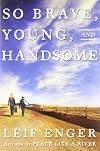
I started this book annoyed. I did NOT like the pseudoformal English that the author posits regular people used a century ago, felt it was such a cutesy way of making the story feel "authentic" and so contrived as to make me want to smack the perpetrator.
I got over it. Glendon the train robber completely seduced me, just like he did the narrator, the narrator's wife, the narrator's son, and so many, many others along his twisty path.
This is a tale about Truth, not truth, and the author shows show more us that from the get-go with the very narrative voice I found so irksome at first. There is Truth in the world, often to be found shoved behind elaborate scrims of lies, where the facts that tell the truth are woven into the most fantastical beasts of falsehood it's amazing.
Leif Enger knows this, and tells us this amazing and important and underappreciated piece of knowledge in the voice of a man whose grasp of the facts is imperfect but whose knowledge of the Truth guides him and saves him from a wasted, useless life.
Very, very worth reading. I say grit your teeth at the narrative voice and charge into the story full tilt. You will be very glad you got to know these characters. They do remain characters, though; some essential *oomph* is missing that's necessary to launch them into full personhood. Still, they're good readin'. Go to it, unfettered by fear of disappointment. show less
I got over it. Glendon the train robber completely seduced me, just like he did the narrator, the narrator's wife, the narrator's son, and so many, many others along his twisty path.
This is a tale about Truth, not truth, and the author shows show more us that from the get-go with the very narrative voice I found so irksome at first. There is Truth in the world, often to be found shoved behind elaborate scrims of lies, where the facts that tell the truth are woven into the most fantastical beasts of falsehood it's amazing.
Leif Enger knows this, and tells us this amazing and important and underappreciated piece of knowledge in the voice of a man whose grasp of the facts is imperfect but whose knowledge of the Truth guides him and saves him from a wasted, useless life.
Very, very worth reading. I say grit your teeth at the narrative voice and charge into the story full tilt. You will be very glad you got to know these characters. They do remain characters, though; some essential *oomph* is missing that's necessary to launch them into full personhood. Still, they're good readin'. Go to it, unfettered by fear of disappointment. show less
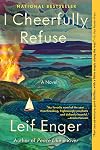
Summary: In a dystopian America, Rainy and Lark carve out a joyful life until tragedy sends Rainy on a Lake Superior odyssey.
I don’t typically select books this way. Looking at a table of new works at my local store, the cover art of this book caught my eye. The description sounded like a modern day odyssey. And the author was from Minnesota. Having had a good experience with another Minnesota author, William Kent Krueger, I thought I’d give Leif Enger a try. I’m so glad I did, though show more amid the goodness, truth and beauty of the story was heartbreak and terrible darkness.
The setting is Lake Superior in a not-too-distant future America. Societal order, the economy, and the climate have collapsed. The country is controlled by sixteen multi-billionaire “astronauts.” Some semblance of societal order is maintained by pharmaceuticals developed aboard “ships of horror.” Children are rated on a “feral scale” and medicated. And if it all becomes intolerable, a little slip of paper with a drug called “Willow” will help you end it all. And some are having “Willow” parties. Libraries have closed and books are becoming an increasingly scarce commodity.
Rainy and Lark have somehow carved out a joyful life together. He’s a big bear of a man who paints houses, plays bass guitar, often with a local band, but sometimes just to comfort his friends. Lark is a former librarian with a big heart and a passion for books. She runs a second-hand bookstore in a bakery, scouring estate sales for book collections. Lark taught Rainy to sail, going to a place called “The Slates,” where they had a somewhat mystical encounter they believed was with Molly Thorn, thought to be dead. Consequently, they buy and re-hab an old sailboat.
Lark, in her open-heartedness brings home a fugitive, Kellen. He has run away from one of the pharmaceutical ships. Perhaps the fact that he had in his possession an unpublished work of Molly Thorn’s, I Cheerfully Refuse, sufficiently seals the deal and he stays with the couple. But tragedy strikes the night of Lark’s birthday. Kellen has disappeared. After a futile hunt, he returns home to find his home destroyed, and Lark brutally murdered. A stranger, an older gentleman, who he later learns is Werryck, ran the ship Kellen had fled, and has been around the town, and through the book, has traced Kellen to their house. That’s why Kellen has gone.
Not only that, Werryck is after Rainy. Whatever they tore up the house looking for is still missing. So, Rainy takes to his boat. The only destination he can think of is “The Slates,” hoping perhaps he will find Lark there. Along the way, he is joined by Sol, a young girl he rescues from an abuser, buying her with his bass. Together they endure Superior’s terrible storms, scrape together an existence, outsmart a corrupt bridge operator, and search for an old relative who once cared for her.
The novel asks the question what kind of people will we become and what kind of communities will we form when the societal order fails? Along the way, amid the corruption, Rainy and Sol will find outposts of goodness. But what kind of person will Rainy, who has lived by goodness, supporting his friends, become? He faces his greatest test when he becomes Werryck’s captive.
Rainy’s sailing journey on Lake Superior strikes me as a modern-day Odyssey. Will he, in the end, find home? And how will the journey have changed him? Also, not unlike Octavia Butler’s Parable of the Sower, Enger confronts us with a very possible dystopia, asking us what kind of people we would be in such times. He does all this in a compellingly beautiful story. show less
I don’t typically select books this way. Looking at a table of new works at my local store, the cover art of this book caught my eye. The description sounded like a modern day odyssey. And the author was from Minnesota. Having had a good experience with another Minnesota author, William Kent Krueger, I thought I’d give Leif Enger a try. I’m so glad I did, though show more amid the goodness, truth and beauty of the story was heartbreak and terrible darkness.
The setting is Lake Superior in a not-too-distant future America. Societal order, the economy, and the climate have collapsed. The country is controlled by sixteen multi-billionaire “astronauts.” Some semblance of societal order is maintained by pharmaceuticals developed aboard “ships of horror.” Children are rated on a “feral scale” and medicated. And if it all becomes intolerable, a little slip of paper with a drug called “Willow” will help you end it all. And some are having “Willow” parties. Libraries have closed and books are becoming an increasingly scarce commodity.
Rainy and Lark have somehow carved out a joyful life together. He’s a big bear of a man who paints houses, plays bass guitar, often with a local band, but sometimes just to comfort his friends. Lark is a former librarian with a big heart and a passion for books. She runs a second-hand bookstore in a bakery, scouring estate sales for book collections. Lark taught Rainy to sail, going to a place called “The Slates,” where they had a somewhat mystical encounter they believed was with Molly Thorn, thought to be dead. Consequently, they buy and re-hab an old sailboat.
Lark, in her open-heartedness brings home a fugitive, Kellen. He has run away from one of the pharmaceutical ships. Perhaps the fact that he had in his possession an unpublished work of Molly Thorn’s, I Cheerfully Refuse, sufficiently seals the deal and he stays with the couple. But tragedy strikes the night of Lark’s birthday. Kellen has disappeared. After a futile hunt, he returns home to find his home destroyed, and Lark brutally murdered. A stranger, an older gentleman, who he later learns is Werryck, ran the ship Kellen had fled, and has been around the town, and through the book, has traced Kellen to their house. That’s why Kellen has gone.
Not only that, Werryck is after Rainy. Whatever they tore up the house looking for is still missing. So, Rainy takes to his boat. The only destination he can think of is “The Slates,” hoping perhaps he will find Lark there. Along the way, he is joined by Sol, a young girl he rescues from an abuser, buying her with his bass. Together they endure Superior’s terrible storms, scrape together an existence, outsmart a corrupt bridge operator, and search for an old relative who once cared for her.
The novel asks the question what kind of people will we become and what kind of communities will we form when the societal order fails? Along the way, amid the corruption, Rainy and Sol will find outposts of goodness. But what kind of person will Rainy, who has lived by goodness, supporting his friends, become? He faces his greatest test when he becomes Werryck’s captive.
Rainy’s sailing journey on Lake Superior strikes me as a modern-day Odyssey. Will he, in the end, find home? And how will the journey have changed him? Also, not unlike Octavia Butler’s Parable of the Sower, Enger confronts us with a very possible dystopia, asking us what kind of people we would be in such times. He does all this in a compellingly beautiful story. show less
Review first appeared on fefferbooks.com.
It’s difficult, really, to explain a novel like Peace Like a River. I try to be discriminating about how often I give five stars when I review books, so that when I do, it really means something. Here, five stars doesn’t even feel like enough. Trite quips like “tour de force” and “emotional powerhouse” come to mind as I try to think of how to describe this book, but overall, the feeling one comes away with after reading it is still, quiet show more power. There were moments in Enger’s writing that made me stop and think about what I believed, what I loved, and what I thought was true about life. I don’t know how to ask anything more from writing.
More impressively, Enger manages to be an impressively entertaining author: his story about Reuben and his family is wholly engaging, entertaining, quirkily funny, and entirely charming. Think along the lines of [b:A River Runs through It|38300|A River Runs Through It|Norman Maclean|https://d202m5krfqbpi5.cloudfront.net/books/1388204089s/38300.jpg|23680709]…only, in my case, more interesting and touching. Let me put it this way: I cracked this open for the first time while sitting down on the bed to put some lotion on my feet before turning in, and found myself totally unable to focus on anything but what I was reading. It’s *that* well-written. I can’t recommend it highly enough.
Clean. Amazing. 5 stars. show less
It’s difficult, really, to explain a novel like Peace Like a River. I try to be discriminating about how often I give five stars when I review books, so that when I do, it really means something. Here, five stars doesn’t even feel like enough. Trite quips like “tour de force” and “emotional powerhouse” come to mind as I try to think of how to describe this book, but overall, the feeling one comes away with after reading it is still, quiet show more power. There were moments in Enger’s writing that made me stop and think about what I believed, what I loved, and what I thought was true about life. I don’t know how to ask anything more from writing.
More impressively, Enger manages to be an impressively entertaining author: his story about Reuben and his family is wholly engaging, entertaining, quirkily funny, and entirely charming. Think along the lines of [b:A River Runs through It|38300|A River Runs Through It|Norman Maclean|https://d202m5krfqbpi5.cloudfront.net/books/1388204089s/38300.jpg|23680709]…only, in my case, more interesting and touching. Let me put it this way: I cracked this open for the first time while sitting down on the bed to put some lotion on my feet before turning in, and found myself totally unable to focus on anything but what I was reading. It’s *that* well-written. I can’t recommend it highly enough.
Clean. Amazing. 5 stars. show less
Lists
Books I've Read (2)
Ambleside Books (1)
USA Road Trip (1)
Books Read 2025 (2)
Favourite Books (1)
Best Beach Reads (1)
Facebook list (1)
All Iowa Reads (1)
Coming of Age (1)
A Novel Cure (1)
Indie Next Picks (1)
Sense of place (1)
Books Read 2026 (1)
Awards


You May Also Like


Associated Authors
Statistics
- Works
- 13
- Also by
- 3
- Members
- 9,080
- Popularity
- #2,648
- Rating
- 4.0
- Reviews
- 332
- ISBNs
- 88
- Languages
- 8
- Favorited
- 16
