
Eldon Jay Epp
Author of Studies in the Theory and Method of New Testament Textual Criticism
About the Author
Eldon Jay Epp is Harkness Professor of Biblical Literature emeritus and Dean of Humanities and Social Sciences emeritus at Case Western Reserve University (Cleveland, Ohio), recently Visiting Professor of New Testament at Harvard Divinity School (2002-2003 and 2004-2005), and President of the show more Society of Biblical Literature (2003) show less
Works by Eldon Jay Epp
Romans: A Commentary (Hermeneia: a Critical and Historical Commentary on the Bible) (2007) 159 copies
Perspectives on New Testament Textual Criticism: Collected Essays, 1962-2004 (Supplements to Novum Testamentum) (Novum Testamentum, Supplements) (2005) 13 copies
Perspectives on New Testament Textual Criticism: Collected Essays, 20062017 (Novum Testamentum, Supplements) (2020) 1 copy
Associated Works
Acts of the Apostles (Hermeneia: A Critical & Historical Commentary on the Bible) (1988) — Editor — 124 copies
Israel's God and Rebecca's Children: Christology and Community in Early Judaism and Christianity (2007) — Contributor — 27 copies
New Testament Manuscripts: Their Texts And Their World (Texts and Editions for New Testament Study, V. 2) (2006) — Contributor — 13 copies
Tagged
Common Knowledge
- Birthdate
- 1930-11-01
- Gender
- male
- Education
- Wheaton College (AB|1952)
Fuller Theological Seminary (BD|1955)
Harvard University (STM|1956)
Harvard University (PhD|1961) - Organizations
- Princeton Theological Seminary
Society of Biblical Literature
Studiorum Novi Testamenti Societas
Catholic Biblical Association
American Academy of Religion - Relationships
- scholar of New Testament textual criticism
- Nationality
- USA
- Birthplace
- Mountain Lake, Minnesota, USA
- Places of residence
- Shaker Heights, Ohio, USA
- Associated Place (for map)
- USA
Members
Reviews
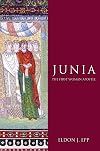
This book is probably overkill, but it's a good kind of overkill.
Romans 16:7 lists several people as apostles who are known to Paul. One of these is a person whose name is given in Greek as ΙΟΥΝΙΑΝ -- an accusative construct that, in the nominative (in Latin, since it's a Latin name), would be either IUNIA ("Junia," in English -- a feminine name) or IUNIAS ("Junias," masculine). The only way to tell which it is is by the way the word is accented -- and accents were not marked in early show more Greek manuscripts. In other words, there is no way, based on our earliest evidence about what Paul dictated, to know whether "Junia" or "Junias" was meant.
In recent centuries, many, thinking that an apostle could not be female, have declared that the name must be "Junias."
Against this sexist view Eldon Jay Epp takes strong exception. It takes him eighty pages to make his argument, but we can boil it down under a few header:
- The feminine name "Junia" is well-known; no one named "Junias" has ever been shown to exist (and the Romans were not the sort to invent a name)
- That the later manuscripts that mark accents without exception accent the name as "Junia"
- That such early authors are refer to this person refer to her as female
The conclusion is clear: "There Was an Apostle Junia."
Even though people continue to argue against this (Epp has a list of commentators and editions and translations that insist upon "Junias"), I don't think there can be any possible doubt. Paul was no feminist, but the early Christian church certainly made room for women -- more room than Greek or Roman society or religion. It only stands to reason that there would be female apostles. And Paul named one for us. With that, I've summed up the entire content of this book. But if you need any additional evidence to deal with the sexists out there, this book will give you all the evidence you want, and then some. I don't think this book was really necessary, but it's certainly hard to argue with. show less
Romans 16:7 lists several people as apostles who are known to Paul. One of these is a person whose name is given in Greek as ΙΟΥΝΙΑΝ -- an accusative construct that, in the nominative (in Latin, since it's a Latin name), would be either IUNIA ("Junia," in English -- a feminine name) or IUNIAS ("Junias," masculine). The only way to tell which it is is by the way the word is accented -- and accents were not marked in early show more Greek manuscripts. In other words, there is no way, based on our earliest evidence about what Paul dictated, to know whether "Junia" or "Junias" was meant.
In recent centuries, many, thinking that an apostle could not be female, have declared that the name must be "Junias."
Against this sexist view Eldon Jay Epp takes strong exception. It takes him eighty pages to make his argument, but we can boil it down under a few header:
- The feminine name "Junia" is well-known; no one named "Junias" has ever been shown to exist (and the Romans were not the sort to invent a name)
- That the later manuscripts that mark accents without exception accent the name as "Junia"
- That such early authors are refer to this person refer to her as female
The conclusion is clear: "There Was an Apostle Junia."
Even though people continue to argue against this (Epp has a list of commentators and editions and translations that insist upon "Junias"), I don't think there can be any possible doubt. Paul was no feminist, but the early Christian church certainly made room for women -- more room than Greek or Roman society or religion. It only stands to reason that there would be female apostles. And Paul named one for us. With that, I've summed up the entire content of this book. But if you need any additional evidence to deal with the sexists out there, this book will give you all the evidence you want, and then some. I don't think this book was really necessary, but it's certainly hard to argue with. show less

This provocatively titled book is a well-written detailed look at Romans 16:7. Eldon Epp is quite convincing that Junia was indeed a prominent woman Apostle of the 1st century. This book goes into a great deal of technical detail, but his charts make many of his points quite well!
You May Also Like


Associated Authors
Statistics
- Works
- 22
- Also by
- 5
- Members
- 599
- Popularity
- #41,951
- Rating
- 4.1
- Reviews
- 3
- ISBNs
- 21