
Loretta Napoleoni
Author of Terror Incorporated: Tracing the Dollars Behind the Terror Networks
About the Author
Loretta Napoleoni, a former Fulbright scholar at Johns Hopkins University's Paul H. Nitze School of Advanced International Studies and Rotary Scholar at the London School of Economics, is an expert on international terrorism who has worked as an economist and foreign correspondent for Italy's show more financial papers show less
Image credit: http://lorettanapoleoni.net/
Works by Loretta Napoleoni
The Islamist Phoenix: The Islamic State (ISIS) and the Redrawing of the Middle East (2014) 105 copies, 3 reviews
Il contagio. Perché la crisi economica rivoluzionerà le nostre democrazie (2011) 14 copies, 1 review
Technocapitalism: The Rise of the New Robber Barons and the Fight for the Common Good (2024) 12 copies, 1 review
Merchants of Men: How Jihadists and ISIS Turned Kidnapping and Refugee Trafficking into a Multi-Billion Dollar Business (2016) 7 copies
Democracia en venta: Cómo la crisis económica ha derrotado la política (Estado y Sociedad) (Spanish Edition) (2013) 4 copies
Az iszlamista főnix : az Iszlám Állam születése és a Közel-Kelet újrafelosztása (2015) 3 copies, 1 review
Traficantes de personas : el negocio de los secuestros y la crisis de los refugiados (2016) 1 copy, 1 review
Ološ ekonomija 1 copy
Dossier Baghdad 1 copy
ISIS califatul terorii 1 copy
O Fim de um Mundo 1 copy
Associated Works
Tagged
Common Knowledge
Members
Reviews
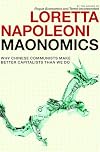
There is a certain kind of joy in reading a non-fiction book with which you can wholly agree, such as [b:The Great Derangement: Climate Change and the Unthinkable|29362082|The Great Derangement Climate Change and the Unthinkable|Amitav Ghosh|https://i.gr-assets.com/images/S/compressed.photo.goodreads.com/books/1462497923l/29362082._SY75_.jpg|49607520]. There is another, equally potent, form of joy to be found in reading a non-fiction book with which you partially agree, and which obliges you show more to think carefully about where precisely the points of disagreement lie. ‘Maonomics’ is the latter kind of book. It is polemic and journalistic rather than academic in style, prone to sweeping statements although it makes profound and subtle arguments in places. I picked it up off the library shelf more or less at random, as my card was getting worryingly empty and I’m fascinated by the paradox of Communist China’s capitalist success. The author is an Italian journalist who teaches economics at the Judge Business School in Cambridge. (Given her savaging of neoliberalism and the Chicago School, I can see why she isn’t in the economics department.) The book was originally written in Italian and the translation has the odd rough edge and awkward moment. For the most part, however, I think Napoleoni’s arguments come through pretty clearly.
I was initially disconcerted by the book’s thesis as articulated in the introduction. This includes the statement that without the profit motive, the communist countries had no growth incentive. While this may have become true by the 1980s, as I understand it targets, rivalry with America, and a culture of fear did allow Russia at least to grow rapidly from a predominantly agrarian economy to an industrialised one. That’s a relatively minor point, however. What I found initially hard to swallow, though, was the idea that for China ‘democracy’ is capitalism, or rather vice versa; that economic freedom constitutes democracy there. This is one of the book’s main arguments and is advanced with more subtlety in later chapters. In part it is a matter of semantics - Napoleoni claims that the historical and cultural differences between China and the West result in a fundamentally different definition of the word ‘democracy’. This I can understand, especially as the Chinese Communist Party describes reportedly describes itself as democratic all the time. What I was less convinced of was a purely economic conception of democracy, which in fact smacks of neoliberal ‘consumer choice as empowerment’ rhetoric.
I wrote masses of notes while I was reading ‘Maonomics’, but looking back over them am ashamed to say that many were pedantic nitpicks. (eg ‘Page 227 - Hull has wolves now?!’) Looking beyond these quibbles, however, the strength of the book is its use of China to throw light on the weaknesses of Western economic and democratic institutions. Napoleoni makes extensive use of comparisons and juxtapositions, some of which are more effective than others. One interesting example that hasn’t aged well in the six years since the book was published uses Iceland as a case study of a bankrupt basket case. Yet Iceland re-wrote its constitution, punished its banking establishment as criminals, rejected neoliberal dogma, and has bounced back. Meanwhile Greece limps from bailout to bailout while austerity shreds the social fabric and breeds neo-fascism. On the other hand, the comparison of statecraft lessons from Machiavelli and Confucius was well done and illustrated a powerful point: in China politicians are willing to criticise themselves and admit to mistakes. Indeed, some are punished with the death penalty for corruption. This is not the same form of accountability as the West is accustomed to, rather it is something that we really do not have.
Although ‘Maonomics’ does not romanticise the Chinese economy and recounts horrific worker abuses, these are paralleled with the exploitation of 19th century Western industrialism. On the political front, I felt that China’s repressiveness was rather de-emphasised. That was the intent, of course, however it did not always seem appropriate. Napoleoni was on stronger ground when bitterly critiquing the US and Europe for our decadence (that term is used repeatedly). An incredible irony that I hadn’t grasped before, though, is that China’s growing economic strength in the face of Western doldrums could easily be linked to relative ideological dogmatism. While the Communists have put pragmatism over ideology and China uses a flexible form of state capitalism in which policy intervenes to correct obvious economics problems, the response to the 2007/8 banking crisis in Europe and the US was characterised by a refusal to admit that markets were failing. After massive bailouts, the financial system’s obvious dysfunction and systematic disregard for risk were not addressed via policy, due to dogmatic belief in free market economics manifested by political pressure exerted by the financial establishment. As Napoleoni puts it, while discussing the notorious Chicago Boys:
I also appreciated the likening of Lehman Brothers’ collapse to a Stalinist purge, the effect of which being ‘to get a few banks out of the way and increase the power of the surviving ones’. And although the comparison between 21st century America and the fall of the Roman Empire would have seemed like hyperbole to me when the book was published, in the era of Trump I can really see it. If ever there was an avatar of corrupt decadence, it would be Trump. It certainly seems plausible that, ‘the average Chinese [...] finds it difficult to look at America and see the superpower that it was in the twentieth century; it’s easier to classify it as a nation held hostage to Wall Street and to the neoconservative ghosts of the past’. Perhaps ‘the neo-fascist ghosts of the past’ might be more appropriate for 2017, though.
Despite this deluge of critique, ‘Maonomics’ is trying to be an optimistic book, even seeking a way past Fukuyama’s End of History by setting China up as the herald of a new and better political economy. While this may not currently exist, Napoleoni argues that, ‘Since Deng’s time, the Chinese have kept themselves busy looking for it, trying out political alternatives; we don’t even look anymore.’ Indeed we scarcely do, however this begs the question of whether China’s alternatives are ways in which we want to live. The recent turn towards renewable energy is laudable, and this book lauds it. Less discussed is the truly appalling, indeed unbelievable environmental toll that industrialisation has taken on the physical environment and health of China. Can the unbreathable air, contaminated water, poisoned land, encroaching desert, biodiversity loss, and changing climate be justified? Is it possible to recover from the scale of damage that has occurred in such a short time? Is the wealth worth it?
One of the most striking things I’ve read about China came from the book [b:Red Capitalism: The Fragile Financial Foundation of China's Extraordinary Rise|8806625|Red Capitalism The Fragile Financial Foundation of China's Extraordinary Rise|Carl E. Walter|https://i.gr-assets.com/images/S/compressed.photo.goodreads.com/books/1348416675l/8806625._SY75_.jpg|13680809], which asked, ‘What in China isn’t a sovereign wealth fund?’ The financial establishment of China is part of the government, thus wrangles between special interests take place within that structure. Does this better reflect the public interest, or is it simply another form for oligarchy to take? What is the public good and can enlightened bureaucrats really pinpoint it in the absence of means for the public to make themselves heard? ‘Maonomics’ claims that Western politics has become voyeuristic rather than participatory, a point also made by Ghosh in [b:The Great Derangement: Climate Change and the Unthinkable|29362082|The Great Derangement Climate Change and the Unthinkable|Amitav Ghosh|https://i.gr-assets.com/images/S/compressed.photo.goodreads.com/books/1462497923l/29362082._SY75_.jpg|49607520]. However, the argument that politics is genuinely participatory in China rests on that participation taking forms that, basically, we in West don’t understand and that co-exist with arbitrary state repression of dissent. This book did not give the me sufficient evidence to believe in this participation, although I would like to think that China is gently evolving towards it and away from repression. Can workers form unions? Denounce corrupt officials without fear of reprisals? Publish press articles critical of government policy? ...Can we do these things in any meaningful fashion here in the UK?
I agree with Napoleoni that the West’s condemnation of ‘human rights abuses’ in China is hypocritical, patronising, and based on extremely shaky moral authority. This doesn’t mean that said abuses should not be condemned, though, and it got me thinking about human rights. I find their discussion in the UK is often very muddled by misunderstanding of their actual existence in law. Although the media and popular culture often frame them as a conflict between individuals, actually human rights can only be enforced against the state under UK law. Say, for example, a retailer of wedding products refuses to sell them to a gay couple due to homophobia. The law does not arbitrate between the retailer’s ‘right’ to discriminate vs the gay couple’s ‘right’ to not be refused service. Human rights law concerns the state’s involvement: has the government neglected to protect the gay couple’s right to fair treatment by allowing discriminatory loopholes in commercial law?
I am not an expert and this is obviously a simplification, what I’m trying to say is that human rights are often assumed to be synonymous with individual rights. This conception is obviously rooted in the Western individualistic capitalist ethos. Personally, I believe that human rights are deeply important because they are about protecting vulnerable groups from discriminatory practises by governments. In themselves, laws cannot transform a discriminatory culture, however they can offer some protection from populist scapegoating and influence social mores. Their roots in the genocides of WWII are far too easily brushed aside these days and attacks on the principle of human rights by the right wing British political establishment are deeply worrying. Going back to China: before we talk about human rights abuses, we need to understand clearly what we mean by human rights and by their abuse. Teresa May (however long she ends up being PM) simply cannot condemn abuse of human rights abroad while declaring that she’ll sweep them aside at home. At the same time, China’s rule of law may be getting stronger, but it still has a very long way to go and certainly should not be above critique. Neither should the West.
To my mind, the validity of the book’s ideas about China, and the extent to which its political economy genuinely presents a remotely desirable, let alone superior, structure compared to that of the US and Europe depend on two main questions.
Firstly, the extent to which the governing class of China is genuinely a meritocratic professional cadre held to account or whether it is a bunch of kleptocratic oligarchs dispensing wealth and favours to their families. Much of what I’ve read about China (including [b:Red Capitalism: The Fragile Financial Foundation of China's Extraordinary Rise|8806625|Red Capitalism The Fragile Financial Foundation of China's Extraordinary Rise|Carl E. Walter|https://i.gr-assets.com/images/S/compressed.photo.goodreads.com/books/1348416675l/8806625._SY75_.jpg|13680809]) has argued for the latter, which Napoleoni claims is due to Western propagandising mired in our colonialist legacy and dismissal of alternatives to neoliberal capitalism. The trouble is, without adequate information it is impossible to determine the real situation. Is China lacking in transparency because its politics are wholly corrupt, or am I blinded by Western assumptions as to its true nature and unable to locate information about this because I don’t know where to look? This book claims that there are ‘strong firewalls’ between politics and business. Is this true?
Secondly, can the suppression of dissent and significant limitations on behaviour and speech leave space for anything meriting the name ‘democracy’? Has the term, like ‘liberal’, become so debased that it means everything and nothing? Napoleoni argues that China is slowly allowing more freedom, that investigative journalism is expanding (despite the imprisonment of journalists), and that civil society thrives. Here semantics become a real problem: Napoleoni does not define ‘democracy’, but leaves the reader to do so. This opens up an interesting and important debate about the extent to which the US and European states can still call themselves democracies. However it does not convince me that China is necessarily democratic in any meaningful fashion. The fact is, the Communist government still conducts arbitrary repression. The book asks, ‘Who governs China?’ and answers that it is a broadly representative class of civil servants chosen meritocratically, who respond to the population’s concerns. Is this true either?
Following on from this, however, is a further and more profound question reflected in the original title Napoleoni wanted to use for the book, as mentioned in the acknowledgements: ‘Marx Won’. She believes, or at least claims in this book, that the Chinese Communist Party is following Marx’s analysis of the stages in the economic development of a country. To generalise, after a period of industrialisation that exploits workers yet generates wealth, the dictatorship of proletariat can rise, the workers can take control of the means of production, and, through some hazy process, the state can wither away leading to full communism. So the question is: can we believe that the Communist Party is playing the long Marxist game? Are they controlling China’s economic development in order to generate wealth that would allow for a genuinely communist state? If you think like someone who has always lived in a free market capitalist country (as I have), you can only cynically assume that this is impossible. It smacks of mad conspiracy theory to assume other than a Chinese oligarchy enriching themselves for their own sake, rather than with grandiose and long term ideological intentions. Moreover, the question fragments into many parts: if you accept that the CCP may genuinely be working towards a long-term plan, how rigid is it? Does it involve specific socio-political structures, or mere avoidance of the West’s mistakes? Will [b:China Mountain Zhang|836964|China Mountain Zhang|Maureen F. McHugh|https://i.gr-assets.com/images/S/compressed.photo.goodreads.com/books/1346669090l/836964._SX50_.jpg|1607617] turn out to be prophetic?
But how different might my view of all this be if I’d grown up in China? Flawed as it undoubtedly is, I can't deny that ‘Maonomics’ challenged a lot of my assumptions about China, induced a great deal of thought, and provoked me to write more than two thousand words. show less
I was initially disconcerted by the book’s thesis as articulated in the introduction. This includes the statement that without the profit motive, the communist countries had no growth incentive. While this may have become true by the 1980s, as I understand it targets, rivalry with America, and a culture of fear did allow Russia at least to grow rapidly from a predominantly agrarian economy to an industrialised one. That’s a relatively minor point, however. What I found initially hard to swallow, though, was the idea that for China ‘democracy’ is capitalism, or rather vice versa; that economic freedom constitutes democracy there. This is one of the book’s main arguments and is advanced with more subtlety in later chapters. In part it is a matter of semantics - Napoleoni claims that the historical and cultural differences between China and the West result in a fundamentally different definition of the word ‘democracy’. This I can understand, especially as the Chinese Communist Party describes reportedly describes itself as democratic all the time. What I was less convinced of was a purely economic conception of democracy, which in fact smacks of neoliberal ‘consumer choice as empowerment’ rhetoric.
I wrote masses of notes while I was reading ‘Maonomics’, but looking back over them am ashamed to say that many were pedantic nitpicks. (eg ‘Page 227 - Hull has wolves now?!’) Looking beyond these quibbles, however, the strength of the book is its use of China to throw light on the weaknesses of Western economic and democratic institutions. Napoleoni makes extensive use of comparisons and juxtapositions, some of which are more effective than others. One interesting example that hasn’t aged well in the six years since the book was published uses Iceland as a case study of a bankrupt basket case. Yet Iceland re-wrote its constitution, punished its banking establishment as criminals, rejected neoliberal dogma, and has bounced back. Meanwhile Greece limps from bailout to bailout while austerity shreds the social fabric and breeds neo-fascism. On the other hand, the comparison of statecraft lessons from Machiavelli and Confucius was well done and illustrated a powerful point: in China politicians are willing to criticise themselves and admit to mistakes. Indeed, some are punished with the death penalty for corruption. This is not the same form of accountability as the West is accustomed to, rather it is something that we really do not have.
Although ‘Maonomics’ does not romanticise the Chinese economy and recounts horrific worker abuses, these are paralleled with the exploitation of 19th century Western industrialism. On the political front, I felt that China’s repressiveness was rather de-emphasised. That was the intent, of course, however it did not always seem appropriate. Napoleoni was on stronger ground when bitterly critiquing the US and Europe for our decadence (that term is used repeatedly). An incredible irony that I hadn’t grasped before, though, is that China’s growing economic strength in the face of Western doldrums could easily be linked to relative ideological dogmatism. While the Communists have put pragmatism over ideology and China uses a flexible form of state capitalism in which policy intervenes to correct obvious economics problems, the response to the 2007/8 banking crisis in Europe and the US was characterised by a refusal to admit that markets were failing. After massive bailouts, the financial system’s obvious dysfunction and systematic disregard for risk were not addressed via policy, due to dogmatic belief in free market economics manifested by political pressure exerted by the financial establishment. As Napoleoni puts it, while discussing the notorious Chicago Boys:
One imagined it was possible to wipe the slate clean and redesign the world. Instead, the hunt for fast and easy wealth via financial instruments has become so hysterical that we’ve stopped noticing the latest disasters these so-called free systems have been amply demonstrated to cause.
I also appreciated the likening of Lehman Brothers’ collapse to a Stalinist purge, the effect of which being ‘to get a few banks out of the way and increase the power of the surviving ones’. And although the comparison between 21st century America and the fall of the Roman Empire would have seemed like hyperbole to me when the book was published, in the era of Trump I can really see it. If ever there was an avatar of corrupt decadence, it would be Trump. It certainly seems plausible that, ‘the average Chinese [...] finds it difficult to look at America and see the superpower that it was in the twentieth century; it’s easier to classify it as a nation held hostage to Wall Street and to the neoconservative ghosts of the past’. Perhaps ‘the neo-fascist ghosts of the past’ might be more appropriate for 2017, though.
Despite this deluge of critique, ‘Maonomics’ is trying to be an optimistic book, even seeking a way past Fukuyama’s End of History by setting China up as the herald of a new and better political economy. While this may not currently exist, Napoleoni argues that, ‘Since Deng’s time, the Chinese have kept themselves busy looking for it, trying out political alternatives; we don’t even look anymore.’ Indeed we scarcely do, however this begs the question of whether China’s alternatives are ways in which we want to live. The recent turn towards renewable energy is laudable, and this book lauds it. Less discussed is the truly appalling, indeed unbelievable environmental toll that industrialisation has taken on the physical environment and health of China. Can the unbreathable air, contaminated water, poisoned land, encroaching desert, biodiversity loss, and changing climate be justified? Is it possible to recover from the scale of damage that has occurred in such a short time? Is the wealth worth it?
One of the most striking things I’ve read about China came from the book [b:Red Capitalism: The Fragile Financial Foundation of China's Extraordinary Rise|8806625|Red Capitalism The Fragile Financial Foundation of China's Extraordinary Rise|Carl E. Walter|https://i.gr-assets.com/images/S/compressed.photo.goodreads.com/books/1348416675l/8806625._SY75_.jpg|13680809], which asked, ‘What in China isn’t a sovereign wealth fund?’ The financial establishment of China is part of the government, thus wrangles between special interests take place within that structure. Does this better reflect the public interest, or is it simply another form for oligarchy to take? What is the public good and can enlightened bureaucrats really pinpoint it in the absence of means for the public to make themselves heard? ‘Maonomics’ claims that Western politics has become voyeuristic rather than participatory, a point also made by Ghosh in [b:The Great Derangement: Climate Change and the Unthinkable|29362082|The Great Derangement Climate Change and the Unthinkable|Amitav Ghosh|https://i.gr-assets.com/images/S/compressed.photo.goodreads.com/books/1462497923l/29362082._SY75_.jpg|49607520]. However, the argument that politics is genuinely participatory in China rests on that participation taking forms that, basically, we in West don’t understand and that co-exist with arbitrary state repression of dissent. This book did not give the me sufficient evidence to believe in this participation, although I would like to think that China is gently evolving towards it and away from repression. Can workers form unions? Denounce corrupt officials without fear of reprisals? Publish press articles critical of government policy? ...Can we do these things in any meaningful fashion here in the UK?
I agree with Napoleoni that the West’s condemnation of ‘human rights abuses’ in China is hypocritical, patronising, and based on extremely shaky moral authority. This doesn’t mean that said abuses should not be condemned, though, and it got me thinking about human rights. I find their discussion in the UK is often very muddled by misunderstanding of their actual existence in law. Although the media and popular culture often frame them as a conflict between individuals, actually human rights can only be enforced against the state under UK law. Say, for example, a retailer of wedding products refuses to sell them to a gay couple due to homophobia. The law does not arbitrate between the retailer’s ‘right’ to discriminate vs the gay couple’s ‘right’ to not be refused service. Human rights law concerns the state’s involvement: has the government neglected to protect the gay couple’s right to fair treatment by allowing discriminatory loopholes in commercial law?
I am not an expert and this is obviously a simplification, what I’m trying to say is that human rights are often assumed to be synonymous with individual rights. This conception is obviously rooted in the Western individualistic capitalist ethos. Personally, I believe that human rights are deeply important because they are about protecting vulnerable groups from discriminatory practises by governments. In themselves, laws cannot transform a discriminatory culture, however they can offer some protection from populist scapegoating and influence social mores. Their roots in the genocides of WWII are far too easily brushed aside these days and attacks on the principle of human rights by the right wing British political establishment are deeply worrying. Going back to China: before we talk about human rights abuses, we need to understand clearly what we mean by human rights and by their abuse. Teresa May (however long she ends up being PM) simply cannot condemn abuse of human rights abroad while declaring that she’ll sweep them aside at home. At the same time, China’s rule of law may be getting stronger, but it still has a very long way to go and certainly should not be above critique. Neither should the West.
To my mind, the validity of the book’s ideas about China, and the extent to which its political economy genuinely presents a remotely desirable, let alone superior, structure compared to that of the US and Europe depend on two main questions.
Firstly, the extent to which the governing class of China is genuinely a meritocratic professional cadre held to account or whether it is a bunch of kleptocratic oligarchs dispensing wealth and favours to their families. Much of what I’ve read about China (including [b:Red Capitalism: The Fragile Financial Foundation of China's Extraordinary Rise|8806625|Red Capitalism The Fragile Financial Foundation of China's Extraordinary Rise|Carl E. Walter|https://i.gr-assets.com/images/S/compressed.photo.goodreads.com/books/1348416675l/8806625._SY75_.jpg|13680809]) has argued for the latter, which Napoleoni claims is due to Western propagandising mired in our colonialist legacy and dismissal of alternatives to neoliberal capitalism. The trouble is, without adequate information it is impossible to determine the real situation. Is China lacking in transparency because its politics are wholly corrupt, or am I blinded by Western assumptions as to its true nature and unable to locate information about this because I don’t know where to look? This book claims that there are ‘strong firewalls’ between politics and business. Is this true?
Secondly, can the suppression of dissent and significant limitations on behaviour and speech leave space for anything meriting the name ‘democracy’? Has the term, like ‘liberal’, become so debased that it means everything and nothing? Napoleoni argues that China is slowly allowing more freedom, that investigative journalism is expanding (despite the imprisonment of journalists), and that civil society thrives. Here semantics become a real problem: Napoleoni does not define ‘democracy’, but leaves the reader to do so. This opens up an interesting and important debate about the extent to which the US and European states can still call themselves democracies. However it does not convince me that China is necessarily democratic in any meaningful fashion. The fact is, the Communist government still conducts arbitrary repression. The book asks, ‘Who governs China?’ and answers that it is a broadly representative class of civil servants chosen meritocratically, who respond to the population’s concerns. Is this true either?
Following on from this, however, is a further and more profound question reflected in the original title Napoleoni wanted to use for the book, as mentioned in the acknowledgements: ‘Marx Won’. She believes, or at least claims in this book, that the Chinese Communist Party is following Marx’s analysis of the stages in the economic development of a country. To generalise, after a period of industrialisation that exploits workers yet generates wealth, the dictatorship of proletariat can rise, the workers can take control of the means of production, and, through some hazy process, the state can wither away leading to full communism. So the question is: can we believe that the Communist Party is playing the long Marxist game? Are they controlling China’s economic development in order to generate wealth that would allow for a genuinely communist state? If you think like someone who has always lived in a free market capitalist country (as I have), you can only cynically assume that this is impossible. It smacks of mad conspiracy theory to assume other than a Chinese oligarchy enriching themselves for their own sake, rather than with grandiose and long term ideological intentions. Moreover, the question fragments into many parts: if you accept that the CCP may genuinely be working towards a long-term plan, how rigid is it? Does it involve specific socio-political structures, or mere avoidance of the West’s mistakes? Will [b:China Mountain Zhang|836964|China Mountain Zhang|Maureen F. McHugh|https://i.gr-assets.com/images/S/compressed.photo.goodreads.com/books/1346669090l/836964._SX50_.jpg|1607617] turn out to be prophetic?
But how different might my view of all this be if I’d grown up in China? Flawed as it undoubtedly is, I can't deny that ‘Maonomics’ challenged a lot of my assumptions about China, induced a great deal of thought, and provoked me to write more than two thousand words. show less

Ez a könyv alapmű mindenkinek, aki érdeklődik a Közel-Kelet és a terrorizmus iránt, de képtelen beszerezni/elolvasni az angol nyelvű szakirodalmat, az pedig, amit az Index meg a 444 (stb.) nyújt a témáról, neki már karcsú. Napoleoni kötete egyrészt vészjósló, másrészt felettébb zavarba ejtő olvasmány. Zavarba ejtő, mert az itt leírt Iszlám Állam köszönő viszonyban sincs azzal a sematikus képpel, amit a média sugároz – és amelyet nem mellesleg saját maga show more is erősít a „félelem propagandájával”. Napoleoni azon túl, hogy leírja a szervezet születését és működését, legfontosabbnak azt tartja, hogy megértesse velünk, miért vonzó alternatíva egy látszólag barbár, brutális rezsim mind a régió lakossága, mind a nyugati másodgenerációs muszlim fiatalok számára. Nos, először is azért, mert bár az IÁ kifelé terrorszervezet, de a mindenféle háború után a káoszba visszazuhant Szíria és Irak polgárai számára ugyanakkor stabilitást nyújt, és biztosítja területén a szociális alapellátást. (Még a védőoltásokat is!) A nyugati diaszpórák számára pedig meglepő profizmussal tálalja, hogy ő az iszlám feltámadás letéteményese, aki az ősi földön újrateremti a Kalifátust – ez pedig több, mint csodás üzenet azoknak, akik belefáradtak a nyugattól sorozatosan elszenvedett vereségekbe és megaláztatásokba*. No és harmadszor és sokadszor: Amerikát meg a zsidókat könnyű gyűlölni. A hibáik miatt, ugye. Meg akár a saját hibáink miatt is.
A könyvet olvasgatva óhatatlanul felmerül a kérdés, hogy akkor miért kell egyáltalán harcolni az IÁ ellen?** Hiszen ők (az al-Káidával ellentétben) nem a Nyugaton végrehajtott terrorcselekményeket tekintik prioritásnak, hanem a Közel-Keleten vívott területszerző háborút – úgyhogy legtöbb félnivalója tőlük éppenséggel a muzulmánoknak van: a siíta elitnek, és a szunnita riválisoknak***. Másrészt pedig még dörzsölheti is a kezét egynémely európai államelnök, ha iszlám kisebbségének radikálisabbja elszivárog a sivatagba a saját vérei ellen harcolni. Számomra úgy tűnik, ebben a kérdésben Napoleoninak sincs kiforrott véleménye. De annyiban biztos, hogy a nyugati inváziók eddig csak a hatalmi vákuumok kialakulását segítették elő, ami a terrorizmus és a radikális szalafizmus melegágya. Szóval csak csínján ezekkel az odacsapásokkal. Azonban balgaság azt hinni, hogy ha létrejön a Kalifátus****, akkor egyszeriben újra szent lesz a béke, a keresztények és muszlimok pedig megelégedetten egymás keblére borulnak – a Nyugat ellen folytatandó támadó dzsihád minden bizonnyal abban a pillanatban aktuálissá válik. És akkor még itt vannak azok a morális kérdések, hogy képes-e tétlenül nézni egy fejlett demokrácia a saría joggyakorlatát, a nőkkel szembeni viselkedést… és ha ezt lehet is, el lehet-e tekinteni a ténytől, hogy az IÁ konkrétan kiírtja a területén élő siítákat. A konkrétan itt azt jelenti, hogy egyet se hagy*****. Szóval rohadt zavaros helyzet ez, ahol a frontvonalak totálisan elmosódottak, és gyakran nem lehet tudni, ki kivel van. Jelen pillanatban az USA kényszerű szövetségesei között ott van az a Hezbollah, akit amúgy terrorszervezetként tartanak számon. Például. Ez a darázsfészket nem lehet teljes mértékben megérteni – legfeljebb kicsit jobban. És ebben nagy segítség volt a könyv. Köszönöm, Loretta.
(Álljon itt egy morcos megjegyzés: talán nem tűnne ennyire komolytalannak egy a könyv, ha nem ilyen szellősen szedték volna. Hát ez már nem is öregbetűs könyv, hanem végstádiumú galapagos-i óriásteknős-matuzsálembetűs könyv! Mondjuk ha sűrűbbre veszik, talán kijött volna 80-120 oldalra, és akkor nem lehetett volna 3.300-ért eladni…)
* Amik közül nem is a háborús vereségek a legfontosabbak, hanem a tény, hogy muzulmánok tömegei gondolták, jobb életminőséget találnak maguknak a dekadens Nyugaton. Na, szerintem ez az iszlám igazi kudarca.
** Aki kiejti az „olaj” szót, zálogot ad.
*** Nesze neked Huntington…
**** Most arról az apróságról ne is essék szó, hogy a Kalifátus területének visszaállítása mit jelent bizonyos államok és népek számára – például hová teszik Izraelt. Vagy a kurdokat.
***** Persze esetenként át is térhetnek. Ám a buzgó siíták nem olyan áttérős fajták. show less
A könyvet olvasgatva óhatatlanul felmerül a kérdés, hogy akkor miért kell egyáltalán harcolni az IÁ ellen?** Hiszen ők (az al-Káidával ellentétben) nem a Nyugaton végrehajtott terrorcselekményeket tekintik prioritásnak, hanem a Közel-Keleten vívott területszerző háborút – úgyhogy legtöbb félnivalója tőlük éppenséggel a muzulmánoknak van: a siíta elitnek, és a szunnita riválisoknak***. Másrészt pedig még dörzsölheti is a kezét egynémely európai államelnök, ha iszlám kisebbségének radikálisabbja elszivárog a sivatagba a saját vérei ellen harcolni. Számomra úgy tűnik, ebben a kérdésben Napoleoninak sincs kiforrott véleménye. De annyiban biztos, hogy a nyugati inváziók eddig csak a hatalmi vákuumok kialakulását segítették elő, ami a terrorizmus és a radikális szalafizmus melegágya. Szóval csak csínján ezekkel az odacsapásokkal. Azonban balgaság azt hinni, hogy ha létrejön a Kalifátus****, akkor egyszeriben újra szent lesz a béke, a keresztények és muszlimok pedig megelégedetten egymás keblére borulnak – a Nyugat ellen folytatandó támadó dzsihád minden bizonnyal abban a pillanatban aktuálissá válik. És akkor még itt vannak azok a morális kérdések, hogy képes-e tétlenül nézni egy fejlett demokrácia a saría joggyakorlatát, a nőkkel szembeni viselkedést… és ha ezt lehet is, el lehet-e tekinteni a ténytől, hogy az IÁ konkrétan kiírtja a területén élő siítákat. A konkrétan itt azt jelenti, hogy egyet se hagy*****. Szóval rohadt zavaros helyzet ez, ahol a frontvonalak totálisan elmosódottak, és gyakran nem lehet tudni, ki kivel van. Jelen pillanatban az USA kényszerű szövetségesei között ott van az a Hezbollah, akit amúgy terrorszervezetként tartanak számon. Például. Ez a darázsfészket nem lehet teljes mértékben megérteni – legfeljebb kicsit jobban. És ebben nagy segítség volt a könyv. Köszönöm, Loretta.
(Álljon itt egy morcos megjegyzés: talán nem tűnne ennyire komolytalannak egy a könyv, ha nem ilyen szellősen szedték volna. Hát ez már nem is öregbetűs könyv, hanem végstádiumú galapagos-i óriásteknős-matuzsálembetűs könyv! Mondjuk ha sűrűbbre veszik, talán kijött volna 80-120 oldalra, és akkor nem lehetett volna 3.300-ért eladni…)
* Amik közül nem is a háborús vereségek a legfontosabbak, hanem a tény, hogy muzulmánok tömegei gondolták, jobb életminőséget találnak maguknak a dekadens Nyugaton. Na, szerintem ez az iszlám igazi kudarca.
** Aki kiejti az „olaj” szót, zálogot ad.
*** Nesze neked Huntington…
**** Most arról az apróságról ne is essék szó, hogy a Kalifátus területének visszaállítása mit jelent bizonyos államok és népek számára – például hová teszik Izraelt. Vagy a kurdokat.
***** Persze esetenként át is térhetnek. Ám a buzgó siíták nem olyan áttérős fajták. show less
Technocapitalism: The Rise of the New Robber Barons and the Fight for the Common Good by Loretta Napoleoni
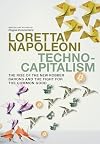
Loretta Napoleoni has an armful of worldwide credentials. She is not only a respected, in-demand global pundit, but earned her stripes in the 1970s when the Red Brigades agreed to speak through her, giving her instant fame in her native Italy. Her latest book, Technocapitalism is meant to show that the techtitans who are changing the face of the Earth and space, are nothing more than greedy capitalists, pushing everyone and everything aside in search of more wealth. Not a very big challenge, show more was my first reaction. And my second.
All the appropriate elements present themselves routinely. Her chapters are a litany of excessive greed in all the domains we read about daily: Wall Street, carbon credits, crypto, blockchain, NFTs, video games, and space.
She attributes the billionaires’ successes to capitalism and despite people hating what they’re selling, using it daily anyway. That we hate the metaverse because it “strengthens our new identity as unhappy loners, mere consumers and commodities. (Yawn.) That Second Life, the original metaverse, has been plagued by hate, violence and scams. (I am shocked!) But these companies are valued in the billions. She points out that Google buys up companies at any price simply to keep them out of the hands of its competitors. This reduces choice and holds up innovation. Don’t be evil was removed as Google’s tagline for good reason.
What she never investigates is how they’re getting away with it. The USA has endless laws long on the books to prevent monopolies. The problem is successive administrations have choked off the budgets of those bureaus and actively prevent them from doing their mandated jobs. As far as she gets is: “No effort has been made to strip the Techtitans of their global data dominance.” If by the time you read this the Supreme Court has not made federal regulation illegal and destroyed the administrative branch completely, it is working on it. Anarchy for the specific benefit of all (billionaires). Just blaming capitalism is not enough.
She has great praise for blockchain, but doesn’t concede that the amount of storage required to put every little thing ever agreed to or purchased on an eternal blockchain is prohibitive and a largely pointless waste of energy and servers. Instead, she posits that blockchains can be local or regional in nature, taking up fewer resources globally by redefining them as statements of stake rather than of work, as with bitcoin blockchains. This is not a great answer to anything.
I have two major issues with this book. First and foremost, Napoleoni presents nothing new. Everything readers will find here can easily be found elsewhere. She does not travel to get the exclusive answers from highly knowledgeable experts. She has no unique insight into anything whatsoever. She simply summarizes history, connecting some dots for those who can’t or won’t do it for themselves. For researchers in the future, this could be a good starting point to understand how it all went so horribly wrong. And while that is necessary in this time of superficiality, it would have been nice if she had come up with something, anything new, to hang this whole effort on.
Two, for a book that wants to be taken seriously, Napoleoni unaccountably lapses into nonsense. At least seven times in the book, she suddenly spouts that whatever she is discussing caused something to “literally” …
-Banks and financial institutions were “literally drowning” in debt. No they weren’t.
-Large Language Models have “literally taken the world by storm.” No they haven’t.
-Ethereum “literally opened up a universe” for online commerce. No it didn’t.
-CryptoKitties “literally exploded” on the Ethereum platform. No it didn’t.
-NFT prices have “literally crashed”. This is as close as she ever comes to something to agree with.
-Without the anchor of the gold standard, inflation “literally exploded.” No it didn’t.
-In the early 2000s, the repo market “literally exploded.” No it did not.
Her ultimate point is that the techtitans “are not heroes or visionaries,” just greedy. Yes, and? And finally, regarding the laughable common good: “No common good will come from the race to accumulate cosmic profits selling connectivity to the masses in order to harvest their brains.” Deep.
David Wineberg show less
All the appropriate elements present themselves routinely. Her chapters are a litany of excessive greed in all the domains we read about daily: Wall Street, carbon credits, crypto, blockchain, NFTs, video games, and space.
She attributes the billionaires’ successes to capitalism and despite people hating what they’re selling, using it daily anyway. That we hate the metaverse because it “strengthens our new identity as unhappy loners, mere consumers and commodities. (Yawn.) That Second Life, the original metaverse, has been plagued by hate, violence and scams. (I am shocked!) But these companies are valued in the billions. She points out that Google buys up companies at any price simply to keep them out of the hands of its competitors. This reduces choice and holds up innovation. Don’t be evil was removed as Google’s tagline for good reason.
What she never investigates is how they’re getting away with it. The USA has endless laws long on the books to prevent monopolies. The problem is successive administrations have choked off the budgets of those bureaus and actively prevent them from doing their mandated jobs. As far as she gets is: “No effort has been made to strip the Techtitans of their global data dominance.” If by the time you read this the Supreme Court has not made federal regulation illegal and destroyed the administrative branch completely, it is working on it. Anarchy for the specific benefit of all (billionaires). Just blaming capitalism is not enough.
She has great praise for blockchain, but doesn’t concede that the amount of storage required to put every little thing ever agreed to or purchased on an eternal blockchain is prohibitive and a largely pointless waste of energy and servers. Instead, she posits that blockchains can be local or regional in nature, taking up fewer resources globally by redefining them as statements of stake rather than of work, as with bitcoin blockchains. This is not a great answer to anything.
I have two major issues with this book. First and foremost, Napoleoni presents nothing new. Everything readers will find here can easily be found elsewhere. She does not travel to get the exclusive answers from highly knowledgeable experts. She has no unique insight into anything whatsoever. She simply summarizes history, connecting some dots for those who can’t or won’t do it for themselves. For researchers in the future, this could be a good starting point to understand how it all went so horribly wrong. And while that is necessary in this time of superficiality, it would have been nice if she had come up with something, anything new, to hang this whole effort on.
Two, for a book that wants to be taken seriously, Napoleoni unaccountably lapses into nonsense. At least seven times in the book, she suddenly spouts that whatever she is discussing caused something to “literally” …
-Banks and financial institutions were “literally drowning” in debt. No they weren’t.
-Large Language Models have “literally taken the world by storm.” No they haven’t.
-Ethereum “literally opened up a universe” for online commerce. No it didn’t.
-CryptoKitties “literally exploded” on the Ethereum platform. No it didn’t.
-NFT prices have “literally crashed”. This is as close as she ever comes to something to agree with.
-Without the anchor of the gold standard, inflation “literally exploded.” No it didn’t.
-In the early 2000s, the repo market “literally exploded.” No it did not.
Her ultimate point is that the techtitans “are not heroes or visionaries,” just greedy. Yes, and? And finally, regarding the laughable common good: “No common good will come from the race to accumulate cosmic profits selling connectivity to the masses in order to harvest their brains.” Deep.
David Wineberg show less
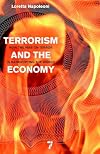
Definitely a new argument in why the US economy has been struggling, the Global War on Terror. Although I have liked some of Napoleoni's past works this volume smacks of a theory pushing the limits of reality. While she makes some excellent points as a student of political economy and international affairs I would have liked to see where some of her material was coming from to do further research and to try and understand more thoroughly her argument. Overall, an interesting yet show more disappointingly argumentative rather than persuasive book. show less
 This review was written for LibraryThing Early Reviewers.
Lists
Awards


You May Also Like


Associated Authors
Statistics
- Works
- 36
- Also by
- 1
- Members
- 753
- Popularity
- #33,775
- Rating
- 3.4
- Reviews
- 34
- ISBNs
- 130
- Languages
- 12
- Favorited
- 2
