
Heather Ewing
Author of The Lost World of James Smithson: Science, Revolution, and the Birth of the Smithsonian
About the Author
Image credit: Photo by Marcelo Guidoli, found at Civitella Ranieri website
Works by Heather Ewing
The Lost World of James Smithson: Science, Revolution, and the Birth of the Smithsonian (2007) 205 copies, 4 reviews
Tagged
Common Knowledge
- Gender
- female
- Education
- Yale University
Courtland Institute of Art - Occupations
- architectural historian
- Organizations
- Smithsonian Institution
Ringling Museum of Art
Center for Italian Modern Art - Nationality
- USA
- Places of residence
- New York, New York, USA
- Associated Place (for map)
- New York, USA
Members
Reviews
The Lost World of James Smithson: Science, Revolution, and the Birth of the Smithsonian by Heather Ewing
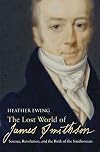
On June 27, 1829, a rather obscure Englishman died in Genoa. He carried with him a receipt for a will stipulating that the bulk of his fortune — something like £100,000 (around $50,000,000 today) — should be employed by the United States for "an establishment for the increase and diffusion of knowledge among men."
James Smithson wrote the will himself and omitted the lawyerly language that might have made his bequest clearer. A chemist by training who published a number of narrowly show more focused scientific papers measuring the amount and action of minerals in various substances, and active in London's Royal Society for the Advancement of Science, Smithson may have intended a museum of natural history — or perhaps a laboratory or school. No one knew.
And why America? Early on, Smithson expressed sympathy for the revolutionary cause, but as the illegitimate son of the Duke of Northumberland, Smithson seemed as much a royalist as a democrat, adopting after his mother's death the name of Smithson (it had been Macie, his mother's first husband's name) as if to reassert his aristocratic prerogatives.
The man was a mystery. South Carolina senator John Calhoun, always suspicious of centralized power, opposed a national museum, especially one endowed by a virtually anonymous Englishman. Accepting Smithson's bequest was "beneath the dignity" of America. John Quincy Adams, on the other hand, still aggrieved over his failure to establish a national university, led the forces that eventually prevailed in establishing an institution that describes itself as "America's national education facility with 19 museums, 9 research centers, and over 140 affiliate museums around the world"—not to mention its display of Charles Lindbergh's "Spirit of St. Louis" and Dorothy's ruby slippers.
But the Smithson mystery deepened in 1865, when a fire in the newly established Smithsonian Institution destroyed his papers. Heather Ewing begins her new biography, "The Lost World of James Smithson," by making it seem that Smithson's story has irrevocably vanished, which of course makes her heroic efforts to recover a sense of Smithson from public documents and from the diaries and letters of his friends all the more laudable.
Ms. Ewing has turned up valuable new material, bringing to light her subject's "lost world," but whenever his own words and papers are missing, the diligent biographer heads for quaint, entertaining tidbits — such as this description of John Graham's "Temple of Health and Hymen," an institution capitalizing on the public's "newfound curiosity for electrical experiments and their ageold interest in sex":
Visitors willing to pay an exorbitant fee could allegedly cure their infertility with a night in the massive "Celestial Bed," in which silk sheets performed "in oriental manner" atop mattresses stuffed with the "most springy hair, produced at vast expense from the tails of English stallions." The bed's domed canopy, supported by forty pillars of colored glass, contained a series of artificial lodestones or magnets, providing the participants with "the exhilarating force of electrical fire."
Remember, these were prehistoric days before you could hook yourself up to a car battery.
This is all very jolly, but in the end Ms. Ewing has to resort to the bane of all biographers: the "must have been." She does not know much about what Smithson really thought, but she is sure about what "must have been." The results of all her probablys and likelys are tenuous, if suggestive.
In "The Stranger and the Statesman: James Smithson, John Quincy Adams, and The Making of America's Greatest Museum: The Smithsonian" (2003), Nina Burleigh has written a tauter, more penetrating biography. Instead of trying to stretch her data, Ms. Burleigh asks pointed questions. Why didn't Smithson marry? Why didn't he give his money to the Royal Society? Because, Ms. Ewing answers, he had a falling out with his colleagues. But then why not another august British institution, Ms. Burleigh asks. Her questions, it seems to me, are more instructive than Ms. Ewing's nugatory speculations.
Smithson's motivations remain a puzzle, though Ms. Burleigh has a final surmise of her own that strikes home. Northumberland never publicly acknowledged his illegitimate son, and Smithson knew that if he did not "specify a contingent use for his money and his nephew died, the estate would revert to the government of England." Whatever else America was, it was a new world, one where Smithson's name could be recognized in its own right rather than absorbed into England's treasury.
Ms. Ewing makes a similar point, that Smithson's life was all about seeking "identity, prestige, and progress," but her narrative is tricked out with too many suppositions that make its arrival at that fundamental point a rather tedious affair. show less
James Smithson wrote the will himself and omitted the lawyerly language that might have made his bequest clearer. A chemist by training who published a number of narrowly show more focused scientific papers measuring the amount and action of minerals in various substances, and active in London's Royal Society for the Advancement of Science, Smithson may have intended a museum of natural history — or perhaps a laboratory or school. No one knew.
And why America? Early on, Smithson expressed sympathy for the revolutionary cause, but as the illegitimate son of the Duke of Northumberland, Smithson seemed as much a royalist as a democrat, adopting after his mother's death the name of Smithson (it had been Macie, his mother's first husband's name) as if to reassert his aristocratic prerogatives.
The man was a mystery. South Carolina senator John Calhoun, always suspicious of centralized power, opposed a national museum, especially one endowed by a virtually anonymous Englishman. Accepting Smithson's bequest was "beneath the dignity" of America. John Quincy Adams, on the other hand, still aggrieved over his failure to establish a national university, led the forces that eventually prevailed in establishing an institution that describes itself as "America's national education facility with 19 museums, 9 research centers, and over 140 affiliate museums around the world"—not to mention its display of Charles Lindbergh's "Spirit of St. Louis" and Dorothy's ruby slippers.
But the Smithson mystery deepened in 1865, when a fire in the newly established Smithsonian Institution destroyed his papers. Heather Ewing begins her new biography, "The Lost World of James Smithson," by making it seem that Smithson's story has irrevocably vanished, which of course makes her heroic efforts to recover a sense of Smithson from public documents and from the diaries and letters of his friends all the more laudable.
Ms. Ewing has turned up valuable new material, bringing to light her subject's "lost world," but whenever his own words and papers are missing, the diligent biographer heads for quaint, entertaining tidbits — such as this description of John Graham's "Temple of Health and Hymen," an institution capitalizing on the public's "newfound curiosity for electrical experiments and their ageold interest in sex":
Visitors willing to pay an exorbitant fee could allegedly cure their infertility with a night in the massive "Celestial Bed," in which silk sheets performed "in oriental manner" atop mattresses stuffed with the "most springy hair, produced at vast expense from the tails of English stallions." The bed's domed canopy, supported by forty pillars of colored glass, contained a series of artificial lodestones or magnets, providing the participants with "the exhilarating force of electrical fire."
Remember, these were prehistoric days before you could hook yourself up to a car battery.
This is all very jolly, but in the end Ms. Ewing has to resort to the bane of all biographers: the "must have been." She does not know much about what Smithson really thought, but she is sure about what "must have been." The results of all her probablys and likelys are tenuous, if suggestive.
In "The Stranger and the Statesman: James Smithson, John Quincy Adams, and The Making of America's Greatest Museum: The Smithsonian" (2003), Nina Burleigh has written a tauter, more penetrating biography. Instead of trying to stretch her data, Ms. Burleigh asks pointed questions. Why didn't Smithson marry? Why didn't he give his money to the Royal Society? Because, Ms. Ewing answers, he had a falling out with his colleagues. But then why not another august British institution, Ms. Burleigh asks. Her questions, it seems to me, are more instructive than Ms. Ewing's nugatory speculations.
Smithson's motivations remain a puzzle, though Ms. Burleigh has a final surmise of her own that strikes home. Northumberland never publicly acknowledged his illegitimate son, and Smithson knew that if he did not "specify a contingent use for his money and his nephew died, the estate would revert to the government of England." Whatever else America was, it was a new world, one where Smithson's name could be recognized in its own right rather than absorbed into England's treasury.
Ms. Ewing makes a similar point, that Smithson's life was all about seeking "identity, prestige, and progress," but her narrative is tricked out with too many suppositions that make its arrival at that fundamental point a rather tedious affair. show less
The Lost World of James Smithson: Science, Revolution, and the Birth of the Smithsonian by Heather Ewing
A thorough and fascinating biography of Smithson, whose story is much more intriguing and complicated than I knew. Well worth a read.
The Lost World of James Smithson: Science, Revolution, and the Birth of the Smithsonian by Heather Ewing
A most interesting book on the life of James Smithson. Smithson's bequest would go on to fund the founding of the Smithsonian institution. Sadly, Smithson's papers were lost in a fire, leaving little material to shed light on his life. However, through painstaking research in archives around the world and amoung the papers, letters and journals of Smithson's friends, family and associates, Ewing has been able to research and shed light on Smithsn's life and activities. The book is well show more written and provides a glimpse into the life of this most interesting and previously little-known, under-appreciated man and the environment in which he lived. show less
This review was written for LibraryThing Member Giveaways.
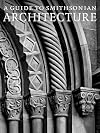
Given the photos are all black and white, I thought this book was older than it was and that it might already be out out date. The publication is listed as 2009 so I am assuming it is still accurate. Lots of photos of the different buildings including how they were many years ago. Great little history.
You May Also Like


Associated Authors
Statistics
- Works
- 7
- Members
- 406
- Popularity
- #59,888
- Rating
- 3.4
- Reviews
- 9
- ISBNs
- 16
- Languages
- 3