
Richard M. Eyre
Author of Teaching Your Children Values
About the Author
Image credit: Richard & Linda Eyre. Mormon Times.
Works by Richard M. Eyre
The Entitlement Trap: How to Rescue Your Child with a New Family System of Choosing, Earning, and Ownership (2011) 79 copies
How to Talk to Your Child About Sex: It's Best to Start Early, but It's Never Too Late -- A Step-by-Step Guide for Every Age (1998) 72 copies
Life Before Life: Origins of the Soul...Knowing Where You Came From and Who You Really Are (2000) 40 copies
The Turning: Why the State of the Family Matters, and What the World Can Do about It (2014) 12 copies
The Happiness Paradox The Happiness Paradigm: The Very Things We Thought Would Bring Us Joy Actually Steal It Away. (2019) 10 copies
Associated Works
The Gift of Eternal Life: Favorite Writings on Our Divine Origin, Mortal Purpose, and Eternal Destiny (2003) — Contributor — 18 copies
Tagged
Common Knowledge
- Gender
- male
- Education
- Brigham Young University
- Organizations
- The Church of Jesus Christ of Latter-day Saints
- Relationships
- Eyre, Linda (wife)
Dunn, Paul H. (friend and co-author)
Members
Reviews
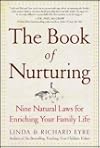
When I was given this for Christmas, I was at first a little skeptical. My parents, and I think my in-laws, had all read or mentioned the Eyres as those parenting self-help book writers that left parents feeling overwhelmed.
Despite this initial reticence, I opted to give it a try and read a few pages. Our first, Abby, was about six months old and though Britt had already poured through a number of "What to expect when..." books aimed at parents, I had not myself read any more than selected show more passages (and few of those). This would be the book that I read to be a better dad.
And I am glad that I gave it a try. I think the Eyres might have had skeptical and busy parents like me in mind when they wrote it. With my short attention span and busy schedule, the book is organized and designed to teach quick, short lessons based on various animals. I began to think of it like an Aesop's Fables for parents. Most of the lessons are way beyond Abby, right now, but as she is growing, I am starting to see their applicability. The elephant's trunk is strong and firm, but gentle and articulated, as parents should be. Crabs never let each other each other climb higher, as criticism can do to families. Geese always put their goslings first, just as the family, children and spouse, should be the first priority.
And so on. Each chapter starts with a story or demonstration, followed by a real life example or two. Next, the principles are stated, followed by very short demonstrations of how different families have implemented the principles. If you don't like how the Eyres decided to apply the principles, there are a dozen or more examples of how other families did it, and each one different and unique to them. Then the chapter ends with a set of blank lines where you are encouraged to evaluate how you will apply the principles. It provided Britt and I a wonderful opportunity to discuss and evaluate what we want our family to look like and how we can begin to plan for the future.
Obviously, with only one child, and a baby at that, it's hard to anticipate everything that will happen. But this has help us to start off on the right foot, to begin making plans, and to make those plans together. I recommend this book to parents, grandparents, and nurturers everywhere. show less
Despite this initial reticence, I opted to give it a try and read a few pages. Our first, Abby, was about six months old and though Britt had already poured through a number of "What to expect when..." books aimed at parents, I had not myself read any more than selected show more passages (and few of those). This would be the book that I read to be a better dad.
And I am glad that I gave it a try. I think the Eyres might have had skeptical and busy parents like me in mind when they wrote it. With my short attention span and busy schedule, the book is organized and designed to teach quick, short lessons based on various animals. I began to think of it like an Aesop's Fables for parents. Most of the lessons are way beyond Abby, right now, but as she is growing, I am starting to see their applicability. The elephant's trunk is strong and firm, but gentle and articulated, as parents should be. Crabs never let each other each other climb higher, as criticism can do to families. Geese always put their goslings first, just as the family, children and spouse, should be the first priority.
And so on. Each chapter starts with a story or demonstration, followed by a real life example or two. Next, the principles are stated, followed by very short demonstrations of how different families have implemented the principles. If you don't like how the Eyres decided to apply the principles, there are a dozen or more examples of how other families did it, and each one different and unique to them. Then the chapter ends with a set of blank lines where you are encouraged to evaluate how you will apply the principles. It provided Britt and I a wonderful opportunity to discuss and evaluate what we want our family to look like and how we can begin to plan for the future.
Obviously, with only one child, and a baby at that, it's hard to anticipate everything that will happen. But this has help us to start off on the right foot, to begin making plans, and to make those plans together. I recommend this book to parents, grandparents, and nurturers everywhere. show less
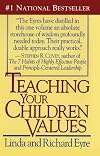
some good ideas for things to talk about with your child about values, but I'm not interested in developing a twelve month program for my child. Aimed more for the large Christian family set.
Divided into 12 monthly teachable values this book gives "lesson plans" for preschoolers, and elementary age children along with a story (sometimes two or more), guidelines for parents, simple games and disussions that further illustrate the topic for the child/ren over the course of a month.
Although major Christian values are covered, Christian parents may notice that God is not directly mentioned as this book was written generically (with no biblical reference) but there is room for you to show more add your religious belief and doctrine although you will have to do the footwork yourself (look up scripture reference and incorporate God into the little stories).
Values are divided into two catagories: values of being (who we are) and Values of Giving (what we do). They include:
honesty, courage, peaceability, self-reliance, discipline, fidelity/chastity, loyalty, respect, unselfishness, kindless, and justice and mercy. show less
Although major Christian values are covered, Christian parents may notice that God is not directly mentioned as this book was written generically (with no biblical reference) but there is room for you to show more add your religious belief and doctrine although you will have to do the footwork yourself (look up scripture reference and incorporate God into the little stories).
Values are divided into two catagories: values of being (who we are) and Values of Giving (what we do). They include:
honesty, courage, peaceability, self-reliance, discipline, fidelity/chastity, loyalty, respect, unselfishness, kindless, and justice and mercy. show less
Some good ideas but the dynamics seemed far more suited to their large family than to our family of three (parents and one child).
Bookcrossing: http://www.bookcrossing.com/journal/5287032/
Bookcrossing: http://www.bookcrossing.com/journal/5287032/
Lists
You May Also Like


Associated Authors
Statistics
- Works
- 42
- Also by
- 5
- Members
- 1,518
- Popularity
- #16,944
- Rating
- 3.9
- Reviews
- 4
- ISBNs
- 77
- Languages
- 1