
Vera Nazarian
Author of Qualify
About the Author
Image credit: Vera Nazarian
Series
Works by Vera Nazarian
Associated Works
Ardeur: 14 Writers on the Anita Blake, Vampire Hunter Series (2010) — Contributor — 81 copies, 7 reviews
Totally Charmed: Demons, Whitelighters and the Power of Three (2005) — Contributor — 33 copies, 1 review
Tagged
Common Knowledge
- Birthdate
- 1966-05-25
- Gender
- female
- Education
- Pomona College
- Occupations
- artist
science fiction writer - Organizations
- Science Fiction and Fantasy Writers of America (SFWA)
- Awards and honors
- Nebula Award Finalist, 2007, 2008
- Nationality
- Russia (birth)
USA - Birthplace
- Moscow, Russia, USSR
- Map Location
- USA
Members
Reviews
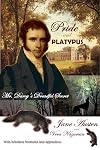
Book Info: Genre: Classical literature satire
Reading Level: Adult
Recommended for: Fans of Jane Austen, satire, cross-genre mashups
Trigger Warnings: Demons beasts! Giant, murderous DUCKS!! And a truly horrible creature called a platypus.
Disclosure: I picked up a copy of this book from Amazon during a free promotion because I so enjoyed the book Northanger Abbey and Angels and Demons. No review has been requested. All opinions are my own.
Synopsis: "When the moon is full over Regency England, show more all the gentlemen are subject to its curse.
Mr. Darcy, however, harbors a Dreadful Secret..."
Shape-shifting demons mingle with Australian wildlife, polite society, and high satire, in this elegant, hilarious, witty, insane, and unexpectedly romantic supernatural parody of Jane Austen's classic novel.
The powerful, mysterious, handsome, and odious Mr. Darcy announces that Miss Elizabeth Bennet is not good enough to tempt him. The young lady determines to find out his one secret weakness—all the while surviving unwanted proposals, Regency balls, foolish sisters, seductive wolves, matchmaking mothers, malodorous skunks, general lunacy, and the demonic onslaught of the entire wild animal kingdom!
What awaits her is something unexpected. And only moon, matrimony, and true love can overcome pride and prejudice!
"Gentle Reader—this Delightful Illustrated Edition includes Scholarly Footnotes and Appendices.”
My Thoughts: Like Northanger Abbey and Angels and Demons (my review here where formatting allowed), this is a delightful mock-up of the original, or at least I assume so, because also like that one, I have not actually read the original version of Pride and Prejudice, or if I have, I have successfully managed to suppress all memory of it. After reading this excellent satire, I feel I have done myself a grave injustice and am more determined than ever to seek out and read as much Jane Austen as I can, as the story, even buried under satire, was really quite charming and left me with a smile on my face. A more voluble expression of love I have never heard than, “Dearest Elizabeth... There is something different about the world; can you suddenly feel it?”
Early on in the book it is noted that the Affliction to which the men of Regency England were subjected caused them to:
“...take on various unnatural shapes—neither quite demon, nor proper beast—and in those shapes to roam the land; to hunt, murder, dismember, gorge on blood, consume haggis and kidney pie, gamble away their familial fortune, marry below their station (and below their stature, when the lady is an Amazon), vote Whig, perform sudden and voluntary manual labor, cultivate orchids, collect butterflies and Limoges snuff boxes, and perpetrate other such odious evil—unless properly contained.”
That is, indeed, a great deal of odious evil. Especially the haggis and kidney pie! (Locations 207-213 and 213-217 in Kindle edition)
This gives you a bit of an idea about the hilariousness of this book! The idea of men going through a monthly Affliction, and the way they use it as another bragging point, building and/or buying cages and crates and chains... and typical overcompensation as to their various sizes. I love the way the author has taken the notion and just run with it to extreme (and extremely funny) lengths. The same with the absurd Mr. Collins and his ridiculous ideas about crossbreeding native Australian fauna with British, such as the kangaroo with goats. It was almost beaten to death, but it was hilarious. Also some of the ideas people had about the origins of such animals was very funny, such as the description of a platypus as “the natural offspring of a duck, otter, beaver, snake, crocodile, gazelle, porcupine, and, I am told, a watercress-fed water buffalo—”
There is a bit of a problem with typos littering the book. I saw “tired” for “tried,” “game” for “gave, “wrecked” ‘for “wreaked”, and “bread” for “bred” among others. Most of them I skipped right over, but the “bread/bred” one was particularly ironic, since it was talking about how the Brighton Duck was “bread” for ferocity and monstrousness or some-such. That one made me laugh quite a lot, as I thought to myself, “I daresay she means ‘bred’, for whilst a duck might eat ‘bread’, they are nonetheless ‘bred’ from one generation to the next.” Then I laughed some more at how I’d unconsciously picked up the wording style of the book. I laughed again later in remembrance when Mr. Collins began his ridiculous rants about crossbreeding Australian fauna with British.
The dueling-editors thing was something that wasn’t quite pulled off to full effect, in this reader’s humble opinion. There were some moments of true hilarity, it is true, but some of them felt forced. I think the ones where the editors are basically just talking to each other could have been excised and that would have felt better to me. I certainly wouldn’t recommend skipping them, because some of them are pure comedy gold, such as footnote 62 regarding the nature of a preservative, but if it annoys you to flip back and forth, even using an e-reader, then maybe save some of them for the end? Another instance in which I feel the ball was dropped was the spoken language of the various characters. Overall it was very good, but there was the profligate use of “got” and “get” within the speech patterns that I cannot help but believe was not at all common among the people of the time.
At the risk of making an already-long review ever longer, I wanted to comment in general about how the world has changed in 200 years! Consider in Regency England a tan was considered “coarse,” yet today we are considered “sickly looking” if we are too pale. Not to mention how the use of the language has changed (deteriorated in my own opinion) from the gracious gentility of the time. Again in my opinion, reverting somewhat to a more lovely use of the language, rather than the hurried and ugly version we use today, would do nothing but improve the world overall.
Overall, I really enjoyed this book a lot. Any flaws were minor and easily overlooked for the most part. Again there were a few drawings scattered through the book, showcasing this author’s many talents. I believe Nazarian did the spirit of Jane Austen justice in this satire, with love and laughter, so fans of Jane Austen’s work ought to enjoy this. Fan of cross-genre mock-ups and satires will also want to be certain to read this wonderful story. Highly recommended! show less
Reading Level: Adult
Recommended for: Fans of Jane Austen, satire, cross-genre mashups
Trigger Warnings: Demons beasts! Giant, murderous DUCKS!! And a truly horrible creature called a platypus.
Disclosure: I picked up a copy of this book from Amazon during a free promotion because I so enjoyed the book Northanger Abbey and Angels and Demons. No review has been requested. All opinions are my own.
Synopsis: "When the moon is full over Regency England, show more all the gentlemen are subject to its curse.
Mr. Darcy, however, harbors a Dreadful Secret..."
Shape-shifting demons mingle with Australian wildlife, polite society, and high satire, in this elegant, hilarious, witty, insane, and unexpectedly romantic supernatural parody of Jane Austen's classic novel.
The powerful, mysterious, handsome, and odious Mr. Darcy announces that Miss Elizabeth Bennet is not good enough to tempt him. The young lady determines to find out his one secret weakness—all the while surviving unwanted proposals, Regency balls, foolish sisters, seductive wolves, matchmaking mothers, malodorous skunks, general lunacy, and the demonic onslaught of the entire wild animal kingdom!
What awaits her is something unexpected. And only moon, matrimony, and true love can overcome pride and prejudice!
"Gentle Reader—this Delightful Illustrated Edition includes Scholarly Footnotes and Appendices.”
My Thoughts: Like Northanger Abbey and Angels and Demons (my review here where formatting allowed), this is a delightful mock-up of the original, or at least I assume so, because also like that one, I have not actually read the original version of Pride and Prejudice, or if I have, I have successfully managed to suppress all memory of it. After reading this excellent satire, I feel I have done myself a grave injustice and am more determined than ever to seek out and read as much Jane Austen as I can, as the story, even buried under satire, was really quite charming and left me with a smile on my face. A more voluble expression of love I have never heard than, “Dearest Elizabeth... There is something different about the world; can you suddenly feel it?”
Early on in the book it is noted that the Affliction to which the men of Regency England were subjected caused them to:
“...take on various unnatural shapes—neither quite demon, nor proper beast—and in those shapes to roam the land; to hunt, murder, dismember, gorge on blood, consume haggis and kidney pie, gamble away their familial fortune, marry below their station (and below their stature, when the lady is an Amazon), vote Whig, perform sudden and voluntary manual labor, cultivate orchids, collect butterflies and Limoges snuff boxes, and perpetrate other such odious evil—unless properly contained.”
That is, indeed, a great deal of odious evil. Especially the haggis and kidney pie! (Locations 207-213 and 213-217 in Kindle edition)
This gives you a bit of an idea about the hilariousness of this book! The idea of men going through a monthly Affliction, and the way they use it as another bragging point, building and/or buying cages and crates and chains... and typical overcompensation as to their various sizes. I love the way the author has taken the notion and just run with it to extreme (and extremely funny) lengths. The same with the absurd Mr. Collins and his ridiculous ideas about crossbreeding native Australian fauna with British, such as the kangaroo with goats. It was almost beaten to death, but it was hilarious. Also some of the ideas people had about the origins of such animals was very funny, such as the description of a platypus as “the natural offspring of a duck, otter, beaver, snake, crocodile, gazelle, porcupine, and, I am told, a watercress-fed water buffalo—”
There is a bit of a problem with typos littering the book. I saw “tired” for “tried,” “game” for “gave, “wrecked” ‘for “wreaked”, and “bread” for “bred” among others. Most of them I skipped right over, but the “bread/bred” one was particularly ironic, since it was talking about how the Brighton Duck was “bread” for ferocity and monstrousness or some-such. That one made me laugh quite a lot, as I thought to myself, “I daresay she means ‘bred’, for whilst a duck might eat ‘bread’, they are nonetheless ‘bred’ from one generation to the next.” Then I laughed some more at how I’d unconsciously picked up the wording style of the book. I laughed again later in remembrance when Mr. Collins began his ridiculous rants about crossbreeding Australian fauna with British.
The dueling-editors thing was something that wasn’t quite pulled off to full effect, in this reader’s humble opinion. There were some moments of true hilarity, it is true, but some of them felt forced. I think the ones where the editors are basically just talking to each other could have been excised and that would have felt better to me. I certainly wouldn’t recommend skipping them, because some of them are pure comedy gold, such as footnote 62 regarding the nature of a preservative, but if it annoys you to flip back and forth, even using an e-reader, then maybe save some of them for the end? Another instance in which I feel the ball was dropped was the spoken language of the various characters. Overall it was very good, but there was the profligate use of “got” and “get” within the speech patterns that I cannot help but believe was not at all common among the people of the time.
At the risk of making an already-long review ever longer, I wanted to comment in general about how the world has changed in 200 years! Consider in Regency England a tan was considered “coarse,” yet today we are considered “sickly looking” if we are too pale. Not to mention how the use of the language has changed (deteriorated in my own opinion) from the gracious gentility of the time. Again in my opinion, reverting somewhat to a more lovely use of the language, rather than the hurried and ugly version we use today, would do nothing but improve the world overall.
Overall, I really enjoyed this book a lot. Any flaws were minor and easily overlooked for the most part. Again there were a few drawings scattered through the book, showcasing this author’s many talents. I believe Nazarian did the spirit of Jane Austen justice in this satire, with love and laughter, so fans of Jane Austen’s work ought to enjoy this. Fan of cross-genre mock-ups and satires will also want to be certain to read this wonderful story. Highly recommended! show less
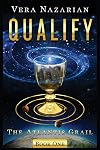
Easily one of the most compelling works of Science Fiction I have read in many years, I would put Nazarian right up with Heinlein, Campbell, or Niven. With the protagonist a sixteen-year-old young woman (Gwen Lark) from Vermont, the story line takes the reader through a series of tests designed to qualify the teenager to leave Earth on board a space ship operated by the descendents of the ancient denizens of Atlantis, a departure that will save her life when an asteroid destroys Earth in a show more few months hence. There are actually three tests Gwen and her peers face, beginning with the Qualification Test Gwen, her three siblings, and all other teenagers across the country (and implied around the world) face at the very beginning of the book. It is understood that anyone not passing the test will return home to face anihilation with their parents and (non-qualifying) siblings, hence the saying "Qualify or Die," which is repeated throughout the story. Those students who pass the first test are immediately taken to a Regional Qualification Center (in Gwen's case in Pennsylvania) where they will train for a month before taking their "Semi-Final" exam. The Semi-Final winnows the thousands of students from each regional center (over 6,000 in Pennsylvania) down to 200. Those who survive the Semi-Final are taken to a National Qualification Center (believed to be in eastern Colorado) where they will train for an additional month with all their fellow countrymen before facing the Final exam. The book's six hundred pages take the reader through all three exams as well as the training sessions leading up to the exams. Most students, including Gwen, are well aware that the chances are rigged against them. All know that if they do not pass the Final Exam, they will die anyway when the asteroid destroys the Earth. Make no mistake, this is a long book, but it is never dull, never slow, and the cast of characters is fully fleshed out, whether they be nerds, geeks, or even the bullies that seem to inhabit all levels of teen-age (and even adult) life. Throw in an alien, yet related, race with an almost unbelievably advance level of technology, and the story line fascinates on so many different levels. My highest recommendation! show less
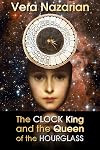
Received through LibraryThing Member Give Away.
I very much enjoyed this book. The sort of flat writing style perfectly complements the tone of the story. It evokes a kind of calm despair and disconnect that the “evolved” people must be feeling. Humans have “controlled” things until they are impotent both physically and intellectually. They go through the motions of a life they can’t live or enjoy. So stagnant have they become that they do what they have always done to survive and show more seemingly never attempt to try to come up with any better way of surviving. They rely on their “genetic throw backs” to supply them with new genetic material to carry on a human race that merely exists. Liaei, The Queen of the Hourglass, defies expectation and the reader is left with the hope she resurrects life. I would love to read what happens next, but the author leaves it to the readers imagination, but she leaves us with hope. show less
I very much enjoyed this book. The sort of flat writing style perfectly complements the tone of the story. It evokes a kind of calm despair and disconnect that the “evolved” people must be feeling. Humans have “controlled” things until they are impotent both physically and intellectually. They go through the motions of a life they can’t live or enjoy. So stagnant have they become that they do what they have always done to survive and show more seemingly never attempt to try to come up with any better way of surviving. They rely on their “genetic throw backs” to supply them with new genetic material to carry on a human race that merely exists. Liaei, The Queen of the Hourglass, defies expectation and the reader is left with the hope she resurrects life. I would love to read what happens next, but the author leaves it to the readers imagination, but she leaves us with hope. show less
This review was written for LibraryThing Member Giveaways.
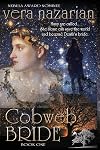
One day, Death stops. He will not resume his tasks until his Cobweb Bride is found and brought to him. The dying linger, their last breaths forever gurgling in their throat, the murdered seek to understand their murderers, and the only nourishment is that which was harvested before Death withdrew.
From all across the lands they come. Potential Cobweb Brides, asked by their rulers to save the world. Some are ordered; some volunteer. Some hope to be chosen; some pray to be spared. But all head show more north to the forest in search of Death's home. And some in the kingdom, pleased with their reprieve from Death, desire to stop them.
This book is beautiful and sorrowful, hopeful and tragic. The writing is poetic; I found myself reading some parts out loud just to hear them spoken. From the moment I picked this book up until the moment I finished it, I was immersed.
5/5 stars
Note: I participated in the Kickstarter for this book. show less
From all across the lands they come. Potential Cobweb Brides, asked by their rulers to save the world. Some are ordered; some volunteer. Some hope to be chosen; some pray to be spared. But all head show more north to the forest in search of Death's home. And some in the kingdom, pleased with their reprieve from Death, desire to stop them.
This book is beautiful and sorrowful, hopeful and tragic. The writing is poetic; I found myself reading some parts out loud just to hear them spoken. From the moment I picked this book up until the moment I finished it, I was immersed.
5/5 stars
Note: I participated in the Kickstarter for this book. show less
Lists
Awards


You May Also Like


Associated Authors
Statistics
- Works
- 42
- Also by
- 27
- Members
- 1,868
- Popularity
- #13,780
- Rating
- 3.7
- Reviews
- 141
- ISBNs
- 90
- Languages
- 2
- Favorited
- 6
