
Fiona Farrell
Author of Book Book
About the Author
Fiona Farrell was born in 1947 in New Zealand. She is a poet, fiction writer and playwright. Her novels include: The Skinny Louie Book, Mr Allbones' Ferrets, and Limestone. Her poetry titles include: Cutting Out, The Inhabited Initial, and The Pop-Up Book of Invasions. In 2015 her book, Villa at show more the Edge of the Empire made The New Zealand Best Seller List. (Bowker Author Biography) show less
Image credit: Fiona Farrell
Series
Works by Fiona Farrell
Paradise Ducks 1 copy
the ninth year 1 copy
Associated Works
Goodbye to Romance: Stories by New Zealand and Australian Women Writers, 1930-1988 (1989) — Contributor — 10 copies
Tagged
Common Knowledge
- Birthdate
- 1947
- Gender
- female
- Education
- University of Otago
University of Toronto - Occupations
- writer-in-residence (Canterbury University ∙ 1992)
lecturer in drama
poet
playwright
fiction writer - Organizations
- Canterbury University
- Awards and honors
- Prime Minister's Award for Literary Achievement ( [2007])
Michael King Writer’s Fellowship (2013)
Katherine Mansfield Memorial Fellowship - Nationality
- New Zealand
- Birthplace
- Oamaru, New Zealand
- Places of residence
- Oamaru, New Zealand
Dunedin, New Zealand
Toronto, Ontario, Canada
Banks Peninsula, Canterbury, South Island, New Zealand
Christchurch, New Zealand - Associated Place (for map)
- New Zealand
Members
Reviews

(7.5) I quickly became absorbed in this story which takes us from the first world war through to contemporary times in New Zealand. The author produces strong character portrayals with young Maura, finding a newborn baby on the day of the royal visit, and her parents Peg and Martin convincing the doctor to allow them to adopt her. The author accurately presents New Zealand post World War 2 and created in this reader a sense of nostalgia.
The jarring aspect for me, as we follow the two sister show more through their childhood, teenage years and adulthood was the diversion into a dystopian setting around 2000. I understand the book was published in 1992, but for me this sudden change to anarchy and a dark world was unconvincing and spoiled what had until then been an enjoyable satisfying read. show less
The jarring aspect for me, as we follow the two sister show more through their childhood, teenage years and adulthood was the diversion into a dystopian setting around 2000. I understand the book was published in 1992, but for me this sudden change to anarchy and a dark world was unconvincing and spoiled what had until then been an enjoyable satisfying read. show less
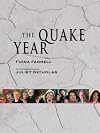
Fiona Farrell interviewed people living in and around Christchurch in the year or so after the earthquakes. She shares their stories along with photos of them, their gardens, the broken world around them. I took my time with this, partly because it felt right to take time with each person's story, but also because it ended up being a much more emotional read than I expected. I didn't experience the earthquakes, although I've been in many small ones, so I didn't expect to be so affected. I show more think perhaps knowing people who did experience them, and having been to Christchurch and seen some of the empty neighborhoods and ruined old buildings, the memorials to those who lost their lives, helped make it much more real for me. It's a lovely book, very thoughtfully done, and a really good way to understand a little better what it's like for people who've survived something like that. show less

(8.5)
I love the diversity of this author. This is a companion novel to her recent non-fiction book, [The Villa at the Edge of the Empire] which I have not read. I have always enjoyed her novels and this one does not disappoint.
The reader follows the rise of the city of Christchurch, in particular this villa on the banks of a river. We experience the arrivals and departures of those who reside in the house over a 100 year period. In this way the author provides a social commentary of life in show more New Zealand against a backdrop of both national and international events.
Farrell has achieved this by short chapters that move forward in 2 yearly bites and interspersed with this we follow the journey of an eel in the river. Of course, the story concludes with the demise of the house following the Christchurch earthquakes of 2010 and 2011. A remarkable book. show less
I love the diversity of this author. This is a companion novel to her recent non-fiction book, [The Villa at the Edge of the Empire] which I have not read. I have always enjoyed her novels and this one does not disappoint.
The reader follows the rise of the city of Christchurch, in particular this villa on the banks of a river. We experience the arrivals and departures of those who reside in the house over a 100 year period. In this way the author provides a social commentary of life in show more New Zealand against a backdrop of both national and international events.
Farrell has achieved this by short chapters that move forward in 2 yearly bites and interspersed with this we follow the journey of an eel in the river. Of course, the story concludes with the demise of the house following the Christchurch earthquakes of 2010 and 2011. A remarkable book. show less
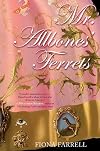
In this slender historical tale of romance and natural science, Walter Allbones, a low-born breeder of ferrets and rabbit poacher, encounters wealthy scientist Mr. Pitford and his granddaughter Eugenia one evening when returning from a profitable night’s poaching with a sack full of rabbit carcasses. Pitford and Eugenia were impressed by Allbones’ knowledge of natural science, however unlettered he might otherwise be—he has spent most of his life rambling the woods around his home and show more observing the wildlife, and much to Eugenia’s delight was able to direct the pair towards the den of a badger with young cubs.
Pitford, a naturalist of the old strain who fancied that mankind’s measured interference would necessarily be for the benefit of new ecosystems, hires Allbones to procure a large quantity of stoats, ferretss and weasels to be introduced into the ecosystem of New Zealand in order to control the rabbits that Europeans had already introduced with disastrous results. Throwing himself into the task, in no small part because of the beautiful eyes and smile of Eugenia, Allbones soon finds himself recruited to accompany the ferrets across the ocean in order to make certain as many of them as possible survive the trip. On board the ship, Allbones and Eugenia grow ever closer, until a disastrous secret threatens to drive them apart.
Slight, and relying too much on stock types rather than fully-fleshed out characters, “Mr. Allbones’ Ferrets” is neverthless an intriguing window on 19th century England and the arrogance of a breed of scientist who believed not in studying nature, but in changing it. show less
Pitford, a naturalist of the old strain who fancied that mankind’s measured interference would necessarily be for the benefit of new ecosystems, hires Allbones to procure a large quantity of stoats, ferretss and weasels to be introduced into the ecosystem of New Zealand in order to control the rabbits that Europeans had already introduced with disastrous results. Throwing himself into the task, in no small part because of the beautiful eyes and smile of Eugenia, Allbones soon finds himself recruited to accompany the ferrets across the ocean in order to make certain as many of them as possible survive the trip. On board the ship, Allbones and Eugenia grow ever closer, until a disastrous secret threatens to drive them apart.
Slight, and relying too much on stock types rather than fully-fleshed out characters, “Mr. Allbones’ Ferrets” is neverthless an intriguing window on 19th century England and the arrogance of a breed of scientist who believed not in studying nature, but in changing it. show less
Awards


You May Also Like


Associated Authors
Statistics
- Works
- 20
- Also by
- 13
- Members
- 228
- Popularity
- #98,696
- Rating
- 3.9
- Reviews
- 14
- ISBNs
- 44
- Languages
- 1