
Lloyd Jones (1) (1955–)
Author of Mister Pip
For other authors named Lloyd Jones, see the disambiguation page.
Works by Lloyd Jones
Associated Works
Are Angels OK?: The Parallel Universes of New Zealand Writers and Scientists (2006) — Contributor — 16 copies, 1 review
From a room of their own: A celebration of the Katherine Mansfield Fellowship (1993) — Contributor — 5 copies
The Colour of Distance: New Zealand Writers in France, French Writers in New Zealand (2006) — Contributor — 3 copies
A passion for travel : New Zealand writers & their adventures overseas (1998) — Contributor — 2 copies
Tagged
Common Knowledge
- Other names
- Eliot, Simon (pseudonym)
- Birthdate
- 1955-03-23
- Gender
- male
- Education
- Victoria University of Wellington
- Occupations
- novelist
- Awards and honors
- Katherine Mansfield Memorial Fellowship (1989)
- Relationships
- Jones, Bob (brother)
- Nationality
- New Zealand
- Birthplace
- Lower Hutt, New Zealand
- Places of residence
- Eastbourne, New Zealand
Wellington, New Zealand - Associated Place (for map)
- New Zealand
Members
Discussions
Mister Pip by Lloyd Jones - Commonwealth Writers' Prize 2007 in New Zealand Thingamabrarians (May 2008)
Reviews
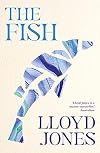
Lloyd Jones is a favourite New Zealand author of mine, but The Fish is a very bleak book indeed.
You know sometimes when you're watching the news, you think, how can one family cope with so much tragedy? The Fish shows with terrible clarity, that sometimes it doesn't.
Longlisted for the Ockham New Zealand Book Awards in 2023, the novel begins in 1960s New Zealand with the birth of the titular 'fish' in a caravan to the unmarried and nameless teenage sister of the narrator. Despite the show more description of difference in his appearance, the newborn is of course not a fish. He is a male child, and the reader knows that from his pronouns on the very first page. He has legs, he wears nappies, he is breastfed, and he learns to say 'Mummy' — though by the time that happens, his mother has lost interest in him altogether and doesn't think he's cute anymore.
There's quite a bit of fake cheeriness masking what is never said in this narrative. The narrator, looking back on these events and also unnamed, is chided by his mother when once he blurts out his nickname for the new member of the family. She is determined that her grandchild be treated like any other, and he never uses the cruel name aloud again. She loses her temper, just once, in frustration, when he turns out not to be a 'good speller' like the rest of the family' and this shocks the narrator who is used to his mother as a role model guiding them all to treat the child well. But like all role models she is human, and imperfect, and she feels disappointment and frustration like anyone else.)
The narrator, for all his cleverness with vocabulary — quoting the Latin origins of new words for the fun of it — is a kid bewildered by the appearance of this new child. Like his father and mother, he appears to come to terms with it, but he is embarrassed and ashamed at school.
The narrator knows he shouldn't feel like this, but he does. And yet, he feels aggrieved, and he wants to protect this child from the realisation not just that he is different, but that other people reject him for it. And yet when Carla, the beautiful sister who took off for Sydney when she was unmarried and pregnant, comes home to meet the child she didn't know existed, she soon learns to be fond of him too. Clearly, he is lovable.
To read the rest of my review, please visit https://anzlitlovers.com/2024/02/08/the-fish-2022-by-lloyd-jones/ show less
You know sometimes when you're watching the news, you think, how can one family cope with so much tragedy? The Fish shows with terrible clarity, that sometimes it doesn't.
Longlisted for the Ockham New Zealand Book Awards in 2023, the novel begins in 1960s New Zealand with the birth of the titular 'fish' in a caravan to the unmarried and nameless teenage sister of the narrator. Despite the show more description of difference in his appearance, the newborn is of course not a fish. He is a male child, and the reader knows that from his pronouns on the very first page. He has legs, he wears nappies, he is breastfed, and he learns to say 'Mummy' — though by the time that happens, his mother has lost interest in him altogether and doesn't think he's cute anymore.
'Mum', it says. 'Mummy.' Its beady eyes grow. Its fish lips shape a smile. It doesn't look or sound like a Colin. It sounds like a fish trained to say 'Mummy'.
The Fish's mother sits chewing her nails. Her Fish doesn't delight her anymore. She doesn't want to be a mother. She doesn't say so. She doesn't need to. The glumness of the Fish's mother forces a fake cheeriness from everyone. (p.55)
There's quite a bit of fake cheeriness masking what is never said in this narrative. The narrator, looking back on these events and also unnamed, is chided by his mother when once he blurts out his nickname for the new member of the family. She is determined that her grandchild be treated like any other, and he never uses the cruel name aloud again. She loses her temper, just once, in frustration, when he turns out not to be a 'good speller' like the rest of the family' and this shocks the narrator who is used to his mother as a role model guiding them all to treat the child well. But like all role models she is human, and imperfect, and she feels disappointment and frustration like anyone else.)
The narrator, for all his cleverness with vocabulary — quoting the Latin origins of new words for the fun of it — is a kid bewildered by the appearance of this new child. Like his father and mother, he appears to come to terms with it, but he is embarrassed and ashamed at school.
In his class photo the Fish has been placed at the end of the row. There is a gap between him and the girl in the white school blouse standing next to him. There are no other gaps in any of the other rows. We know because we have looked, in that way of the aggrieved out to prove a point. The rest of the class is shoulder to shoulder. Three rows of pegs. Except for the girl next to our Fish. We find a place to hide the class photo. We worry that the Fish will see in the photo what has not been apparent to him in his short life so far. He is different. My sister has given birth to difference. Worse, she has placed difference in our ranks. (p.3)
The narrator knows he shouldn't feel like this, but he does. And yet, he feels aggrieved, and he wants to protect this child from the realisation not just that he is different, but that other people reject him for it. And yet when Carla, the beautiful sister who took off for Sydney when she was unmarried and pregnant, comes home to meet the child she didn't know existed, she soon learns to be fond of him too. Clearly, he is lovable.
To read the rest of my review, please visit https://anzlitlovers.com/2024/02/08/the-fish-2022-by-lloyd-jones/ show less

I requested this book from ER because I enjoyed Mr. Pip so much. At the same time I was concerned that I would be disappointed. Not so. It was a very satisfying book that gives you a lot to think about.
What if your own story were only told by the people that you encountered? What would they see of you? How different would their tale be from the tale you told of yourself?
The early chapters where, through other people's eyes, we learn of this woman's struggle to find her child made me wonder show more what had she done and felt and thought during this journey. The later chapters where Ines tells her own story bring all of these questions sharply into focus. Because the book jacket referred to a 'shattering conclusion' I was prepared for an ending that I didn't want; but it ended the way I hoped, with the understanding of Abebi and her willingness to come to terms with the events in her life.
Lloyd Jones has demonstrated, in both this book and in Mr. Pip, that he has the ability to make us see the importance of the lives of those around us. show less
What if your own story were only told by the people that you encountered? What would they see of you? How different would their tale be from the tale you told of yourself?
The early chapters where, through other people's eyes, we learn of this woman's struggle to find her child made me wonder show more what had she done and felt and thought during this journey. The later chapters where Ines tells her own story bring all of these questions sharply into focus. Because the book jacket referred to a 'shattering conclusion' I was prepared for an ending that I didn't want; but it ended the way I hoped, with the understanding of Abebi and her willingness to come to terms with the events in her life.
Lloyd Jones has demonstrated, in both this book and in Mr. Pip, that he has the ability to make us see the importance of the lives of those around us. show less
 This review was written for LibraryThing Early Reviewers.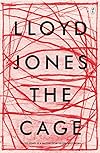
‘Everyone is born to a place on this earth. And everyone has a cover they can slip in and out of. We ask, we prod. They shake their heads, then look disconsolate. What are they to do? What are we to do?’
In unsettling times do we seek solace in stories that give us comfort and reassurance, or do we turn to unsettling, evasive stories that defy answers? In an interview Haruki Murakami once pointed out that during the fall of Communism in eastern Europe he saw sales of his books increase; show more as he put it, confusing times led many to read his confusing books. I start with this because Lloyd Jones’ new novel is an often-unsettling read, with answers in very short supply.
Two men arrive at an hotel in a small town, dishevelled and with no ID or idea from where they have come. The ‘strangers’ are taken in by the hotel owner Warwick, his wife Dawn and their nephew (orphaned a while ago); they are named ‘Doctor’ and ‘Mole’ in the absence of their true names. These labels are an important theme throughout the book: who are we if we do not have our own identity? The boy is given the job of observing the pair and keeping a ledger, and this is how we see the town deal with these two men. The boy himself is never named; we know him as ‘Sport’ because this is what his uncle calls him. We know there has been some sort of catastrophe, but neither of the men can talk about or can give any answers to the questions put to them. They are given some wire to create something, and they make some sort of sculpture, which is taken to represent their experiences: it ‘represents the conundrum they find themselves in – asked to describe a catastrophe which they cannot, asked to provide documentation which they lack, asked to speak of a place that no longer exists.’ A large-scale model is constructed and, somehow, the two strangers find themselves locked inside it. While the hunt is on for the key their internment in the cage begins.
A council of Trustees is set up, they are fed through a slot in the cage, but their conditions soon become intolerable. There is much made of their degradation, most vividly in their lack of toilet facilities, and they soon become exhibits in some sort of weird zoo – as much as the animals in the town’s real zoo, which becomes a parallel metaphor as Sport and his cousin make numerous visits throughout the book. The novel requires considerable leaps of faith, for this is more fable or allegory than real life. Existential problems are at the core of the book: the townsfolk do not want to cut open the cage to free the men because they are ‘loathe to destroy property, intellectual or otherwise, that belonged to the strangers.’ Their otherness, and how they become defined precisely by that otherness, is a troubling theme; the ‘them versus us’ scenario with which the book deals is presented to us in, at times, all its illogical logic. It almost becomes something itself, something that once out in the open cannot be controlled. I won’t go any further into the plot and how it all unravels; suffice to say it doesn’t answer the overwhelming question, offer resolution or neatness.
Jones’ writing is sparse, beautifully haunting, matching the contrast between the confinement of the cage and the vastness of the countryside. The book also becomes a study on the act of writing itself; Sport’s ledger is meant to convey facts, and he frequently questions how he feels, and how he can communicate these feelings. And again, this is at the heart of the book: we don’t want to engage with the ‘other’, because it is easier to see them as less than human. We may see their despair or boredom, but we don’t want to engage with it, to humanise it, to empathise.
I can see why this book would not be everyone’s idea of a good time, but I found it a rewarding, unsettling, profound piece of writing. In unsettling times do we turn to comfort and solace in what we read? If that’s all we do then we risk becoming precisely the people who turn their backs on others. All the way through the book I was feeling that this is something in the vein of Kafka or Auster or Beckett; the fact that there are no answers is in itself the only answer. A genuinely thought-provoking and necessary book, this one will haunt my memory for some time, I think. show less
In unsettling times do we seek solace in stories that give us comfort and reassurance, or do we turn to unsettling, evasive stories that defy answers? In an interview Haruki Murakami once pointed out that during the fall of Communism in eastern Europe he saw sales of his books increase; show more as he put it, confusing times led many to read his confusing books. I start with this because Lloyd Jones’ new novel is an often-unsettling read, with answers in very short supply.
Two men arrive at an hotel in a small town, dishevelled and with no ID or idea from where they have come. The ‘strangers’ are taken in by the hotel owner Warwick, his wife Dawn and their nephew (orphaned a while ago); they are named ‘Doctor’ and ‘Mole’ in the absence of their true names. These labels are an important theme throughout the book: who are we if we do not have our own identity? The boy is given the job of observing the pair and keeping a ledger, and this is how we see the town deal with these two men. The boy himself is never named; we know him as ‘Sport’ because this is what his uncle calls him. We know there has been some sort of catastrophe, but neither of the men can talk about or can give any answers to the questions put to them. They are given some wire to create something, and they make some sort of sculpture, which is taken to represent their experiences: it ‘represents the conundrum they find themselves in – asked to describe a catastrophe which they cannot, asked to provide documentation which they lack, asked to speak of a place that no longer exists.’ A large-scale model is constructed and, somehow, the two strangers find themselves locked inside it. While the hunt is on for the key their internment in the cage begins.
A council of Trustees is set up, they are fed through a slot in the cage, but their conditions soon become intolerable. There is much made of their degradation, most vividly in their lack of toilet facilities, and they soon become exhibits in some sort of weird zoo – as much as the animals in the town’s real zoo, which becomes a parallel metaphor as Sport and his cousin make numerous visits throughout the book. The novel requires considerable leaps of faith, for this is more fable or allegory than real life. Existential problems are at the core of the book: the townsfolk do not want to cut open the cage to free the men because they are ‘loathe to destroy property, intellectual or otherwise, that belonged to the strangers.’ Their otherness, and how they become defined precisely by that otherness, is a troubling theme; the ‘them versus us’ scenario with which the book deals is presented to us in, at times, all its illogical logic. It almost becomes something itself, something that once out in the open cannot be controlled. I won’t go any further into the plot and how it all unravels; suffice to say it doesn’t answer the overwhelming question, offer resolution or neatness.
Jones’ writing is sparse, beautifully haunting, matching the contrast between the confinement of the cage and the vastness of the countryside. The book also becomes a study on the act of writing itself; Sport’s ledger is meant to convey facts, and he frequently questions how he feels, and how he can communicate these feelings. And again, this is at the heart of the book: we don’t want to engage with the ‘other’, because it is easier to see them as less than human. We may see their despair or boredom, but we don’t want to engage with it, to humanise it, to empathise.
I can see why this book would not be everyone’s idea of a good time, but I found it a rewarding, unsettling, profound piece of writing. In unsettling times do we turn to comfort and solace in what we read? If that’s all we do then we risk becoming precisely the people who turn their backs on others. All the way through the book I was feeling that this is something in the vein of Kafka or Auster or Beckett; the fact that there are no answers is in itself the only answer. A genuinely thought-provoking and necessary book, this one will haunt my memory for some time, I think. show less
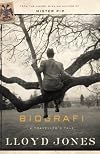
Lloyd Jones (author of the excellent Mister Pip) visited Albania for six weeks in 1991, a country that is, as he put it, an hour’s flight from Italy and a hundred years behind Europe. Albania suffered long under Enver Hoxha, the Communist leader who broke with the Soviet Union, moved to the Chinese camp and then broke with them and throughout it all built the most isolated, paranoid and backward country in Europe. Hoxha died in 1985 and Albania gradually moved towards greater openness, but show more in the context of social and economic collapse. Jones describes well the incredible backwardness of the country in the cities, towns, and villages, the lack of any amenities and most services (virtually none outside of the capital), terrible housing, the completely intermittent supply of food especially in the countryside, the lack of any jobs or prospects, the flood of refugees onto boats to Italy to find varying degrees of success but most not good, a countryside and beaches bedecked with thousands of concrete firing bunkers to repel invasion, the primitive 19th century life in many of the country villages and farms, an essential warmth of many people but so many traumatized and stunted by their experience under Hoxha and his iron grip on society. The title of the book—biografi—refers to the individual biographies maintained by the security police on every individual in the country, biographies that determine and could ruin a life if even a distant relative had any questionable associations or behavior, even those of the most innocent or innocuous nature. It is impossible for those who have never lived under such a suffocating regime to appreciate the controlling nature of the system….one couple that Jones met had the chance to move to a larger apartment on the ground floor of a building but they refused because they were afraid that people on the street might overhear conversations in the apartment and report them to the police.
A focal part of the book is Jones’s search for a man named Shapallo who was snatched from anonymity to become a double for Hoxha in public events. In the book, Jones does track down Shapallo and spends time with him….but in fact, Shapallo never existed, he is an invention by Jones. This caused some consternation with publishers (one of which cancelled a contract); many were not sure how to characterize the book and some criticized Jones for being dishonest. It is an interesting combination of fact and fiction, but the reader is not aware of it until he/she reads the afterword to the book. In a sense, Shapallo represents the ultimate falsity of the regime, a world where no external representations can be taken as real, where everything and anything can be manipulated and faked and made “real”.
An interesting and entertaining read about a world in Europe that existed in its own bubble of time and space. show less
A focal part of the book is Jones’s search for a man named Shapallo who was snatched from anonymity to become a double for Hoxha in public events. In the book, Jones does track down Shapallo and spends time with him….but in fact, Shapallo never existed, he is an invention by Jones. This caused some consternation with publishers (one of which cancelled a contract); many were not sure how to characterize the book and some criticized Jones for being dishonest. It is an interesting combination of fact and fiction, but the reader is not aware of it until he/she reads the afterword to the book. In a sense, Shapallo represents the ultimate falsity of the regime, a world where no external representations can be taken as real, where everything and anything can be manipulated and faked and made “real”.
An interesting and entertaining read about a world in Europe that existed in its own bubble of time and space. show less
Lists
Booker Prize (1)
Refugee crisis (1)
Awards


You May Also Like


Associated Authors
Statistics
- Works
- 24
- Also by
- 8
- Members
- 4,652
- Popularity
- #5,425
- Rating
- 3.8
- Reviews
- 239
- ISBNs
- 238
- Languages
- 14
- Favorited
- 2
