
Laurence Fearnley
Author of Edwin + Matilda
About the Author
Laurence Fearnley is the author of several novels including Room and Edwin and Matilda. The Hut Builder won the fiction category of the 2011 NZ Post Book Awards. She also made the New Zealand Best Seller List in 2015 with her title Lydia Bradey: Going Up is Easy. (Bowker Author Biography)
Series
Works by Laurence Fearnley
Floating 1 copy
Associated Works
Tagged
Common Knowledge
- Birthdate
- 1963
- Gender
- female
- Education
- Victoria University of Wellington (MA|Creative Writing|1997)
- Occupations
- novelist
short story writer
curator - Awards and honors
- Artists to Antarctica (2003/04)
Robert Burns Fellowship (2007) - Nationality
- New Zealand
- Places of residence
- Dunedin, New Zealand
Germany - Associated Place (for map)
- Dunedin, New Zealand
Members
Reviews
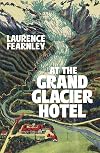
(8.5)This is a poignant novel and I wasn't surprised to learn that the writer had herself experienced the same illness. Although, as she reflects on her journey, the situation she now finds herself in, shows a strength and determination to try to rediscover or reinvent the person she is. The friendship she forms during her stay in the hotel allows her to start becoming this new person.
The relationships are beautifully drawn as are the small number of characters in this book.
The flora and show more fauna is almost a character in itself, the wild wet natural landscape is vividly depicted increasing the sense of isolation from the urban world.
This is the third book in the series of books about the senses fearnley has chosen and she delivers on the hearing theme. show less
The relationships are beautifully drawn as are the small number of characters in this book.
The flora and show more fauna is almost a character in itself, the wild wet natural landscape is vividly depicted increasing the sense of isolation from the urban world.
This is the third book in the series of books about the senses fearnley has chosen and she delivers on the hearing theme. show less
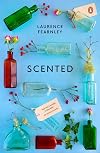
Some years ago, I was in the CBD, waiting to cross at the lights, when a complete stranger smiled and asked me about the perfume I was wearing. It reminded her of her mother, who had always worn it, she said. That is what is meant by a signature scent.
At the time, I didn't have a signature scent. I never bought perfume for myself, but for years my mother had kept me supplied with French perfume with gift sets at Christmas and on my birthday, and their small sizes were perfect to keep in a show more handbag for top-ups during the day. Mostly I never remembered from one day to the next which one I was wearing, but I remembered the Estée Lauder one because I liked it so much. It was called Beautiful and it suited me. And some years after that, when I was visiting my father in aged care every day, I always wore that scent because I had learned that even when memory goes altogether, a person will know who you are by your familiar scent. It's a way of holding on and not letting go. For me, that perfume still represents hope.
In Laurence Fearnley's novel Scented, a middle-aged academic called Siân has lost her way. A single-minded career woman, she has lost her job and her sense of identity when the university was restructured and her entire department was abolished. The story begins during that dreadful period of stress when the news has leached out but the administration is not being transparent about its intentions. Not knowing yet that American Studies is to close down altogether, Siân is hopeful that her job will survive because she has made herself so very useful to other academics in the department. Taking on their responsibilities as well as her own. Enabling them to get grants and professorships and impressive CVs. Helping out colleagues under stress as one might do in work that's collaborative and secure. But perhaps not so strategic in a competitive environment when survival skills are needed.
Then Siân is hopeful of being able to transfer to a new department. After all, her senior colleague Jerome seems to be able to reinvent himself. Not because he is a man. But because he is a certain type. We had those applying for positions at my work too, where the applicants were nearly always women because I worked in a feminised profession (I became quite skilled in interviews at ferreting out the CVs claiming expertise in work they hadn't done. 'Can you tell us more about your own contribution to this committee?' I would ask, with my pen poised mid-air to write down the answer that always waffled on vaguely about not taking credit for team work.)
At home in her apartment, Siân is in the doldrums. Her early days are filled with writing a new CV, and sending off job applications. Most receive no reply or a pseudo-rueful reply. There are, after all, not so many universities in New Zealand. (Though more than you'd think for a population of about 5 million.) She casts her net a bit wider and lowers her expectations because the mortgage on that much-loved apartment is pressing. She gets a couple of job interviews outside academia but she messes up. It's not looking good.
It dawns on the reader that Siân is not an entirely reliable narrator.
To read the rest of my review please visit https://anzlitlovers.com/2024/05/31/scented-2019-by-laurence-fearnley/ show less
At the time, I didn't have a signature scent. I never bought perfume for myself, but for years my mother had kept me supplied with French perfume with gift sets at Christmas and on my birthday, and their small sizes were perfect to keep in a show more handbag for top-ups during the day. Mostly I never remembered from one day to the next which one I was wearing, but I remembered the Estée Lauder one because I liked it so much. It was called Beautiful and it suited me. And some years after that, when I was visiting my father in aged care every day, I always wore that scent because I had learned that even when memory goes altogether, a person will know who you are by your familiar scent. It's a way of holding on and not letting go. For me, that perfume still represents hope.
In Laurence Fearnley's novel Scented, a middle-aged academic called Siân has lost her way. A single-minded career woman, she has lost her job and her sense of identity when the university was restructured and her entire department was abolished. The story begins during that dreadful period of stress when the news has leached out but the administration is not being transparent about its intentions. Not knowing yet that American Studies is to close down altogether, Siân is hopeful that her job will survive because she has made herself so very useful to other academics in the department. Taking on their responsibilities as well as her own. Enabling them to get grants and professorships and impressive CVs. Helping out colleagues under stress as one might do in work that's collaborative and secure. But perhaps not so strategic in a competitive environment when survival skills are needed.
Then Siân is hopeful of being able to transfer to a new department. After all, her senior colleague Jerome seems to be able to reinvent himself. Not because he is a man. But because he is a certain type. We had those applying for positions at my work too, where the applicants were nearly always women because I worked in a feminised profession (I became quite skilled in interviews at ferreting out the CVs claiming expertise in work they hadn't done. 'Can you tell us more about your own contribution to this committee?' I would ask, with my pen poised mid-air to write down the answer that always waffled on vaguely about not taking credit for team work.)
At home in her apartment, Siân is in the doldrums. Her early days are filled with writing a new CV, and sending off job applications. Most receive no reply or a pseudo-rueful reply. There are, after all, not so many universities in New Zealand. (Though more than you'd think for a population of about 5 million.) She casts her net a bit wider and lowers her expectations because the mortgage on that much-loved apartment is pressing. She gets a couple of job interviews outside academia but she messes up. It's not looking good.
It dawns on the reader that Siân is not an entirely reliable narrator.
To read the rest of my review please visit https://anzlitlovers.com/2024/05/31/scented-2019-by-laurence-fearnley/ show less

Given that Laurence Fearnley is a woman, she has an uncanny ability to write convincingly in a masculine voice.
Boden Black is the youngest son of a butcher in small town Fairlie. His world is narrow and close. He draws a picture of a mother who is depressed following the loss of all her other children through multiple miscarriages and eventually war. Boden seeks solace and laughter with a neighbouring family. It is with Dudley that Boden experiences true joy for the first time on seeing the show more MacKenzie Basin. Here begins Boden's love of words, his poetry which provides an avenue to express his innermost thoughts.
We follow Boden as a shocking revelation is made, as he learns his father's trade and as he forges new friendships on the slopes of Mount Cook.
This is a reflective tale which conjures the remarkable views in this area of the South Island and also the solitariness that can be experienced there.
This is so beautifully written that one experiences the shocks and surprises as Boden does. This book explores how upbringing moulds our ability to relate to others and yet nature provides the outlet for the inner soul. show less
Boden Black is the youngest son of a butcher in small town Fairlie. His world is narrow and close. He draws a picture of a mother who is depressed following the loss of all her other children through multiple miscarriages and eventually war. Boden seeks solace and laughter with a neighbouring family. It is with Dudley that Boden experiences true joy for the first time on seeing the show more MacKenzie Basin. Here begins Boden's love of words, his poetry which provides an avenue to express his innermost thoughts.
We follow Boden as a shocking revelation is made, as he learns his father's trade and as he forges new friendships on the slopes of Mount Cook.
This is a reflective tale which conjures the remarkable views in this area of the South Island and also the solitariness that can be experienced there.
This is so beautifully written that one experiences the shocks and surprises as Boden does. This book explores how upbringing moulds our ability to relate to others and yet nature provides the outlet for the inner soul. show less
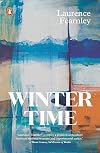
(8.5)This almost reached the heights of her earlier novel 'The Hut Builder' for me. The setting of the fictional Lake Matariki, (actually Lake Tekapo), is beautifully rendered along with the searingly cold climate, characters in their own right. There is a steady build in tension and the eventual climax and ending sadly failed to reach my expectation. After confronting his own personal situation, I felt there was no resolution. Nonetheless, I did really enjoy this return to her earlier form.
Awards


You May Also Like


Associated Authors
Statistics
- Works
- 17
- Also by
- 1
- Members
- 213
- Popularity
- #104,443
- Rating
- 3.9
- Reviews
- 14
- ISBNs
- 35