
Emily Perkins
Author of Novel About My Wife
About the Author
Emily Perkins is a New Zealand novelist who has started to write for theatre with her adaptation of A Doll's House by Henrik Ibsen. Perkins started her theatre career as an acting student in Toi Whakaari's stellar Class of 1987. Her first collection of stories Not Her Real Name, published when she show more was 26, was awarded the Geoffrey Faber Memorial Prize in the UK and the Montana First Book of Fiction Award in NZ. Picador published her first novel, Leave Before You Go. The New Girl, her second novel, was shortlisted for the John Llewellyn Rhys Prize in the UK. She was the Buddle Findlay Sargeson Fellow in 2006 and during the Fellowship finished her fourth book, Novel About My Wife which was awarded the Believer Book Award in the US and the Medal for Fiction at the Montana NZ Book Awards. Her most recent novel, The Forrests, published by Bloomsbury in 2012, was long-listed for the Women's Prize for Fiction 2013 and a finalist in the NZ Post Book Awards. In 2011 she was made an Arts Laureate by the Arts Foundation of New Zealand. (Bowker Author Biography) show less
Works by Emily Perkins
Can't Beat It 1 copy
Associated Works
Tagged
Common Knowledge
- Birthdate
- 1970
- Gender
- female
- Education
- New Zealand Drama School
Victoria University of Wellington, New Zealand - Occupations
- writing tutor
novelist
television presenter - Organizations
- International Institute of Modern Letters, Victoria University of Wellington
- Awards and honors
- Buddle Findlay Sargeson Fellowship (2006)
- Relationships
- Maughan, Karl (husband)
- Nationality
- New Zealand
- Birthplace
- Christchurch, New Zealand
- Places of residence
- Christchurch, New Zealand
Grey Lynn, Auckland, New Zealand
Wellington, New Zealand
London, England, UK - Associated Place (for map)
- New Zealand
Members
Reviews
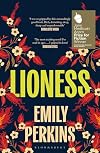
A middle-aged woman has a life crisis and self-actualises: there is surely an entire comfort-read genre that uses this plot, perhaps with a tropical escape and an affair with an exotic stranger. Well, Lioness puts the boot into the cliches by being set in non-tropical paradise of pre–COVID Wellington, though there is in fact an exotic stranger. Theresa (born Teresa), a people-pleasing trophy wife, goes on a journey (to exotic Martinborough) and the scales fall from her eyes, as she show more gradually learns to stand up for herself and break up with her husband's wealth and horrible family. Elegantly written and especially mean about lifestyle homeware brands with their maroon smoked glass candle holders. (Design notes: Bloomsbury has published a book set in contemporarary New Zealand, which will require macrons, but the Bembo font they've chosen doesn't have a full character set, so slightly-jarring character substitution happens in several Māori words—not very professional. Also this cover is much more insipid than the original, a shame.) show less
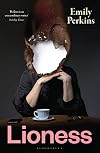
Mmm, I do love it when an author skewers the more tawdry aspects of contemporary life!
New Zealander Emily Perkins is the author of a collection of short stories Not Her Real Name and Other Stories (1996); and the novels: Leave Before You Go (1998, on my TBR); The New Girl (2001); Novel about My Wife (2008, see my review) and The Forrests (2012). She is also a columnist and a screenwriter, a teacher of creative writing and was the host of TVNZ7’s book programme The Good Word. Her latest show more release Lioness is set in Wellington NZ where she is now resident after a career which includes teaching in the UK, India, and China.
For readers whose mental image of New Zealand features pristine scenery and lots of sheep, Lioness offers an urban landscape and a world of wealth and privilege. (If you've ever watched Grand Designs New Zealand you will know that there are some really (really) rich Kiwis who exemplify the kind of inequitable society that has emerged in late stage capitalism here in Australia too. (If you have some spare millions you can buy one those palatial extravaganzas, there were six on the market on the day I looked, see here.)
The central characters in Lioness are a husband and wife power couple: Trevor is a developer under scrutiny because of some shady planning deal on a waterfront hotel, and Therese runs a chain of lifestyle boutiques, which she's about to expand into Sydney. (Where they will retire to a suitably posh address.)
We visited Wellington in 2019 so I can attest to how well the setting is realised. I'm very glad we didn't experience the terrifying plane landing that Therese describes.
The oxygen masks come down, the plane banks so that all she can see through the window is the raw, bobbing ocean, and a man gets out his phone to ring his loved ones.
Next time, we'll fly in through Auckland!
It is Therese who narrates most of the novel, with what seems like disarming honesty. Her background is modest, and a makeover is part of the deal when she marries Trevor. Along with changing her name from Teresa to the more aspirational Therese, smartening up her vowels and her dress sense, she gets that wonky eyetooth straightened so that she could open her mouth when she smiled. These canines are what we used to tear our food, and this action is symbolic of the way she willingly submits to restraining any expression of anger. To enjoy this kind of good life, she has to fit in and make everything good and nice for everybody else.
Her forbearance is not the patience of a gentle personality; it is the price of the life she leads.
To read the rest of my review please visit https://anzlitlovers.com/2023/09/06/lioness-2023-by-emily-perkins/ show less
New Zealander Emily Perkins is the author of a collection of short stories Not Her Real Name and Other Stories (1996); and the novels: Leave Before You Go (1998, on my TBR); The New Girl (2001); Novel about My Wife (2008, see my review) and The Forrests (2012). She is also a columnist and a screenwriter, a teacher of creative writing and was the host of TVNZ7’s book programme The Good Word. Her latest show more release Lioness is set in Wellington NZ where she is now resident after a career which includes teaching in the UK, India, and China.
For readers whose mental image of New Zealand features pristine scenery and lots of sheep, Lioness offers an urban landscape and a world of wealth and privilege. (If you've ever watched Grand Designs New Zealand you will know that there are some really (really) rich Kiwis who exemplify the kind of inequitable society that has emerged in late stage capitalism here in Australia too. (If you have some spare millions you can buy one those palatial extravaganzas, there were six on the market on the day I looked, see here.)
The central characters in Lioness are a husband and wife power couple: Trevor is a developer under scrutiny because of some shady planning deal on a waterfront hotel, and Therese runs a chain of lifestyle boutiques, which she's about to expand into Sydney. (Where they will retire to a suitably posh address.)
We visited Wellington in 2019 so I can attest to how well the setting is realised. I'm very glad we didn't experience the terrifying plane landing that Therese describes.
The plane jolted, my champagne glass nearly snatched out of my hand by an unseen force. Landing in Wellington was infamously hairy, and even a jet like this could shake about in turbulence. The seatbelt light dinged on repeat. I drained my drink and tucked the glass into the seat pocket. Trevor was engrossed in the spreadsheet on his laptop, headphones on. We lifted and dropped, plateauing with another bump. I reached for his forearm and he unhooked his headphones. At the next bang of air, he closed the laptop. We held hands, our fingers interlaced, as around us people gasped and yelped in the shaking cabin. At the top of the galley the air stewards stared into the middle distance from their perches. If the plane crashes, I thought, it won't matter which class we are in. Another part of me thought, it will never crash with Trevor on board.
The next lift in the air — almost sweet, weightless — was followed by the sharpest drop yet, and someone screamed, and a woman behind us in the cabin started singing 'Amazing grace.' (p.9)
The oxygen masks come down, the plane banks so that all she can see through the window is the raw, bobbing ocean, and a man gets out his phone to ring his loved ones.
Next time, we'll fly in through Auckland!
It is Therese who narrates most of the novel, with what seems like disarming honesty. Her background is modest, and a makeover is part of the deal when she marries Trevor. Along with changing her name from Teresa to the more aspirational Therese, smartening up her vowels and her dress sense, she gets that wonky eyetooth straightened so that she could open her mouth when she smiled. These canines are what we used to tear our food, and this action is symbolic of the way she willingly submits to restraining any expression of anger. To enjoy this kind of good life, she has to fit in and make everything good and nice for everybody else.
Her forbearance is not the patience of a gentle personality; it is the price of the life she leads.
To read the rest of my review please visit https://anzlitlovers.com/2023/09/06/lioness-2023-by-emily-perkins/ show less
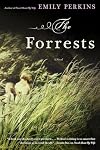
Opening with Frank Forrest filming a family movie of his children, Dorothy, Evelyn, Michael, Ruthie and their friend Daniel, the interrupted script, unintended images, and the ultimate abandonment of the film captures the feel of the novel as a whole and sets up this slice of life series of episodic style shorts from the life of the dysfunctional Forrest family. The Forrests move to New Zealand chasing father Frank's dream of acting but he can no more break into theater in Auckland than he show more could in New York and the family must fall back on his rapidly disappearing trust fund to live. Thus starts this dreamy novel that follows second Forrest daughter Dorothy's life from childhood through her dementia-riddled old age.
The vignette-like chapters each freeze a moment in time as the story progresses and the Forrests age. Parents Frank and Lee are remote and consumed by their own self-centered whims. They haul their children around without reference to the damage they might do them and they never actually see what is going on in the lives of the kids. Although each of the family members is granted time on the page, Dorothy is the focus of the majority of the novel and so the reader spends the most time reading about her ultimately ordinary life and the never realized dreams she still sometimes entertains, including her lifelong love of family friend Daniel.
The writing is kaleidoscopic, filled with shimmeringly beautiful descriptions and imagery but the feel is still somehow still distant and detached. The feel is almost like a collection of photographs overlaid with a wash, like Instagram snaps. From chapter to chapter there are gaps in time that are left to the reader to fill in. Some of the gaps are quite large and some smaller, an uneven teasing thread. The characters, specifically Dorothy and Eve, can never quite overcome their family and their upbringing, remaining emotionally shattered. They cannot connect, drifting untethered in their own lives. And while the effect seems intentional it is still disorienting for the reader who also cannot quite connect with this admittedly gorgeously written but aloof and oft times dispassionate story. show less
The vignette-like chapters each freeze a moment in time as the story progresses and the Forrests age. Parents Frank and Lee are remote and consumed by their own self-centered whims. They haul their children around without reference to the damage they might do them and they never actually see what is going on in the lives of the kids. Although each of the family members is granted time on the page, Dorothy is the focus of the majority of the novel and so the reader spends the most time reading about her ultimately ordinary life and the never realized dreams she still sometimes entertains, including her lifelong love of family friend Daniel.
The writing is kaleidoscopic, filled with shimmeringly beautiful descriptions and imagery but the feel is still somehow still distant and detached. The feel is almost like a collection of photographs overlaid with a wash, like Instagram snaps. From chapter to chapter there are gaps in time that are left to the reader to fill in. Some of the gaps are quite large and some smaller, an uneven teasing thread. The characters, specifically Dorothy and Eve, can never quite overcome their family and their upbringing, remaining emotionally shattered. They cannot connect, drifting untethered in their own lives. And while the effect seems intentional it is still disorienting for the reader who also cannot quite connect with this admittedly gorgeously written but aloof and oft times dispassionate story. show less

Compelling, well-written, and achingly sad. (I'm currently reading Nabokov's Timofey Pnin as a comic antidote to pull me out of the funk after reading this.) Written from the perspective of a man whose wife has died, you slowly learn the details leading to her death. Makes me wonder about the solidity of our relationships, and how well we know people in our lives. I want to read more by Perkins, but my public libraries carry hardly any of her books...
Lists
Awards


You May Also Like


Associated Authors
Statistics
- Works
- 10
- Also by
- 11
- Members
- 625
- Popularity
- #40,301
- Rating
- 3.5
- Reviews
- 34
- ISBNs
- 51
- Languages
- 4