
Mo Rocca
Author of Mobituaries: Great Lives Worth Reliving
About the Author
Mo Rocca is a correspondent for CBS Sunday Morning, host of The Henry Ford's Innovation Nation, and host and creator of the Cooking Channel's My Grandmother's Ravioli, in which he learned to cook from grandmothers and grandfathers across the country. He's also a frequent panelist on NPR's hit show more weekly quiz show Wait WaitDon't Tell Me! Rocca spent four seasons as a correspondent on Comedy Central's The Daily Show with Jon Stewart. He began his career in TV as a writer and producer for the Emmy and Peabody Award-winning PBS children's series Wishbones. As an actor, Rocca starred on Broadway in The 25th Annual Putnam County Spelling Bee. Rocca is the author of All the Presidents' Pets, a historical novel about White House pets and their role in presidential decision-making. show less
Image credit: The Collegian
Works by Mo Rocca
[No title] 1 copy
Associated Works
Tagged
Common Knowledge
- Legal name
- Rocca, Maurice Alberto
- Birthdate
- 1969-01-28
- Gender
- male
- Education
- Harvard University (BA, Literature)
- Occupations
- journalist
humorist
writer
actor - Nationality
- USA
- Birthplace
- Washington, D.C., USA
- Associated Place (for map)
- D.C., USA
Members
Reviews
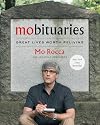
This is a fun, entertaining, and (this will hurt) educational book. Mo Rocca writes with a light, comedic hand and, at the same time, provides information you do not but should know. And you learn without recognizing that such is the case. For example, it was amazing what I discovered about the station wagon.
“Wait!” you say, “Isn’t this a book of obituaries – of people who have died?” Yes, there are a lot of descriptions of people who are no longer with us. But there is more. As show more he states in the introduction “A Mobituary is an appreciation for someone who didn’t get the love she or he deserved the first time around…[But] there are also Mobits for people who aren’t people at all.”
Okay, describing a station wagon as “people” may be a stretch, but that is what is fun. Anyone and anything may appear. There are Mobituaries for the likes of Fanny Brice, Billy Carter, Vaughn Meader (Who? See, you’re wanting to learn already), Reconstruction (and that is a depressing chapter), Prussia, and dragons.
There are important things to be learned here. (The “Works Consulted” section is 35 pages long and provides additional reading that would keep anyone busy for quite a while.) But, allow me to repeat myself, these are entertaining. Very entertaining. And very fun.
I hadn’t heard of the Mobituaries podcast before reading this book. But now I think it might be worth checking out. And you should take the time to check out this book. You won’t be disappointed show less
“Wait!” you say, “Isn’t this a book of obituaries – of people who have died?” Yes, there are a lot of descriptions of people who are no longer with us. But there is more. As show more he states in the introduction “A Mobituary is an appreciation for someone who didn’t get the love she or he deserved the first time around…[But] there are also Mobits for people who aren’t people at all.”
Okay, describing a station wagon as “people” may be a stretch, but that is what is fun. Anyone and anything may appear. There are Mobituaries for the likes of Fanny Brice, Billy Carter, Vaughn Meader (Who? See, you’re wanting to learn already), Reconstruction (and that is a depressing chapter), Prussia, and dragons.
There are important things to be learned here. (The “Works Consulted” section is 35 pages long and provides additional reading that would keep anyone busy for quite a while.) But, allow me to repeat myself, these are entertaining. Very entertaining. And very fun.
I hadn’t heard of the Mobituaries podcast before reading this book. But now I think it might be worth checking out. And you should take the time to check out this book. You won’t be disappointed show less
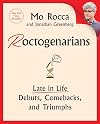
[3.75] Perhaps Pablo Picasso said it best: “We don’t grow older, we grow riper.” This witticism puts a humorous spin on an underlying theme in “Roctogenarians:” late life is no time to surrender. Even in a youth-focused culture, we can turn our age into an asset.
CBS Sunday correspondent Mo Rocca and co-author Jonathan Greenberg aptly describe this eclectic collection of breezy bios as a banquet — “ a sumptuous feast of stories for every taste.“ But like any robust show more smorgasbord, not every dish will satisfy every reader. For example, I wasn’t overly interested in the sections involving late life accomplishments of folks in the military arena or milestones in people’s love lives (there goes my carefully cultivated image as a hopeless romantic.)
Having said that, this anthology of tales about the triumphs and milestones achieved by folks in the 60-to-death demographic is both inspiring and entertaining.
“Old people are my jam,” Rocca proclaimed in an NPR interview.
His enthusiasm for such stories is evident in every chapter. One must give credit to a literary duo who skillfully managed to include the stories of such a diverse cast of characters — from Norman Rockwell to Norman Lear. From Colonel Sanders to Mel Brooks. There are even delightful vignettes about Laura Ingalls Wilder and Clara Peller, a burger hawker who made all of us ask “Where’s the Beef?”
Although the book celebrates late-life comebacks, there’s also a section titled “Misspent Old Age” that examines successful people who self-destructed in old age (Can you say Guilani?)
“Roctogenarians” is an engaging book that serves as a reminder that we’re never too old to hit new heights. show less
CBS Sunday correspondent Mo Rocca and co-author Jonathan Greenberg aptly describe this eclectic collection of breezy bios as a banquet — “ a sumptuous feast of stories for every taste.“ But like any robust show more smorgasbord, not every dish will satisfy every reader. For example, I wasn’t overly interested in the sections involving late life accomplishments of folks in the military arena or milestones in people’s love lives (there goes my carefully cultivated image as a hopeless romantic.)
Having said that, this anthology of tales about the triumphs and milestones achieved by folks in the 60-to-death demographic is both inspiring and entertaining.
“Old people are my jam,” Rocca proclaimed in an NPR interview.
His enthusiasm for such stories is evident in every chapter. One must give credit to a literary duo who skillfully managed to include the stories of such a diverse cast of characters — from Norman Rockwell to Norman Lear. From Colonel Sanders to Mel Brooks. There are even delightful vignettes about Laura Ingalls Wilder and Clara Peller, a burger hawker who made all of us ask “Where’s the Beef?”
Although the book celebrates late-life comebacks, there’s also a section titled “Misspent Old Age” that examines successful people who self-destructed in old age (Can you say Guilani?)
“Roctogenarians” is an engaging book that serves as a reminder that we’re never too old to hit new heights. show less
This was an enjoyable light listen. Well suited 1o listening for 15 or 20 minute intervals. I found when I listened for longer than that it just started to drone on like Charlie Brown's teacher.
I am one of those people who loves going down internet rabbit holes, often about discrete historical events or figures, and Rocca clearly belongs to this tribe as well. He is clever and funny, and many of the snippets here are fun and interesting. I knew a lot of the information packed in here (see show more above re rabbit holes, and also, like Rocca, I used to read the World Book Encyclopedia for fun) but some was new, and some things I knew I had forgotten about and enjoyed being reminded.
In the end this was a pleasant trivia-filled escape from Coronavirus and police murdering Black people, and I really needed that escape. show less
I am one of those people who loves going down internet rabbit holes, often about discrete historical events or figures, and Rocca clearly belongs to this tribe as well. He is clever and funny, and many of the snippets here are fun and interesting. I knew a lot of the information packed in here (see show more above re rabbit holes, and also, like Rocca, I used to read the World Book Encyclopedia for fun) but some was new, and some things I knew I had forgotten about and enjoyed being reminded.
In the end this was a pleasant trivia-filled escape from Coronavirus and police murdering Black people, and I really needed that escape. show less

Mo Rocca's "Mobituaries," written with Jonathan Greenberg, is a diverting and amusing compilation of essays in which Rocca recalls people, places, ideas, and objects that, in some cases, have been relegated to the dustbin of history. He also pays tribute to "great lives" that, until now, have not received the attention they deserved. Rocca entertains us with goofy humor, and edifies us with his encyclopedic knowledge of such topics as geography, history, politics, and the world of show more entertainment. He does not concentrate solely on past presidents, movie stars, humanitarians, and sports heroes. Rocca also gives a shout out to or, in some cases, disparages bygone fashion trends, political movements, medical diagnoses, scientific hokum, and tarnished reputations.
We are treated to intriguing tidbits concerning "firsts" and "lasts," people who died on the same day, black-sheep siblings, and places you won't find on a map. Furthermore, Rocca highlights the exploits of females who were ahead of their time, African-Americans who made their mark but were not given credit for their contributions, celebrities who stuck their necks out to help others, and other little-known facts that should please trivia fans.
What makes this book exceptional are its intimacy (Mo Rocca freely shares his feelings and opinions); conversational prose style; meticulous research backed up by an extensive bibliography; Rocca's endless curiosity about what makes people tick; and his compassion for those who, through no fault of their own, failed to accomplish their goals. He answers many questions, such as (in no particular order): Why is the name Giacomo Meyerbeer, the most famous opera composer of the nineteenth century, merely a footnote in the annals of classical music? What were Herbert Hoover's most important accomplishments before he was elected to the White House? Who technically preceded Jackie Robinson as the first African-American Major League ballplayer? What was Marlene Dietrich's true passion? Whatever happened to Disco? You can choose to read "Mobituaries" in order, as I did, or browse through it at your leisure. You might consider purchasing this engaging work of non-fiction as a gift for someone with eclectic tastes who is fascinated by esoteric information on a variety of subjects. show less
We are treated to intriguing tidbits concerning "firsts" and "lasts," people who died on the same day, black-sheep siblings, and places you won't find on a map. Furthermore, Rocca highlights the exploits of females who were ahead of their time, African-Americans who made their mark but were not given credit for their contributions, celebrities who stuck their necks out to help others, and other little-known facts that should please trivia fans.
What makes this book exceptional are its intimacy (Mo Rocca freely shares his feelings and opinions); conversational prose style; meticulous research backed up by an extensive bibliography; Rocca's endless curiosity about what makes people tick; and his compassion for those who, through no fault of their own, failed to accomplish their goals. He answers many questions, such as (in no particular order): Why is the name Giacomo Meyerbeer, the most famous opera composer of the nineteenth century, merely a footnote in the annals of classical music? What were Herbert Hoover's most important accomplishments before he was elected to the White House? Who technically preceded Jackie Robinson as the first African-American Major League ballplayer? What was Marlene Dietrich's true passion? Whatever happened to Disco? You can choose to read "Mobituaries" in order, as I did, or browse through it at your leisure. You might consider purchasing this engaging work of non-fiction as a gift for someone with eclectic tastes who is fascinated by esoteric information on a variety of subjects. show less
Awards

You May Also Like


Associated Authors
Statistics
- Works
- 35
- Also by
- 1
- Members
- 571
- Popularity
- #43,840
- Rating
- 3.7
- Reviews
- 26
- ISBNs
- 19