

Laurence Scott
Author of The Four-Dimensional Human: Ways of Being in the Digital World
About the Author
Laurence Scott is the author of Four Dimensional Human whcih made the Samuel Johnson Prize 2015 shortlist. (Bowker Author Biography)
Works by Laurence Scott
Picnic Comma Lightning: The Experience of Reality in the Twenty-First Century (2018) 55 copies, 1 review
Associated Works
Tagged
Common Knowledge
- Places of residence
- London, England
Scotland (south-west)
Members
Reviews
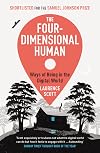
I came across 'The Four-Dimensional Human' while browsing a relatively unfamiliar branch library. I'm easily convinced to read non-fiction dissecting our digital world and its effects. In this instance, Scott examines various different dimensions of the experience of pervasive digital connectedness. It's worth noting that he is a lecturer in English and creative writing, so the references are largely drawn from literature. (As an aside, since becoming a university lecturer my respect for show more that title has dropped to near zero. I no longer assume that just because someone lectures in a subject, they know a lot about it. After all, I have to lecture on topics I have only a limited grasp of! More senior lecturers than I presumably have actual expertise, though.) These literary comparisons are both a strength and a weakness of the book. The points being made can be vague and diffuse, verging at times into meaninglessness, but are all very elegantly expressed. My overall feeling was that I'd prefer greater substance. I recall most of Scott's arguments being made more effectively in [b:Present Shock: When Everything Happens Now|15811513|Present Shock When Everything Happens Now|Douglas Rushkoff|https://i.gr-assets.com/images/S/compressed.photo.goodreads.com/books/1355084098l/15811513._SY75_.jpg|21536777]. Nonetheless, the book kept my interest and conveys certain sensations central to digital life very well. For example:
While this is hardly a new insight, I liked how he put it. Inevitably, I found the treatment of current digital technology as a sort of natural condition of life, rather than a manifestation of the path taken by 21st century capitalism, slightly frustrating. The meandering chapters were, however, pleasant to read and certainly included elements I and doubtless many others could recognise:
Although it didn't give me anything particularly new to think about, 'The Four-Dimensional Human' was written with nuance in a pleasing style. It also features another example of the baffling fascination with analysing The Dark Knight Rises displayed by [a:David Graeber|29101|David Graeber|https://images.gr-assets.com/authors/1479657149p2/29101.jpg]'s [b:The Utopia of Rules: On Technology, Stupidity, and the Secret Joys of Bureaucracy|22245334|The Utopia of Rules On Technology, Stupidity, and the Secret Joys of Bureaucracy|David Graeber|https://i.gr-assets.com/images/S/compressed.photo.goodreads.com/books/1417415465l/22245334._SY75_.jpg|41620170] and [a:Slavoj Žižek|2340358|Slavoj Žižek|https://images.gr-assets.com/authors/1449231598p2/2340358.jpg]'s [b:Trouble in Paradise: From the End of History to the End of Capitalism|23265831|Trouble in Paradise From the End of History to the End of Capitalism|Slavoj Žižek|https://i.gr-assets.com/images/S/compressed.photo.goodreads.com/books/1411500347l/23265831._SY75_.jpg|42806779]. Look, I enjoyed it in the cinema, but the plot and themes were a mess! Graeber at least admits that it was disappointing. I really don't understand why cultural theorists look to this film specifically for insight into the postmodern condition. There's much more of that to be found in the Fast & Furious movies, in my opinion. show less
The collision of these two stories is just one example of how, in an age of constant information, we must daily reconcile two scales of tragedy: the personal and the planetary. The digital age supplies us with a steady exposure to two infinities of horror, the universe of sorrow contained in individual loss, and the vast dread of our collective undoing. [...] This collision of scale threatens us with a loss of proportion, a precondition for a culture of panic.
While this is hardly a new insight, I liked how he put it. Inevitably, I found the treatment of current digital technology as a sort of natural condition of life, rather than a manifestation of the path taken by 21st century capitalism, slightly frustrating. The meandering chapters were, however, pleasant to read and certainly included elements I and doubtless many others could recognise:
...Nevertheless there is a strong and widespread feeling that our relationship with technology has to be managed as a sort of chronic problem. Simultaneously we are rightly enamoured with all the ease and enrichment they provide. The four-dimensional human thus regularly experiences two types of breathlessness. The first is due to the thrill of roving over the world, of dropping in on a sibling and their baby on another continent, of staying for five minutes and laughing the whole time, then swooping back into your skin. The second breathlessness is not cheerful, and arises in the moments when all this liberty seems to come at the price of its opposite, when the sum of digital life feels more like a cage than a flying carpet. The ongoing narrative of toxicity and depression that shadows digital progress, in conjunction with a sense that this progress is both for the best and inevitable, creates a pervasive atmosphere of claustrophobia.
Although it didn't give me anything particularly new to think about, 'The Four-Dimensional Human' was written with nuance in a pleasing style. It also features another example of the baffling fascination with analysing The Dark Knight Rises displayed by [a:David Graeber|29101|David Graeber|https://images.gr-assets.com/authors/1479657149p2/29101.jpg]'s [b:The Utopia of Rules: On Technology, Stupidity, and the Secret Joys of Bureaucracy|22245334|The Utopia of Rules On Technology, Stupidity, and the Secret Joys of Bureaucracy|David Graeber|https://i.gr-assets.com/images/S/compressed.photo.goodreads.com/books/1417415465l/22245334._SY75_.jpg|41620170] and [a:Slavoj Žižek|2340358|Slavoj Žižek|https://images.gr-assets.com/authors/1449231598p2/2340358.jpg]'s [b:Trouble in Paradise: From the End of History to the End of Capitalism|23265831|Trouble in Paradise From the End of History to the End of Capitalism|Slavoj Žižek|https://i.gr-assets.com/images/S/compressed.photo.goodreads.com/books/1411500347l/23265831._SY75_.jpg|42806779]. Look, I enjoyed it in the cinema, but the plot and themes were a mess! Graeber at least admits that it was disappointing. I really don't understand why cultural theorists look to this film specifically for insight into the postmodern condition. There's much more of that to be found in the Fast & Furious movies, in my opinion. show less

This book is chock full of touch stones in my mind that resonate. Beginning with the internet and the changes it is making in our minds, bodies and world. Comparing these changes to earlier changes with recognizable reference points in books and film. Frightening visions of things to come and the warning portents of dying bees, calving ice cliffs of glaciers, dying elephants and expanding deserts. Very readable, instructive with many familiar signposts in my own life.
Really enjoyed this for the most part, some interesting thinking of areas of the internet. Many of us will have thought idly about much discussed here, but Scott needles in to how truly strange life in the digital world is.
You are no doubt reading this on a screen, most likely some sort of tablet or phone, but it could be on a computer. This constant interaction with the 1’s and 0’s of the digital world is starting to have an effect on our own lives, as we are drawn into a world of constant connection, information at your fingertips and 24 hour communication. Scott calls this new persona, the four dimensional human, and in this book considers the ways that this influx of digital consciousness will affect show more us. Some of his subjects include the private and public faces that we show online, how the digital sphere is affecting us and our thought processes and the perils on our sanity with a constant stream of news.
It was an interesting book in lots of ways, almost everything we do these days has some sort of interaction with a computer or screen, and Scoot has made a good attempt to try and see what sort of human being we will become with the constant digital feeds in our lives. The first part of the book dragged a little, but thankfully picked up in the last half where he gave a number of examples on social media and his own experiences on it as well as illustrations from the film and fiction worlds. Overall good, and it would be a subject worth re-visiting again in five years or so with my children’s generation who have only know this world. show less
It was an interesting book in lots of ways, almost everything we do these days has some sort of interaction with a computer or screen, and Scoot has made a good attempt to try and see what sort of human being we will become with the constant digital feeds in our lives. The first part of the book dragged a little, but thankfully picked up in the last half where he gave a number of examples on social media and his own experiences on it as well as illustrations from the film and fiction worlds. Overall good, and it would be a subject worth re-visiting again in five years or so with my children’s generation who have only know this world. show less
Awards


You May Also Like


Associated Authors
Statistics
- Works
- 2
- Also by
- 7
- Members
- 190
- Popularity
- #114,773
- Rating
- 3.7
- Reviews
- 9
- ISBNs
- 17