
Claire Weekes (1903–1990)
Author of Hope and Help for Your Nerves
About the Author
Works by Claire Weekes
Self-Help for Your Nerves: Learn to Relax and Enjoy Life Again by Overcoming Fear and Nervous Tension (1962) 97 copies, 2 reviews
Essential Help for Your Nerves: Recover from Nervous Fatigue and Overcome Stress and Fear (2000) 15 copies
Blijf uw zenuwen de baas 1 copy
Tagged
Common Knowledge
- Legal name
- Weekes, Hazel Claire
- Birthdate
- 1903
- Date of death
- 1990
- Gender
- female
- Education
- University of Sydney
University College London - Occupations
- scientist
physician
author
broadcaster - Awards and honors
- Order of the British Empire (Member, 1979)
- Nationality
- Australia
- Associated Place (for map)
- Australia
Members
Reviews
Self Help for Your Nerves : Learn to Relax and Enjoy Life Again by Overcoming Stress and Fear by Claire Weekes
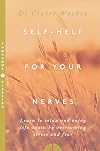
Recommended to me by a colleague in a conversation about mental health, this slim volume (171 pages) was first published in 1962 and feels every bit its age. Though reissued in 2015, the framing is still rooted in the language of “nerves” and advice that now borders on dangerous. Shock therapy is mentioned approvingly, and the text is steeped in sexist, heteronormative assumptions - the breadwinning man, the dutiful housewife - making it not only out of touch but actively alienating.
Its show more central argument is that fear is the root of breakdown, and that recovery lies in “facing” it -essentially, 'fake it until you make it'. That may sound bracing, but it leaves no room for the wide spectrum of mental health conditions, their complex causes, or the role of structural pressures like modern working culture and burnout. The implication is that breakdowns stem from weakness of character, and that a strong will alone can pull you through. This mindset risks invalidating people’s experiences and deterring them from seeking proper support.
For me, it ultimately said more about the mindset of the person who recommended it than about mental health itself. Its matronly, patronising tone might be of interest to a historian of psychiatry, but in practice it risks doing harm to readers who are vulnerable and looking for help, particularly anyone neurodivergent.
Readable, yes - but only as a relic of outdated thinking. I wouldn’t recommend it to anyone in genuine need of guidance. show less
Its show more central argument is that fear is the root of breakdown, and that recovery lies in “facing” it -essentially, 'fake it until you make it'. That may sound bracing, but it leaves no room for the wide spectrum of mental health conditions, their complex causes, or the role of structural pressures like modern working culture and burnout. The implication is that breakdowns stem from weakness of character, and that a strong will alone can pull you through. This mindset risks invalidating people’s experiences and deterring them from seeking proper support.
For me, it ultimately said more about the mindset of the person who recommended it than about mental health itself. Its matronly, patronising tone might be of interest to a historian of psychiatry, but in practice it risks doing harm to readers who are vulnerable and looking for help, particularly anyone neurodivergent.
Readable, yes - but only as a relic of outdated thinking. I wouldn’t recommend it to anyone in genuine need of guidance. show less

I was given this book by a friend to use in my Little Free Library. However she suggested I read it because I am dealing with anxiety I developed during the pandemic. My friend is a retired psychotherapist. She said she skimmed parts of this book, but she thought it might help me.
Although this book is very dated, I enjoyed reading it. I especially liked that author suggested we deal with anxiety by focusing on our body reactions rather than on the fear which causes them. There are other show more parts of this book that deal with depression and agoraphobia, but the author’s approach to those problems also seem down to earth and doable.
I also like the idea the author presented of thoughts being bluffing. Scary thoughts are just that. Often they are worst case scenarios. Our thoughts must be called for that bluffing. What hasn’t happened yet is not reality. It is only a bluff which raises our anxiety level and causes us to panic.
I’m going to try some of the ideas presented in this book and feel that reading it was indeed helpful. show less
Although this book is very dated, I enjoyed reading it. I especially liked that author suggested we deal with anxiety by focusing on our body reactions rather than on the fear which causes them. There are other show more parts of this book that deal with depression and agoraphobia, but the author’s approach to those problems also seem down to earth and doable.
I also like the idea the author presented of thoughts being bluffing. Scary thoughts are just that. Often they are worst case scenarios. Our thoughts must be called for that bluffing. What hasn’t happened yet is not reality. It is only a bluff which raises our anxiety level and causes us to panic.
I’m going to try some of the ideas presented in this book and feel that reading it was indeed helpful. show less

I don't really know how to rate this book. On the one hand, the material and terminology suffers from being more than 50 years out-of-date. On the other hand, it's not entirely wrong. This book is more like looking at an evolutionary ancestor of current anxiety treatment books. Pretty good for the time, but not so great if looked at with current standards.
This book outlines treatment methods for "nervous illness," which today we'd call anxiety (including generalized anxiety disorder and show more panic disorder). Many of these treatment options still exist today under the guise of Cognitive Behavioral Therapy (CBT), Dialectical Behavioral Therapy (DBT) or Acceptance and Commitment Therapy (ACT). At the time this book was written, I'm assuming the treatment methods weren't so formally studied to warrant official names or acronyms, making them sound more like folksy advice or words of wisdom. These treatment methods consist of such things as mindfulness, cognitive defusion, radical acceptance, "riding the wave," reframing, relaxation (deep breathing, progressive muscle relaxation) and goal setting and achievement.
Some of the treatment methods in this book are outdated and probably not the greatest ideas anymore. These include heavy sedation (taking barbiturates continually to sleep for several days is one of the treatment suggestions for severe "nervous illness") as well as electroshock treatment before trying antidepressants. Of course, in the 1960s, SSRIs didn't exist, but at that time electroshock treatment wasn't as benign as it is today, so I don't know why it would be so casually suggested.
I found the depression section of this book particularly unhelpful, but being that this is a book about anxiety written in the 1960s, I'm not terribly surprised. While many of the above-mentioned treatment methods are very useful for depression, the author takes the view that depression is a result of emotional exhaustion, and will go away if the emotions are restored. She states that "[d]epression always passes because, as I have already explained, it is a state of emotional depletion, and as emotional reserves rebuild, spirits automatically rise." Which is totally untrue.
Additionally, I found it interesting that many of the "nervous illness" problems that she discusses in the context of housewives seem to be equivalent to Betty Friedan's "problem that has no name."
Finally, there was a brief (one side of a page) afterward to this book written in 1989. I was hoping it would discuss a bit of the changes in treatment methodology that had occurred in the past 30 years. However, it just goes on to mention the book and author's many accomplishments, and that antidepressant treatment is not helpful by itself. Technically true, but discounting SSRIs so quickly does a disservice to all of the people whom antidepressants help. show less
This book outlines treatment methods for "nervous illness," which today we'd call anxiety (including generalized anxiety disorder and show more panic disorder). Many of these treatment options still exist today under the guise of Cognitive Behavioral Therapy (CBT), Dialectical Behavioral Therapy (DBT) or Acceptance and Commitment Therapy (ACT). At the time this book was written, I'm assuming the treatment methods weren't so formally studied to warrant official names or acronyms, making them sound more like folksy advice or words of wisdom. These treatment methods consist of such things as mindfulness, cognitive defusion, radical acceptance, "riding the wave," reframing, relaxation (deep breathing, progressive muscle relaxation) and goal setting and achievement.
Some of the treatment methods in this book are outdated and probably not the greatest ideas anymore. These include heavy sedation (taking barbiturates continually to sleep for several days is one of the treatment suggestions for severe "nervous illness") as well as electroshock treatment before trying antidepressants. Of course, in the 1960s, SSRIs didn't exist, but at that time electroshock treatment wasn't as benign as it is today, so I don't know why it would be so casually suggested.
I found the depression section of this book particularly unhelpful, but being that this is a book about anxiety written in the 1960s, I'm not terribly surprised. While many of the above-mentioned treatment methods are very useful for depression, the author takes the view that depression is a result of emotional exhaustion, and will go away if the emotions are restored. She states that "[d]epression always passes because, as I have already explained, it is a state of emotional depletion, and as emotional reserves rebuild, spirits automatically rise." Which is totally untrue.
Additionally, I found it interesting that many of the "nervous illness" problems that she discusses in the context of housewives seem to be equivalent to Betty Friedan's "problem that has no name."
Finally, there was a brief (one side of a page) afterward to this book written in 1989. I was hoping it would discuss a bit of the changes in treatment methodology that had occurred in the past 30 years. However, it just goes on to mention the book and author's many accomplishments, and that antidepressant treatment is not helpful by itself. Technically true, but discounting SSRIs so quickly does a disservice to all of the people whom antidepressants help. show less
Self Help for Your Nerves : Learn to Relax and Enjoy Life Again by Overcoming Stress and Fear by Claire Weekes
This is the end all be all self help book, it's natural and doesn't make unexpected goals.
It's all achievable and natural. Most books on self help are bloated pseudo profound nonsense. This book is written in a simple manner. The author makes you understand the problem in each chapter and then it's followed by a few steps towards healing.
It's definitely a great read and something an anxiety ridden person should read again and again.
Don't waste your time on nonsense self help books that are show more making you follow unrealistic goals.
This book will tell you again and again that it will take time to stay calm and work on the steps given.
What stuck with me was that the author mentions that depression is all in your head and that greatly changed my perspective on depression. Definitely a great read. show less
It's all achievable and natural. Most books on self help are bloated pseudo profound nonsense. This book is written in a simple manner. The author makes you understand the problem in each chapter and then it's followed by a few steps towards healing.
It's definitely a great read and something an anxiety ridden person should read again and again.
Don't waste your time on nonsense self help books that are show more making you follow unrealistic goals.
This book will tell you again and again that it will take time to stay calm and work on the steps given.
What stuck with me was that the author mentions that depression is all in your head and that greatly changed my perspective on depression. Definitely a great read. show less
Lists
You May Also Like


Statistics
- Works
- 12
- Members
- 455
- Popularity
- #53,950
- Rating
- 3.7
- Reviews
- 6
- ISBNs
- 71
- Languages
- 2