
Richard O'Connor (1)
Author of Undoing Depression: What Therapy Doesn't Teach You and Medication Can't Give You
For other authors named Richard O'Connor, see the disambiguation page.
About the Author
Richard O'Connor, Phd, is a practicing psychotherapist with offices in Canaan, Connecticut, and New York City. He is also the author of Active Treatment of Depression, Undoing Perpetual Stress, and Happy at Last. For more information, visit www.undoingdepression.com
Image credit: Dr. Richard O'Connor
Works by Richard O'Connor
Undoing Depression: What Therapy Doesn't Teach You and Medication Can't Give You (1997) 434 copies, 4 reviews
Rewire: Change Your Brain to Break Bad Habits, Overcome Addictions, Conquer Self-Destruc tive Behavior (2014) 168 copies, 4 reviews
Undoing Perpetual Stress: The Missing Connection Between Depression, Anxiety and 21st Century Illness (2005) 99 copies
Tagged
Common Knowledge
- Birthdate
- 20th Century
- Gender
- male
- Education
- University of Chicago (PhD)
- Nationality
- USA
- Associated Place (for map)
- USA
Members
Reviews
Undoing Depression: What Therapy Doesn't Teach You and Medication Can't Give You by Richard O'Connor
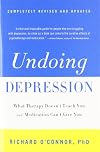
There are some great ideas and techniques in this book. At the beginning the author really seems to "get" the depression mindset: "This is the cruelest part of the disease: we blame ourselves for being weak or lacking character instead of accepting that we have an illness, instead of realizing that our self-blame is a symptom of the disease."
But he totally lost me with this one sentence: "In either case, more self-control — plain old willpower — is essential to recovery." Really? show more Willpower will defeat depression. Yeah...not so much. And I was already turned off by the time I got to this kicker: "Every patient I’ve ever known who was depressed had a difficult childhood." Umm, except me, it seems.
I think the problem here is something the author mentions himself. He admits that he has less experience with the "lethargic" form of depression - where you have no interest in anything, every simple task feels like a mountain to climb. He clearly treats a form of depression I don't even recognize because it's not my experience. So this book might be a game-changer for someone with the over-work kind of depression he speaks about. And maybe that's where his willpower theory would also be helpful. But when you're struggling just to get out of bed, force yourself to eat something, and crying hysterically at nothing at all, this book will just make you feel like you've failed yet again. show less
But he totally lost me with this one sentence: "In either case, more self-control — plain old willpower — is essential to recovery." Really? show more Willpower will defeat depression. Yeah...not so much. And I was already turned off by the time I got to this kicker: "Every patient I’ve ever known who was depressed had a difficult childhood." Umm, except me, it seems.
I think the problem here is something the author mentions himself. He admits that he has less experience with the "lethargic" form of depression - where you have no interest in anything, every simple task feels like a mountain to climb. He clearly treats a form of depression I don't even recognize because it's not my experience. So this book might be a game-changer for someone with the over-work kind of depression he speaks about. And maybe that's where his willpower theory would also be helpful. But when you're struggling just to get out of bed, force yourself to eat something, and crying hysterically at nothing at all, this book will just make you feel like you've failed yet again. show less
Rewire: Change Your Brain to Break Bad Habits, Overcome Addictions, Conquer Self-Destruc tive Behavior by Richard O'Connor
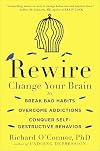
I have a lot of bad habits. Lots. I am usually running late, I eat too much sugar and salt, I am unorganized, I drink too much coffee, I apologize way too much, I giggle when I’m nervous. I could go on, but……you get the idea. So, I snapped up this book on Audible hoping to overcome at least one or two of these habits this year.
This book was much more than I expected. I didn’t read the details too closely (or at all) when I saw it listed on Audible. I read the front cover, and thought show more it would be a good tool for conquering some of my bad habits. Honestly, I got more than I expected. The book is deeper and more detailed than a series of shallow tips for making better choices.
O’Connor, a psychotherapist, focuses on recent research that shows your brain is always growing new cells. This happens even in adults, therefore, we all can build new connections. I found this information highly encouraging, and I was eager to learn HOW to do this.
The author repeatedly emphasizes the importance of mindfulness and being honest in all your interactions (especially with yourself). He also stresses you have to PRACTICE consistently to develop mindfulness and honesty. Therefore he recommends at least 20-30 minutes of daily meditation. This was the most helpful advice in the whole book (for me!). If you cannot recognize your patterns and habits, you are powerless to form new ones.
He also provides information about different personality traits and types, the bad habits associated with them, and ways for overcoming them. Because there is so much information to absorb, I think I would have found the print version more useful than audio for this type of book. I had a hard time remembering everything, and had to rewind (A LOT!) to take notes. So while I do recommend this book, I suggest getting the print version if you are really ready to change some bad habits. Definitely a good book for the start of a new year. show less
This book was much more than I expected. I didn’t read the details too closely (or at all) when I saw it listed on Audible. I read the front cover, and thought show more it would be a good tool for conquering some of my bad habits. Honestly, I got more than I expected. The book is deeper and more detailed than a series of shallow tips for making better choices.
O’Connor, a psychotherapist, focuses on recent research that shows your brain is always growing new cells. This happens even in adults, therefore, we all can build new connections. I found this information highly encouraging, and I was eager to learn HOW to do this.
The author repeatedly emphasizes the importance of mindfulness and being honest in all your interactions (especially with yourself). He also stresses you have to PRACTICE consistently to develop mindfulness and honesty. Therefore he recommends at least 20-30 minutes of daily meditation. This was the most helpful advice in the whole book (for me!). If you cannot recognize your patterns and habits, you are powerless to form new ones.
He also provides information about different personality traits and types, the bad habits associated with them, and ways for overcoming them. Because there is so much information to absorb, I think I would have found the print version more useful than audio for this type of book. I had a hard time remembering everything, and had to rewind (A LOT!) to take notes. So while I do recommend this book, I suggest getting the print version if you are really ready to change some bad habits. Definitely a good book for the start of a new year. show less
Undoing Depression: What Therapy Doesn't Teach You and Medication Can't Give You by Richard O'Connor
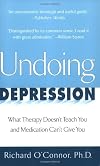
It has been more than two years since I started reading this book. Since then this book managed to save my sanity at least twice and probably will do so in the future. The amount of red, green and blue color lines almost on every page spread is staggering. I never underlined so much in any other books. It was not always pleasant. There are no magic bullets in it. It’s a true self-help book. But at the very least it can help reader to see what is wrong, how it is wrong and what you can do show more to change that. It is more like an eye opener; to shine the light on things that depressed (usually but not only) brain hide so skillfully.
But, with all that said I should note for whoever will read this in hopes of changing things. The foundation of solutions from this book is two things – your own work to change yourself and your friends/relatives who will help you in that. If don’t have the latter, the former will be many times harder. This is probably not the book you should read while been truly alone in life. Probably. show less
But, with all that said I should note for whoever will read this in hopes of changing things. The foundation of solutions from this book is two things – your own work to change yourself and your friends/relatives who will help you in that. If don’t have the latter, the former will be many times harder. This is probably not the book you should read while been truly alone in life. Probably. show less
Rewire: Change Your Brain to Break Bad Habits, Overcome Addictions, Conquer Self-Destruc tive Behavior by Richard O'Connor
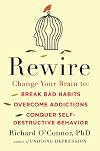
It's hard to give any self-help book a 5-star rating. They just aren't all that thrilling. This one probably deserves it. It is not the usual with a little bit of meat said over and over again to fill the pages. This book contains a lot of information on self-destructive behavior. I can't see that any one person would have all of the various types of behavior described. The idea is to see these many possibilities and perhaps find yourself in it somewhere. With the sections there are also show more exercises. If you have bad habits to overcome, I recommend this book as a help. If you don't, but know people who do, it could be enlightening. show less
Lists
Awards

You May Also Like


Associated Authors
Statistics
- Works
- 7
- Members
- 786
- Popularity
- #32,383
- Rating
- 3.7
- Reviews
- 10
- ISBNs
- 81
- Languages
- 5