
Terrence Real
Author of I Don't Want to Talk About It: Overcoming the Secret Legacy of Male Depression
About the Author
Terrence Real is family therapist and lecturer, he is a member of the senior faculty at the Family Institute of Cambridge and director of the Gender Relations Program at the Meadows Institute in Arizona
Works by Terrence Real
I Don't Want to Talk About It: Overcoming the Secret Legacy of Male Depression (1997) 592 copies, 9 reviews
Us: Getting Past You and Me to Build a More Loving Relationship (Goop Press) (2022) 113 copies, 2 reviews
Us (Lead Title) 1 copy
Tagged
Common Knowledge
Members
Reviews
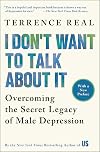
Most men are depressed. Many of them don't even know it. Sexism and the Patrix are part of the problem. Talk about stuff! Tell your stories! Don't keep it in. Don't hide emotion.
Way back in July or something I listened to the audio edition of “I Don’t Want to Talk About It: The Hidden Legacy of Male Depression" - a book by psychotherapist Terrence Real, recommended to my by my friends Jorge and Dave.
He asserts, as I’ve long believed, that a majority of men in the US have depression. show more But unlike the overt depression we hear about that goes with suicide attempts and the like, Real proposes that most men have what he calls covert depression - a condition of which they’re not even aware, yet which can often manifest in addictive behavior and a general dissatisfaction with life/self.
Lately I’ve been thinking about myself, and the people around me, and have realized that addictive behavior is rampant in our culture. Almost anything can be used addictively - whether it be alcohol, TV, Facebook, athletics, or even spirituality and love. I list these examples because they’re forms of addiction which I’ve personally experienced or witnessed.
I was super into the book, and all the case studies. But I forgot to tell other people about because the book just peters out. The premise is bulletproof, but Real focuses more on the academic side of things that the DIY/handbook aspect of things - so I didn’t actually find the piece that helpful for identifying next steps for myself or those I support.
It got me asking the question again - why are most US americans [the community with which I’m most familiar] depressed and addicted? It brought me back to my sustainable living class with John Gerber at UMass Amherest. Gerber proposed that we’re more interconnected than we are separate. In other words, we can’t be healthy if our community or planet isn’t healthy. It’s a theme echoed by Charles Eisenstein.
I’d say that I’ve experienced this to be my truth as well. I do my best to take care of myself, but if I’m ever truly going to be healthy, the world’s going to need to be healthy as well. Maybe this is why Real didn’t address the bigger picture - it’s pretty daunting.
I have identified one leverage point for these issues: our culture prefers externally-derived self-esteem to internally-generated self-esteem. Until people make this personal shift, we’re going to keep being addicted - filling that hole with things that can’t fit. show less
Way back in July or something I listened to the audio edition of “I Don’t Want to Talk About It: The Hidden Legacy of Male Depression" - a book by psychotherapist Terrence Real, recommended to my by my friends Jorge and Dave.
He asserts, as I’ve long believed, that a majority of men in the US have depression. show more But unlike the overt depression we hear about that goes with suicide attempts and the like, Real proposes that most men have what he calls covert depression - a condition of which they’re not even aware, yet which can often manifest in addictive behavior and a general dissatisfaction with life/self.
Lately I’ve been thinking about myself, and the people around me, and have realized that addictive behavior is rampant in our culture. Almost anything can be used addictively - whether it be alcohol, TV, Facebook, athletics, or even spirituality and love. I list these examples because they’re forms of addiction which I’ve personally experienced or witnessed.
I was super into the book, and all the case studies. But I forgot to tell other people about because the book just peters out. The premise is bulletproof, but Real focuses more on the academic side of things that the DIY/handbook aspect of things - so I didn’t actually find the piece that helpful for identifying next steps for myself or those I support.
It got me asking the question again - why are most US americans [the community with which I’m most familiar] depressed and addicted? It brought me back to my sustainable living class with John Gerber at UMass Amherest. Gerber proposed that we’re more interconnected than we are separate. In other words, we can’t be healthy if our community or planet isn’t healthy. It’s a theme echoed by Charles Eisenstein.
I’d say that I’ve experienced this to be my truth as well. I do my best to take care of myself, but if I’m ever truly going to be healthy, the world’s going to need to be healthy as well. Maybe this is why Real didn’t address the bigger picture - it’s pretty daunting.
I have identified one leverage point for these issues: our culture prefers externally-derived self-esteem to internally-generated self-esteem. Until people make this personal shift, we’re going to keep being addicted - filling that hole with things that can’t fit. show less

I am a huge fan of Terrence Real and his books, along with my wife. We listened to this book together along with [b:Us: Getting Past You and Me to Build a More Loving Relationship|58502657|Us Getting Past You and Me to Build a More Loving Relationship (Goop Press)|Terrence Real|https://i.gr-assets.com/images/S/compressed.photo.goodreads.com/books/1636979112l/58502657._SY75_.jpg|91881634]
Some of the thoughts and tools are great reminders, and some of the information is a total new way of show more communicating and appreciating each other.
The angle of this book is that women have changed. The role women play in the family and in society in general has evolved as well as their desires and confidence to speak up for what they want. So, men have to change and adapt as well for healthy relationships.
I recommend this book both for struggling and healthy relationships. show less
Some of the thoughts and tools are great reminders, and some of the information is a total new way of show more communicating and appreciating each other.
The angle of this book is that women have changed. The role women play in the family and in society in general has evolved as well as their desires and confidence to speak up for what they want. So, men have to change and adapt as well for healthy relationships.
I recommend this book both for struggling and healthy relationships. show less
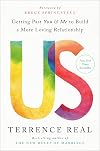
This is a life changing book for my wife and me. We listened and then discussed this book together, a chapter at a time.
[a:Terrence Real|27393|Terrence Real|https://s.gr-assets.com/assets/nophoto/user/u_50x66-632230dc9882b4352d753eedf9396530.png]'s philosophy is that we create coping mechanisms as a child to survive, which is great, but those mechanisms are detrimental as an adult, especially in relationships. So he gives the tools how to overcome your "adaptive child" and become your show more "mature adult self" when dealing with others, especially in a romantic relationship.
Is there anything new in this book? Not really. But the perspective and tools offered is simple, refreshing, and effective. show less
[a:Terrence Real|27393|Terrence Real|https://s.gr-assets.com/assets/nophoto/user/u_50x66-632230dc9882b4352d753eedf9396530.png]'s philosophy is that we create coping mechanisms as a child to survive, which is great, but those mechanisms are detrimental as an adult, especially in relationships. So he gives the tools how to overcome your "adaptive child" and become your show more "mature adult self" when dealing with others, especially in a romantic relationship.
Is there anything new in this book? Not really. But the perspective and tools offered is simple, refreshing, and effective. show less
I read this book because I loved [b:Us: Getting Past You and Me to Build a More Loving Relationship|58502657|Us Getting Past You and Me to Build a More Loving Relationship (Goop Press)|Terrence Real|https://i.gr-assets.com/images/S/compressed.photo.goodreads.com/books/1636979112l/58502657._SY75_.jpg|91881634] so much.
[b:I Don't Want to Talk About It: Overcoming the Secret Legacy of Male Depression|236765|I Don't Want to Talk About It Overcoming the Secret Legacy of Male Depression|Terrence show more Real|https://i.gr-assets.com/images/S/compressed.photo.goodreads.com/books/1424410383l/236765._SY75_.jpg|229325] was published in 1997, and Real's take on male depression seemed cutting edge then, and, at least from my experience, is still not widely accepted.
Real says there are two types of depression. Overt depression which includes Major and Minor Depression, the traditional definitions of depression. This manifests as loss of sleep, loss of appetite, eating too much, loss of interest in things and so on and so forth. The second for of depression is Covert Depression. This is where men (I assume can apply to women) are depressed but are using coping mechanism to keep it at bay. This normally includes some type of addiction, drugs, alcohol, sex, or any other form of addiction, and men, generally externalizes this depression in aggressive behavior towards other. (Women would normally internalize this depression)
Though this book is not engaging as [b:Us: Getting Past You and Me to Build a More Loving Relationship|58502657|Us Getting Past You and Me to Build a More Loving Relationship (Goop Press)|Terrence Real|https://i.gr-assets.com/images/S/compressed.photo.goodreads.com/books/1636979112l/58502657._SY75_.jpg|91881634], I found it to be really helpful in analyzing your past and connecting it to your current actions. How you have to move from Covert to Overt depression before you can heal.
This is the type of therapy I thought I was going to receive when I started going. show less
[b:I Don't Want to Talk About It: Overcoming the Secret Legacy of Male Depression|236765|I Don't Want to Talk About It Overcoming the Secret Legacy of Male Depression|Terrence show more Real|https://i.gr-assets.com/images/S/compressed.photo.goodreads.com/books/1424410383l/236765._SY75_.jpg|229325] was published in 1997, and Real's take on male depression seemed cutting edge then, and, at least from my experience, is still not widely accepted.
Real says there are two types of depression. Overt depression which includes Major and Minor Depression, the traditional definitions of depression. This manifests as loss of sleep, loss of appetite, eating too much, loss of interest in things and so on and so forth. The second for of depression is Covert Depression. This is where men (I assume can apply to women) are depressed but are using coping mechanism to keep it at bay. This normally includes some type of addiction, drugs, alcohol, sex, or any other form of addiction, and men, generally externalizes this depression in aggressive behavior towards other. (Women would normally internalize this depression)
Though this book is not engaging as [b:Us: Getting Past You and Me to Build a More Loving Relationship|58502657|Us Getting Past You and Me to Build a More Loving Relationship (Goop Press)|Terrence Real|https://i.gr-assets.com/images/S/compressed.photo.goodreads.com/books/1636979112l/58502657._SY75_.jpg|91881634], I found it to be really helpful in analyzing your past and connecting it to your current actions. How you have to move from Covert to Overt depression before you can heal.
This is the type of therapy I thought I was going to receive when I started going. show less
Lists
Awards

You May Also Like


Statistics
- Works
- 8
- Members
- 1,020
- Popularity
- #25,252
- Rating
- 4.1
- Reviews
- 12
- ISBNs
- 34
- Languages
- 4